I’ve learned that refreshing your lounge doesn’t require a complete overhaul; it starts with one strategic choice. When you anchor your room around a bold focal point, everything else falls into place. But here’s what most people miss: the real impact comes when you layer in the right conversation zones, furniture placement, and lighting. Let me show you the five ideas that’ll completely reshape how your space functions.
Choose Your Focal Point First
How do you want your lounge room to feel when you walk in?
How do you want your lounge room to feel when you walk in? Start by choosing one bold centerpiece to anchor your entire space.
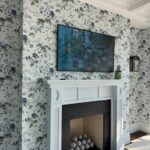
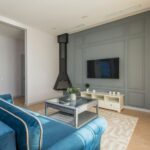
Start by selecting one strong centerpiece—a fireplace, bold wall color, or striking art piece. This anchor guides your entire living room layout and creates visual interest.
Position your seating arrangement to face this centerpiece, ensuring clear sightlines and balanced symmetry. This deliberate placement makes your space feel purposeful and welcoming.
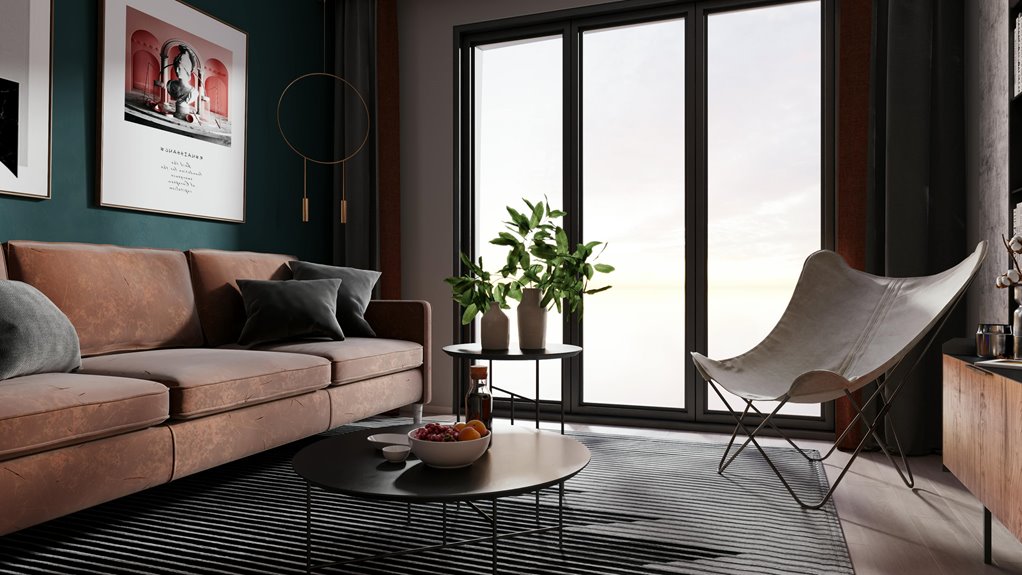
Enhance your centerpiece with complementary lighting and contrasting textures that draw attention. Layer warm lights around artwork or use varied materials like wood and metal for depth.
Apply the Two-Thirds Rule: fill two-thirds of surfaces while keeping your centerpiece area uncluttered. Plan all decor ideas and space planning around supporting this centerpiece.
When your centerpiece commands attention, your lounge becomes an inviting gathering space where everyone naturally wants to belong.
Define Conversation Zones Around It
Why settle for one gathering spot when you can create multiple intimate seating areas?
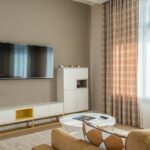
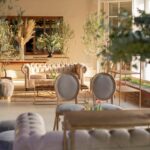
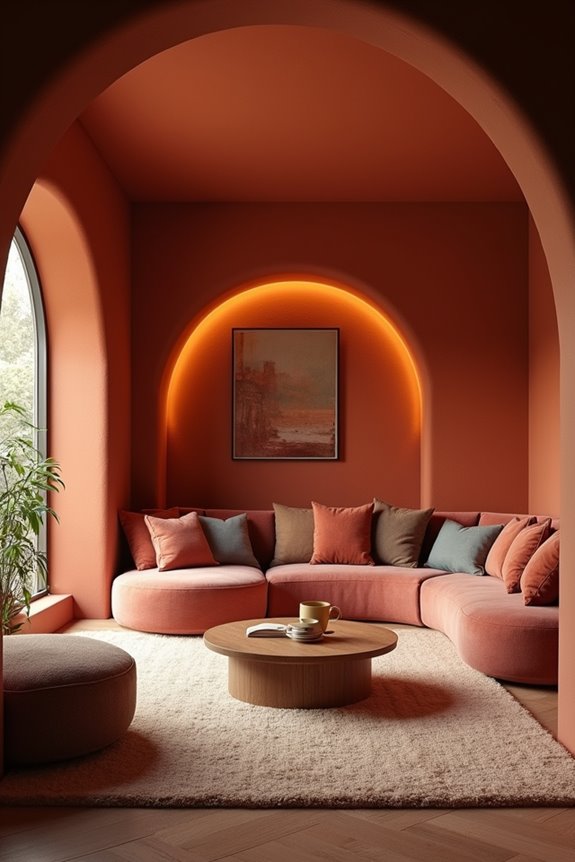
I’d recommend arranging seating groups around your focal point to establish distinct conversation zones in your living room. Position your main sofa facing the fireplace or TV, then add secondary seating like chairs or a loveseat to form an L-shaped or U-shaped seating arrangement that encourages interaction.
Layer area rugs beneath each seating group to visually define separate zones within your lounge decor. Use varied lighting—ambient, task, and accent—to support different activities and subtly delineate areas. A console table behind seating increases surface space without crowding.
Finally, keep walkways unobstructed to maintain clear traffic flow. Align your seating groups so guests circulate easily between conversation zones, making your living room feel welcoming and functional.
Select Statement Furniture to Anchor Each Zone
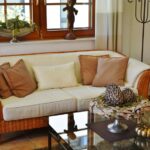
Once you’ve mapped out your conversation zones, anchor each one with a standout furniture piece that commands attention and defines the space. I recommend selecting a large sofa for your main living room zone, a contrasting loveseat for the secondary area, and a long bench for the third wall. These statement furniture pieces create visual interest while establishing clear boundaries.
| Furniture Type | Best Zone Position |
|---|---|
| Large Sofa | Primary Wall |
| Loveseat | Secondary Wall |
| Bench | Tertiary Wall |
| Round Table | Central Flow |
Matching your furniture’s scale to your room’s length prevents overcrowding. Each anchor piece should reflect your style while supporting the U-shaped layout.
This seating arrangement maintains room flow and creates an inviting environment where everyone feels included and connected to the space.
Layer Lighting and Rugs to Divide the Space

Layer Lighting and Rugs to Divide the Space
With your statement furniture in place, you’ll want to create distinct zones using lighting and rugs, two powerful tools that define space without building walls.
Layered Lighting Strategy
I recommend combining ambient, task, and accent lights throughout your open-plan lounge. This approach illuminates different seating zones while establishing visual hierarchy. Overhead fixtures provide general brightness, desk lamps support reading areas, and accent lighting highlights focal points.
Strategic Rug Placement
Rugs anchor seating zones and guide traffic flow naturally. A bold rug beneath your central coffee table grounds the conversation area effectively.
For larger spaces, I suggest pairing rugs of different sizes and textures to delineate separate lounges. Align rug edges with seating arrangements to enhance room proportions. This intentional placement prevents foot traffic from cutting through gathering spaces, creating comfortable zones within your lounge.
Leave One-Third Open for Movement (The Two-Thirds Rule)
How much floor space should your furniture actually occupy? I recommend the two-thirds rule for creating balanced lounge rooms.
Fill about two-thirds of your space with seating arrangements and decor. This leaves one-third open for movement and circulation. Your furniture layout directly impacts room flow and comfort.
Position major seating to anchor two-thirds of your floor space. Keep pathways clear between your sofa, chairs, and other pieces. This arrangement supports conversation zones while maintaining easy movement.
Open space prevents your lounge from feeling cramped or cluttered. It creates breathing room that makes the space feel larger.
Regular reassessment helps your furniture layout evolve with your needs.
The two-thirds rule guides every design decision you’ll make. It balances aesthetics with functionality, making your lounge into an inviting sanctuary.