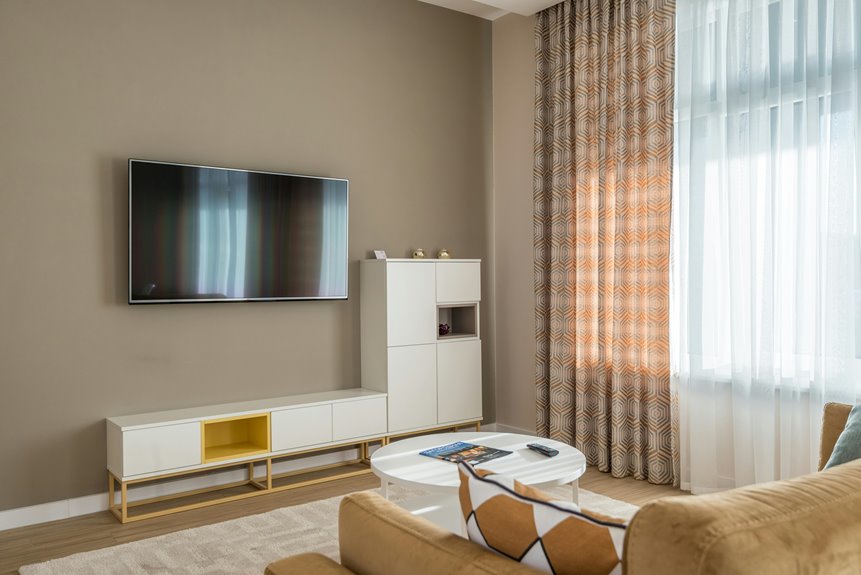
Your living room curtains are the window to your home’s true style. Right now, you’re likely working with basic window treatments that don’t match your vision. But what if you could change that space with seven proven curtain ideas?
Each approach, from layered sheers to floor-to-ceiling drapes, offers a specific way to control light, add height, and enhance your room’s sophistication. Let’s explore how.
Blur Transitions With Sheer Layers in Open-Plan Living Rooms

How can you visually separate different zones in an open-plan living room without blocking natural light?
Light-filtering sheer curtains create distinct boundaries while preserving brightness. I recommend layering curtains strategically to define spaces without visual heaviness. Install Ripple Fold Drapery on track systems for smooth operation and maximum flexibility.
Light-filtering sheers with Ripple Fold Drapery create distinct zones while preserving natural brightness and visual flexibility.
Choose neutral tones such as whites, soft grays, or warm beiges that complement both indoor furnishings and outdoor views. These colors maintain consistency throughout your open-plan living rooms while enhancing the indoor-outdoor transition.
Consider subtle textures or patterns on your sheers for added depth. This approach provides light and privacy simultaneously, creating distinct zones that feel connected rather than divided.
Add Drama and Height With Floor-To-Ceiling Drapery
When you’re ready to enhance your living room’s visual impact, floor-to-ceiling drapery delivers immediate drama and sophistication.
Installation Essentials
I recommend installing your ceiling-height rod at the actual ceiling line. This positioning draws the eye upward and maximizes perceived height throughout your space. Hang curtains 2–3 inches longer than your window height for a luxurious hang that feels polished and deliberate.
Material Selection
Choose heavy fabrics like velvet or thick linen to enhance the dramatic look. These materials drape beautifully and complement high ceilings while adding texture and depth.
Maximizing Light and Design
Extend drapery beyond the window frame on both sides. This strategy maximizes natural light during daytime hours and emphasizes your room’s architectural lines.
Floor-to-ceiling curtains work smoothly with minimalist and ornate decor, offering a high-end finish that enhances your living room.
Soften Glass Walls With Warm Linen and Tailored Pleats
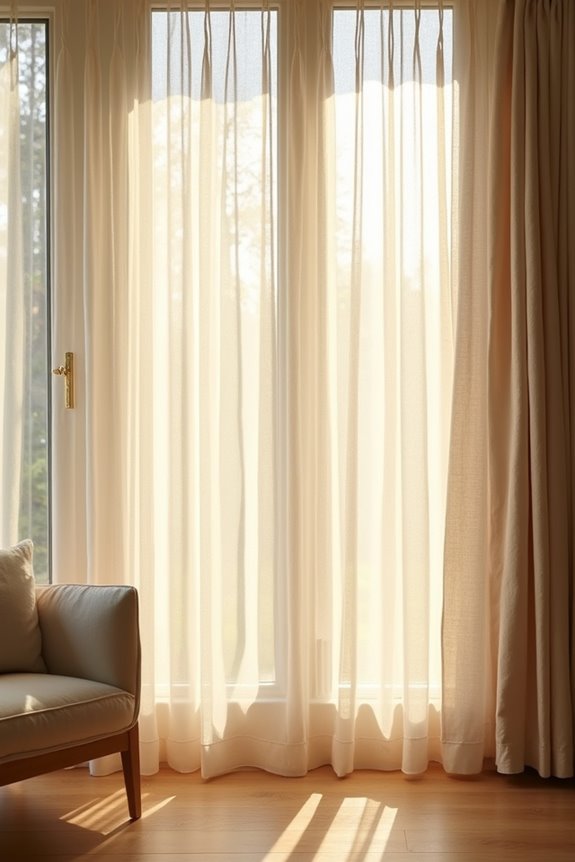
Glass walls present a unique design challenge; they’re beautiful but can feel cold and austere without the right treatment. I’ve found that tailored pleat drapery in warm linen works beautifully in these spaces.
Here’s my approach: Start with a base ripple fold or tailored pleat layer in natural warm beige linen. This creates structure while enhancing vertical lines. The linen’s subtle texture adds presence without overwhelming glass surfaces.
Next, I layer a sheer inner panel in desert hues. This combination provides adjustable light control while maintaining fabric weight and visual interest.
Why this works: Linen’s tactile quality softens the rigidity of glass walls. The warm tones complement wood elements in your room. Together, these layers balance functionality with comfort, creating a cohesive, inviting living space that feels both polished and approachable.
Elevate Your Style With Luxury Trims and Natural Fabrics
Once you’ve established your curtain foundation, adding luxury trims changes ordinary panels into designer-quality focal points. I recommend pairing natural fabrics like linen with curated accents for an opulent living room aesthetic. These textured fabrics create authentic warmth while weighted pleats add structure and sophistication.
| Natural Fabric | Trim Style | Best For |
|---|---|---|
| Linen | Silk ribbon | Traditional spaces |
| Wool | Beaded edge | Formal rooms |
| Flax | Decorative fringe | Arch-friendly designs |
Tailored finishes improve your entire space. Natural color combinations with delicate trims establish a refined ambiance.
When linen curtains frame architectural arches, they showcase your home’s best features while maintaining luxury appeal. This approach creates spaces where you’ll feel both comfortable and inspired.
Ground Your Space With Dark Olive-Grey Weaves
Dark olive-grey weaves offer a sophisticated alternative to the luxury trims we’ve explored. I recommend building your natural-inspired scheme around these grounded tones for tranquility and depth.
Dark olive-grey weaves offer sophisticated depth and tranquility, grounding your natural-inspired interior design scheme beautifully.
To achieve this look, consider:
- Lisbon Woven in Agave fabric – This woven fabric delivers rich texture and visual interest in the olive-grey family
- Linen-blend construction – The blend adds richness and hand-feel, enhancing your window treatment’s tactile quality
- Ripple fold drapery style – This pleat introduces soft movement while maintaining the palette’s serene character
Pair your dark olive-grey curtains with wood accents, woven decor, and greenery. These natural elements reinforce consistency throughout your space. The combination creates a grounded living room that feels both elegant and inviting, establishing the calm sanctuary you deserve.
Simplify With Monochromatic Ripple Fold Drapery
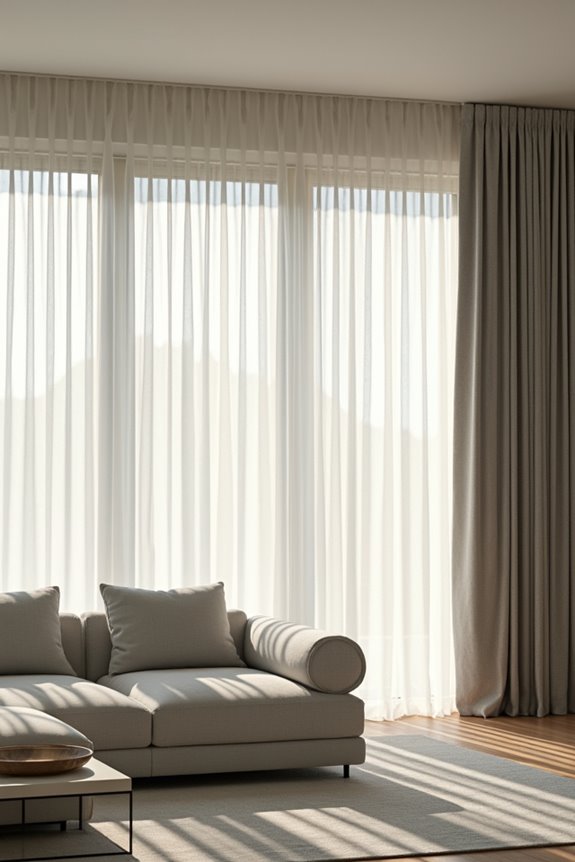
I’ll walk you through how monochromatic ripple fold drapery can simplify your living room while creating visual interest. By layering different shades and textures within a single color family, you’ll build depth that keeps the space feeling polished and deliberate.
The crisp vertical lines of ripple fold design enhance this minimalist approach, making your room feel taller and more unified than ever before.
Monochrome Color Strategy
Subtlety and restraint create a living room when you commit to a monochromatic color palette. This strategy uses variations of a single color to expand perceived space and create visual harmony throughout your room.
Here’s how to build your monochrome scheme:
- Select your base color – Choose Ripple Fold Drapery in Ivory or Mirador in Ivory as your foundation for floor-to-ceiling applications.
- Layer with texture – Combine soft neutral bases with light-filtering layers that vary in fabric weight and sheen, maintaining tonal harmony without introducing new colors.
- Install quality hardware – Use proper hardware tracks to keep smooth operation and a polished appearance across wide windows.
The crisp vertical lines of Ripple Fold Drapery enhance height while keeping your space streamlined and cohesive.
Ripple Fold Visual Impact
How can vertical pleats give your living room a sophisticated, spacious feel?
Ripple fold drapery creates crisp vertical lines that draw the eye upward, emphasizing height and modern elegance. When you choose monochromatic ripple folds, you establish a unified appearance that enhances the sense of space, particularly in rooms with lower ceilings. This modern drapery style pairs seamlessly with curtain hardware tracks or traditional rods, ensuring smooth, uniform movement across wide windows.
Your living room curtains gain dimensional depth through layering potential in monochrome setups. Shadow and texture variations emerge without pattern clashes disrupting visual harmony. Floor-to-ceiling curtains amplify this effect dramatically.
For materials, linen drapes in natural tones preserve your soft, understated aesthetic while adding sophistication. This approach creates an inviting sanctuary reflecting contemporary design principles and personal refinement.
Layering For Subtle Depth
When you’re ready to add dimension to your living room without disrupting visual calm, monochromatic layering makes your window treatment a sophisticated design feature. I recommend building depth through strategic fabric combinations that work together seamlessly.
Consider these three layering approaches:
- Base and Shade Pairing – Start with Ripple Fold Drapery in natural linen, then add an inner shade in a matching warm tone like Sahara Stripe for a unified monochrome look.
- Light Control Addition – Introduce Solar Shades in a complementary neutral to manage brightness while maintaining your color scheme’s integrity.
- Texture Enhancement – Layer fabrics with varying weaves to create visual interest through tactile differences rather than color contrast.
This approach delivers the crisp vertical lines you want while establishing sophisticated depth that improves your entire space.
Layer Drapery, Shades, and Sheers for Complete Light and Privacy Control
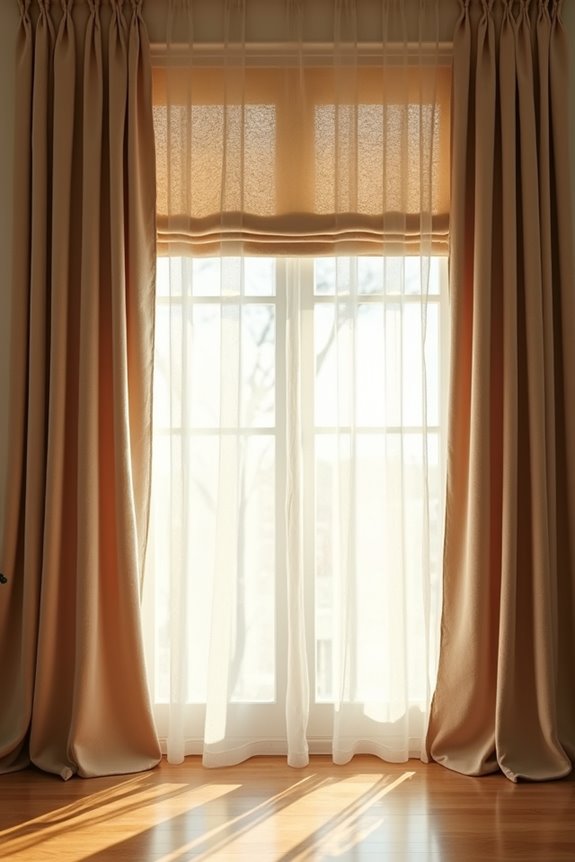
When you layer drapery, shades, and sheers together, you’ll build a functional system that handles light, privacy, and style all at once. I’m guiding you through three key strategies: creating practical layering systems with double rods, balancing your room’s brightness and seclusion needs, and coordinating colors and textures that work together.
Let’s explore how these elements improve your living room into a space you’ll love.
Build Functional Layering Systems
Why settle for a single curtain solution when layered window treatments deliver superior light control, privacy, and visual depth?
I’ll guide you through building functional layering systems that work together seamlessly. Start with these three essential components:
- Outer drapes in warm neutrals like beige or taupe using Ripple Fold or Tailored Pleat styles
- Sheer panels positioned on a double curtain rod for daytime light diffusion without full exposure
- Inner shades such as Solar or Roman Shades, ideally motorized for convenient adjustment
Install treatments at matching widths to prevent visible gaps when closed. Coordinate your color temperatures by pairing warm drapes with off-white sheers and similarly-toned shades. This maintains consistent light quality throughout your space and creates a professional appearance.
Balance Light and Privacy Needs
How do you achieve perfect light control throughout your day without sacrificing privacy? Layered drapery gives you flexible options that work together seamlessly.
Start with light-filtering sheers as your foundation. They soften incoming daylight while maintaining daytime privacy. Add blackout panels or heavier drapes behind them for complete darkness and privacy when needed.
Consider motorized shades within your layered system for quick adjustments. Cascade Roman shades work particularly well, letting you switch between filtered light and full coverage instantly.
Choose fabrics with varying opacity levels. Semi-sheer drapes bridge your sheers and blackout panels, providing mid-range light control.
Make sure tone coordination exists across all layers. Your outer drapes should fully cover inner shades when closed, maximizing both privacy and light control simultaneously throughout your space.
Coordinate Colors and Textures
Layered curtain systems let you combine different fabrics and finishes into one unified look. I recommend using two-layer curtains to balance bright daylight with privacy while maintaining color harmony throughout your space.
Start with a neutral palette of beige or off-white as your base tone. This foundation lets you introduce texture contrast and coordinated patterns without overwhelming the room.
Consider these layering strategies:
- Pair sheer inner layers with heavier outer drapes in complementary neutral shades
- Use floor-to-ceiling curtains with subtle textures like Harbor Stripe to emphasize height
- Select matching hardware finishes in matte black or brass across all layers
Coordinating your fabrics creates visual depth and sophistication. When you align your drapery colors with adjacent walls and furniture, you establish a carefully planned design that makes your living room feel refined and welcoming.