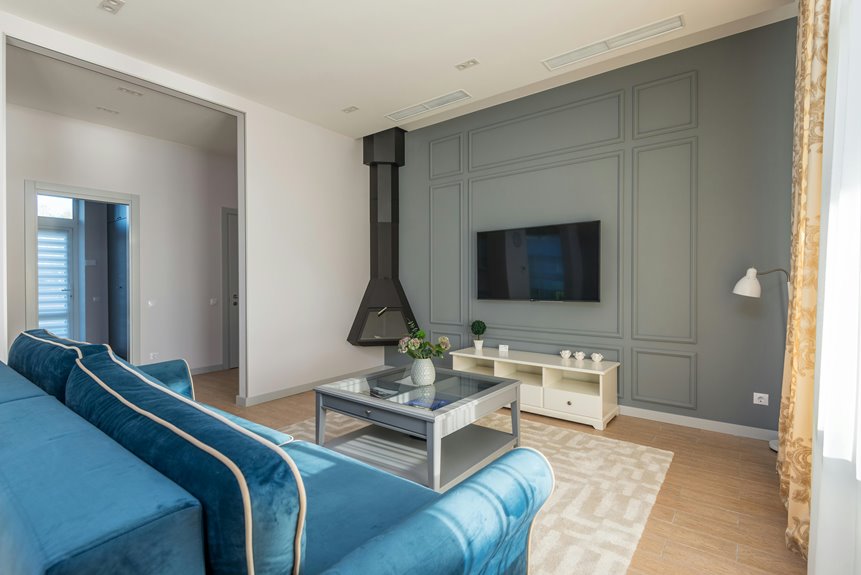
Your TV wall deserves the same design attention you’d give a gallery opening. Right now, it’s probably just a screen mounted on drywall, functional but forgettable.
What if you redesigned it into something that actually reflects your style and anchors your entire living room? The ten strategies ahead will show you exactly how to do that.
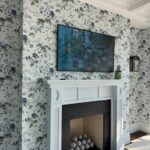
Surround Your TV Wall With Gallery-Style Artwork
Why settle for a TV wall that feels bare and one-dimensional? Create a gallery wall that achieves true focal balance. Arrange a large XL artwork above the TV, flanking it with smaller framed pieces on either side.
This gallery wall approach shifts attention from the screen itself to the curated composition. Select artwork that echoes your room’s existing color palette, allowing the TV to recede rather than dominate. Consistent framing styles, matching mat widths and frame finishes, unify disparate pieces into harmonious artwork.
Align frame tops with your TV or cabinetry edges for visual cohesion. Leave strategic negative space around the display so your gallery reads as one unified composition rather than merely decorating around electronics. This method creates belonging through thoughtful, deliberate design choices.
Create a Built-In Media Wall With Shelving and Storage
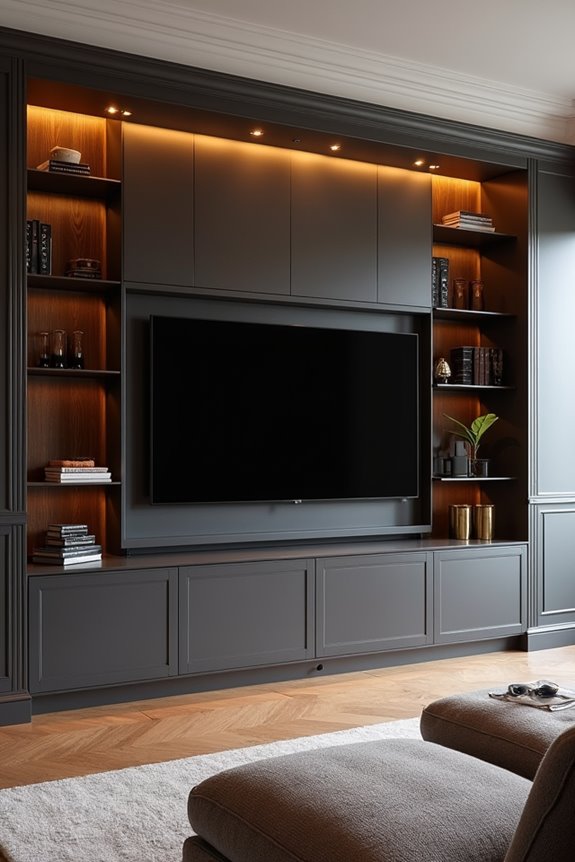
A built-in media wall creates a cohesive furniture system rather than a standalone screen. You’ll achieve visual harmony by running continuous joinery behind the screen, framing it with open shelves and low cupboards that work together smoothly.
| Design Element | Purpose |
|---|---|
| Open Shelving | Display decorative items and books |
| Closed Cabinets | Conceal cables and electronics |
| Ventilation Grilles | Prevent heat buildup |
Mix closed storage with open shelving to hide unsightly wires while showcasing meaningful pieces. Plan adequate spacing between shelves for proper ventilation and heat dissipation.
Choose colors and finishes that complement your wall, creating a balanced, integrated look. This approach reduces your TV’s visual dominance while providing organized storage that reflects your style and values.
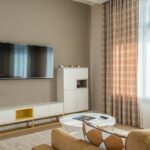
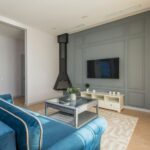
Paint an Accent Wall Behind Your TV
While a built-in media wall provides excellent storage and organization, painting an accent wall offers a simpler way to frame your screen and reshape your room’s focal point.
Painting an accent wall offers a simpler alternative to built-in media, elegantly framing your screen and reshaping your room’s focal point.
Choose a contrasting color that complements your décor without creating glare. Deep navy, matte black, or warm taupe work exceptionally well. These shades add depth and establish visual balance between your TV and surrounding elements.
Align your accent wall with architectural features like mantels or shelves for a unified gallery-style appearance. Two-tone designs or symmetrical alcoves further reduce the screen’s visual dominance.
Consider adding bias lighting behind or along the edges of your TV. This enhancement improves contrast perception and reduces eye strain during viewing.
A painted backdrop gives your entertainment space a polished, purposeful quality that shows your design preferences.
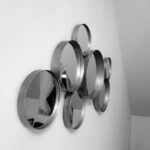
Hide Your TV Behind a Decorative Mirror or Shutter Panel

When your TV sits dark and silent, wouldn’t it be better if that blank screen disappeared from view? A decorative mirror or shutter panel offers elegant TV concealment that creates a more cohesive look in your space.
Mirror Benefits
A frameless mirror positioned above your sideboard creates dual-purpose design. It reflects light throughout your room, enhancing perceived space while hiding your screen completely. Choose subtle framing to maintain cohesiveness with your existing décor.
Installation Essentials
Secure your TV behind the mirror using adjustable back straps or security features. This ensures stability and safety.
Position the mirror carefully to integrate seamlessly with furniture placement.
Design Integration
You’ll preserve elegance by turning the screen area into a functional design element rather than a visual focal point. This approach combines practicality with sophisticated aesthetics, helping you create the refined living room you deserve.
Tuck Your TV Into an Architectural Alcove
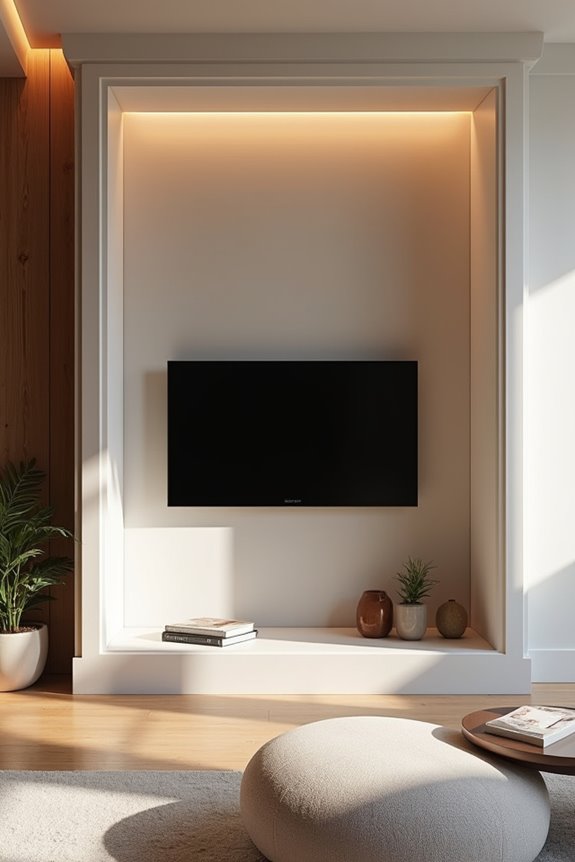
If you’ve got an existing alcove or chimney breast, you have a perfect opportunity to create a sophisticated TV display. I’d recommend using this architectural feature to maximize storage while keeping your screen perfectly centered and flush with the wall.
You’ll achieve a clean, purposeful look that balances your TV with decorative items and functional shelving around it.
Maximizing Architectural Features
One of the smartest ways to integrate your TV into your living room is by tucking it into an architectural alcove, a recessed wall section that naturally frames your screen.
This approach makes your space feel more intentional. You’re creating a built-in joinery that makes your recessed TV appear purposeful and architectural rather than simply mounted on drywall.
Consider these design elements:
- Floor-to-ceiling plaster framing or cabinetry that surrounds your screen with continuous lines
- Adjacent shelving and cupboards on both sides for balanced storage and display
- Layered lighting around the frame and sound-absorbing panels within the joinery
A recessed TV minimizes wall depth while reducing glare and improving viewing angles. Your screen becomes part of your home’s architecture, not an afterthought. This integrated approach creates the polished, unified living room you’ve envisioned.
Storage And Visual Balance
How do you turn a simple TV alcove into a unified focal point that feels well-planned and organized?
I’d start by building a complete storage unit around your TV. A built-in alcove houses the screen in a central compartment while shelves above display décor. This approach creates visual balance and makes your TV feel like part of the design rather than a separate screen.
Paint surrounding storage in a unifying color like Boringdon Green. This technique helps everything read as one unified unit. Built-in cupboards and staggered shelving work well with sloping walls, maximizing vertical storage without emphasizing the screen’s dominance.
| Feature | Benefit | Consideration |
|---|---|---|
| Central TV compartment | Creates focal point | Allow proper ventilation |
| Matching paint color | Visual unity | Choose complementary shade |
| Staggered shelving | Maximizes space | Accommodates awkward walls |
| Standard dimensions | Balanced proportions | 65″ TV needs 57″ opening |
Back Your TV Wall With Warm Wood Paneling
Why settle for bare drywall when you can create a rich, textured backdrop that anchors your entire entertainment space?
Dark wood paneling creates a sophisticated focal point for your TV wall. I’ve found that this approach delivers both aesthetic and functional benefits. The material absorbs sound effectively, improving acoustics and reducing echo in your room. You’ll appreciate how it conceals cables and tech equipment seamlessly.
Installation options suit different preferences:
- Full wall coverage for maximum impact and warmth
- Layered application over existing walls for added texture
- Varied stain finishes matching your décor style
Wood paneling pairs beautifully with warm-toned furniture, creating a cohesive entertainment backdrop. Whether you’re building your dream space or refining your current setup, this design choice delivers lasting character and practical advantages that improve your living room’s functionality and appeal.
Frame Your Screen With Floating Shelves and Mixed Heights
I can create a sophisticated viewing area by framing your screen with floating shelves at varying heights that add visual interest. You’ll layer shelves strategically above and below the TV, using asymmetrical placement to achieve gallery-style balance without cluttering your central viewing area.
This approach lets you display books, plants, and decor while maintaining clean sight lines and a thoughtful design that enhances your living room’s style.
Creating Visual Balance
While a TV can dominate your living room wall, floating shelves at varying heights frame the screen beautifully and restore visual balance. I recommend distributing three to five decorative elements asymmetrically across your shelves to achieve equilibrium without clutter.
Consider these styling options:
- Books and vases in complementary colors that echo your room’s palette
- Small framed art positioned at different levels to draw the eye upward
- Sculptural objects that add dimension and interest to your TV wall design
The key to visual balance is intentional spacing. Place your longest shelf below the TV and shorter ones above at staggered heights. This arrangement creates a unified frame around your screen while maintaining the floating shelves’ clean aesthetic.
Your thoughtfully curated display turns a simple TV wall into a gallery-like focal point.
Layering Shelves Strategically
Strategic shelf layering goes beyond simple balance; it creates depth and visual interest that frames your screen like museum-quality display. I recommend arranging floating shelves in odd numbers (three or five) at varying depths and heights around your wall-mounted TV.
This approach makes your space feel carefully curated. Position shelves at different levels to draw your eye outward from the screen without overwhelming it. Place books, art pieces, and decorative objects strategically across shelves to achieve dynamic visual rhythm.
Align your shelf lines with existing architectural features such as mantels, windows, or wall panels for cohesive integration. Don’t overlook cable management. You’ll want hidden space behind or between shelves for wires, maintaining easy device access while keeping everything organized and intentional.
Styling With Intentional Spacing
How can you create a TV wall into a gallery-like focal point? Strategic intentional spacing around floating shelves creates visual rhythm while keeping your screen as the primary anchor. I recommend staggering shelf heights at 8–12 inch intervals, which naturally guides your eye toward the TV without distraction.
Consider these styling approaches:
- Odd-numbered groupings: Arrange three or five items per shelf: art books, small plants, framed photos. This creates balanced visual interest.
- Varying shelf depths: Mix 10-inch and 12-inch depths to add architectural dimension and prevent monotony.
- Lower anchors: Place wider shelves or low cabinets beneath the TV to ground the entire composition.
This layered approach creates a curated display that celebrates your screen while reflecting your personal style.
Choose the Right Paint Color to Complement Your TV

Your wall’s paint color sets the tone for how your TV appears in the room. It’s the foundation of your entire viewing experience. I recommend considering three strategic approaches.
1. Neutral Foundation
Light gray to charcoal tones create a distraction-free backdrop that pairs with any décor style. These paint colors reduce glare and eye fatigue, allowing your screen to command attention without competing elements.
2. Bold Contrast
A vibrant accent wall establishes your TV as a deliberate design feature. Balance this contrast carefully with surrounding furniture to prevent visual overwhelm.
3. Finish Matters
Matte finishes minimize reflections from lighting, improving perceived contrast markedly. This glare reduction enhances your viewing comfort substantially.
Two-tone walls or painted alcoves add visual depth and integration. Choose your paint color strategically to create a unified, functional viewing environment that works for your needs.
Recess Your TV for a Seamless, Integrated Look
When you recess your TV into the wall, you’re using shadow framing and strategic architecture to make the screen feel like a natural part of your room’s design. I’d recommend pairing the recessed setup with floor-to-ceiling joinery that draws your eye upward while providing hidden storage, creating a unified look that blends seamlessly with surrounding cabinetry.
This integrated approach makes your TV an architectural element rather than a standalone focal point, enhancing your entire wall system.
Shadow Framing Architecture
If you’re ready to make your TV disappear into your wall, shadow framing architecture offers a sophisticated solution. This recessed wall design creates a built-in TV cavity that reads as intentional architecture rather than an afterthought.
Here’s what makes this approach compelling:
- Plaster framing around the cutout draws focus to architectural depth with clean, hidden trim edges
- In-wall cable management routes all connections behind the wall for a clutter-free appearance
- Optional backlighting emphasizes the recess without creating screen glare during viewing
The recessed wall cavity typically requires 2–4 inches of depth beyond standard framing to accommodate your TV and ventilation needs. You’ll also need a recessed power and AV box installed within the wall cavity.
This integrated approach creates a living room where technology works with your design choices rather than against them.
Built-In Visual Integration
A recessed TV makes the wall unified architecture rather than a display surface. You’ll create visual harmony by embedding your screen within the wall plane, making it feel like a purposeful design choice rather than an afterthought.
Built-in cabinetry surrounding your recessed TV provides practical storage while maintaining seamless integration. Floor-to-ceiling options anchor the entire wall system, giving your space a custom, deliberate appearance.
In-wall cable management keeps power and HDMI connections hidden behind the screen. This eliminates visible clutter and reinforces the clean aesthetic you’re building.
Indirect LED bias lighting around the recess adds depth and sophistication. The soft glow draws attention away from the screen itself, further emphasizing architectural integration.
Deep recesses also reduce ambient noise reflection, contributing to a quieter, more refined living environment. Your room becomes unified rather than a space organized around entertainment.
Add Bold Color and Lighting to Make Your TV Wall a Focal Point
Why settle for a plain backdrop when your TV wall can command attention? I’ve found that bold color and thoughtful lighting create a space you’ll genuinely enjoy.
A saturated paint color or wallpaper creates instant visual interest. I recommend pairing it with layered lighting, such as wall sconces and dimmable LEDs, to add depth. RGB backlighting behind your screen offers a configurable halo that shifts the room’s mood.
Here’s how to keep it balanced:
- Choose one dominant bold color on the wall
- Install neutral furniture to prevent visual overwhelm
- Add minimal clutter around the focal point
Consider a two-tone approach: a darker shade frames the TV while lighter walls maintain architectural balance. This strategy emphasizes your display without dominating the entire room.
Your TV wall becomes a designed focal point, not just a screen placement.