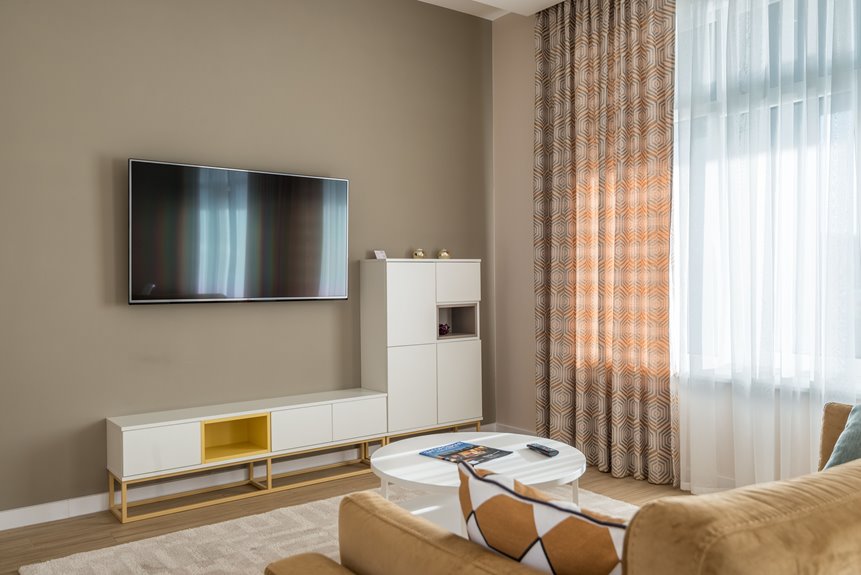
Your living room’s focal point deserves thoughtful consideration. I’m going to show you how to choose an entertainment center that actually works for your space, whether you’re working with tight corners, blank walls, or something in between.
The right setup combines smart storage, clean aesthetics, and practical functionality. We’ll explore built-in units, floating stands, and corner solutions that improve how you use your room. But first, you need to understand which structure fits your lifestyle.
Choose Your Structure: Built-In, Floating, or Corner
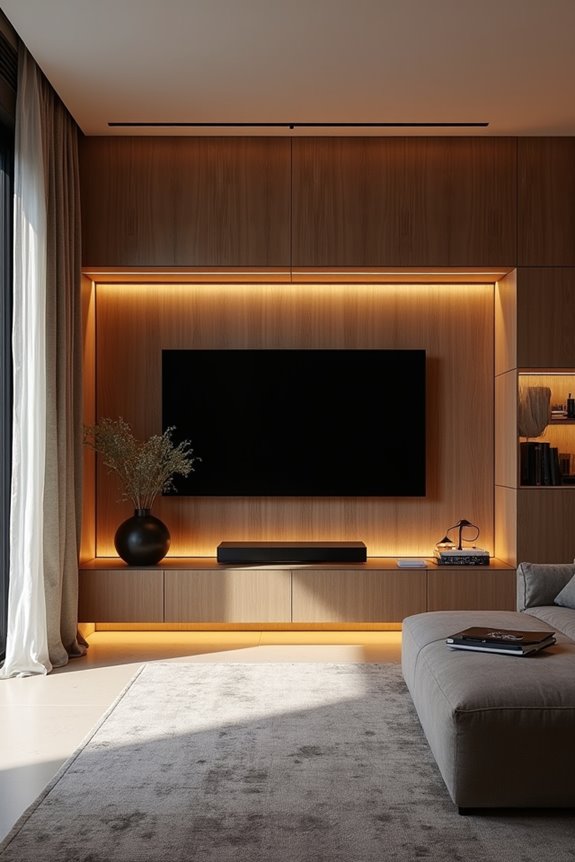
How do you want your entertainment center to look and function in your living room?
Built-In Systems
Built-in wall units extend from floor to ceiling, maximizing your storage while creating a seamless architectural focal point. They hide wires effectively and establish a polished, permanent presence in your space.
Floating Designs
Floating shelves and wall-mounted consoles maintain an airy, lightweight appearance. These slim structures offer excellent cable management solutions while keeping your room feeling open and spacious.
Corner Solutions
Corner entertainment centers optimize underutilized angles, fitting perfectly into angled configurations. They free up your main walls for artwork or pathways, making your layout more functional.
Making Your Choice
Each structure combines with integrated lighting, ventilation planning, and robust power management for future-proofing. Consider your storage needs, aesthetic preferences, and available wall space when selecting your ideal configuration.
Decide on Your Aesthetic: Five Signature Styles
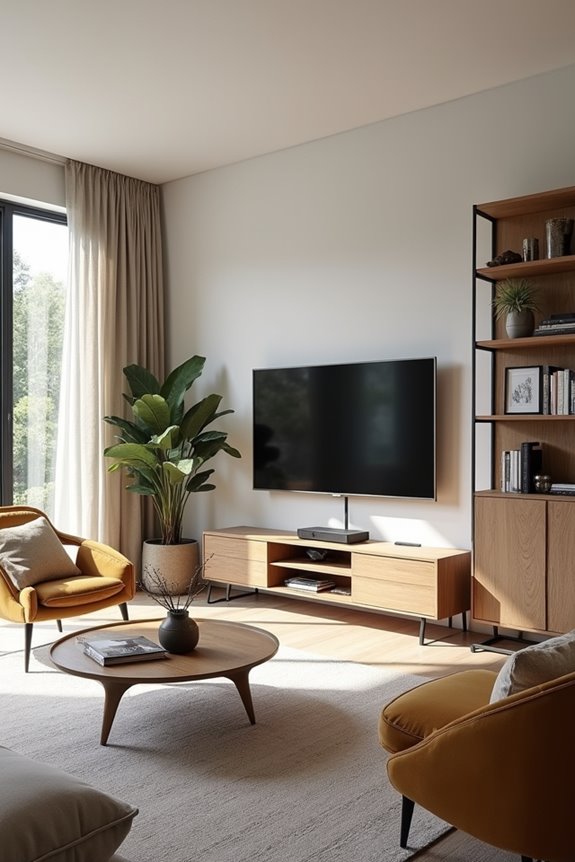
Your entertainment center’s visual impact depends on the aesthetic you choose. I’ll walk you through three compelling styles: Modern Minimalist, Industrial and Rustic, and Mid-Century Farmhouse.
You can then identify which one aligns with your living room’s existing design and your personal preferences.
Modern Minimalist Design Elements
Where does a truly uncluttered entertainment space begin? It starts with intentional choices that prioritize clean lines and purposeful design. I’d recommend embracing minimalist design through wall-mounted consoles that reduce floor clutter and create an airy feel. Hidden storage compartments keep devices organized while maintaining seamless surfaces.
Integrated cable management systems eliminate visible wires, supporting your handle-free facade aesthetic. Choose a restrained material palette; think neutral tones and monochrome finishes to highlight your display area effectively.
Modular components offer flexibility as your technology evolves. Adjustable shelving lets you reconfigure spaces without major redesigns. This approach creates a living room that feels organized and serene, reflecting your commitment to purposeful design and sophisticated style.
Industrial And Rustic Aesthetics
If you’re drawn to bold, architectural spaces, industrial design creates a striking focal point for your entertainment center. I’d combine black iron pipes with reclaimed wood shelves to create authentic character.
This style emphasizes exposed construction and visible hardware, giving your setup a genuinely crafted appearance. You’ll appreciate how DIY customization lets you tailor dimensions to your exact wall space.
Balance the rugged aesthetic by layering softer textures, such as throw pillows or upholstered seating nearby. This prevents your industrial entertainment center from feeling cold or overwhelming.
Prioritize cable management to keep wires hidden behind shelves or within pipe channels. Secure all connections with pipe sealant and apply proper wood sealing for durability.
Ready-made options exist through retailers, though custom builds deliver a truly unique industrial rustic piece.
Mid-Century And Farmhouse Styles
How do you choose between styles that feel both timeless and distinctly different?
Mid-century and farmhouse aesthetics offer contrasting yet complementary approaches to entertainment centers. Mid-century designs feature clean lines, tapered legs, and walnut or teak tones, creating sculptural storage with minimal clutter. Farmhouse units showcase weathered finishes, reclaimed wood, and visible hardware for warmth and tradition.
Consider blending both approaches for versatile appeal:
- Natural wood tones anchor authenticity in either style
- Open shelving displays media while maintaining gallery-like organization
- Hardware choices define character; metal accents signal farmhouse, smooth surfaces suggest mid-century
- Storage media combines concealed and visible options
- Tapered legs versus wide uprights shape your room’s visual flow
Align wood tones and metal finishes with existing room elements. This hybrid strategy balances minimalism with warmth, establishing a timeless entertainment center that reflects your aesthetic preferences.
Built-In Wall Units: Maximum Storage and Seamless Integration
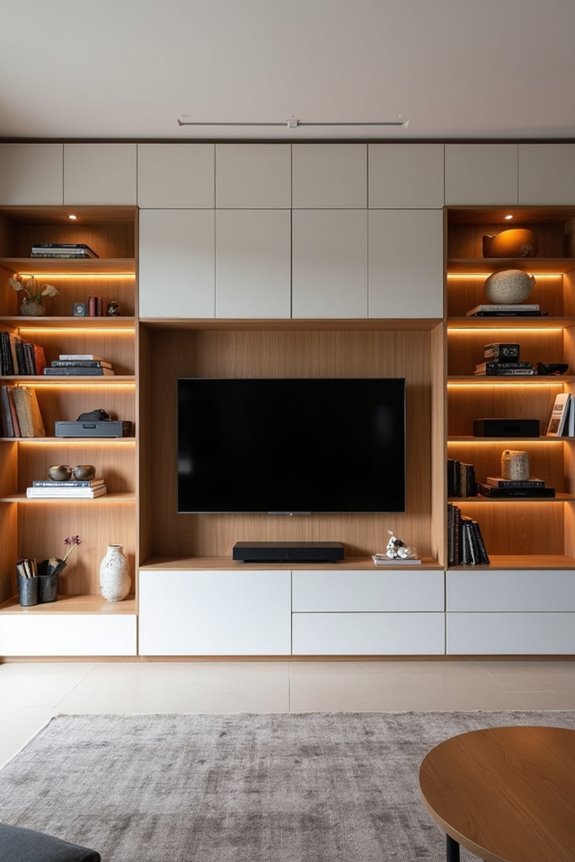
Built-in wall units work well in your living room by combining storage, display, and technology into one unified architectural feature. These floor-to-ceiling installations maximize your space while creating a thoughtful, polished aesthetic that defines the room.
I recommend integrating media storage and concealed panels that hide electronics while keeping components accessible. Recessed lighting and hidden cable management systems keep your setup organized and visually clean. Consider adding built-in niches for displaying artwork or hosting your TV.
Designers like Clive Christian offer fully custom millwork, while California Closets provides semi-custom solutions fitting various budgets. Both approaches deliver future-proof configurations adapting to your changing needs.
Built-in wall units improve your living room’s functionality and style simultaneously. You’re investing in seamless integration that balances storage capacity with architectural interest.
Floating Stands: Modern Appeal Without Visual Weight
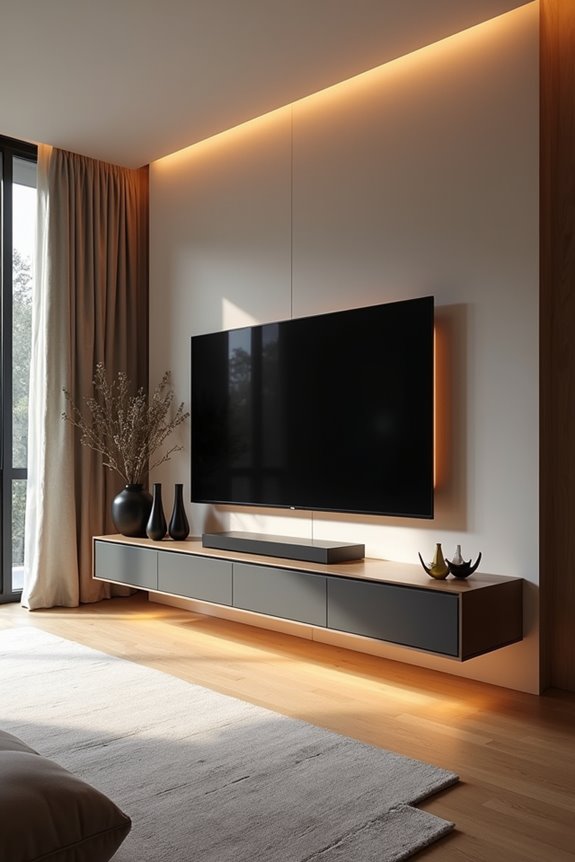
When you’re ready to redesign your living room with floating stands, you’ll want to master three essential elements that make them work beautifully. First, I’ll show you how to achieve that coveted airy aesthetic while maximizing your floor space. Then we’ll tackle the practical side: managing cables invisibly and keeping your installation safely supporting your TV’s weight.
Airy Aesthetic and Space Optimization
Why does a floating TV stand change how a room feels? When you elevate your screen and console off the floor, you’re creating visual breathing room that makes your space feel larger and more open.
A wall-mounted console paired with open shelving delivers multiple benefits:
- Keeps floor space visible, enhancing the airy aesthetic throughout your room
- Combines closed storage with display surfaces for balanced organization
- Enables strategic cable management to hide wires completely
- Allows flexible styling of books, decor, and smaller devices
- Reduces visual weight while maintaining functional storage
This approach aligns with minimalist design principles. Your floating TV stand becomes an anchor point without dominating the space. Precise mounting and meticulous cable management are critical for safety and maintaining that clean, uncluttered appearance you’re seeking.
The result is an entertainment center that feels well-considered and welcoming.
Cable Management and Clean Lines
The floating stand’s visual appeal hinges on one often-overlooked detail: how you handle the cables behind it. I’ve found that routing wires along back panels or within built-in channels creates a contemporary design that looks polished rather than cluttered. This cable management approach is essential for achieving clean lines that define modern entertainment centers.
Wall-mounted systems with integrated cable concealment options let you run power cords and HDMI cables discreetly. Consider channels that match your wall color for seamless integration. Securing cables every twelve inches prevents sagging and maintains that airy aesthetic you’re after.
The floating configuration already frees your floor space, so don’t undermine that achievement with visible wiring. Strategic cable routing reinforces your commitment to intentional, sophisticated design that reflects your standards.
Weight Capacity and Installation Precision
How much weight can your floating stand actually hold? This question matters more than you’d think when choosing your wall-mounted console.
Your floating TV stand must support your television safely and securely. Here’s what you need to know:
- Verify weight capacity ratings before purchasing any floating unit
- Match TV weight to manufacturer specifications exactly
- Use heavy-duty wall anchors rated for your TV’s mass
- Install at precise level alignment to prevent tilting
- Check cable management channels accommodate all connections
Installation precision isn’t negotiable. I recommend hiring professionals if you’re uncertain about wall construction. They’ll ensure your wall-mounted console stays firmly secured for years.
Proper cable management within your floating stand keeps wires hidden while maintaining structural integrity. This combination creates the modern, clean aesthetic you’re seeking while building confidence in your entertainment setup.
Corner Centers: Maximize Awkward Spaces
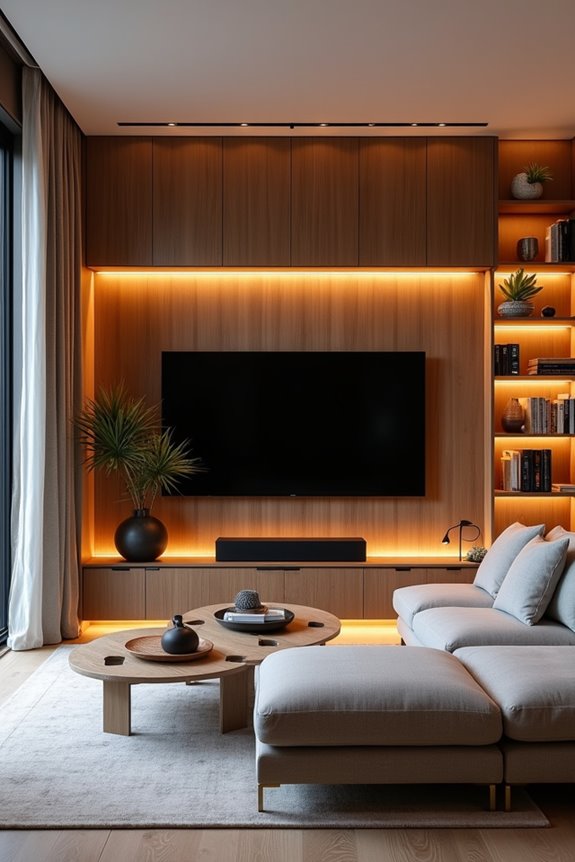
Often, corner spaces in your living room sit empty or feel awkward, but they’re actually prime real estate for entertainment centers. Corner units deliver exceptional space optimization by tucking storage and displays into underutilized geometry. L-shaped layouts align naturally with seating while keeping main walls open for artwork and traffic flow.
You’ll find ready-made corner entertainment centers from Ashley Furniture and Riverside Furniture, or commission custom builds for exact dimensions. Angled and diagonal placements create visual impact without bulk, making rooms feel larger.
Successful corner centers require three considerations: measure non-90-degree angles accurately, use lighter color palettes to maintain openness, and install strategic lighting to eliminate shadows. This approach turns awkward spaces into functional, attractive focal points that enhance your room’s overall design and usability.
Industrial Pipe and Wood: Raw Materials and Bold Design
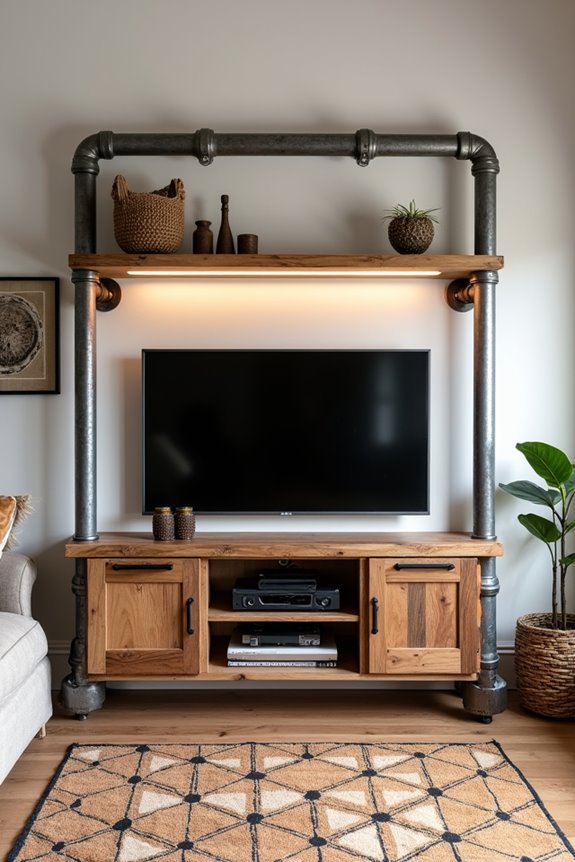
Why settle for ordinary when you can build an entertainment center that showcases authentic industrial style?
Industrial pipe and wood entertainment centers merge rugged black iron with reclaimed wood shelves. This combination creates striking focal points in lofts and bold spaces. You’ll appreciate how exposed materials balance raw aesthetics with warmth.
Key advantages of this custom build approach:
- Control over dimensions to fit your specific wall layout
- Secure pipe-thread connections with sealant for stability
- Thorough wood sanding and sealing for durability
- Adjustable feet to level on uneven floors
- One-of-a-kind storage and display integration
DIY customization lets you tailor finishes to match your vision. Whether you purchase ready-made options from retailers or construct a custom piece, this style delivers authenticity. Your entertainment center becomes both functional storage and a clear expression of your design sensibility.
Mid-Century Modern: Timeless Lines and Natural Finishes
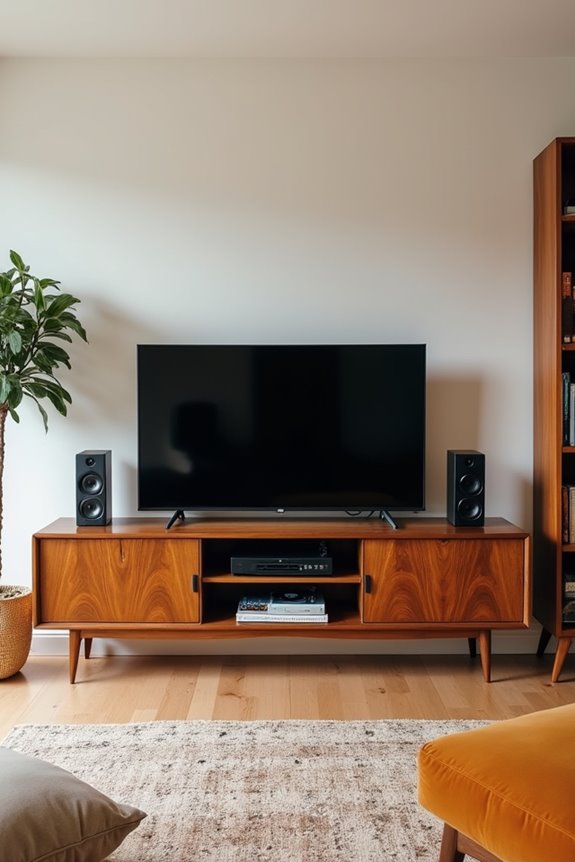
If you’re drawn to timeless design, I’d encourage you to explore mid-century modern entertainment centers that blend clean lines with natural elegance. You’ll notice these pieces feature sculptural silhouettes in walnut or teak wood, creating functional focal points without unnecessary decoration.
Their combination of open and closed storage compartments delivers the practical appeal you need while maintaining that airy, uncluttered appearance that works beautifully in contemporary spaces.
Clean Lines And Elegance
Mid-century modern entertainment centers bring timeless design to your living room through carefully considered design principles. You’ll notice how clean lines and minimalism work together to create spaces that feel both functional and beautiful.
Here’s what makes this style work for you:
- Tapered wooden legs create visual lightness
- Open shelving displays media without visual clutter
- Natural wood finishes in walnut or teak age gracefully
- Restrained hardware maintains understated elegance
- Simple, sculptural forms eliminate unnecessary ornamentation
The beauty of mid-century design lies in its restraint. You’re choosing quality over quantity, allowing each element to serve a purpose.
Open shelving keeps electronics accessible while maintaining that airy aesthetic you’re seeking. Natural wood tones warm your space without overwhelming it, creating an inviting environment that belongs in any modern home.
Natural Wood Tones Selection
The sculptural forms you’ve just discovered gain their warmth and character from thoughtfully selected wood tones. I recommend exploring walnut and teak for authentic mid-century pieces that provide natural elegance in your living room.
These natural wood tones showcase beautiful grain patterns that become visually prominent on their own. When you select walnut’s deep richness or teak’s golden warmth, you’re investing in finishes that age gracefully and develop character over time.
Your storage silhouette becomes more versatile when paired with these wood choices. I suggest combining natural wood tones with subdued mid-tones and neutral textiles to create unified, timeless aesthetics throughout your space.
This approach means your entertainment center complements both vintage sensibilities and contemporary design preferences, making it a lasting investment in your home’s visual identity.
Functional Sculptural Design Statements
How do you create an entertainment center that serves as both a functional hub and a visual focal point? Mid-Century Modern design offers the answer through sculptural pieces that balance form and function seamlessly.
I’ve found that strategic design choices improve your space:
- Open shelving displays media while maintaining sight lines across your room
- Tapered legs create visual lightness and prevent bulky appearances
- Minimalism eliminates clutter, showcasing only essential components
- Sculptural storage serves as decorative artwork and practical organization
- Natural wood finishes complement any interior style you’re developing
These entertainment centers work as unobtrusive yet impactful focal points. The clean lines and purposeful storage keep your living room feeling spacious.
You’ll appreciate how accessible components remain hidden behind sleek facades, creating the balanced aesthetic you’re seeking for your home sanctuary.
Rustic Farmhouse: Warmth and Practical Storage
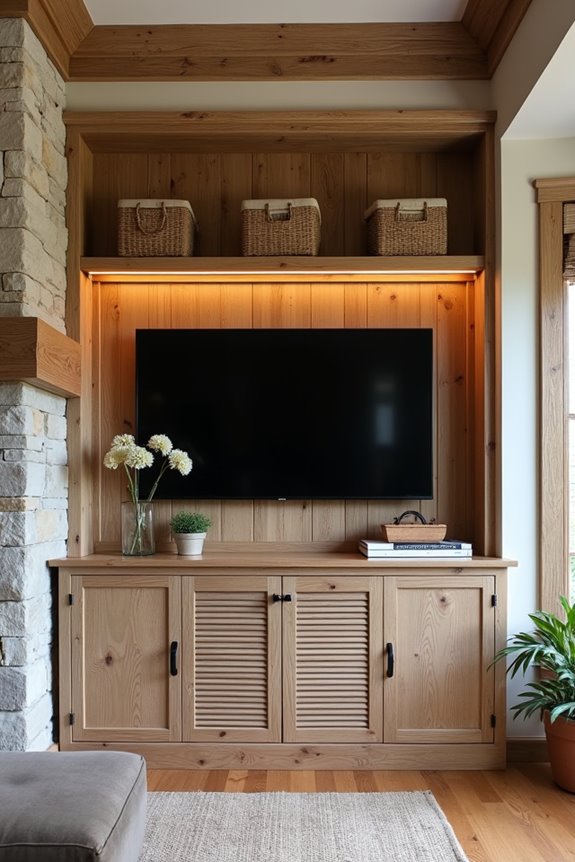
Where can you find warmth and storage working together beautifully? A rustic farmhouse entertainment center delivers both in one inviting piece.
These centers feature sturdy wood tones paired with weathered finishes that create immediate coziness. You’ll appreciate the open shelving that displays decorative items while providing practical storage solutions.
Sturdy wood tones and weathered finishes create cozy warmth, while open shelving balances beautiful display with practical storage.
The design emphasizes natural materials. Reclaimed wood showcases authentic grain patterns and character. Exposed hardware adds genuine farmhouse charm and durability.
Consider these key elements:
- Warm materials – Natural wood with authentic patina
- Open shelving – Easy access and visual breathing room
- Storage integration – Glass-front cabinets balance display with organization
- Hardware accents – Sturdy metal fixtures enhance authenticity
Metal and stone accents complete the unified farmhouse style. This approach makes your living room a welcoming gathering space that feels both grounded and refined.
Minimize the Mess: Hidden Storage, Cables, and Concealed Tech
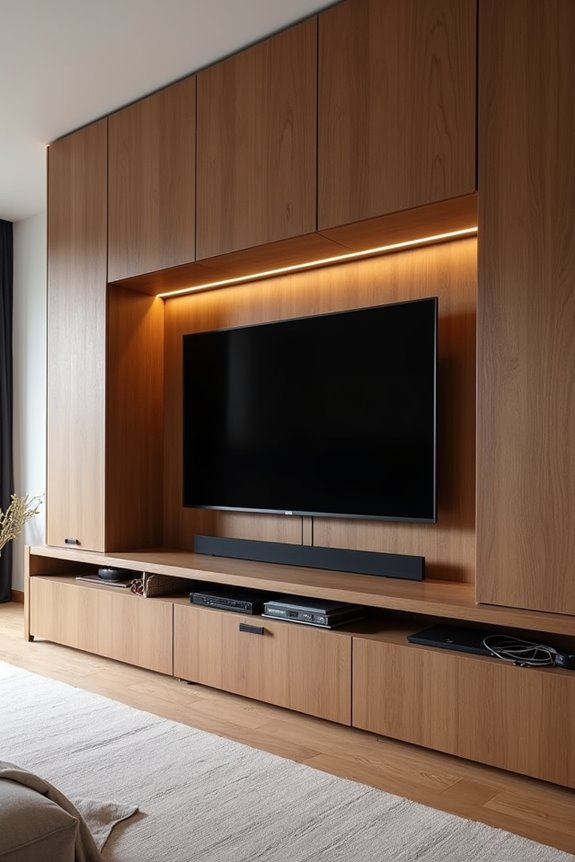
While rustic farmhouse designs excel at showcasing character and warmth, they can sometimes reveal too much: cables, remotes, and electronics clutter your carefully curated space.
I’ve found that strategic cable management creates a polished entertainment center. Here’s how I minimize visual chaos:
- Route wires behind panels and within shelving for a clean appearance
- Install concealed storage with closed cabinets keeping remotes and manuals hidden
- Add hidden compartments for device organization while maintaining easy access
- Choose low-profile entertainment units that reduce visual weight
- Plan ventilation and power management during initial design
A low-profile entertainment unit paired with organized living room storage creates the streamlined look you’re seeking. By combining display shelving with cabinetry, you’ll balance function and style. This approach keeps your entertainment center looking purposeful and organized, not cluttered, supporting the welcoming atmosphere your space deserves.
Size, Place, and Light: The Setup Steps That Matter Most
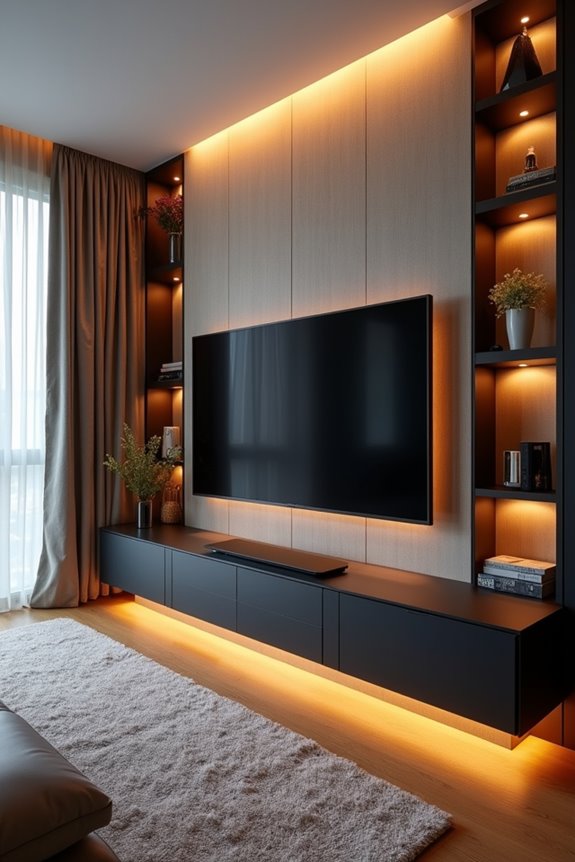
The right placement and lighting strategy makes your entertainment center a focal point that anchors your entire room. I recommend starting with a corner setup or floating wall unit that maximizes your available space while maintaining an open, airy feel.
Next, establish layered lighting by positioning a standing lamp in the far left corner and adding a table lamp on your end table. This dual approach creates visual balance and provides comfortable viewing without harsh shadows.
Finally, consider your storage needs. A minimalist wall unit with integrated cabinetry hides cables and tech equipment seamlessly. When your entertainment center combines strategic placement, thoughtful lighting, and hidden storage, you build a unified space where everything serves both function and design.