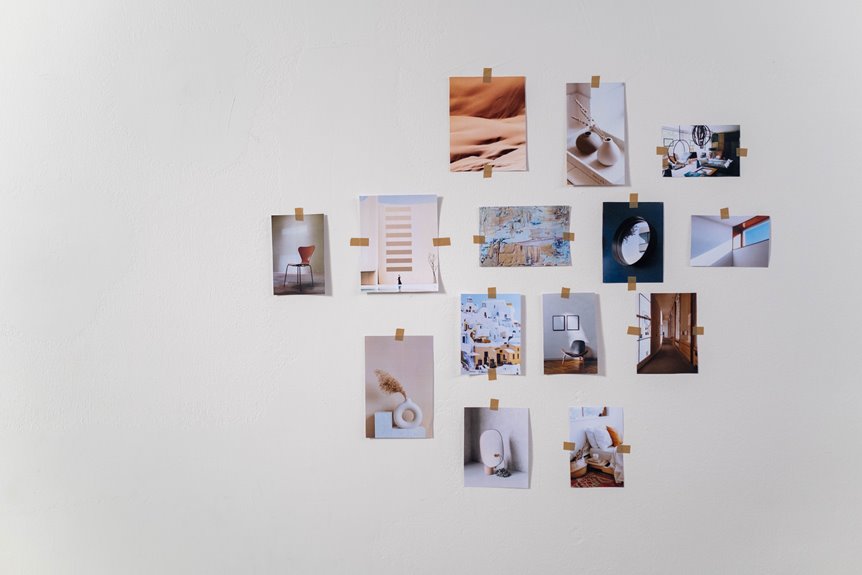
Your sofa wall doesn’t need to stay blank. Changing it up is simpler than you think. Whether you’re working with a small apartment or spacious living room, the right decor creates immediate impact.
From oversized mirrors that bounce light around the space to gallery walls that display your interests and memories, there’s a design approach for every style. The key is understanding which technique works best for your room’s dimensions and your personal aesthetic.
Choose Your Wall Decor Based on Room Size and Style
How do you know which wall decor will work best in your living room? Your room’s size determines what works on the wall behind the sofa. In smaller spaces, I recommend one large piece or three evenly spaced prints in matching frames to prevent overcrowding. Medium to large rooms benefit from an oversized mirror or central painting that serves as a focal point for the entire wall.
Consider your style preference too. Symmetrical gallery layouts create calm, orderly atmospheres through matching frames and even spacing. Asymmetrical groupings of varied-sized prints add visual interest without overwhelming the space.
Aim to fill about one-half to two-thirds of the wall height above your sofa, balancing scale with surrounding furniture. This proportion creates a polished, intentional look that gives your living room a well-designed appearance as a cohesive gathering space.
A Large, Oversized Mirror for Drama and Light
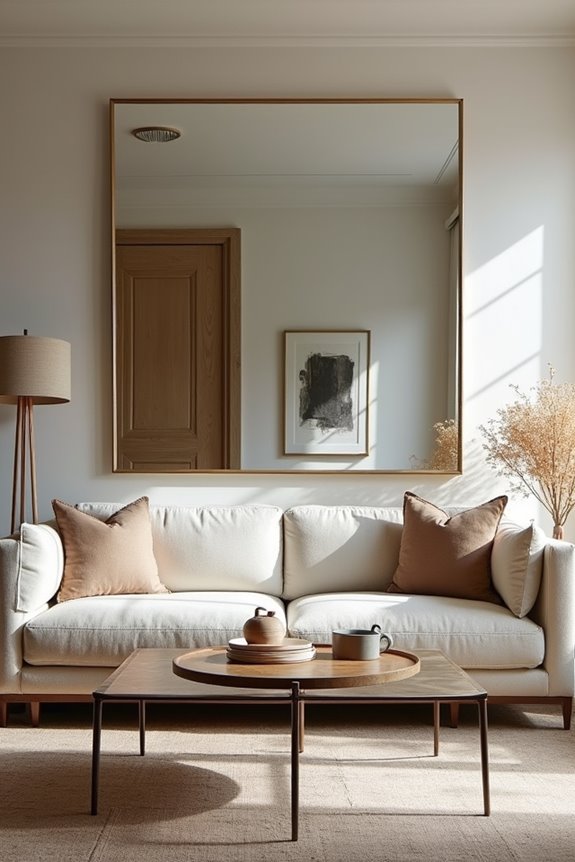
I’ll hang a large, oversized mirror that creates dramatic visual impact and bounces light throughout the space. You can select the right size by measuring your wall and choosing a mirror that fills at least one-third of the space above your sofa.
The frame finish, whether metal, wood, or beveled, should complement your furniture and color palette for a unified appearance.
Creating Dramatic Visual Impact
When you’re looking to redesign a living room wall, few design choices deliver impact as quickly as an oversized mirror.
A mirror above sofa creates immediate drama by doubling perceived depth and visually expanding your seating area. This strategic placement maximizes sightline impact while balancing expansive wall space effectively.
Consider these three important elements:
- Frame Style: Choose frames, gilded, minimalist, or natural wood, that work well with your color palette and existing metal finishes throughout the room.
- Complementary Lighting: Pair your mirror above sofa with sconces or pendant lights. This pairing enhances ambient glow and highlights surrounding decor beautifully.
- Centering Strategy: Position the mirror centrally above your sofa. This balanced placement amplifies visual drama while reflecting room lighting for added brightness.
Your oversized mirror becomes the centerpiece that redesigns your living room with intentional, professional design.
Reflecting Light and Space
An oversized mirror positioned above your sofa accomplishes multiple design goals simultaneously. It reflects natural and artificial light throughout your room, brightening darker corners and enhancing overall illumination.
This large mirror fills expansive wall space with bold style while making your room feel visibly larger. The reflection amplifies existing colors and textures in your seating area, creating depth you wouldn’t achieve otherwise.
Selecting the right mirror requires careful consideration. Match your mirror’s scale proportionally to both your sofa width and wall height for balanced visual weight. A single, substantial framed piece reduces clutter compared to scattered smaller mirrors.
The strategic placement creates a more open, luminous living room. You’ll notice how the mirror interacts with nearby furnishings, resulting in a well-designed aesthetic that feels carefully planned and sophisticated.
Selecting the Right Size
Now that you’ve decided on an oversized mirror’s placement and benefits, sizing becomes your next critical decision. I’ll guide you through selecting dimensions that work well in your space.
Consider these sizing principles:
- Aim for a mirror spanning 60–90% of your sofa wall’s width for maximum visual impact and balanced proportions.
- Measure your wall height and furniture placement to ensure the mirror complements rather than overwhelms your room’s scale.
- Account for frame style and finish, whether metallic, wood, or contemporary, when calculating overall dimensions and visual weight.
Proper sizing amplifies light reflection and creates that dramatic focal point you’re pursuing. A substantial mirror fills expansive wall space effectively, eliminating clutter from multiple smaller pieces.
This approach delivers a bold statement while maintaining harmony with existing furnishings. Your room will feel purposefully designed, not accidentally decorated.
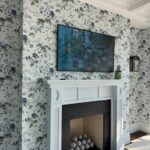
One Large Painting as a Confident Focal Point
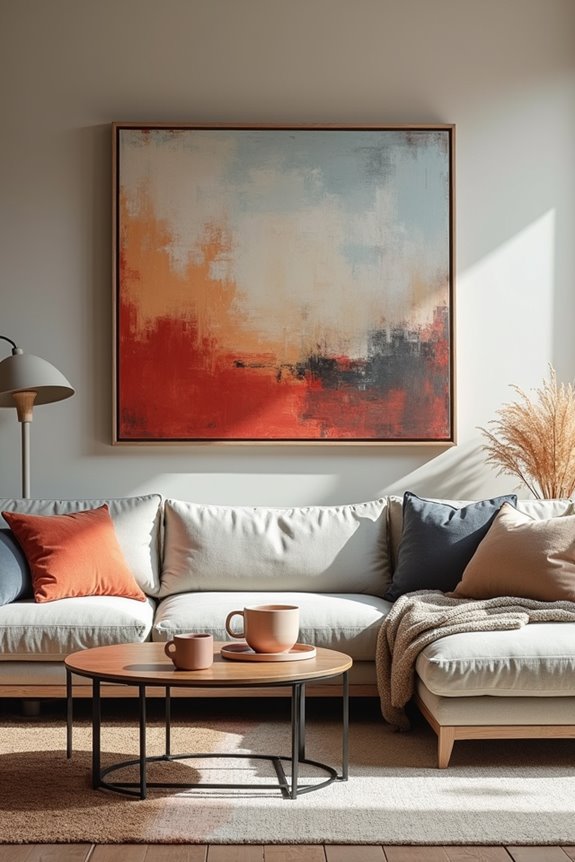
A single, oversized painting above your sofa creates a polished anchor that organizes your entire living room. One large painting delivers a strong visual statement that guides your room’s color palette and design choices. This approach eliminates the need to coordinate multiple smaller pieces, simplifying your decor considerably.
To achieve proportional impact, select a piece spanning roughly 60–85% of your sofa’s width. Centering the painting establishes a balanced axis that organizes surrounding elements like sconces or consoles. The artwork fills generous wall space intentionally, making the area feel organized with minimal clutter.
This confident design choice makes your living room feel purposeful and well-considered. You’ll enjoy a sophisticated aesthetic that reflects your personal style while creating visual harmony throughout the room.
Create Symmetrical Impact With a Matched Print Grid
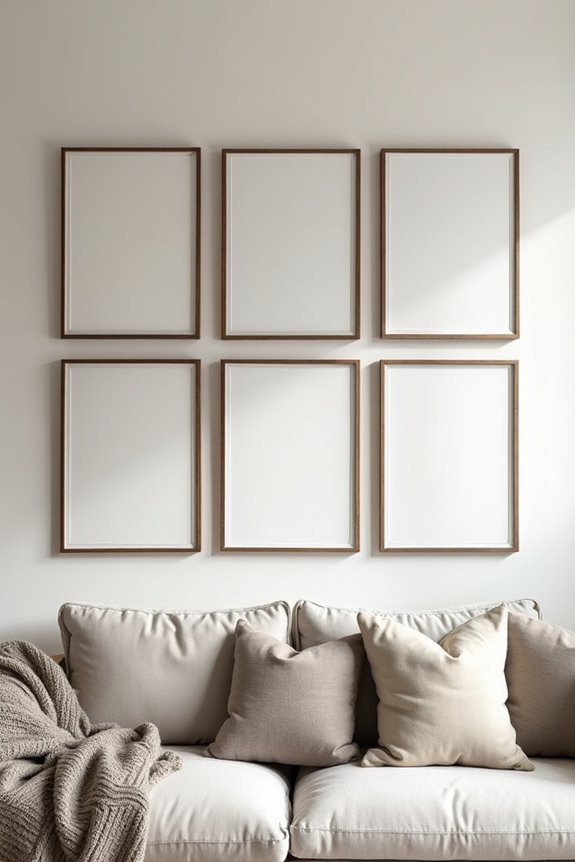
If you’re drawn to balanced, organized design, a matched print grid offers a compelling alternative to the single statement piece. This approach creates a unified display that feels intentional and refined.
A successful grid arrangement requires three key elements:
- Consistent spacing — Maintain even gaps between frames and a clear vertical axis to distribute visual weight evenly across the wall.
- Unified aesthetic — Select prints from the same artist or color family to reinforce cohesion while allowing individual pieces to shine individually.
- Strategic sizing — Use three or more prints in matching frames to emphasize symmetry and create a polished focal point above your sofa.
Symmetrical layouts reduce visual chaos while guiding your eye across the entire display. This method helps you achieve the organized, welcoming space you’re building.
Mix Print Sizes for Asymmetrical Balance Without Chaos
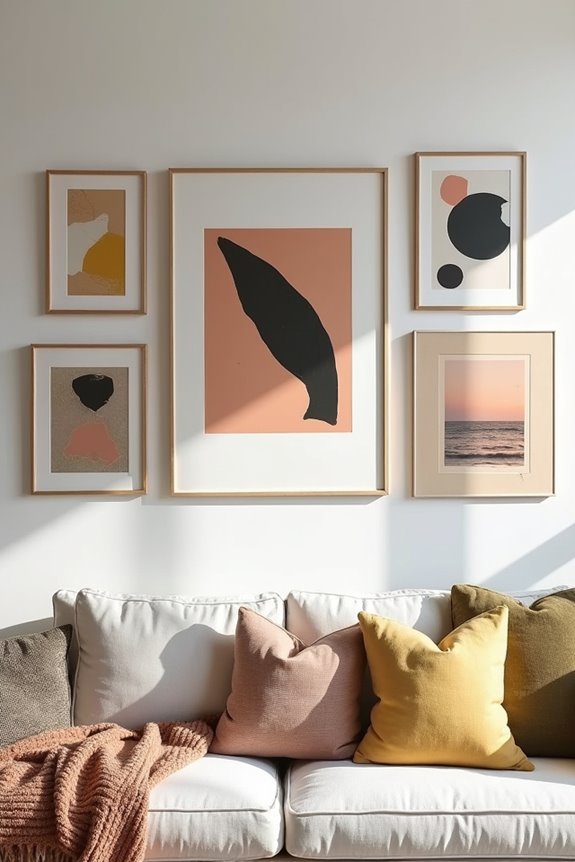
If you want visual interest without a rigid, mirrored look, I’ll show you how varying heights and dimensions create dynamic movement on your wall. You can achieve this by selecting prints from the same artist or color family, which keeps everything unified while different frame sizes add rhythm and prevent a static appearance.
This approach lets your eye travel naturally across the space, making your living room feel carefully arranged rather than randomly decorated.
Varying Heights and Dimensions
When you mix prints of different sizes on your living room wall, you’ll notice the arrangement feels purposeful rather than random. Varying heights and dimensions make your wall above the sofa a dynamic point of visual interest that guides the viewer’s eye naturally across the space.
Consider these strategic approaches:
- Pair tall rectangular pieces with shorter square prints to establish rhythm and movement throughout your arrangement.
- Start with a dominant centerpiece, then build outward using progressively smaller pieces to maintain visual balance.
- Use consistent frame styles or colors to unify pieces despite their different dimensions and proportions.
This method prevents crowding while allowing your collection to feel well-considered and modern. The key is balancing scale variation with intentional spacing. Thoughtful dimension mixing creates sophistication without chaos, turning your above-sofa display into a polished design statement.
Unified Artist Selection Strategy
How do you arrange prints of wildly different sizes without creating visual chaos? Selecting work from a single artist solves this challenge instantly. When you commit to one creator’s vision, their consistent style naturally unifies everything, regardless of size variations.
I recommend pairing this approach with a unified color palette. Choose pieces that share similar tones: warm neutrals, cool blues, or muted earth shades. This consistency makes even dramatically different dimensions feel deliberate rather than random.
Start by selecting your dominant focal piece, typically your largest print. Arrange smaller works around it in a staggered pattern, avoiding rigid grid formations. This creates visual interest while maintaining cohesion.
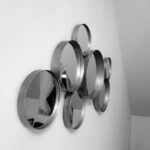
Layer Multiple Mirrors to Multiply Light and Scale
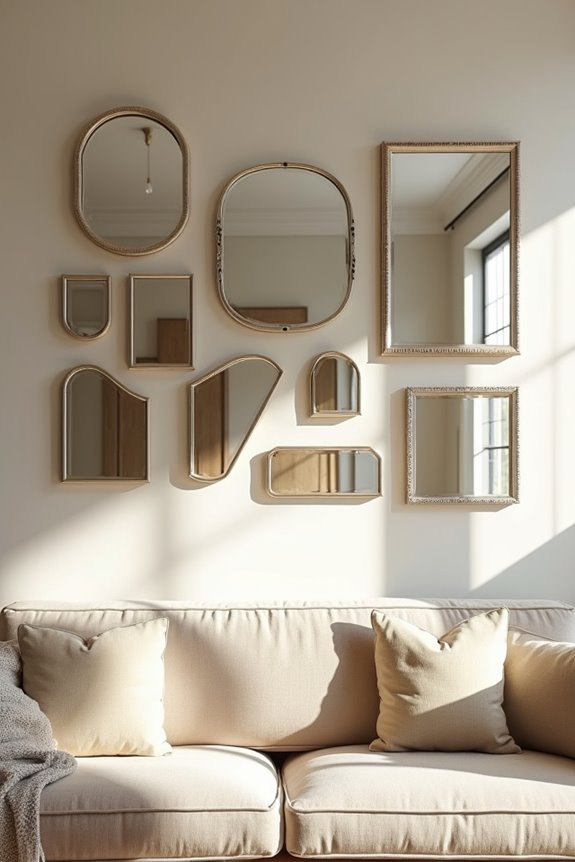
Why settle for a single mirror when you can make your living room wall into a light-reflecting powerhouse? Layering multiple mirrors strategically amplifies natural light across your space from different angles.
I recommend you implement these design elements:
- Mix mirror shapes and sizes; pair a large central piece with smaller surrounding mirrors to create visual depth without clutter
- Vary frame finishes using brushed metal, wood, and gilded options to add texture while maintaining cohesion
- Position mirrors at different heights to guide the eye along the wall and enhance perceived width
Thrifted or varied mirrors arranged gallery-style become a dynamic focal point that maximizes light throughout your living room. This approach turns your above-sofa wall into both a functional and visually interesting design feature that expands your space.
Build a Gallery Wall by Collecting Over Time
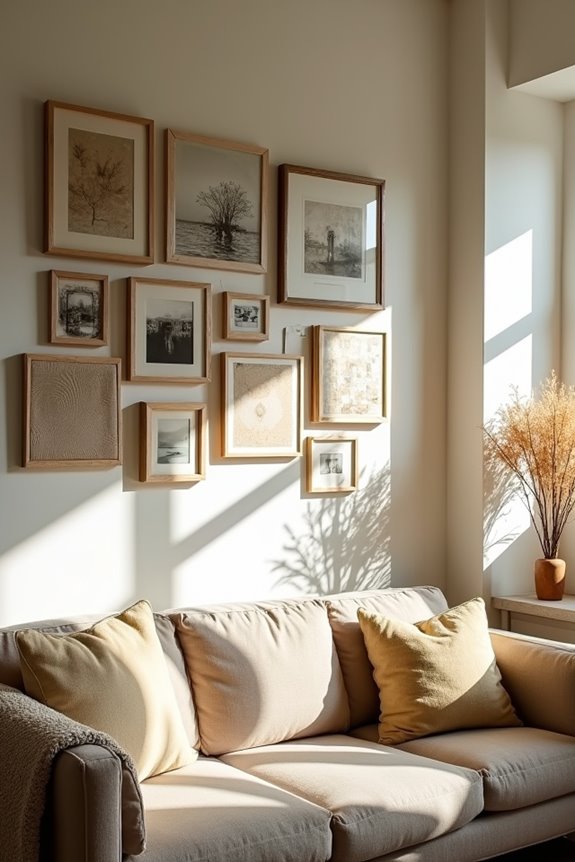
Rather than purchasing an entire gallery wall at once, you can build one gradually by collecting pieces you genuinely love over time. I’ll show you how to start small with a unified vision, thoughtfully curate each addition, and evolve your display as your collection grows.
This approach lets you develop a personalized gallery wall that reflects your taste while staying within budget.
Start Small, Think Big
Building a gallery wall doesn’t require completing it all at once. I start with a few smaller pieces and gradually expand as I discover pieces I genuinely love. This approach reduces overwhelm and creates authentic collections.
Here’s how I approach building strategically:
- Lay out frames on the floor first, then photograph the arrangement before mounting anything to your wall
- Fill roughly half to two-thirds of your wall space initially, leaving room for future additions
- Maintain a consistent color palette: whites, blacks, and natural wood while mixing frame styles and sizes
I prioritize pieces that resonate with me personally, then expand with thrifted finds sharing a unifying theme. This measured approach builds my gallery wall into something that feels intentional and meaningful. Each addition tells my evolving story while maintaining visual harmony throughout the space.
Curate Your Personal Collection
How do you build a gallery wall that feels authentically yours? Start with one central focal piece—a large print, mirror, or photograph. This anchor establishes your design direction and color palette. Gradually add complementary pieces around it as you discover items you genuinely love.
Mix frame styles and sizes while maintaining color harmony with your rug and existing décor. This approach prevents visual monotony while creating cohesion. Incorporate thrifted finds and budget-friendly DIY art to expand your gallery wall affordably.
Plan your layout on the floor first, arranging pieces before mounting anything. This strategy lets you visualize spacing and adjust proportions. Leave strategic gaps for future acquisitions, allowing your collection to evolve naturally. This intentional curation reflects your personal aesthetic in a meaningful way.
Evolve Your Gallery Wall
The best gallery walls aren’t completed in a single weekend; they develop gradually as you discover pieces that truly speak to you. I’ve found that building over time creates authenticity and prevents buyer’s remorse.
Start by laying out your floor plan above the sofa, testing symmetrical versus asymmetrical arrangements. Select a large piece of art as your anchor, then expand outward methodically.
- Mix frame styles and sizes while maintaining a unifying color palette of whites, natural woods, and muted tones
- Incorporate thrifted finds and DIY art to refresh your display continually
- Add layered textures with heirloom or sentimental items for personal depth
This gradual approach lets you curate with intention. Each addition strengthens your overall design, building a display that grows naturally with your collecting journey.
A Mirror or Art Plus Sconces for Ambiance and Function
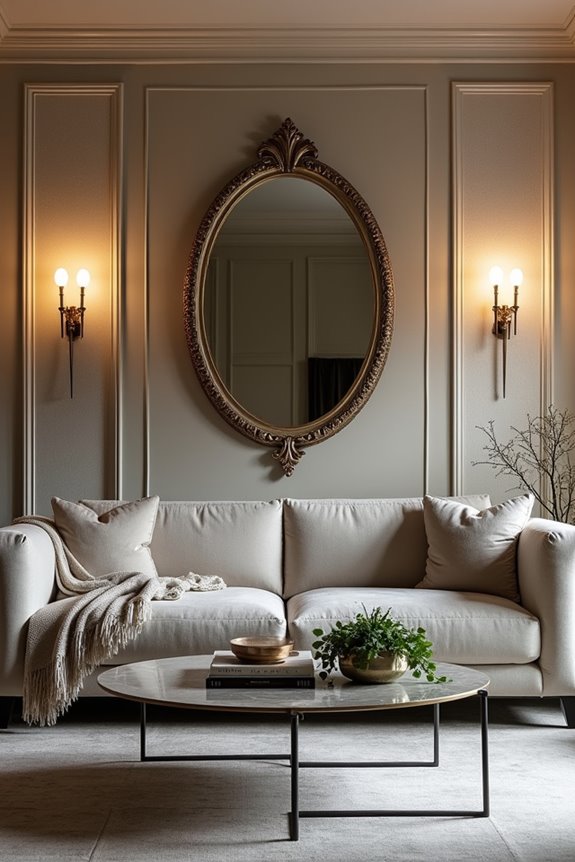
Why settle for a single focal point when you can combine function and style with a mirror or art piece flanked by sconces?
Positioning sconces on either side of a central mirror or painting creates balanced visual weight and even light distribution. This arrangement serves dual purposes: it establishes a striking focal point while providing warm, functional lighting that makes your space feel brighter and more expansive.
For optimal results, anchor your arrangement with one dominant piece. Position sconces at eye level to frame it without causing glare. Make sure your mirror or artwork frame matches the sconces’ metal finish for a unified appearance.
This combination creates a sophisticated design statement on your above-sofa wall that enhances both ambiance and practicality in your living room.
Style Floating Shelves With Books, Plants, and Personal Objects
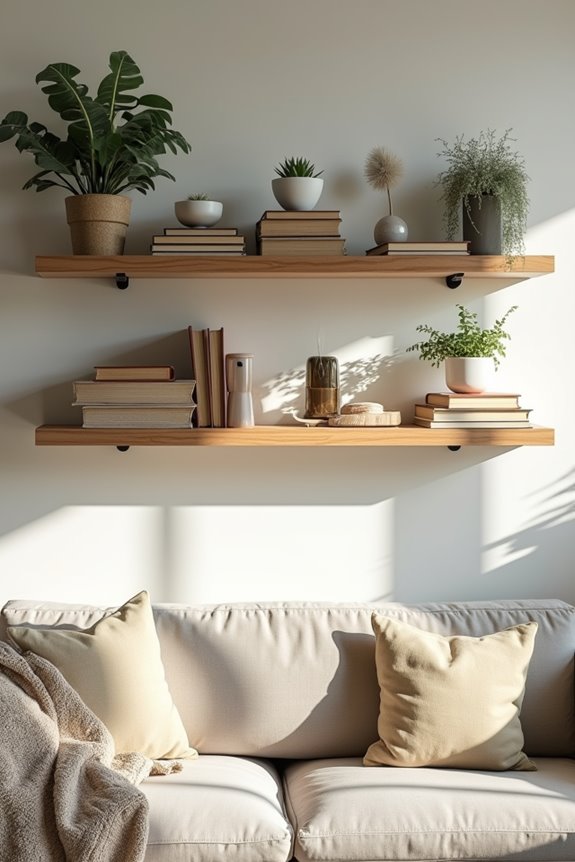
Floating shelves offer another dynamic way to fill wall space above your sofa while building on the layered display approach you’ve established with mirrors and sconces. I recommend creating visual interest through thoughtful styling choices.
- Mix horizontal shelves at varying heights with vertical spacing to achieve gallery-wall balance and prevent a cluttered appearance.
- Combine books, small potted plants, and curated personal objects to establish a narrative reflecting your taste.
- Anchor heavier items closer to the sofa, distributing weight evenly across the wall composition.
Pair green plants with white or natural wood pieces to echo your existing décor palette. Rotate items seasonally, swapping in thrift finds or handmade pieces to maintain freshness. This approach turns static wall space into a personalized display that feels well-considered and lived-in, deepening your connection to your living environment.
Add Texture With Woven Baskets or Macramé
How can you introduce warmth and dimension to your sofa wall without adding visual clutter? Woven baskets and macramé offer the perfect solution.
Layer woven baskets in varying sizes across your wall in a grid or staggered arrangement. This creates a gallery-like display with organic warmth that feels carefully planned rather than crowded. Pair natural-fiber baskets with neutral-toned frames or mirrors to maintain visual harmony while adding textural contrast.
Macramé wall hangings introduce dimensionality through knots and fringe, softening straight lines and enhancing boho or coastal aesthetics. The three-dimensional quality adds depth without overwhelming the space.
Both options work as interchangeable accents. Swap in seasonal pieces to refresh your focal area without repainting or rehauling large artwork. This flexibility lets you evolve your space affordably throughout the year.