A rust sofa anchors a room the way a tree anchors a forest; everything else grows around it. You’re probably wondering how to make this bold color work without overwhelming your space.
The good news? I’ll show you nine proven strategies that create a striking focal point with your rust couch. From minimalist shelving to warm lighting, you’ll discover exactly what creates that perfect balance.
Style Your Rust Sofa With Minimalist Shelving
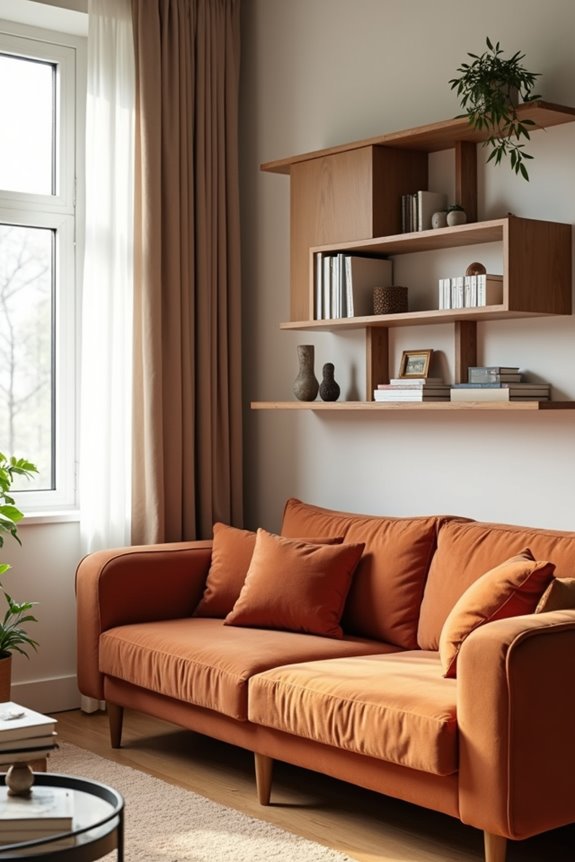
How can you make a rust sofa feel like the star of your living room? Pair it with floating white shelves for a minimalist shelving approach that changes your space.
Pair your rust sofa with floating white shelves to make it the star of your minimalist living room.
This design strategy creates a rust sofa small living room layout that feels carefully considered. The clean shelving emphasizes your sofa’s rich rust tones while keeping surfaces uncluttered and light.
Install slim, floating shelves on one accent wall beside or above your sofa. Keep decorative items minimal: perhaps three books, one plant, and two framed pieces per shelf.
This minimalist shelving strategy delivers two key benefits. Your room feels visually larger, and your rust sofa commands attention as the center point. The trade-off involves limited display space for accessories.
The result is a living room design that feels open, purposeful, and welcoming. Your rust-colored sofa becomes the hero of the space.
Layer Textures Around Your Rust Sofa
Layering textures turns a rust sofa into a richly detailed anchor for your living room. I recommend combining complementary materials that enhance warmth and visual interest without overwhelming your space.
Build your textured foundation with these essentials:
- Chunky knit throws in cream or beige draped over the rust upholstery
- Jute rugs anchoring the seating area with natural fiber appeal
- Linen curtains in soft neutrals framing windows with understated elegance
- Velvet or wool accent pillows adding tactile contrast and depth
The key is maintaining a consistent color palette across all textures. Stick to warm neutrals: ivory, taupe, and soft gray. This balance keeps variety without creating visual chaos.
Keep your base furniture minimal with clean lines, allowing layered textures to enhance rather than crowd the space. This approach creates an inviting, well-designed living room.
Rust Sofas Meet Industrial Edges
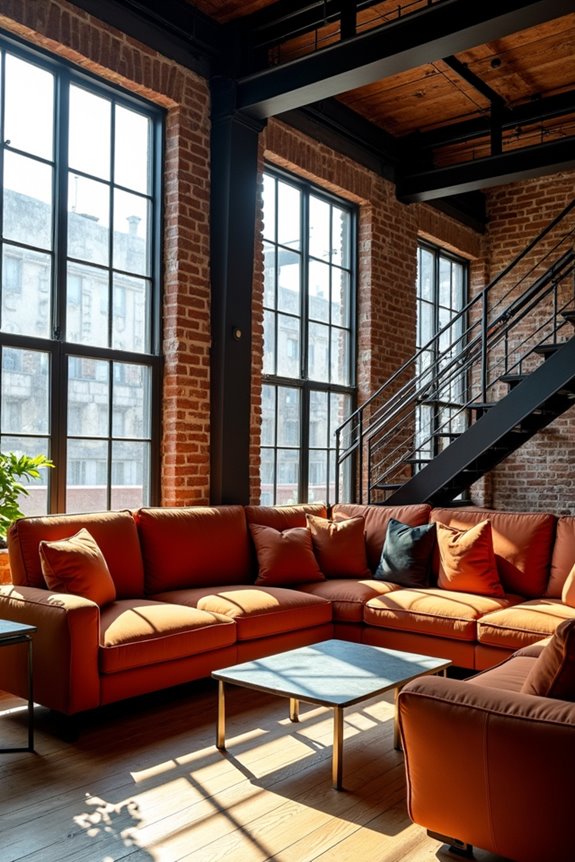
When you pair a rust sofa with industrial design elements, you’re creating a striking contrast that makes your couch the room’s centerpiece. The rich velvet texture of your rust upholstery stands out beautifully against exposed brick and matte black metal frames, establishing an authentic loft feel.
| Design Element | Purpose |
|---|---|
| Exposed brick walls | Creates raw industrial backdrop |
| Matte black metal frames | Adds contemporary edge |
| Warm layered lighting | Softens industrial harshness |
| Copper accents | Complements rust tones |
| Dark metal coffee tables | Reinforces consistent palette |
Balance this edginess with warm textiles: soft knits, linen, and jute prevent coldness. Your lighting strategy matters significantly; warm-bulb lamps enhance the sofa’s amber warmth while softening industrial harshness.
Incorporate copper accents and minimal artwork to integrate your rust sofa seamlessly. This approach creates inviting urban spaces where industrial elements and comfort coexist naturally.
Pair Your Rust Sofa With Complementary Greenery
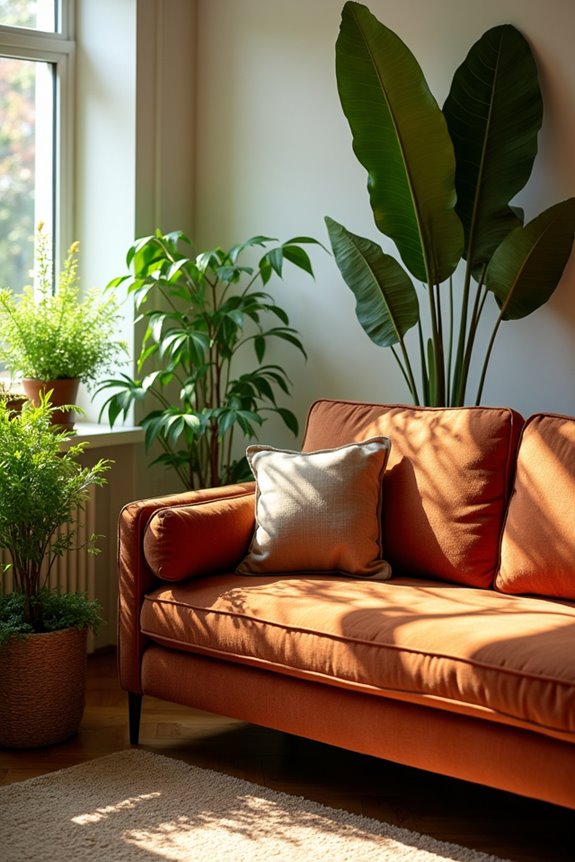
While industrial elements create undeniable visual impact, introducing greenery alongside your rust sofa makes the space warmer and more inviting. I’ve found that strategic plant placement adds visual interest and natural contrast to your living room.
Strategic plant placement transforms industrial spaces, adding warmth and natural contrast that makes your rust sofa feel intentional and inviting.
Here’s how I’d approach this:
- Tall plants like fiddle leaf figs frame your seating area and create vertical balance
- Varied leaf textures such as glossy leaves or feathery ferns add depth without competing with rust
- Neutral planters in cream, beige, or terracotta harmonize with your sofa’s warmth
- Small plants on side tables soften edges and reflect light onto the fabric
Position foraged or potted greenery beside your rust sofa to enhance its warm velvet upholstery. The texture contrast between plant leaves and fabric creates dimension. Choose planters that complement rather than distract, keeping focus on your sofa while building an inviting environment that feels intentional.
Go Bohemian: Rust Sofa With Eclectic Layers
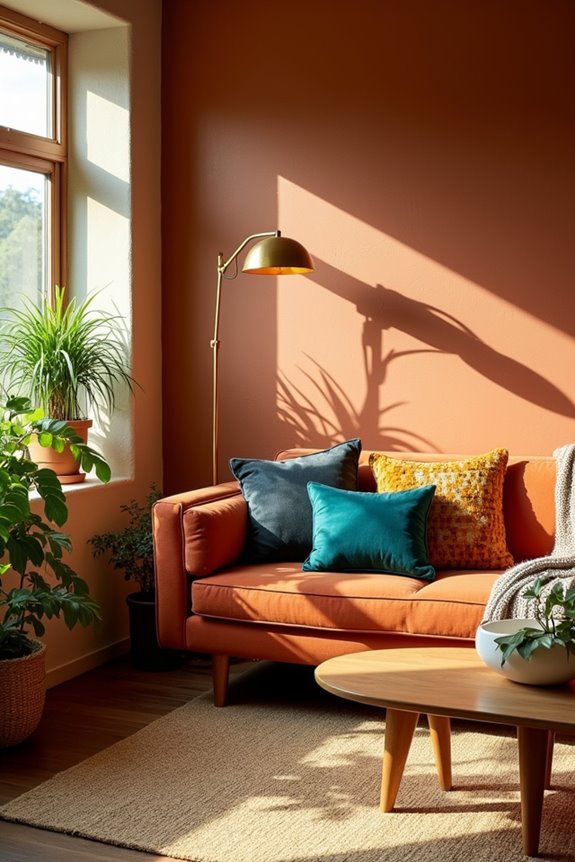
How do you create a bohemian-inspired living room centered around a rust sofa? Start by layering patterned rugs, woven baskets, and travel art around your rust sofa to create an eclectic aesthetic.
Mix diverse textured textiles—knits, linen, jute, and velvet—to add visual depth without overwhelming the space. This combination grounds your bohemian decor while keeping your rust sofa as the centerpiece.
Incorporate global-inspired accessories like vintage prints and handcrafted pieces that reflect your personal journey. A cohesive palette of soft neutrals balances the bold rust tone, preventing the space from feeling cluttered.
Consider rotating artwork and textiles seasonally to maintain visual interest. This approach keeps your eclectic layering looking fresh while your rust sofa remains the anchoring centerpiece of your thoughtfully designed, welcoming space.
Brighten a Rust Sofa With Light Neutrals
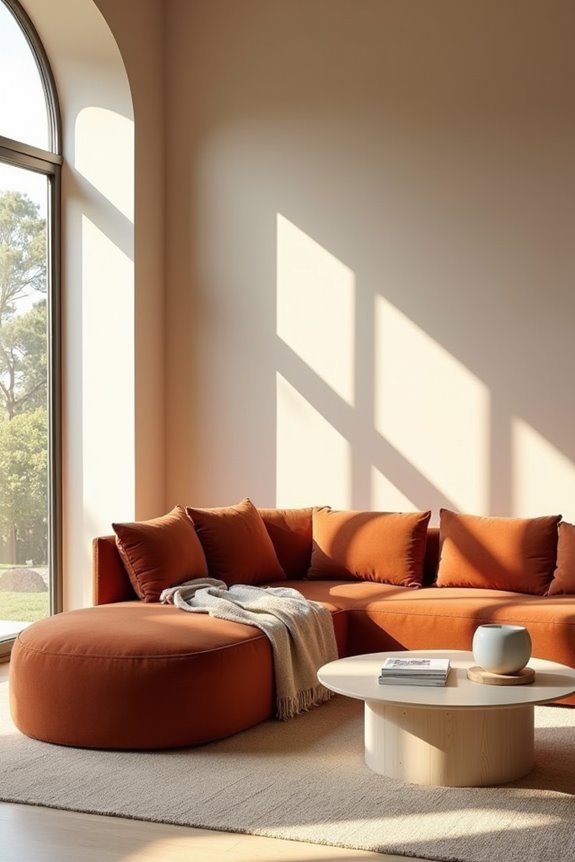
I’ll brighten your rust sofa by pairing it with sheer white curtains, pale wood floors, and minimal accessories that let the sofa stand out. These light neutrals create an airy backdrop that prevents your warm-toned sofa from feeling heavy or overwhelming in smaller rooms.
Sheer White Curtain Pairing
Why does a rust sofa sometimes feel heavy in a room? The answer lies in pairing it with the right window treatments. Sheer white curtains create brightness and balance in your living room.
Consider these key benefits:
- Enhances natural light by allowing sunlight to bounce throughout your space
- Softens rust’s boldness while maintaining a clean, minimalist backdrop
- Visually expands small rooms through reflected pale fabrics
- Keeps your sofa as the focal point without competing elements
Choose voile or lightweight linen fabrics to preserve that delicate translucence. This approach keeps your living room feeling open and welcoming rather than confined.
To prevent a washed-out appearance, balance your decor with warmer wood tones, cream accents, or metallics in cushions and lamps. These touches support your rust sofa while complementing your sheer curtains beautifully.
Pale Wood Floor Contrast
What makes a rust sofa feel grounded and sophisticated rather than heavy? Pairing it with pale wood floors creates the high-contrast foundation your living room needs.
Light wood floors, such as natural oak or ash tones, brighten your seating area without diluting the sofa’s warmth. This contrast keeps your rust upholstery as the visual anchor while maintaining an airy atmosphere.
Here’s how to maximize this effect:
- Choose complementary neutrals for walls and rugs (off-white, ivory, cream) to reflect natural light.
- Select light wooden furniture like coffee tables to preserve visual openness.
- Layer soft textures (linen, knits, felt) in pale tones to prevent clashing between your rust upholstery and the floor’s lightness.
This balanced approach creates an inviting, cohesive living room.
Minimal Accessory Styling Strategy
While pale wood floors anchor your rust sofa with visual contrast, the accessories you choose determine whether your room looks well-planned or cluttered. I recommend embracing a minimal accessories approach within your neutral palette to preserve the space’s airy quality.
Strategic Accessory Selection:
- Off-white or soft beige throws draped over the sofa’s arm
- Light-colored pillows in natural linen or cotton fabrics
- Neutral artwork that echoes your room’s calm aesthetic
- Warm white lighting fixtures that enhance the rust’s richness
Keep your living room thoughtful by selecting each piece with purpose. A single throw blanket and two complementary pillows suffice for the sofa itself. This restrained styling lets your rust couch command attention without overwhelming the space. Minimal accessories create the polished, inviting environment you’re seeking in your living room design.
Frame Your Rust Sofa With Gallery Walls
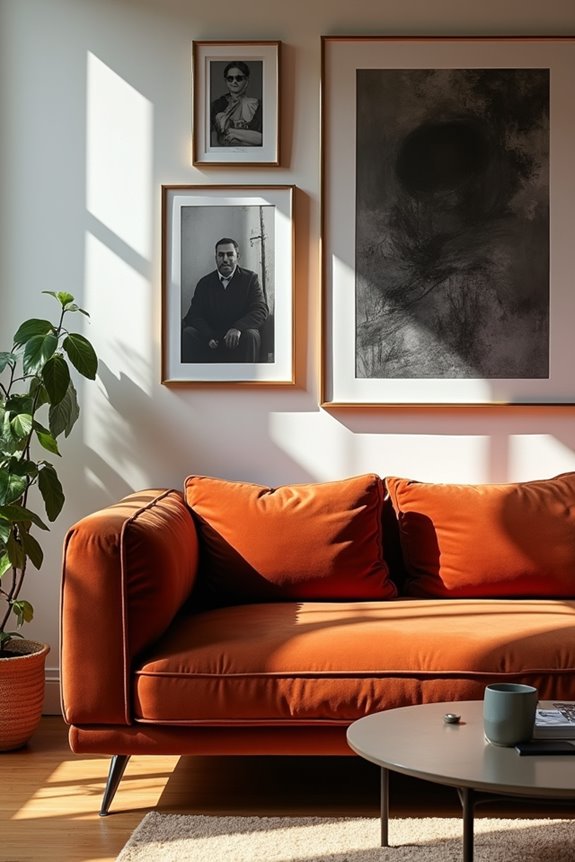
How you arrange artwork around your rust sofa determines whether it becomes a focal point or competes for attention.
I recommend curating a gallery wall using rust velvet as your visual anchor. Select earthy-toned pieces: ochres, terracottas, and creams that echo your sofa’s warmth. Frame selections matter significantly; warm metals and natural wood maintain consistency throughout your space.
| Frame Style | Color Palette | Piece Size |
|---|---|---|
| Wood | Cream & charcoal | Large (24″×36″) |
| Brass | Rust & gold | Medium (16″×20″) |
| Natural | Earthy tones | Small (8″×10″) |
| Mixed | Warm metals | Varied |
Balance your wall art with negative space. Avoid overcrowding by using fewer larger pieces or organized grid layouts.
Rotate artwork seasonally to refresh the backdrop without altering your sofa, keeping the arrangement dynamic and intentional.
Warm Lighting for Rust Sofas
I’ve discovered that layered lighting, combining floor lamps, hidden LEDs, and dimmable fixtures, changes how your rust sofa looks throughout the day. When I select warm white bulbs around 2700–3000K with textured lampshades, the amber tones in the upholstery truly come alive.
Strategic placement of ambient, task, and accent lighting keeps your rust sofa as the main visual element without overwhelming the room’s balance.
Layered Lighting Amplifies Warmth
Why settle for flat, one-directional lighting when your rust sofa deserves a dynamic lighting plan?
Layered lighting creates depth across your living room by combining multiple light sources at different heights. This approach amplifies the warmth of your rust velvet and reduces harsh shadows while highlighting the sofa’s rich texture.
Consider these layered lighting elements:
- Floor lamps positioned beside the sofa for ambient evening glow
- Table lamps on side tables for task lighting and accent brightness
- Hidden LED strips behind furniture for subtle background warmth
- Wall-mounted sconces for balanced, shadow-free illumination
Select bulbs rated 2700K–3000K for warm white tones that enhance rust hues. Add dimming capabilities to shift from bright daytime functionality to intimate evening ambiance.
This balanced approach reinforces a welcoming living room atmosphere while showcasing your rust sofa’s inviting character.
Bulb Selection Enhances Rust Tones
The right bulb choice affects how your rust sofa appears under artificial light. I recommend selecting bulbs in the 2700K–3000K color temperature range for optimal results. This warm lighting enhances your velvet sofa’s orange undertones without diminishing its visual depth or richness.
Amber and soft white bulbs work exceptionally well with rust tones. They amplify the sofa’s natural warmth while preserving its sophisticated character. These bulbs coordinate seamlessly with complementary decor elements like rust-colored curtains, throw pillows, and area rugs.
The right color temperature creates consistency throughout your living space. Your velvet sofa becomes a centerpiece that invites relaxation and connection. By choosing appropriate bulbs, you’re establishing the foundation for a warm lighting scheme that showcases your rust furniture’s best qualities.
Ground Your Rust Sofa With Reclaimed Wood
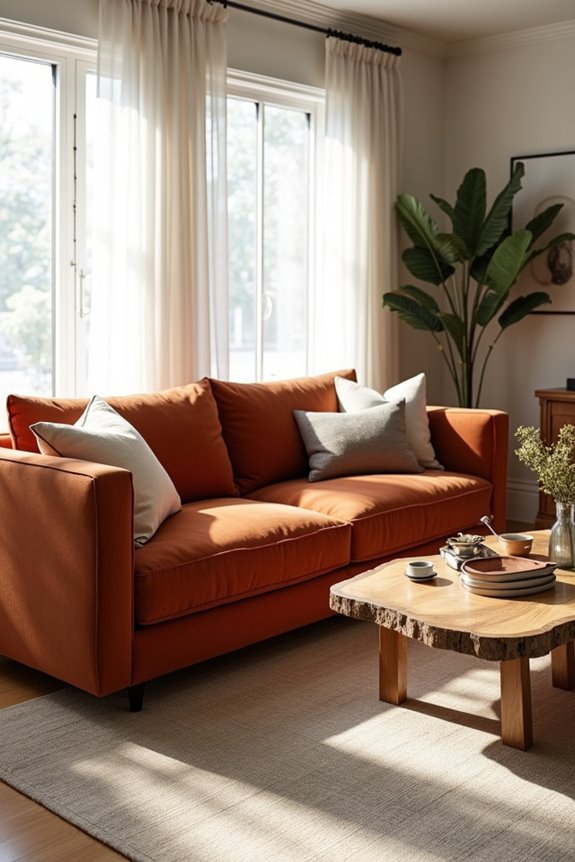
Reclaimed wood grounds a rust sofa by adding natural warmth and textural depth that anchors the room’s color story. This pairing creates a living room where your upholstery becomes a luxurious accent rather than overwhelming the space.
Reclaimed wood grounds a rust sofa, transforming upholstery into a luxurious accent rather than overwhelming your living room.
I recommend these strategies for integrating reclaimed wood:
- Install exposed beams or a live-edge shelf to serve as architectural backdrop elements
- Choose coffee tables and consoles with matte or lightly patinated finishes for authentic character
- Layer soft textiles in creams, taupes, or olive greens to balance rustic texture
- Apply protective finishes to wood pieces near seating areas while preserving natural appearance
The rust and reclaimed wood combination creates coherence through contrast. Your living room develops lasting appeal when these materials work together intentionally, establishing the inviting atmosphere you’re seeking.