I recently helped a friend restore her 15-year-old gray sectional for under $200. Instead of replacing it entirely, she discovered seven practical strategies that completely changed its appearance and comfort. You can tackle each step yourself; no professional upholsterer required.
These budget-friendly methods address sagging cushions, outdated fabrics, and worn details. Keep reading to learn which strategy will have the biggest impact on your sofa.
Start Fresh With a Deep Clean
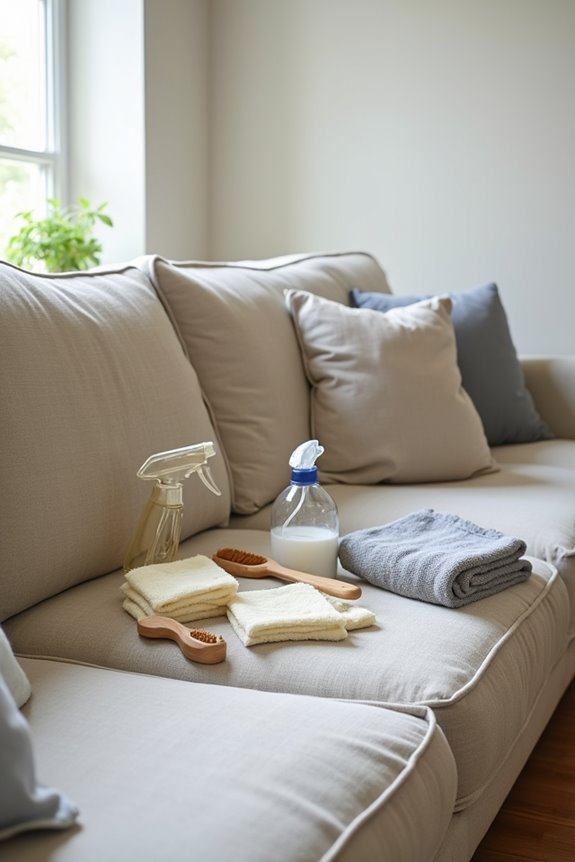
Why does your sofa deserve a thorough cleaning before any renovation? A clean foundation sets the stage for real change. I’ll guide you through essential upholstery cleaning steps that restore your sofa’s potential.
1. Vacuum Thoroughly
Begin with vacuuming using the upholstery attachment. Focus on seams, tufts, and corners where dust accumulates. This removes surface debris and prepares fabric for deeper cleaning.
2. Check Care Labels
Locate your sofa’s care label and note the code: W, S, WS, or X. Test any cleaning solution on a hidden patch first to prevent damage.
3. Deodorize Naturally
Sprinkle baking soda across cushions, let it sit, then vacuum thoroughly. This eliminates odors without harsh chemicals.
4. Address Stains
For W and WS fabrics, spot clean using mild soap-and-water solutions. Blot gently rather than rubbing.
Plump Sagging Cushions With Fiberfill
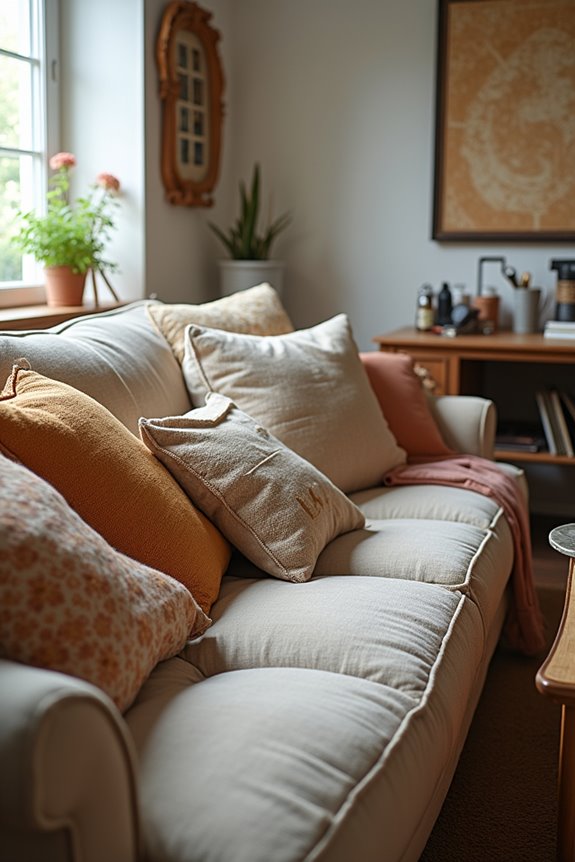
I’ll show you how to restore your sofa’s comfort by reviving those flattened cushions. You can fluff and knead the filling, add fiberfill to problem areas, and rotate cushions regularly to maintain even support.
These straightforward techniques will refresh your seating without requiring expensive replacements.
Fluffing and Kneading Technique
One of the simplest ways to restore your sofa’s comfort is by fluffing and kneading the cushions to redistribute their internal filling. This hands-on method revives loft without requiring tools or replacements. I recommend performing this maintenance weekly to prevent uneven wear patterns.
| Technique | Frequency | Expected Result |
|---|---|---|
| Fluff cushions | Weekly | Improved loft |
| Knead stuffing | Weekly | Even distribution |
| Rotate placement | Weekly | Consistent support |
| Deep massage | Monthly | Maximum restoration |
Start by removing each cushion and vigorously fluffing it upward. Then knead the stuffing with your hands, working from edges toward the center. This redistributes compressed filling throughout the cushion interior.
Rotate cushions between sofa sections to balance wear. Regular fluffing maintains your sofa’s appearance and comfort, extending its lifespan considerably while keeping your investment fresh.
Adding Fiberfill Materials
While weekly fluffing maintains your sofa’s comfort, persistently flat cushions need additional support to restore their original shape. I’ll show you how adding fiberfill improves your seating.
Opening the Inner Lining
Carefully open your cushion’s inner seating by locating the stitched seam. Work slowly to avoid damaging fabric. This access point lets you insert new materials directly.
Inserting Fiberfill Materials
Add polyester fiberfill or batting inside your cushions for improved cushioning. Layer the fiberfill evenly, distributing it throughout the cushion’s interior. This approach prevents lumpy spots and maintains consistent support across your entire seating surface.
Achieving Results
Stitch the seam closed securely. Test your cushions by sitting and adjusting fiberfill density as needed.
This straightforward method restores comfort while maintaining your sofa’s original appearance, giving you quality seating without replacement costs.
Rotating Cushions Weekly
How often do you sit in the same spot on your sofa? Most of us develop habits that concentrate wear on specific cushions. Weekly cushion rotation prevents this uneven deterioration and maintains consistent appearance across your furniture.
Here’s your rotation strategy:
- Rotate cushions systematically. Move each cushion to a different position every seven days. This distributes weight evenly and extends cushion lifespan significantly.
- Restore cushion loft regularly. Before sitting, fluff, shake, and knead each cushion. This redistributes filling and restores the support you need for comfortable seating.
- Monitor sofa maintenance progress. Track rotation dates to establish consistent habits. You’ll notice improved cushion resilience and shape retention over time.
This simple practice, combined with proper filling adjustments, preserves your sofa’s structure and appearance while maximizing your investment’s durability.
Replace Seat Cushions for Renewed Comfort
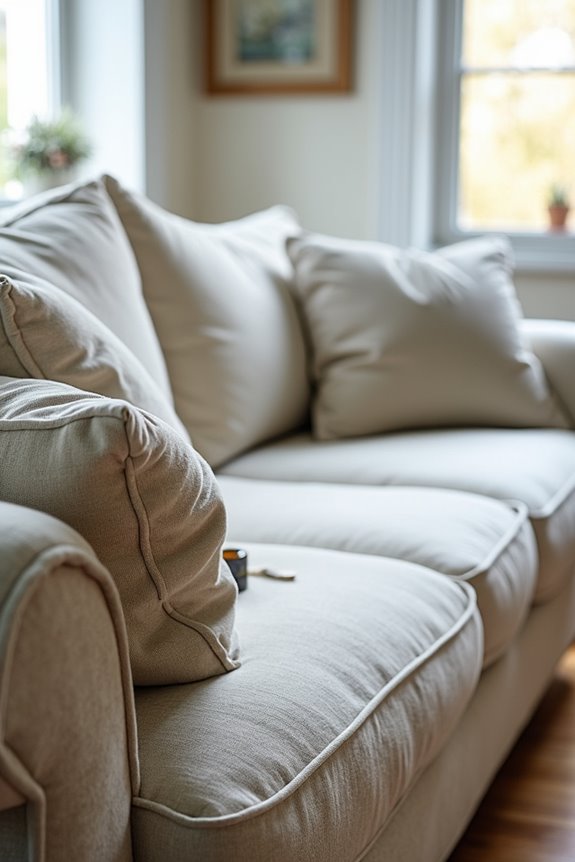
If your cushions have removable zippered covers, you can measure them precisely and order custom foam inserts that match your exact dimensions. I’d recommend choosing between conventional foam, high-resilient (HR) foam, or down-wrapped options based on your desired firmness and budget.
For a premium feel, consider wrapping your new foam cores in Trillium or Dacron, like What A Room does with their 2.5 lb HR foam cushions, to achieve both comfort and lasting durability.
Measuring and Selecting Foam
When your sofa cushions start feeling flat and lifeless, the solution lies in understanding what foam works best for your space. I recommend measuring your cushion dimensions: length, width, and depth before selecting replacements.
High-resilient foam offers superior support and longevity compared to standard options. If your cushions have removable covers with zippers, you’ll find measuring and replacing inserts straightforward for a custom fit.
Consider 2.5 lb HR foam cores wrapped in Dacron or Trillium for consistent durability. This combination restores structure effectively while maintaining uniform support across your seating.
When selecting foam inserts, prioritize quality materials that match your original cushion specifications. Precise measurements help your new foam cushions fit perfectly, improving your sofa’s comfort and appearance without professional upholstery costs.
Removable Zipper Covers
Why settle for a permanently faded or worn sofa when removable zipper covers let you refresh your seating in minutes?
Zipper cushions give your sofa new life without expensive reupholstery. I recommend measuring your cushion dimensions precisely to get the right fit for stock or custom removable covers. This simple step prevents ordering mismatched pieces.
A cushion refresh works best when you select quality fabrics that match your space. What A Room cushions feature 2.5 lb HR foam cores wrapped in dacron, providing consistent support for your new covers.
Swapping covers seasonally keeps your sofa feeling current and extends its lifespan. You’ll wash covers easily or replace them entirely when textures fade. This affordable approach lets you experiment with colors and patterns while preserving your sofa frame’s structure and integrity.
Premium Fill Options
Comfort restoration begins with understanding your cushion’s core material. When your sofa cushions flatten over time, you’re not stuck replacing the entire piece. Instead, you can upgrade with quality fill options that restore both support and softness.
Consider these three premium fill choices:
- High-resilient foam – Offers excellent support and durability, maintaining its shape longer than standard foam while providing reliable comfort.
- Down-wrapped foam – Combines supportive cores with soft down layers, creating a luxurious feel that balances comfort with longevity.
- Trillium – This premium down-alternative delivers high-end softness without allergen concerns, making it an excellent choice for households seeking durability and comfort.
What A Room seat cushions use 2.5 lb high-resilient foam cores wrapped in Dacron or Trillium. Your removable zipper covers make upgrading straightforward, allowing you to restore your sofa affordably.
Paint, Dye, or Slipcover for Instant Color Change
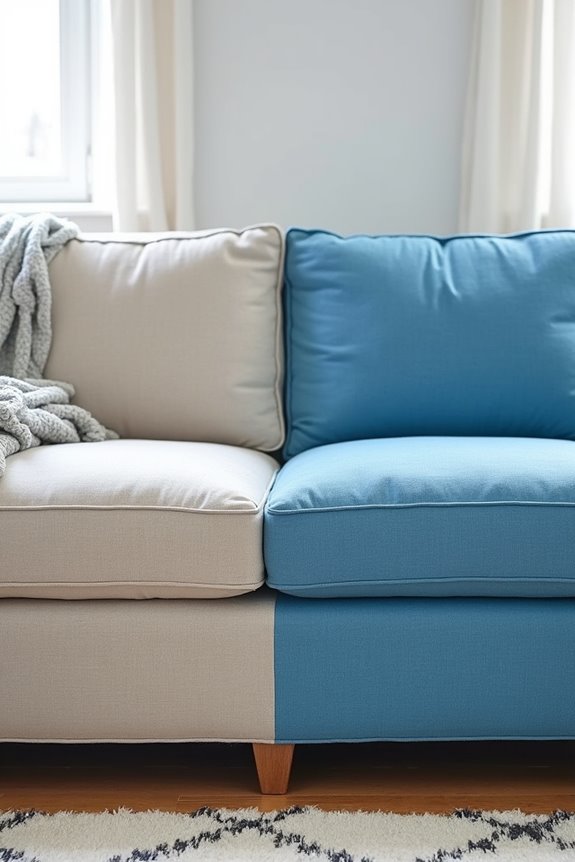
How quickly can you refresh a tired sofa’s appearance? You’ve got three powerful options: paint, dye, and slipcovers.
1. Paint Application
Angelus leather paint delivers impressive results on budget couches. Apply it to worn leather, and you’ll achieve a weathered aesthetic while letting original black peek through in spots. This approach costs minimal investment for dramatic change.
2. Dye Solutions
Rit Dye works exceptionally well on light-colored sofas. Mix complementary shades, petal pink, yellow, and tan, to create sophisticated slipcover tints.
Spray dye options like Simply Spray produce fresh finishes. Charcoal gray applications maintain durability beyond one year with only minor touchups needed.
3. Slipcover Strategy
Makeshift slipcovers using floral fabric offer affordable temporary solutions before full reupholstery. This flexible approach protects your investment while you decide on permanent changes.
Layer Seasonal Throws and Pillows for Visual Refresh
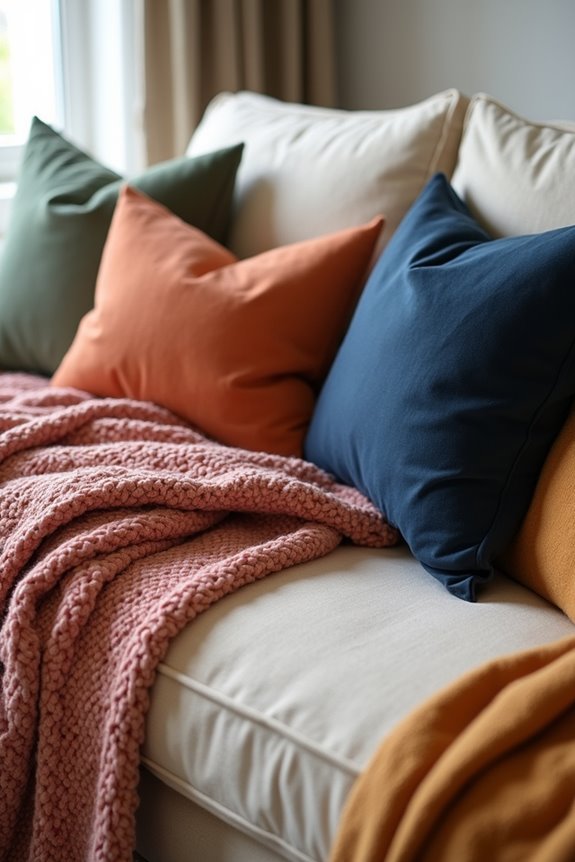
When you’re ready to refresh your sofa without major expenses, layering seasonal throws and pillows changes the entire look in minutes. I’ve discovered that rotating textiles seasonally keeps my old sofa looking current and well-planned throughout the year.
Here’s how I approach layered textiles:
- Spring and Summer: I layer pastel throws with bold print pillows to brighten the space and create visual interest.
- Fall and Winter: I introduce jewel tones and chunky knits that feel cozy and sophisticated for cooler months.
- Texture Mixing: I combine velvet, linen, faux fur, and quilted throws to build depth and dimension.
I arrange cushions for a polished appearance or drape throws casually for relaxed vibes. Seasonal throws work hardest when you choose durable performance fabrics.
Order free fabric swatches first to test how pieces coordinate in your actual space before purchasing.
Install New Sofa Legs for an Instant Style Shift
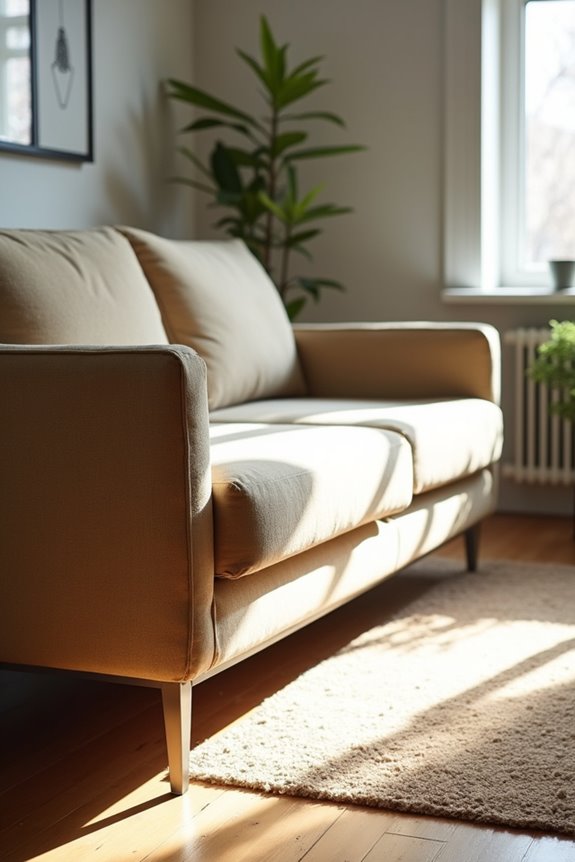
Ever noticed how furniture legs dramatically reshape a room’s entire look? I’ve discovered that swapping sofa legs creates an instant style shift without replacing the entire piece.
Swapping sofa legs instantly reshapes your room’s aesthetic without replacing the entire piece—a simple style shift that transforms your space.
1. Choose Your Style
Tall wood or metal legs deliver an airy, light feeling. Sculpted tapered legs evoke mid-century charm, while block legs embrace casual contemporary vibes. Slim metal legs offer sleek, minimalist appeal for modern spaces.
2. Ensure Proper Installation
Before purchasing, verify compatibility with your sofa’s frame and mounting hardware. This guarantees secure installation and prevents frustrating mismatches.
3. Find Quality Options
What A Room offers replacement sofa legs in wood and metal finishes. Their diverse selections match virtually any decor theme.
This affordable update joins your seasonal styling efforts, completing your sofa’s makeover without breaking the bank.
Add Trim and Nailheads to Finish Strong
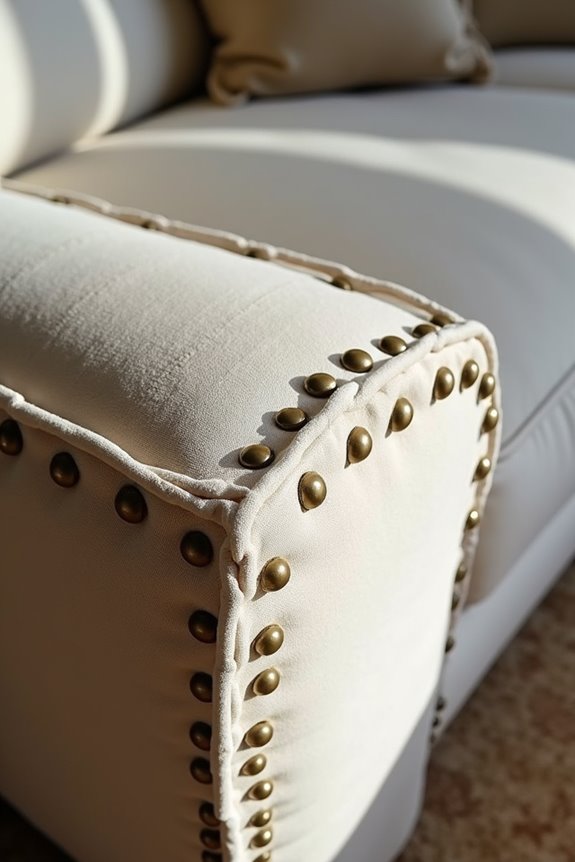
The finishing touches change a sofa from simply functional to genuinely custom-designed.
I’ve discovered that strategic trim and nailheads elevate any sofa makeover remarkably. Here’s how you can achieve professional results:
- Apply bullion fringe trim using fabric glue and pins along edges for bold visual impact
- Install nail heads on sofa arms to create high-impact detail and custom appearance
- Place nail heads along cushion bottom edges for a chic, tailored silhouette
These decorative elements work together flawlessly. Trim adds softness and movement, while nailheads introduce structured elegance. You’ll achieve that designer look you’ve admired without complete reupholstery costs.
The combination changes your sofa’s character dramatically. Start with one element, then layer additional details. This budget-friendly approach delivers genuine sophistication and belonging to a community that values smart design choices and intentional living spaces.