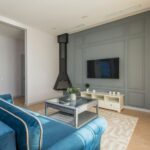
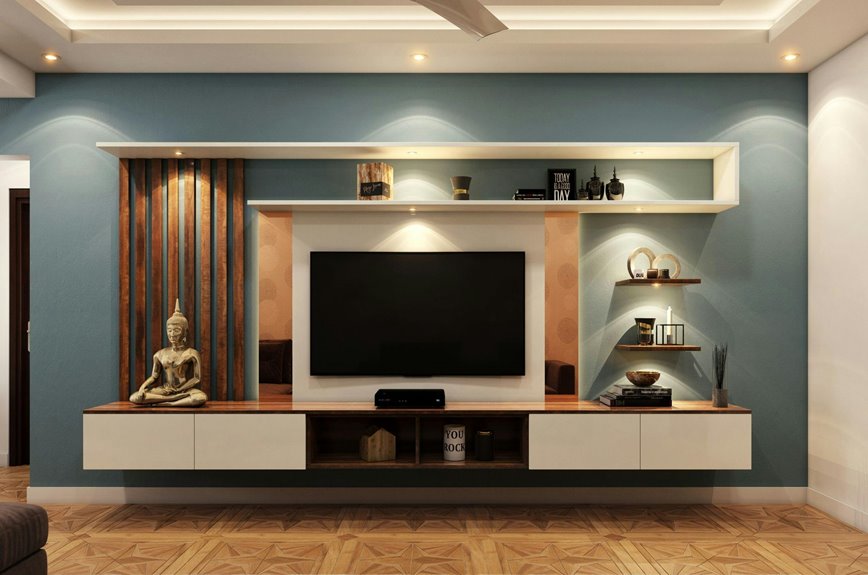
your TV unit can change how a room feels, or blend seamlessly into it. I’ve learned that the right design balances function with style, whether you’re working with a compact bedroom or an open living room.
The real challenge isn’t finding ideas; it’s choosing materials, colors, and storage solutions that match your specific space. Let’s explore how to create an entertainment wall that actually works for you.
TV Units for Different Rooms: Bedrooms, Living Rooms, and Compact Spaces
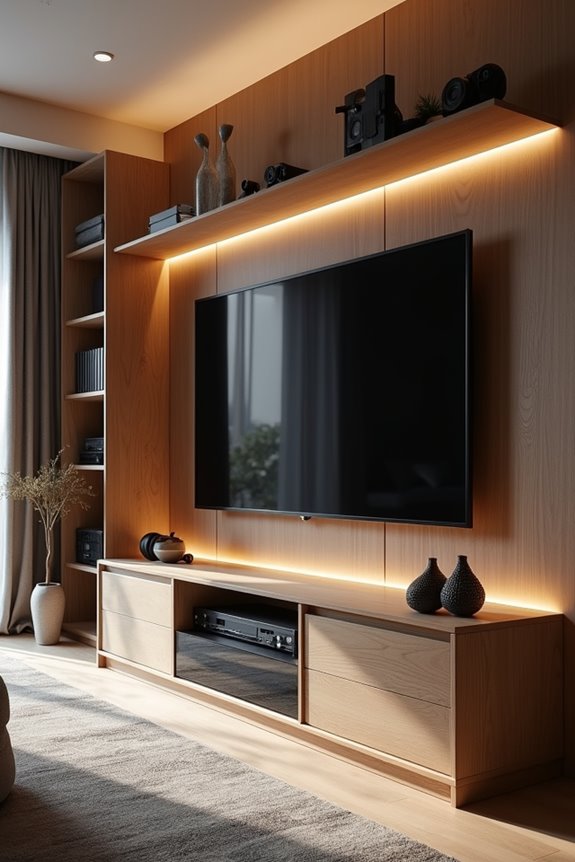
Where should you position your TV unit to match your room’s purpose and size?
1. Bedroom TV Units
I recommend keeping bedroom units minimal with soft lighting and thoughtful shelving. This approach maintains calm while providing practical storage. Muted color palettes work best here.
2. Living Room TV Units
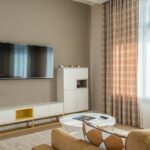
Your living room deserves a unified wall design. Wall-mounted or built-in options integrate storage and cable management smoothly. This creates a central focal point that anchors your entire space.
3. Compact Spaces
Floating wall-mounted units maximize floor area in smaller rooms. Hidden storage keeps clutter invisible while maintaining style. Slim profiles preserve precious square footage without sacrificing functionality.
Contemporary designs blend wood, glass, and metal materials effectively. Pairing your TV unit with surrounding artwork and lighting creates a deliberate, professional interior that reflects your design vision.
Modern Styles: Wall-Mounted Panels, Floating Shelves, and Built-In Cabinets
I’ll show you how sleek wall-mounted panels and floating shelves create a modern look for your TV wall. These systems combine visual sophistication with smart storage, letting you display décor while hiding cables and devices smoothly. By pairing these elements strategically, you’ll create a unified entertainment space that feels well-planned and polished.
Sleek Wall-Mounted Panel Systems
How can you create a TV wall as an architectural focal point? Sleek wall-mounted panel systems combine three essential elements into one unified design. You’ll integrate wall-mounted panels, floating shelves, and built-in cabinets to create visually seamless storage solutions.
Modern panel systems feature textured back panels or timber-inspired finishes that add depth without clutter. Cables stay hidden behind the panels, maintaining a clean appearance. Floating shelves offer flexible display space around your TV, balancing open showcasing with concealed storage for remotes and devices.
Built-in cabinets complete the system, creating an integrated architectural unit. These systems support soft curves and muted color palettes that align with contemporary interiors. The overall effect is a streamlined, cinema-like ambiance with visual coherence and purposeful design.
| Element | Purpose | Visual Effect |
|---|---|---|
| Wall-mounted panels | Structure and cable management | Clean, unified backdrop |
| Floating shelves | Display and flexible storage | Open, balanced composition |
| Built-in cabinets | Integrated storage solutions | Seamless architectural integration |
| Textured finishes | Depth and visual interest | Modern, layered appearance |
| Concealed lighting | Ambiance and functionality | Cinema-like atmosphere |
Floating Shelves With Storage
Floating shelves create the perfect balance between open display and functional storage in your modern TV wall design. I’d recommend considering these key elements:
- Display and concealment combination – Mix open shelves for books and plants with closed cabinets for cables and devices
- Centered or offset placement – Position shelves directly under your TV or stagger them asymmetrically for visual interest
- Wall-mounted integration – Pair floating shelves with matching panels to create a unified appearance
- Modular adaptability – Choose adjustable configurations that fit your specific room dimensions and evolve with your needs
This modular storage approach makes your entertainment area feel more spacious while keeping clutter hidden. Built-in cabinets beneath floating shelves maximize functionality without sacrificing style.
You’ll achieve that contemporary aesthetic while maintaining the organized, deliberate look that defines successful modern interiors.
Choose Your TV Unit Material: Wood, Glass, Metal, Marble, and MDF
I’ll guide you through selecting the right material for your TV unit by examining how each option performs under real-world conditions and affects your space visually. Your choice between wood, glass, metal, marble, and MDF will directly impact both how long your unit lasts and the overall look you’re creating.
Let’s explore the durability requirements and aesthetic qualities that’ll help you match the perfect material to your design vision.
Material Durability And Maintenance
When you’re selecting a TV unit material, you’re really choosing how your furniture will look and perform over time. The right material choice directly impacts your maintenance routine and long-term satisfaction.
- Wood finishes require regular dusting and occasional polishing to maintain their natural beauty and protect against scratches.
- Glass surfaces need frequent cleaning to prevent fingerprints and dust buildup, but they’re easy to wipe down with appropriate cleaners.
- Metal frames resist staining and wear well, though they may require occasional polishing to maintain their finish.
- Marble and stone demand careful handling; they’re susceptible to stains and require specialized sealants for protection.
Consider your living space’s traffic patterns and environmental exposure. Choose durable finishes that align with your cleaning commitment. Quality materials and proper maintenance will keep your TV unit looking stylish and performing well for years to come.
Aesthetic Impact By Material
How you choose your TV unit’s material shapes the entire personality of your living room.
Wood creates warmth and belonging through rich hardwood finishes or cost-effective engineered options. This material invites comfort into your space.
Glass delivers sleek, contemporary appeal that reflects light and expands visual space. High-gloss panels or clear doors achieve minimalist sophistication you’ll appreciate.
Metal frames introduce industrial edge and durability. They contrast beautifully with warm materials, creating streamlined silhouettes that feel deliberate.
Marble and stone add luxury through natural veining and tactile surfaces. These materials pair perfectly with muted tones for refined aesthetics.
MDF and engineered wood offer versatile, budget-friendly solutions. They mimic solid wood or glass while enabling diverse textures and colors that match your vision.
Your material choice establishes the design foundation for your entire room’s character.
Best Colors for TV Units: Neutral Tones and Bold Statements
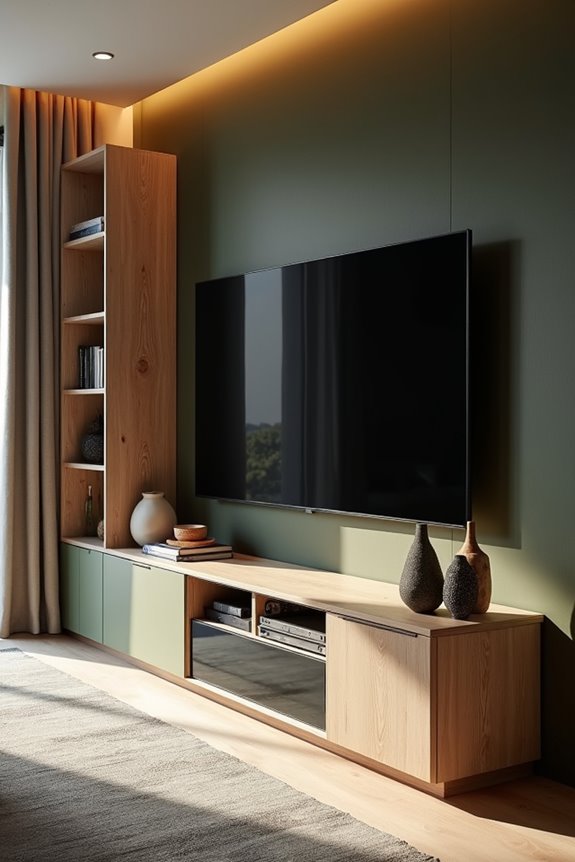
Why does color matter so much when designing a TV unit? Color sets the mood and draws attention to your space’s centerpiece.
I’ve discovered that successful TV unit color coordination depends on understanding your room’s visual balance. Here’s what I recommend:
- Use neutral tones like white, black, grey, or wood finishes for versatile appeal across design styles
- Apply bold color statements strategically to create focal points while balancing with complementary elements
- Contrast light furniture against darker walls (or vice versa) to maintain screen readability and visual interest
- Consider your overall interior theme to maintain a timeless aesthetic
You’ll achieve professional-looking results by pairing wood finishes for natural warmth with glass or metal accents for contemporary flair. This approach helps your TV unit work well with your decor while maintaining the sophisticated look you’re aiming for.
Storage Strategies: Concealed Cabinets, Open Shelves, and Cable Management
The storage strategy you choose for your TV unit determines whether your entertainment space looks neat or cluttered. I recommend combining concealed cabinets with open shelves to achieve balance.
Concealed cabinets hide remotes, media players, and cables effectively. They maintain a sleek appearance while keeping necessary items accessible. Position these cabinets on either side of your TV for symmetrical design.
Open shelves display decorative pieces, books, and plants nearby. This approach adds visual interest without overwhelming the space. The contrast between hidden and visible storage creates design harmony.
Cable management requires integrated solutions like pull-down drawers or grommets. These features minimize visible wiring for a cinema-like presentation. Floating or recessed storage options maximize floor space, supporting modern, minimalist aesthetics.
The combination preserves design harmony while keeping devices easy to access.
Texture and Layers: Mixing Panels, Paint, and Stone
While concealed storage keeps your entertainment space organized, what truly makes a TV unit stand out as a focal point is the surface itself. I find that layering different textures creates visual interest and sophistication. Here’s how you can achieve this approach:
- Combine textured panels with tongue-and-groove finishes to add depth behind your screen
- Mix natural stone or marble with wooden elements for a luxe, multi-tone backdrop
- Apply paint finishes, such as dark accent walls or concrete effects, to set dramatic moods
- Coordinate all textures with your existing furniture and color palette for balance
Textured backdrops reduce the stark contrast between your TV and wall while maintaining cohesion. Stone elements bring elegance, while paint provides adaptability to contemporary or minimalist styles.
When you thoughtfully blend panels, paint, and stone, you’re creating a visually balanced focal point that reflects your design vision.
Curves and Soft Lines: Softening Modern Edges
I can redesign your modern TV unit by introducing curved panels and soft edges that counteract hard architectural lines. You’ll discover how blending curves with sleek wood finishes or glass creates visual softness while keeping your design contemporary and functional.
Let me show you how strategic material choices and flowing shapes bring sophistication to your entertainment space with refined details.
Curved Panels And Edges
How can soft, rounded edges change a TV wall from stark and imposing into something warm and welcoming? I’ve found that curved panels and soft edges create an inviting focal point that draws people in rather than intimidating them.
Consider these design strategies:
- Install curved panels alongside your TV to replace boxy, angular surfaces with flowing lines
- Choose rounded shelves that reduce visual weight and improve the flow toward seating areas
- Pair soft edges with muted paint tones and natural textures like wood or marble for balance
- Add curved lighting accents in recessed coves to emphasize the unit’s soft lines without harsh shadows
A whole-wall design incorporating curved edges promotes contemporary aesthetics while maintaining cohesion throughout your space. This approach changes your entertainment area into a sophisticated gathering spot that feels both modern and approachable.
Soft Material Integration Methods
Beyond curved panels alone, layering soft materials makes your TV unit feel warm and welcoming rather than sleek but cold. You’ll discover that combining textures creates depth and warmth throughout your space.
| Material | Application | Benefit |
|---|---|---|
| Fabric-backed panels | Cabinet doors and wall backing | Sound absorption and tactile softness |
| Matte lacquer | Cabinet surfaces | Reduces glare and creates gentle finishes |
| Warm wood tones | Shelving and framing | Natural warmth and organic appeal |
When you integrate soft textures with curved cabinetry, you’re establishing visual harmony. Material layering using matte finishes and natural wood complements rounded edges beautifully.
This approach softens modern geometry while maintaining contemporary sophistication. Your TV wall becomes a cohesive design element that welcomes rather than intimidates.
Blending Function With Elegance
Modern TV units often feature sharp angles and straight edges that can feel harsh in your living space. You’ll want to soften these edges while maintaining functionality and style.
Consider these design strategies:
- Install curved shelves and rounded cabinet doors on your wall-mounted unit for visual flow
- Choose a soft color palette with muted tones and warm wood finishes to reduce visual weight
- Incorporate concealed storage with arch-backed panels to keep clutter hidden and organized
- Select tapered edges on floating shelves to guide your eye naturally through the space
This approach creates balance between minimalism and warmth. When you combine sleek materials like matte metal and glass with gentle curves, your TV unit becomes both practical and inviting. You’re creating a center of attention that belongs in your home, not dominates it.
Style Your TV Wall: Gallery Arrangements, Decor, and Lighting
Why settle for a blank wall when you can design your TV area into a curated display that serves as both entertainment and decor?
A gallery arrangement around your TV creates visual interest while keeping the space unified. Use matching black-and-white frames to help your screen blend smoothly into the wall. This unified approach prevents visual clutter and establishes a polished focal point.
Symmetry reinforces balance throughout your TV wall. Place identical vases or frames on either side of your screen to achieve this effect. Floating shelves adjacent to the TV provide perfect display space for art without crowding the screen itself.
Strategic lighting amplifies your gallery’s impact. Wall sconces or feature lights near the TV highlight your arrangement while reducing screen glare. This layered approach makes your entertainment area a designed, intentional space that reflects your style.
Floating Shelves: Creating Symmetry and Display Space
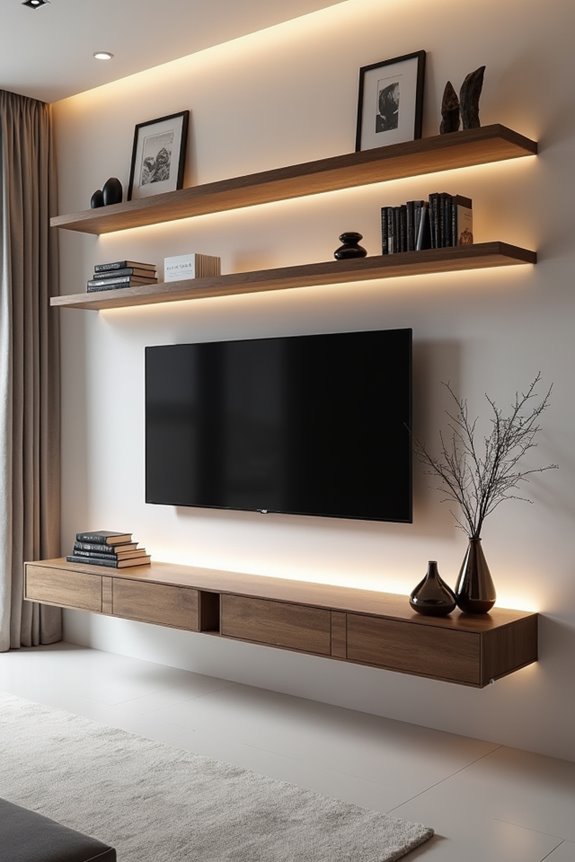
How can you convert empty wall space into purposeful display areas? Floating shelves offer the perfect solution, combining vertical storage with aesthetic appeal. I’ll guide you through creating a balanced arrangement that improves your TV wall design.
Floating shelves transform empty wall space into purposeful display areas, combining vertical storage with aesthetic appeal for your TV wall design.
Consider these strategic approaches:
- Position shelves symmetrically on both sides of your TV for visual equilibrium and harmony
- Choose thicker shelves over multiple thin ones for sturdier support and consistent styling
- Mix textures like wood, metal, and glass to coordinate with your TV unit palette
- Layer decorative items, such as books, plants, and candles, creating intentional negative space
This styling method converts your display space into a curated gallery. Pairing shelves with concealed storage maintains that clean, clutter-free aesthetic you’re seeking.
The result is a sophisticated TV wall that reflects your personal style while providing functional storage that belongs in your home.
Hide the Cables: Clean Cable Management Solutions
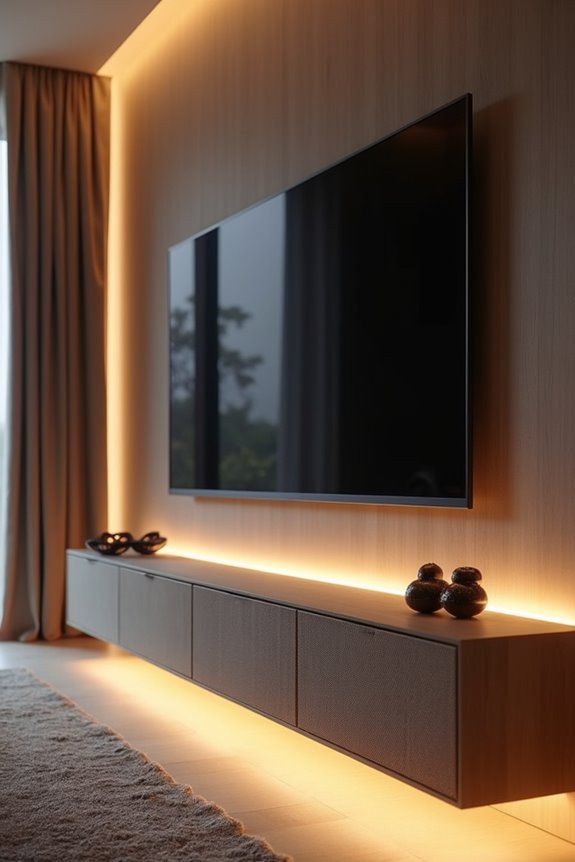
Once you’ve arranged your floating shelves and styled your TV wall, tangled cords threaten to undo all that careful work. I recommend investing in integrated cable management solutions that keep wires hidden and organized.
1. Built-in concealment options work best with wall-mounted TV installations. Integrated channels run behind your unit, routing cables discreetly while maintaining easy device access. This approach creates the polished look you’re aiming for.
2. Pull-down drawers and sleek shelves provide additional cable routing pathways. These solutions hide stray cords underneath or behind your TV unit, reinforcing a clutter-free aesthetic.
3. Recessed entertainment walls incorporate cable channels and LED strips seamlessly. This design choice works across minimalist and eclectic styles alike.
Pairing cable management with matching decor items completes your streamlined TV area, so every element works together as one unified design.
Brass Accents and Ambient Lighting: Adding Drama and Warmth
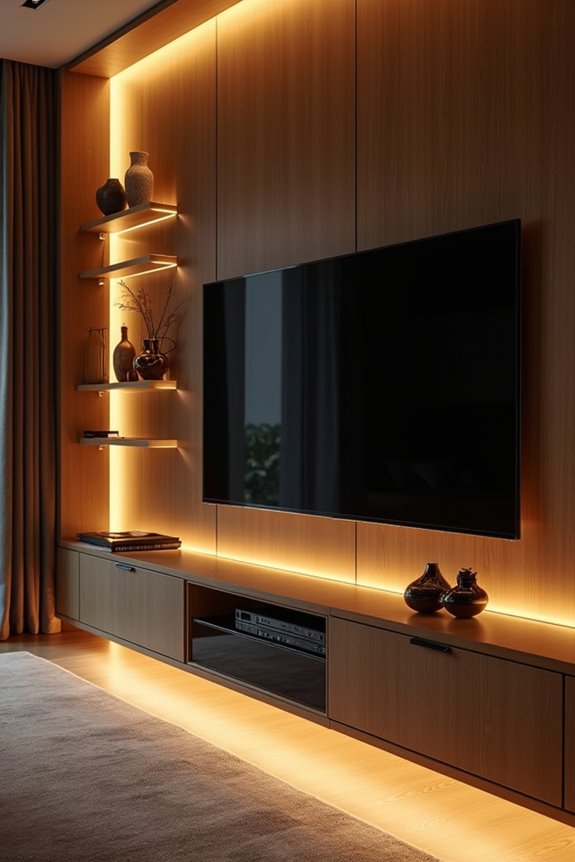
Consider how brass fixtures enhance your TV unit from functional furniture into a sophisticated focal point. I’ve found that brass accents create luxe metallic contrast beautifully against dark walls and wood tones. Pairing these elements with ambient lighting creates an entertainment wall with real visual interest.
Here’s how I’d approach this design:
- Balance brass with neutrals like white, black, or grey to prevent overwhelming the space
- Install LED backlighting behind your TV unit to create cinematic mood and highlight textures
- Position wall sconces strategically to minimize screen glare while enhancing surrounding artwork
- Coordinate brass finishes with complementary materials: wood, glass, and matte metals.
The best results come from thoughtfully combining these elements. Strategic ambient lighting showcases your brass accents without competing with your screen. This balanced approach creates an entertainment space you’ll enjoy spending time in.
Affordable TV Units: What to Expect and Where to Buy

Why settle for a basic TV stand when budget-friendly options deliver real style and function? You’ll discover affordable TV units crafted from engineered wood and MDF that rival pricier alternatives. Contemporary designs in white, black, and neutral tones fit seamlessly into any room while keeping costs down.
What to Expect:
- Built-in cable management keeps cords organized and hidden
- Open or concealed storage adapts to your needs
- Scalable designs accommodate various TV sizes affordably
Smart shopping means comparing warranty coverage and after-sale support across retailers. Sales and promotions frequently reduce prices on popular models, making quality accessible.
Check delivery terms and return policies before purchasing. Look for storage solutions that maximize functionality without overspending. These budget-friendly units prove you don’t sacrifice style for affordability.