Your family room should work as hard as you do. I’m going to show you how to design a gathering space that serves as the heart of your home; one that invites conversation, handles daily life, and feels well-planned.
From choosing the right focal point to layering in flexible seating, these ten ideas will help your family connect in meaningful ways. Here’s where we start.
Define Your Room’s Primary Focal Point

Why does your family room feel scattered or unbalanced? Your interior design lacks a clear anchor point. Without one, your eyes wander aimlessly, and conversations feel fragmented.
Without a clear focal point, your family room lacks visual organization, leaving eyes wandering and conversations feeling disconnected.
A focal point organizes everything: seating, traffic flow, and sightlines. It’s the visual destination that pulls attention naturally.
1. Choose Your Anchor
Evaluate your room’s strongest feature. Is it a fireplace? Large windows overlooking the pool? An architectural element? Select one primary focal point to avoid visual competition.
2. Orient Seating Strategically
Arrange furniture to face your chosen focal point. If your fireplace sits behind the couch, reposition seating to showcase it prominently rather than hide it.
3. Reinforce with Design
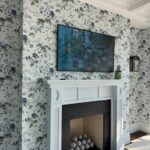
Emphasize your focal point through wall treatments, color, and furniture scale. These elements create visual hierarchy while maintaining balance in your half-dining, half-living layout.
Connect Your Family Room to Outdoor Views

Once you’ve established your family room’s main visual anchor, you’re ready to expand that connection beyond your walls.
Position Windows Strategically
Place windows to frame your pool room or outdoor view directly. This creates natural sightlines that draw your eye outward and flood your space with daylight.
Arrange Furniture Intentionally
Position seating so conversations flow toward both your fireplace and exterior views. Keep clear pathways to windows without blocking scenery with large pieces.
Anchor Without Obstruction
Use appropriately scaled rugs to define your seating area while maintaining open routes to outdoor access points.
Unify Interior and Exterior
Select wall treatments and artwork that harmonize with your landscape. This matching design reinforces the transition between indoor gathering space and outdoor environment, making your family room feel naturally connected to nature.
Arrange Seating That Sparks Conversation
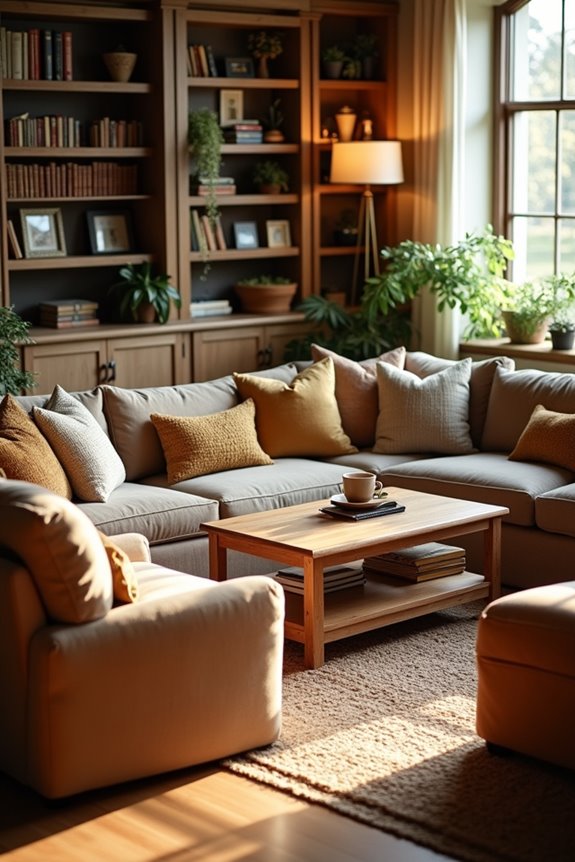
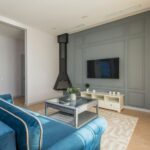
How you arrange your seating directly shapes whether your family room becomes a gathering hub or just a place where people happen to sit. I’d position furniture to face each other and toward natural focal points like fireplaces or pools. This encourages direct conversation and connection.
| Seating Strategy | Purpose |
|---|---|
| 36–42 inch walkways | Prevents crowding and enables movement |
| Angled toward center | Fosters eye contact and inclusion |
| Conversational groupings | Accommodates different interaction styles |
| Coffee table + ottomans | Provides shared surfaces and flexible seating |
| Face natural focal points | Draws attention and encourages dialogue |
I’d use loveseat-and-armchair combinations or sectionals with accent chairs. These adaptable groupings welcome various conversation styles.
Position pieces slightly angled rather than flat against walls. Add a properly sized coffee table for shared snacks and dual-purpose ottomans for extra seating during larger gatherings.
Layer Lighting for Every Mood and Activity
Lighting creates a family room that feels warm and dynamic instead of flat and uninviting. I’ve found that layering different light sources creates flexibility for any activity or mood you want to establish.
Here’s how I approach layered lighting:
- Ambient lighting provides overall illumination through dimmed ceiling fixtures that set a relaxed foundation for movie nights or casual gatherings
- Task lighting includes bright sconces and table lamps positioned near seating zones for reading, games, or focused conversations
- Accent lighting highlights architectural features like fireplaces with uplights or artwork with picture lights, adding visual interest and depth
I recommend installing dimmable controls throughout your space. This lets you shift gradually between social gatherings and quiet lounging.
A central statement pendant anchors the room while wall sconces prevent harsh shadows across seating areas. This ensures everyone enjoys clear sightlines for conversation.
Choose Durable Materials That Hide Life’s Messes
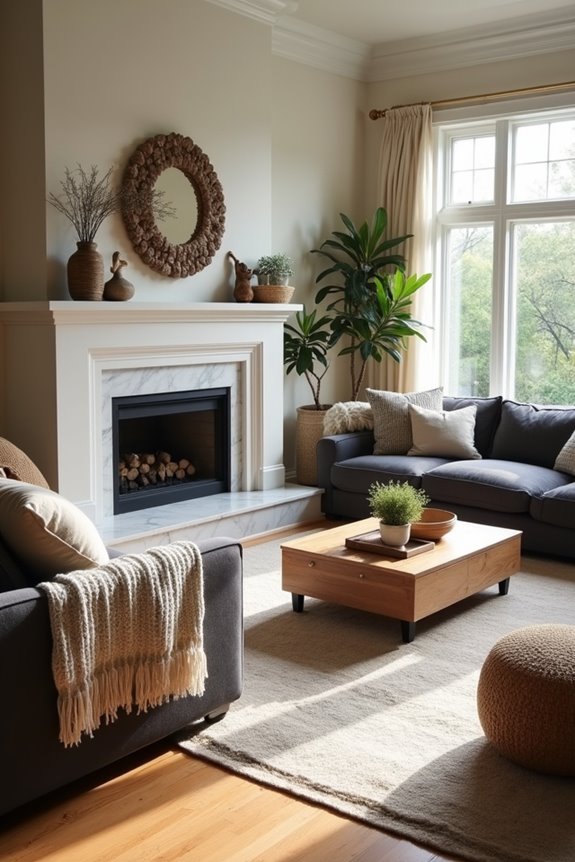
With the right lighting setting the mood, your family room needs furnishings and materials that can actually handle the real life happening inside it. I recommend selecting performance fabrics and hard-wearing surfaces that resist stains and simplify cleaning.
| Material Type | Best Options | Why It Works |
|---|---|---|
| Upholstery | Performance velvet, indoor-outdoor acrylic | Resists spills and cleans easily |
| Flooring | Engineered hardwood, ceramic tile, luxury vinyl | Hides wear and wipes clean |
| Frames | Solid wood, metal | Withstands daily use durably |
| Finishes | Textured neutrals, speckled surfaces | Conceals fingerprints and minor marks |
Choose medium to dark tones and patterned fabrics that camouflage everyday messes. Add slipcovered seating and washable throw blankets for quick refreshes.
Incorporate protective rug treatments and flexible layouts. These choices let your family gather confidently without worrying about damage or constant maintenance.
Divide Your Family Room Into Flexible Activity Zones
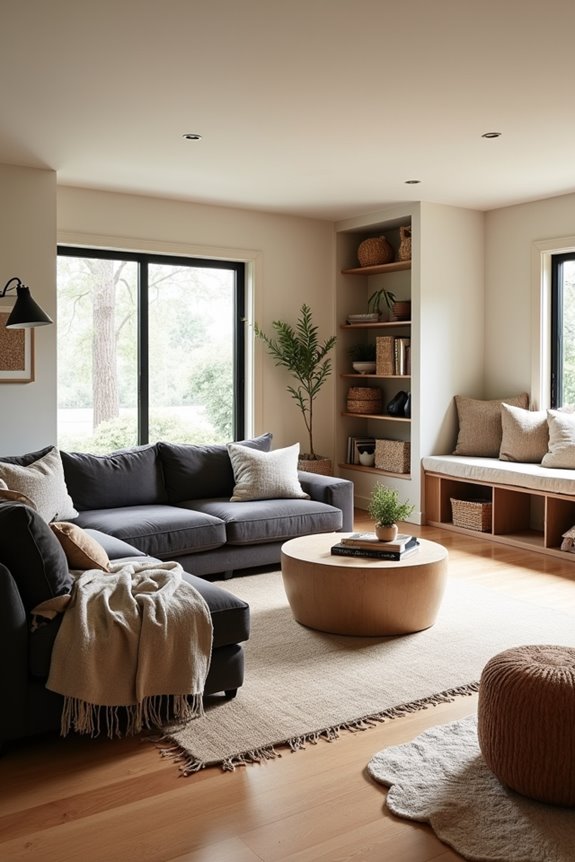
Why settle for a single-purpose room when your family needs multiple gathering spaces?
I’d divide your family room into distinct zones that work together seamlessly. Position your couch group to face the pool-room windows, creating a primary seating area. Then establish a separate casual dining niche nearby for meals and snacks.
Here’s how I’d make it work:
- Use larger area rugs under living spaces and smaller ones under dining areas to define each zone visually.
- Place your fireplace on a shared wall to anchor conversations without blocking pool views.
- Arrange furniture to keep sightlines clear between entry, dining, and pool access.
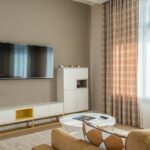
Modular seating and movable tables let you reconfigure spaces for movie nights or gatherings without permanent changes. This flexibility gives your room the adaptability your family needs day to day.
Hide Clutter: Strategic Storage That Stays Invisible
I’ve discovered that built-in cabinets with push-to-open doors and concealed storage compartments help you manage toys, games, and media without sacrificing style. Strategic placement of these solutions, from toe-kick drawers to hidden compartments in ottomans and sofas, keeps your family room surfaces clean and organized.
When you invest in furniture designed specifically to conceal clutter, you’re creating a polished gathering space that functions beautifully whether your family’s relaxing or entertaining guests.
Built-In Cabinet Solutions
Built-in cabinets create stylish storage in family rooms by hiding items you prefer out of sight while keeping surfaces clean and organized. You’ll appreciate how custom cabinetry integrates seamlessly into your space, creating a polished look that invites everyone to gather.
Consider these storage possibilities:
- Media equipment concealment: Hide gaming systems, remote controls, and cables behind soft-close doors near your seating area
- Floor-to-ceiling designs: Maximize vertical space while framing focal points like fireplaces or windows
- Mixed display options: Combine open shelves for decorative items with closed compartments for everyday clutter
Material choices matter significantly. Wood veneer, painted MDF, or matte laminates each offer different durability levels and aesthetics. Soft-close hinges and push-to-open drawers enhance functionality while maintaining that intentional, uncluttered appearance your family deserves in a gathering space.
Concealed Storage Organization
How can you enjoy a truly relaxed gathering space when remote controls, charging cables, and toy bins clutter every surface? Strategic concealed storage keeps essentials accessible while maintaining visual calm.
I recommend using furniture with hidden compartments: coffee tables and media consoles store remotes, chargers, and accessories seamlessly. Ottomans with lift-top surfaces and sofa tables work similarly, hiding items instantly.
Lightweight baskets and bins tuck under seating or inside armrests for flexible organization. Position storage walls along less-frequented areas to preserve traffic flow. A dedicated hidden charging station with discrete cable management preserves your room’s clean appearance.
| Storage Type | Best Location | Hidden Items |
|---|---|---|
| Coffee table | Center seating | Remotes, chargers |
| Ottoman | Seating area | Blankets, toys |
| Media console | Wall-mounted | Game accessories |
Use Color and Texture to Create Warmth
Warmth in a family room comes from thoughtful choices in color and texture that work together to make the space feel inviting and comfortable. I recommend starting with a warm color palette featuring soft taupe, warm gray, and creamy white as your foundation.
Layer in rich textures and materials that enhance coziness:
- Combine smooth leather seating with chunky knit throws and sheepskin accents for tactile contrast
- Incorporate natural materials like wood furniture, stone fireplace surrounds, and jute rugs that add underfoot warmth
- Use amber or rust accents near the fireplace balanced with cooler blues or greens in adjacent areas
For lighting, I’d install layered fixtures with warm-colored bulbs (2700K–3000K) and fabric lampshades. These deliberate choices create an atmosphere where your family genuinely wants to gather.
Add Personal Touches That Tell Your Story
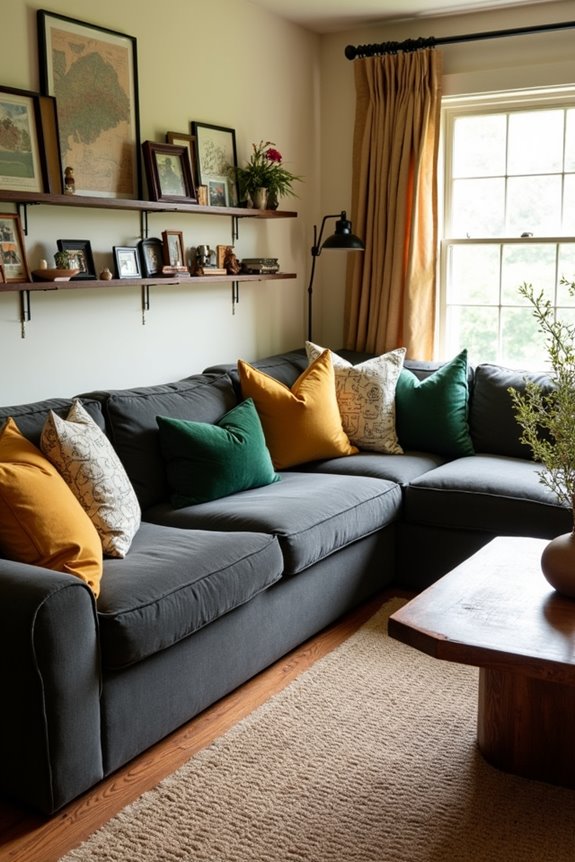
Once you’ve established your room’s foundation with warm colors and inviting textures, it’s time to infuse the space with elements that reflect your family’s unique story.
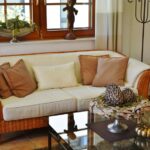
Display meaningful items strategically throughout your gathering space. Family heirlooms like quilts or framed photos work beautifully on shelves or gallery walls. Travel mementos such as maps, shells, or collectibles add narrative depth and spark conversation.
Incorporate tactile pieces such as hand-me-down furniture or heritage rugs that create continuity across generations. Custom signage featuring family milestones, births, or anniversaries personalizes your walls authentically.
Keep your space current with rotating displays. Monthly photo boards or children’s artwork installations remind everyone that this room celebrates your family’s ongoing journey. These personal layers create a genuine reflection of who you are.
Plan Seating Flexibility for Gatherings and Everyday Comfort
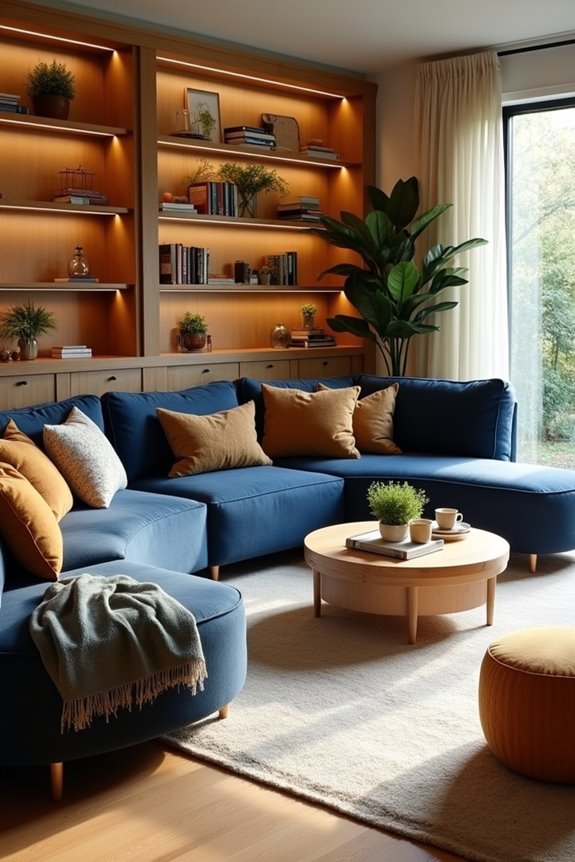
I’ll craft a seating arrangement that adapts to both intimate gatherings and everyday living. You can achieve this flexibility through modular pieces, conversation-focused layouts, and multi-use furniture that shift based on your needs.
Strategic placement of sofas, chairs, and occasional tables creates multiple configurations while maintaining sightlines to your fireplace and pool room.
Modular Seating Arrangements
How can your family room adapt to both quiet evenings and lively gatherings? Modular seating gives you flexibility to reconfigure your space whenever you need it.
I recommend combining pieces in varied scales to create dynamic clusters. A 90-inch sofa paired with two to three smaller armless chairs lets you form conversation groups easily. Add lightweight ottomans on casters so you can shift them quickly during events.
Consider these configuration options:
- Fireplace clusters – arrange seating to center around your focal point while maintaining sightlines across groups
- Traffic-friendly layouts – separate modular sections to create clear pathways from your pool room or dining area
- Game configurations – position chairs and ottomans in flexible arrangements for board games and activities
Choosing pieces with easy-to-move bases allows you to rearrange your room effortlessly whenever your family gathers.
Conversation-Focused Layout Design
The best family rooms spark natural conversation by arranging seating in ways that let people see and hear each other easily.
1. Arrange Seating for Face-to-Face Interaction
Position curved sofas and chairs to face one another rather than toward walls. This layout encourages eye contact and genuine connection during gatherings. Include varied seating heights, armchairs, ottomans, and benches, so guests can adjust their comfort and distance naturally.
2. Anchor Your Space with Purpose
Place a central coffee table or area rug to define your seating zone while maintaining open pathways. Position your fireplace or pool-room windows within sightlines from most seats, creating natural focal points that support conversation flow.
3. Prioritize Movement and Accessibility
Clear pathways between entry points, seating areas, and adjoining rooms help people move smoothly during gatherings and daily use.
Multi-Use Furniture Solutions
To create a family room that adapts smoothly from daily life to larger gatherings, you’ll want modular seating as your foundation. I recommend selecting pieces that you can rearrange easily: sofas, loveseats, and ottomans work best. This flexibility lets you accommodate 6–8 seating points around your central hearth or media wall.
Consider these practical additions:
- Low-profile coffee tables or nesting tables that serve daily use without blocking pathways during events
- Extendable dining tables or tucked-away nooks that transition from everyday meals to family feasts
- Portable ottomans and poufs that expand capacity while maintaining traffic flow toward adjacent rooms
Select area rugs and lighting that anchor zones without restricting movement. This approach keeps your family room welcoming for both quiet evenings and lively celebrations without compromise.