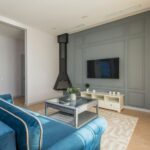
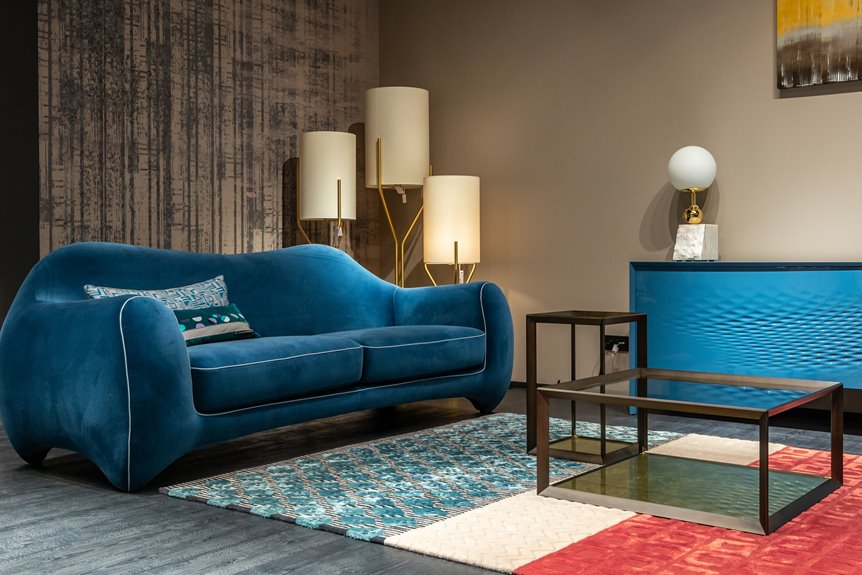
Your living room sets the tone for your entire home. Whether you’re starting from scratch or renewing your current space, understanding the core design principles will help you succeed. I’ll walk you through five essential strategies: from foundational wall colors to strategic furniture placement. Each element builds on the last, creating depth and comfort.
These foundational concepts work together to build a well-designed room that feels complete and welcoming.
Lay the Foundation for Your Living Room Design
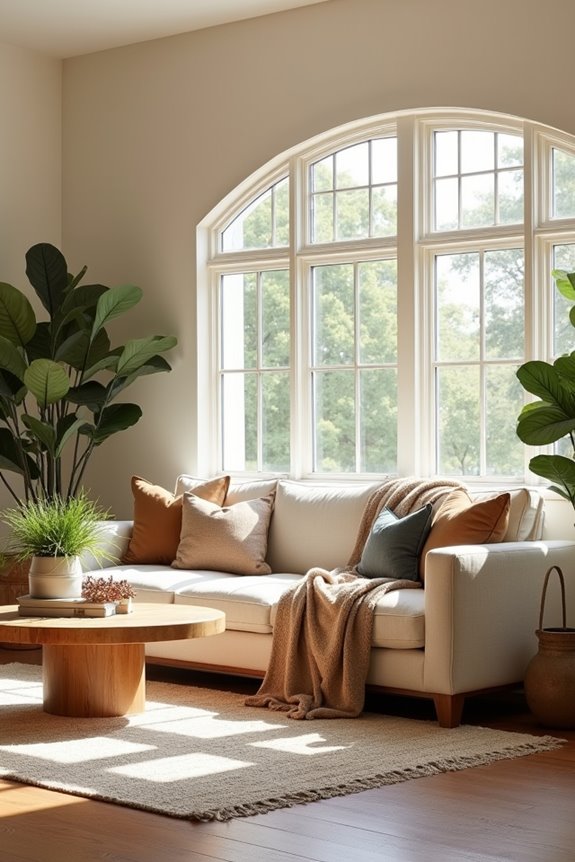
How do you create a living room that feels both calm and inviting? I’d start by painting walls a soft, bluish-gray like Shoji White. This neutral base works beautifully with warm woods and textiles you’ll add later.
Next, anchor your living space with a properly scaled rug and glass-top coffee table. This pairing prevents cramping and creates visual balance in your interior design. The rug should be large enough that furniture legs sit on it.
Layer textures throughout the room using velvet pillows and woven throws. These elements add warmth against cooler wall tones. Finally, incorporate warm metallic accents in brass or gold through lamps and tables. These touches offset the cool palette while creating a welcoming environment for your family.
Anchor Your Living Room With Durable, Comfortable Seating
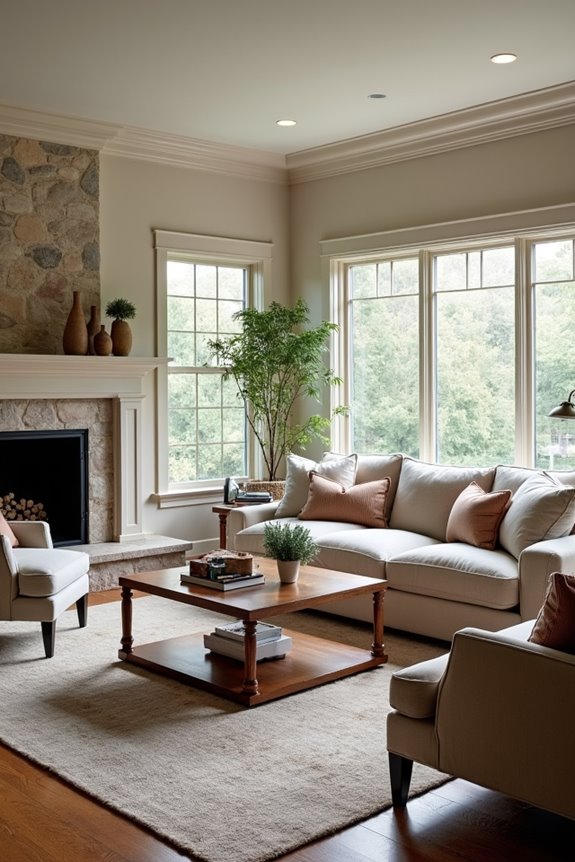
Your sofa is the centerpiece of any living room, so choosing one that balances comfort with durability matters. I recommend exploring options like the Westwood Sofa with its performance fabric and removable covers, or the Palmetto Sofa featuring down-blend cushions for lasting comfort.
| Sofa Style | Key Feature | Best For |
|---|---|---|
| Westwood | Durable performance fabric | High-traffic families |
| Palmetto | Down-blend cushions | Cozy comfort seekers |
| York Sleeper | Space-saving design | Compact living rooms |
| Aldon | Architectural lines | Modern aesthetics |
When selecting seating, consider your family’s lifestyle and space constraints. Performance fabrics withstand daily wear while maintaining that warm Pottery Barn aesthetic you’re building. Removable covers simplify cleaning, making upkeep manageable.
The right sofa grounds your room functionally and visually, creating an inviting gathering space where your family truly belongs.
Warm Your Living Room With Strategic Lighting and Color
Why does lighting matter so much in a living room? Strategic warm lighting creates an inviting sanctuary that feels purposeful and sophisticated.
Layer Your Lighting
I recommend combining multiple light sources to create depth. Overhead fixtures provide baseline illumination, while table lamps and floor lamps add warmth near seating areas and your coffee table. This layered lighting approach lets you adjust ambiance throughout the day.
Balance Color and Warmth
Shoji White walls risk feeling sterile without proper accents. Introduce honey gold pillows, wood tones, and warm textiles to counteract coolness from grey walls and dark fireplaces. Larger lamps and drapery soften reflections while enhancing comfort.
Complete the Look
Rugs, throws, and patterned pillows in warm neutrals reinforce your Pottery Barn aesthetic without sacrificing sophistication or comfort.
Layer Natural Materials and Varied Woods for Timeless Depth
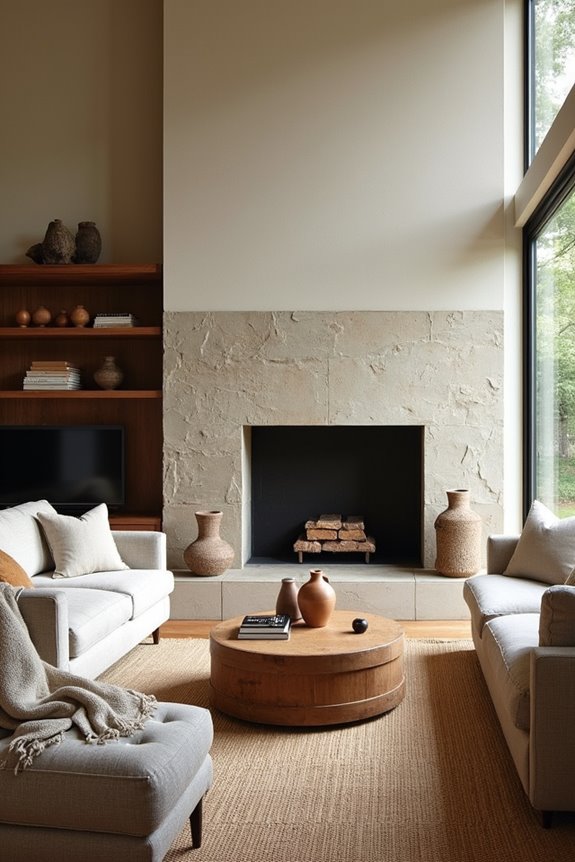
Natural materials form the foundation of authentic Pottery Barn style, creating warmth that manufactured finishes simply can’t replicate. I’d recommend pairing varied wood tones, like maize-finished Aldon pieces with darker wood accents, to build visual contrast and depth that feels deliberate.
Incorporate organic textures through wool, jute, and natural fibers in pillows, rugs, and throws. These elements complement your woodwork without overwhelming the space. A reclaimed wood coffee table or live-edge accent piece grounds the room authentically.
Balance wood-heavy elements by choosing lighter wall colors such as Shoji White. This prevents the room from feeling too dark. Add greenery and botanical accents to enhance your natural wood palette, bringing outdoor-influenced freshness that completes your unified design.
Accessorize With Rugs, Drapery, and Intentional Styling
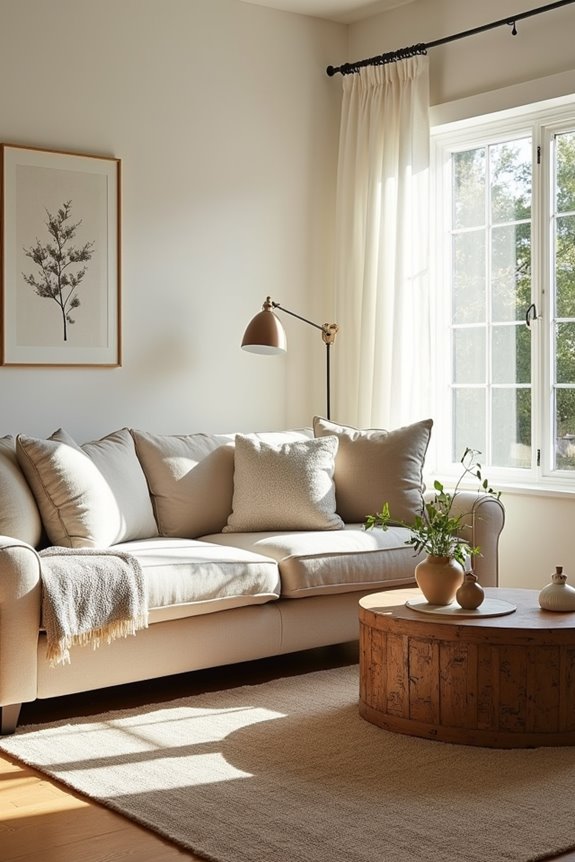
With your natural materials and wood tones in place, it’s time to ground the room with textiles that work together.
1. Choose the Right Rug Scale
Select a rug large enough to ground your seating arrangement and coffee table. A properly sized rug unifies furniture pieces, while an undersized one leaves spaces feeling disconnected and choppy.
2. Layer Drapery Strategically
Install floor-to-ceiling drapery panels in coordinating neutral tones to add height and warmth. Pair heavier drapes with lighter sheers to soften natural light and create visual interest without overwhelming the space.
3. Balance Your Palette
If your walls and fireplace lean gray, introduce warmer rug tones or gold accents through accessories. This prevents a cold, monochromatic environment that lacks personality and comfort.
4. Build Depth With Accessories
Layer printed pillows, textured throws, and a glass-top coffee table to create dimension without cluttering your carefully curated space. This approach adds richness and visual interest to your room.