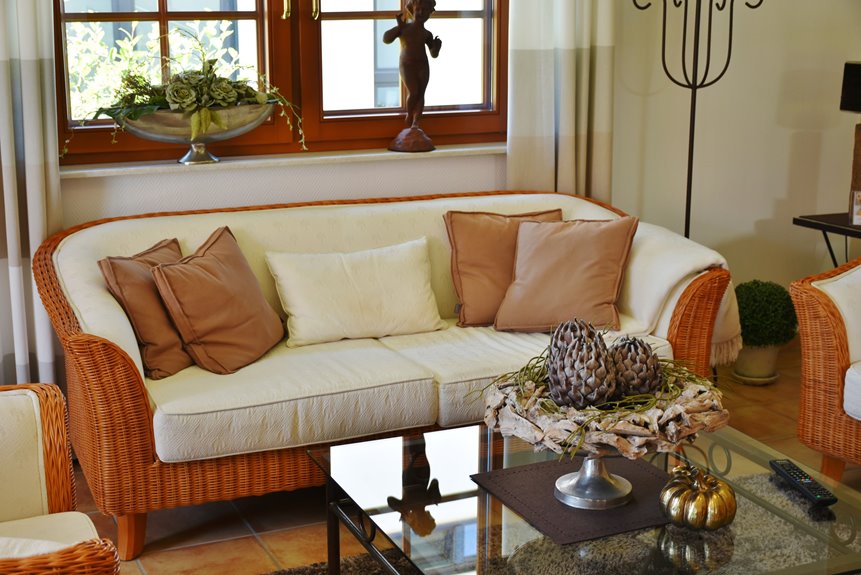
Your sitting room holds untapped potential. With thoughtful arrangement and design choices, you can create a space into somewhere you’ll actually want to spend time. Conversations naturally flourish in well-designed rooms.
Whether you’re working with a compact layout or a sprawling area, the right strategies matter. Strategic seating, lighting, and focal points create rooms that work harder for you.
Arrange Seating to Encourage Conversation
How you position your furniture shapes whether guests intuitively talk together or sit in isolation.
Furniture placement fundamentally influences social dynamics—thoughtful arrangement encourages conversation while poor positioning isolates guests.
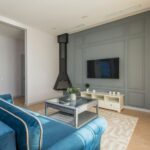
I recommend creating conversation-friendly seating arrangements that naturally draw people together. A corner sofa works exceptionally well, as it facilitates easier conversation and promotes inclusive seating during gatherings. If you prefer flexibility, position two matching sofas facing each other to achieve a similar dynamic and define your room’s social zone.
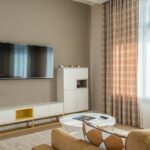
Maintain clear sightlines between seating areas, the fireplace, and the TV. This keeps conversations natural and unobstructed.
Provide adequate circulation by keeping 30 to 36 inches of walking space between large furniture pieces. This prevents your gathering space from feeling cramped.
For larger rooms, I suggest creating two distinct seating areas. This separates TV-watching from fireplace viewing while maintaining good flow throughout the space.
Pick a Paint Color That Sets Your Room’s Mood
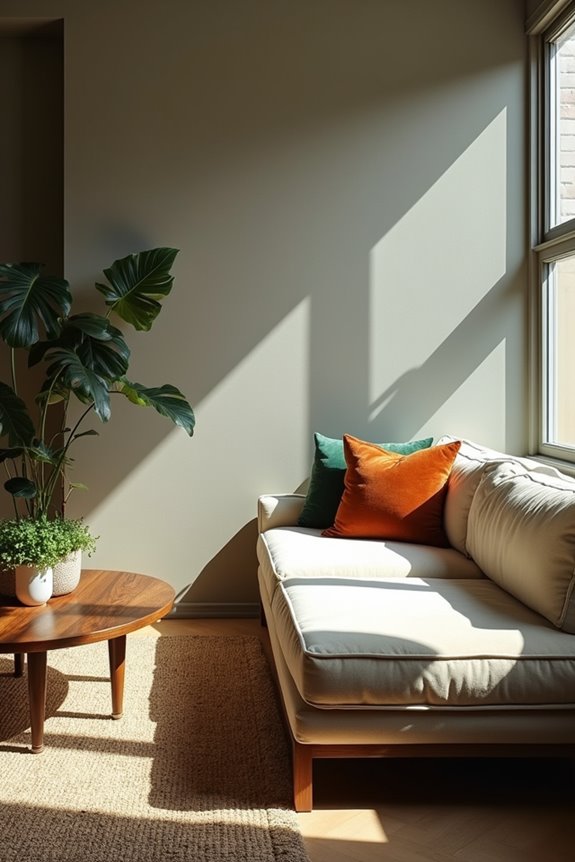
What mood do you want your sitting room to evoke? Dark tones create magical qualities, especially in evening light, and offer striking visual contrast on walls and ceilings.
Consider these global color palettes:
1. Grounding Greens: De Nimes No. 299 and Treron No. 292 (Estate Emulsion) establish calming, earthy environments. Pair them with Bancha No. 298 in Estate Eggshell for unity.
2. Inky Blues: Black Blue No. 95 explores deep moods through Estate Emulsion and Eggshell finishes. Layer with Lichen No. 19 and Setting Plaster No. 231 for sophisticated depth.
3. Softly Does It: Extend wall color onto chair rails and baseboards using Parma Gray No. 27, Borrowed Light No. 235, or Skimming Stone No. 241 to add perceived height and unity.
Each palette works intentionally to shape your space.
Layer Lighting for Morning to Night
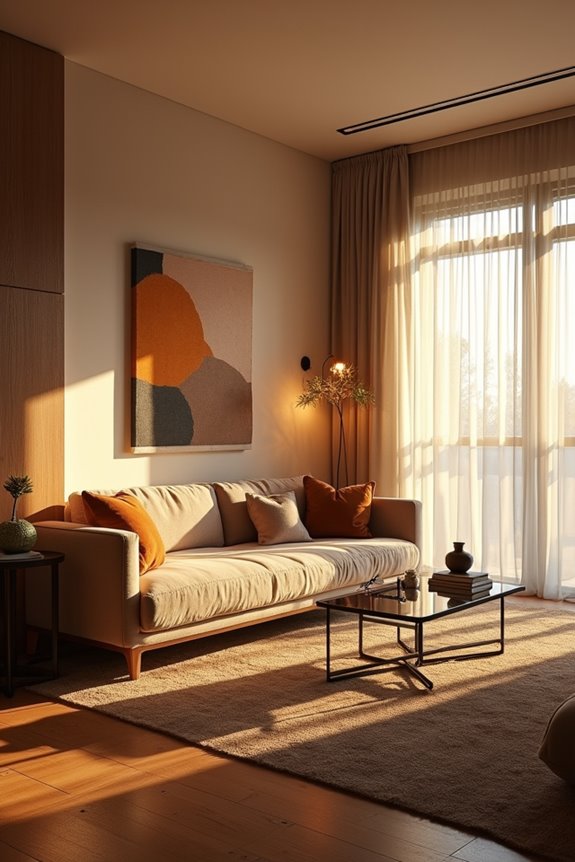
I’ve discovered that layering lighting changes how your sitting room feels throughout the day. You’ll start by maximizing natural light during morning hours, then strategically add fixtures like standing and table lamps as evening approaches.
This combination of natural and artificial sources lets you control the room’s mood while maintaining visual balance from sunrise to bedtime.
Natural Light Maximization
The right lighting strategy makes your sitting room brighter and more welcoming throughout the day. I recommend positioning seating to face windows, allowing you to capture natural light while you relax.
Optimize Your Window Treatments
I suggest installing sheer curtains or adjustable blinds that fully open during daylight hours. These lightweight options prevent glare while flooding your space with brightness.
Amplify Light Distribution
I’ve found that strategic mirror placement bounces natural light deeper into corners and creates a sense of spaciousness. Position mirrors opposite or adjacent to windows for maximum effect.
Support With Color Choices
I recommend selecting light, reflective wall colors that enhance rather than absorb illumination. Pair neutral backdrops with botanical accents to maintain brightness without visual clutter, creating an inviting atmosphere that encourages connection and comfort.
Fixture Layering Strategies
How do you create the right mood for every hour of your day? I’ve found that layered lighting makes your sitting room into a versatile space that adapts to morning tasks and evening relaxation.
Strategic fixture placement at varying heights creates visual interest while balancing illumination throughout your room. You’ll want to combine sources like floor lamps, table lamps, and overhead fixtures to achieve this effect.
Consider these lighting approaches:
- Position floor lamps near seating areas for ambient warmth
- Place table lamps at different heights for visual depth
- Install dimmer switches for adjustable brightness control
- Balance bright zones around reading nooks with softer areas
- Complement natural light with supplementary fixtures
This layered approach means you’re not dependent on a single overhead light. You’ll control mood and atmosphere with ease while highlighting your room’s best features throughout the day.
Ambient Evening Transformation
As daylight fades, your sitting room’s lighting needs shift dramatically from task-focused brightness to intimate relaxation. I recommend layering ambient lighting by combining a floor lamp with at least one table lamp. This approach creates varied light levels that allow your space to adapt naturally.
Dimming overhead fixtures while keeping table and floor lamps on maintains that cozy glow you’re after. You’ll find this flexible setup lets you adjust brightness based on your evening activities.
To emphasize key features, direct light toward focal points like fireplaces or artwork. This technique adds warmth and visual interest without overwhelming the room.
Consider adding small black accent pieces strategically. These grounding elements provide contrast and visual weight as evening settles.
This layered ambient lighting strategy creates an inviting atmosphere where you’ll want to spend time.
Add Warmth With Rugs and Throws
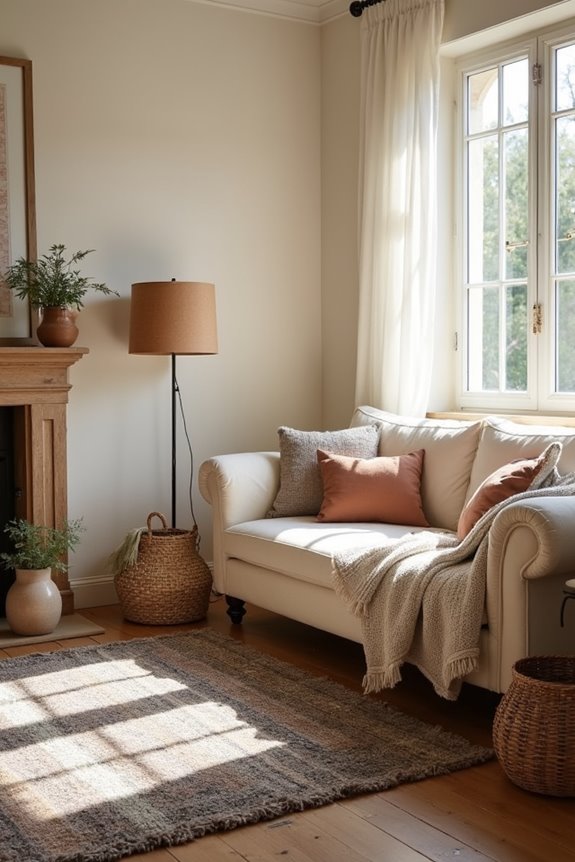
Why settle for bare floors when rugs and throws create a warm, inviting sitting room?
Rugs anchor your seating area while adding color, style, and pattern that reflect your personal aesthetic. I recommend selecting sizes like 8×10 or 9×12 to guide proportions relative to your furniture and room scale. Throws draped over sofas and chairs introduce layered texture and comfort that invites you to settle in.
Consider these elements for your space:
- Position rugs at least 6 inches wider than your sofa on both sides
- Maintain 30–36 inches of walkway between large furniture pieces
- Choose varied materials like wool or cotton for durability and warmth
- In smaller rooms, select compact rugs that preserve airiness
- Layer throws in complementary tones for visual interest and coziness
This approach creates a welcoming environment where you’ll want to spend time.
Light Your Focal Point: Fireplace or Feature Wall

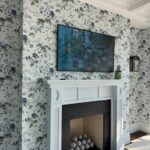
I’ll strategically light your fireplace or feature wall to make it the room’s visual anchor. You can position uplighting behind architectural elements and add wall sconces on either side to enhance texture and depth.
These lighting choices create warm, inviting atmospheres that make your space feel different from day into evening while drawing every eye toward your carefully designed focal point.
Strategic Lighting Placement Techniques
Where should your sitting room’s lighting draw the eye first? Strategic lighting placement creates visual hierarchy in your space by anchoring attention on what matters most. I recommend layering your approach to create depth and control the room’s atmosphere effectively.
Consider these lighting placement techniques:
- Position uplights behind your fireplace to enhance warmth and architectural detail
- Place floor lamps at 45-degree angles from seating to eliminate screen glare
- Use table lamps on side tables flanking your feature wall for balanced illumination
- Install accent lighting to highlight textures and create visual interest
- Arrange ambient sources to complement natural sightlines without overwhelming the space
This strategic lighting placement keeps your focal point commanding attention while maintaining functional comfort. By distributing light intentionally, you’ll establish an environment that invites you to settle in and relax.
Enhancing Architectural Features Visually
Your fireplace or feature wall deserves to command attention the moment someone enters your sitting room. I’d recommend creating a wooden accent wall surrounding your fireplace to anchor the space visually. Upgrade to a substantial mantle that grounds the composition and draws the eye naturally.
Consider these strategic enhancements:
- Paint unity: Match wall colors with your fireplace area for a unified appearance, or choose white for brightness and contrast.
- Bold accents: Incorporate small black details, like slim mantle features or accessories, to add visual weight without overwhelming the focal point.
- Layered lighting: Position table lamps and floor lamps around your accent wall to highlight architectural details during evening hours, creating depth and warmth throughout the room.
Creating Ambient Evening Atmospheres
Once your fireplace or feature wall commands visual attention during daylight hours, strategic lighting makes it a center of attention after sunset.
I recommend layering your ambient lighting around this focal point to create depth and mood as natural light fades. Position standing lamps and table lamps strategically near your fireplace or accent wall. This approach allows you to control brightness and adjust the atmosphere based on your needs.
Consider these lighting elements:
- Standing floor lamps positioned on either side of the fireplace
- Table lamps on side tables to distribute light evenly
- Warm-toned bulbs (2700K) for cozy evening ambiance
- Dimmer switches to adjust intensity throughout the evening
- Uplighting behind the mantle to highlight architectural details
Dark or bold accents around your focal point add visual weight in small doses. This combination of layered ambient lighting creates the inviting evening atmosphere you’re seeking.
Make Your Room Feel Bigger With Mirrors and Storage
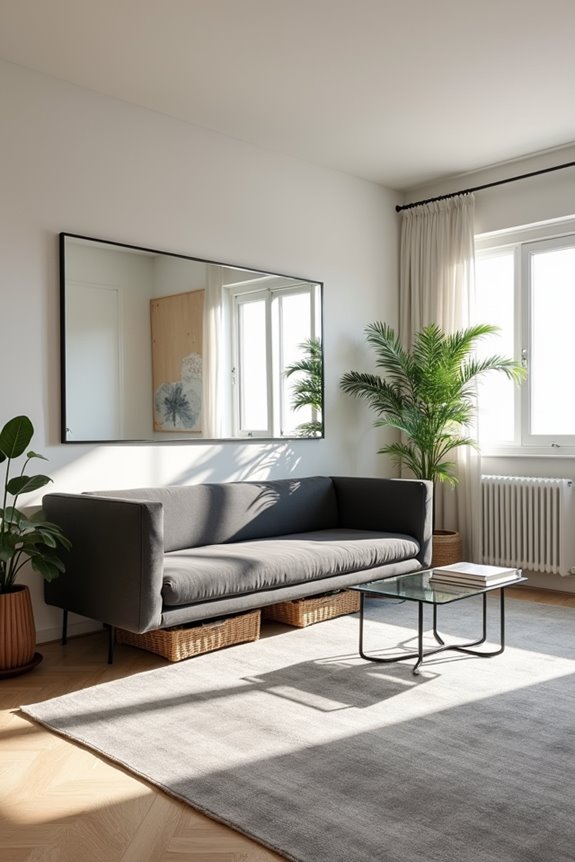
Because mirrors reflect light and existing spaces, they’re one of the most effective tools for making a sitting room feel larger than it actually is. I’d recommend placing mirrors opposite windows to maximize natural daylight and reduce daytime artificial lighting needs.
Strategic mirror placement with varied shapes and frames enhances your decor style while boosting brightness throughout the room. Consider pairing reflective surfaces with organized display shelving or cabinets to balance function and aesthetics effectively.
Storage solutions paired with mirrors keep surfaces clear, contributing to a more open and airy atmosphere. This combination creates perceived depth while maintaining visual organization.
Thoughtful mirror placement and concealed storage help convert cramped spaces into welcoming sitting areas that feel spacious and well-designed.
Bring Plants and Natural Textures Into Your Design
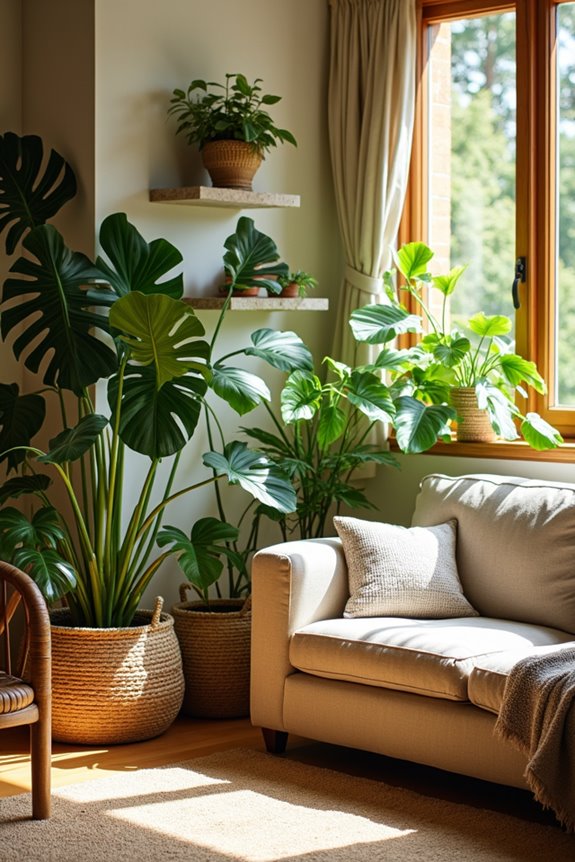
I’ll create a botanical design for your sitting room by layering greenery and natural textures to add depth and visual interest. You can use large statement plants like fiddle leaf figs or monstera deliciosas as focal points, then fill shelves and ledges with smaller pothos or snake plants for balanced spacing.
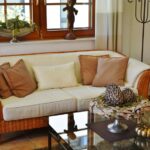
Natural elements such as woven baskets, wood surfaces, and linen fabrics will ground your botanical design while soft greys and off-whites amplify the calming effect.
Layering Greenery and Textures
How can you create a calming sanctuary in your sitting room? I’ve found that layering greenery with natural textures creates the foundation for a peaceful retreat. You’ll want to combine soft green wall colors like De Nimes with complementary botanical elements throughout the space.
Here’s how you can build this layered approach:
- Paint walls in Estate Emulsion using greens like De Nimes or Bancha for a consistent foundation
- Layer woven fabrics and wood accents to add tactile depth and visual interest
- Position tropical houseplants at varying heights throughout the room
Install a floral feature wall or display fresh flowers in a simple vase. Mix natural textures, linen, jute, and live plants, to enhance the nature-driven palette.
This strategic combination of greenery and textures creates a harmonious, grounded environment that invites relaxation and belonging.
Natural Elements as Focal Points
Strategic plant placement creates a nature-inspired sitting room with purpose and harmony. I recommend selecting one statement plant, such as a tall Monstera or elegant palm, to serve as your room’s visual anchor. This botanical element becomes the centerpiece, unifying your soft grey and off-white palette.
Position your chosen plant where it receives adequate light and commands attention. Pair it with natural textures like woven baskets, wooden side tables, or linen upholstery nearby. These materials reinforce the organic atmosphere you’re creating.
Consider complementary botanical elements throughout the room. Small potted plants on shelves or a simple vase arrangement on a side table extends your nature theme without overwhelming the space. Together, these strategic choices establish a calming, purposeful environment that feels both sophisticated and welcoming.
Layer Walls With Art, Wallpaper, or Paint
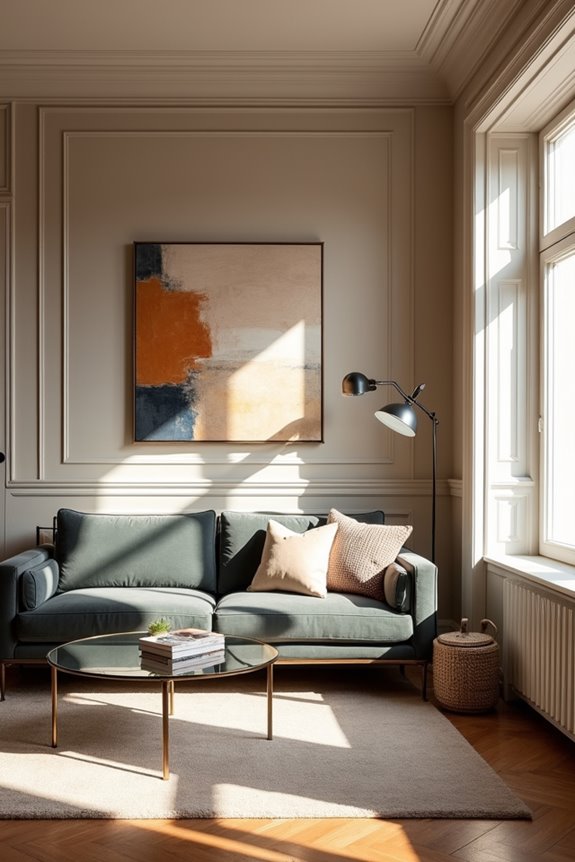
When you’re ready to move beyond basic paint, your walls become a canvas for creativity. Wallpaper and art create depth that makes your sitting room feel carefully planned and put-together. I recommend layering these elements thoughtfully to build a unified appearance that reflects your style.
Consider these wall-layering strategies:
- Combine bold wallpaper patterns with coordinating neutral furniture pieces
- Arrange gallery walls using prints, posters, and photographs as focal points
- Select dark or saturated paint tones for moody evening atmospheres
- Mix textured wallpaper with botanical artwork for natural harmony
- Balance statement walls with simpler adjoining surfaces
Your wall choices influence the room’s mood significantly. Dark tones create intimate settings as light changes throughout the day. Coordinating your selections with existing accents ensures a polished, layered appearance that feels both personal and welcoming.
Choose a Coffee Table That Works as Decor
Your coffee table does more than hold your morning coffee; it anchors your entire sitting room. This furniture piece shapes your room’s mood through design choices like rustic wood, marble, or sleek glass. A bold, statement coffee table becomes a focal point that elevates your hosting atmosphere and sparks conversation.
Layer your coffee table with trays to add texture and organize remotes and small items decoratively. Contrast tray shapes against your table’s form—place a rectangular tray on a round table for visual interest that prevents chaos.
Your coffee table must balance practical needs with aesthetic harmony. It should offer storage and accessibility while complementing your surrounding seating and focal points. This thoughtful selection creates a sitting room with a sense of purpose and intention, one that reflects your style and supports daily living.
Keep Floors Clear and Surfaces Organized for Breathing Room
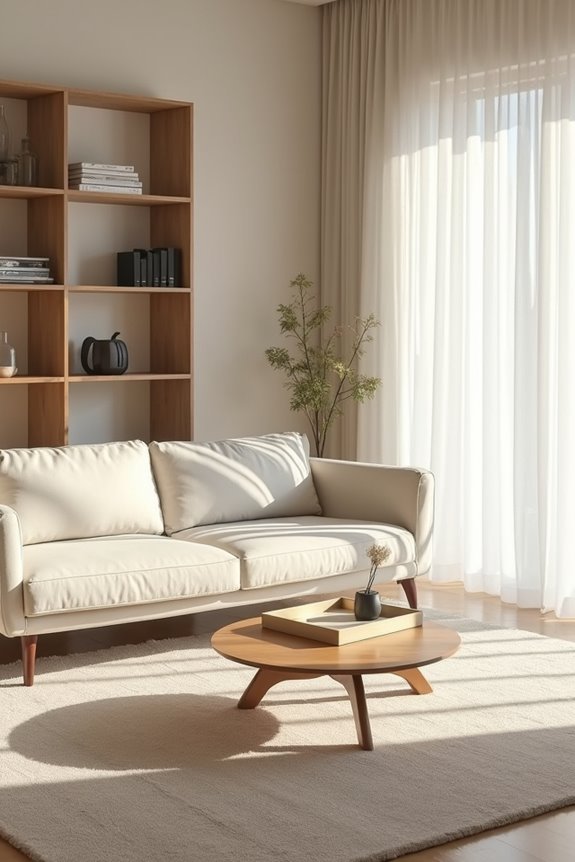
How does an uncluttered floor make your sitting room feel more spacious and welcoming?
Clear floors and organized surfaces give your living space the breathing room it needs. Removing visual clutter instantly makes any room feel more open and peaceful.
Here’s what I prioritize:
- Maintain functional walkways of 30 to 36 inches between furniture pieces for comfortable movement
- Use 18–24 inch pathways in tighter spaces to maintain accessibility
- Place trays on coffee tables to corral remotes and small items effectively
- Select appropriately sized rugs that don’t overpower small rooms or hide floors
- Establish a cohesive color palette to prevent your decor from feeling scattered