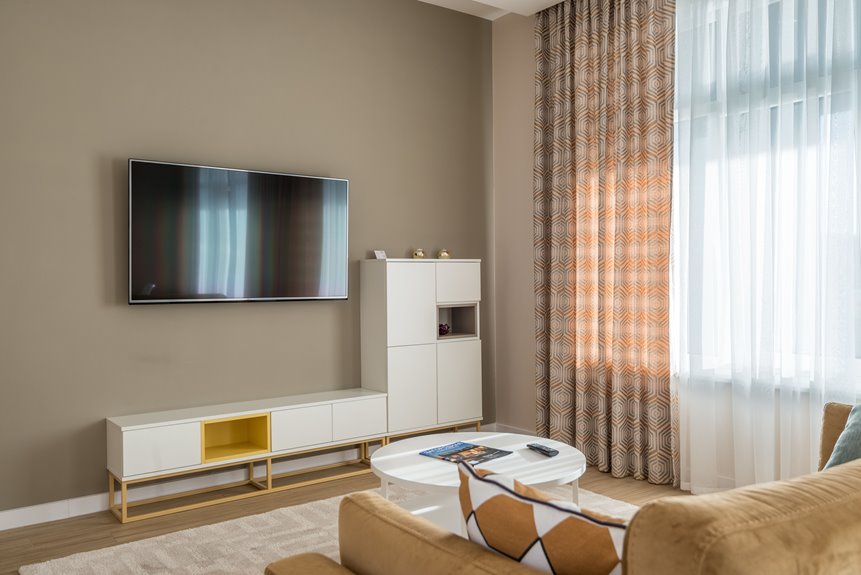
I get it—your small TV room feels cramped, and you’re wondering how to make it work.
The good news? Smart design choices can help even the tightest spaces become functional, inviting retreats.
By mapping traffic flow, choosing scaled furniture, and layering lighting strategically, you’ll discover potential you didn’t know existed.
The seven ideas ahead show you exactly how to do this.
Map Your Small TV Room: Purpose, Traffic, and Layout
How do you create a functional entertainment area in a cramped living space? I’ll guide you through strategic space planning that works.
Start by identifying your room’s primary purpose: TV viewing, circulation routes, and dining access. These zones anchor your room layout.
Next, measure your walls, doors, and windows carefully. I note the TV console placement first, as it commands your space. Position it where viewers enjoy comfortable sightlines from seating areas.
Map traffic flow through doorways and hallways. Furniture shouldn’t block natural pathways between rooms.
Draft a birds-eye floor plan using accurate dimensions. Test multiple arrangements on paper before moving pieces. This iterative approach saves time and prevents costly mistakes.
Consider existing sentimental furniture. Plan around cherished pieces to highlight their value within your new layout, creating a cohesive design that reflects what your space can become.
Choose Furniture Scaled for Small TV Rooms
Now that you’ve mapped your room’s layout, furniture scale becomes your advantage for avoiding a cramped, cluttered feeling.
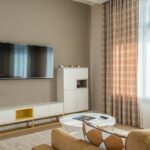
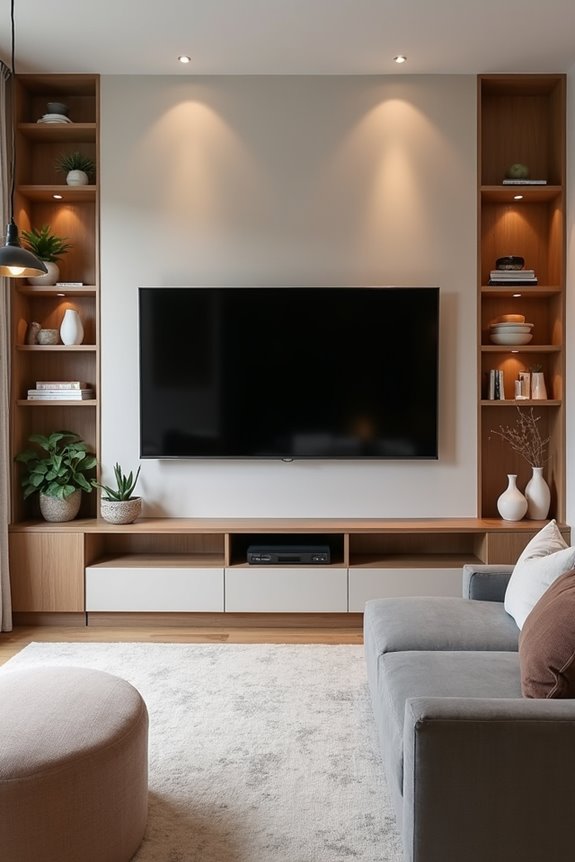
Small-scale furniture keeps your space open and airy. I recommend selecting a low-profile TV stand that maintains clear sightlines without dominating the room. Wall-mounted setups work equally well for space optimization.
Small-scale furniture and low-profile TV stands maintain clear sightlines while keeping your space open and airy.
Open shelving and floating storage solutions preserve openness while holding essentials. Consider a narrow, multi-purpose floating cabinet that frames your TV while hiding clutter. This approach minimizes bulk significantly.
Balance matters too. I suggest placing slim bookcases or decorative objects on either side of your screen. This creates visual symmetry without overwhelming proportions.
Your seating requires equal attention. Opt for slim sofas or compact chairs that fit your room’s width. Proper proportions ensure unobstructed pathways and comfortable viewing distances, making your small space an inviting gathering spot.
Paint Dark Walls and Choose Coordinated Furnishings
With your furniture scaled and layout finalized, it’s time to establish the room’s visual foundation through strategic color choices.
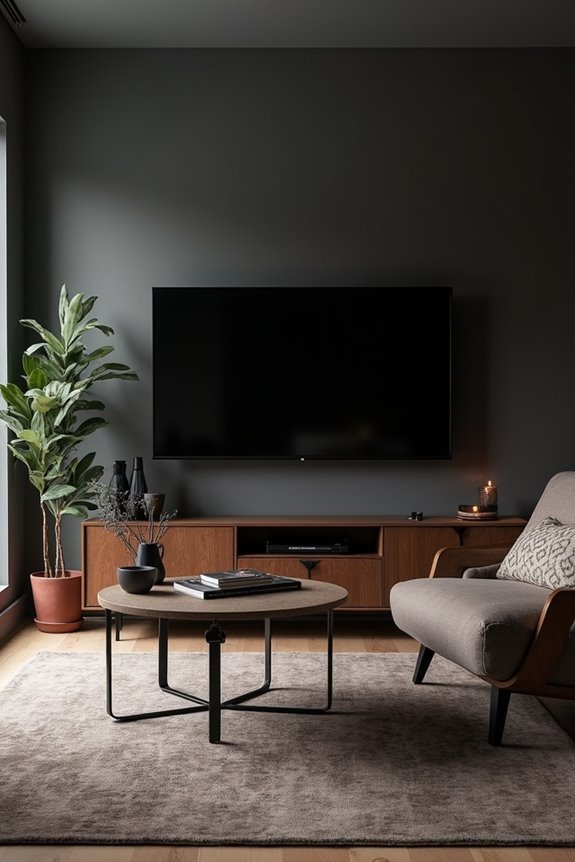
Dark walls create depth in your small space while establishing a sophisticated atmosphere. I recommend pairing dark green with blue undertones, like Rookwood Shutter Green, with coordinated furnishings to unify the room visually.
Here’s why this monochrome palette works:
- Creates an enveloping cocoon effect that makes compact rooms feel purposeful and luxurious
- Minimizes visual breaks across walls, trim, and built-ins for continuous flow
- Allows statement pieces like velvet upholstery to become focal points without competing colors
- Extends perceived space by painting ceilings the same dark tone
Pair dark walls with high-contrast textiles, velvet sofas and heavy linen treatments, to balance darkness with warmth. This coordinated approach creates small spaces that feel like inviting retreats where thoughtful design choices reflect your personal style and feel complete.
Layer Multiple Light Sources Beyond Ceiling Fixtures
Why do dark walls demand smarter lighting strategies? They absorb light, making rooms feel smaller and dimmer than they actually are. I’ve found that layered lighting, combining ambient, task, and accent sources, creates inviting spaces in dark rooms.
Dark walls absorb light and shrink spaces visually. Layered lighting—combining ambient, task, and accent sources—transforms them into inviting rooms.
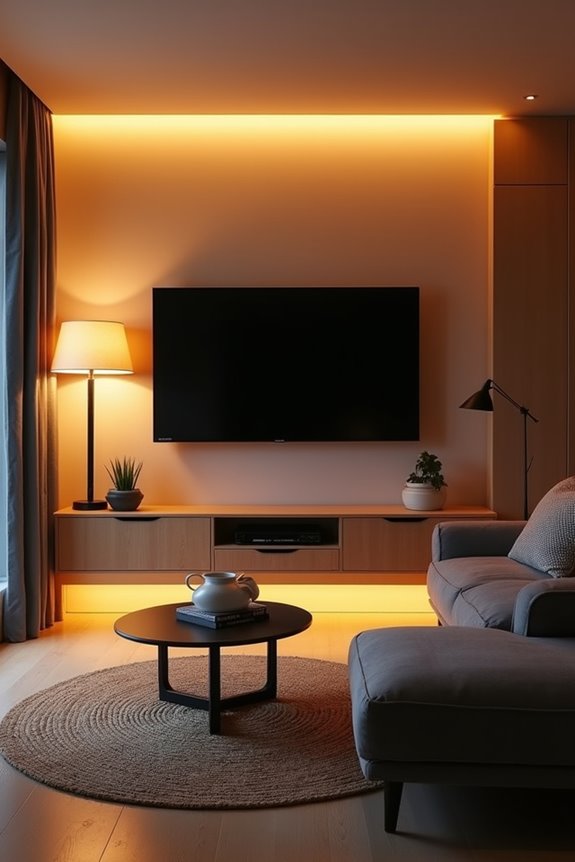
Start with dimmable fixtures positioned at different heights. Wall sconces flanking your TV provide ambient lighting without screen glare. Add a floor lamp and low-profile side table lamp for vertical illumination that brightens corners. These sources work together, not against each other.
Choose warm, high-CRI fixtures (2700–3500K) that enhance texture and soften shadows on dark walls. Strategic uplighting behind shelves or artwork draws your eye upward, making rooms feel larger.
The key is giving every light source adjustable brightness and color temperature. This flexibility lets you shift from cozy movie mode to bright daytime functionality seamlessly.
Maximize Storage in Your Small TV Room
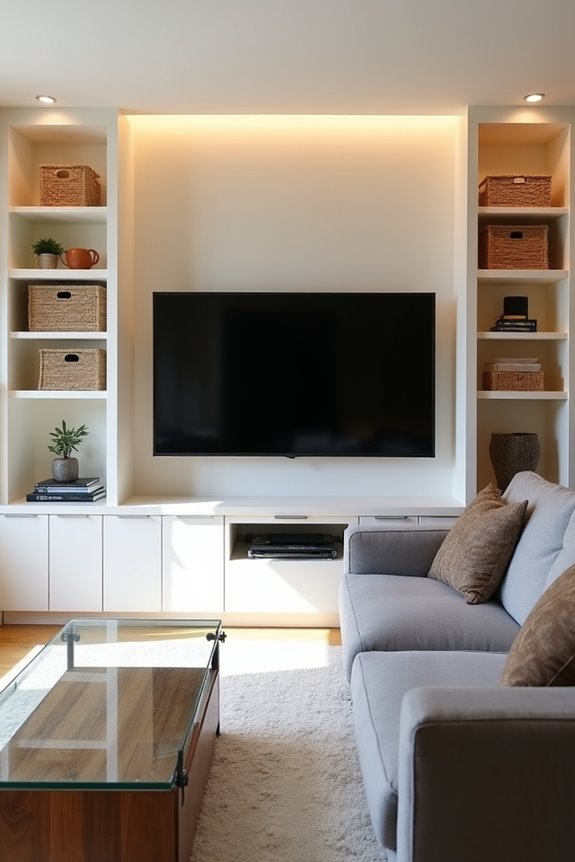
When you’re working with limited square footage, smart storage makes your TV room feel more spacious and comfortable. You can tackle this challenge through built-in shelving solutions, multi-purpose furniture that serves double duty, and strategic use of vertical space that you might otherwise overlook.
Let me show you how these three approaches work together to keep your room functional and visually open.
Built-In Shelving Solutions
How can you reclaim valuable floor space while creating a polished storage system? Built-in shelving solutions help your small TV room become an organized, functional space that feels carefully planned.
- Wall-to-wall bookcases visually expand rooms and create cohesive, professional aesthetics
- Floating cabinets beneath the TV keep remotes and devices hidden from view
- Open shelves display personal items and greenery, adding personality to compact spaces
- Matching stains and finishes help built-ins blend seamlessly with existing furniture
Frame your television with narrow bookcases and integrated storage units. This approach combines media organization with decorative display. You’ll achieve a curated look by mixing artwork, mirrors, and literature across your shelves.
Built-ins eliminate floor clutter while maximizing every inch of wall space, creating the polished, organized room you’ve envisioned.
Multi-Purpose Furniture Storage
While built-in shelving creates a polished framework around your TV, multi-purpose furniture takes storage a step further by combining function and seating into single pieces.
Storage ottomans and poufs work exceptionally well in small TV rooms. They provide extra seating while hiding blankets, pillows, and accessories in concealed compartments. This approach eliminates the need for separate storage furniture, keeping your space open and uncluttered.
Consider pairing your wall-mounted TV with floating storage units that serve double duty. Modular units offer flexibility as your needs change, allowing you to reconfigure shelves and compartments without permanent installation.
A low-profile TV stand with built-in drawers keeps remotes and cables organized and out of sight. By choosing multi-functional storage solutions, you’re creating a room that’s both practical and visually balanced.
Vertical Space Utilization
Why settle for cluttered floors when your walls offer endless storage possibilities?
I recommend maximizing your vertical space to improve your small TV room. A wall-mounted TV serves as your anchor point, freeing valuable floor area. Here’s how I’d approach vertical storage:
- Install slim consoles beneath your wall-mounted TV for remotes and media devices
- Add tall, slim bookcases on either side to expand storage visually
- Use open shelving with closed storage behind doors for organized displays
- Match all vertical storage to existing furniture for a built-in appearance
Floating cabinets and narrow consoles provide practical storage without bulk. Wall-mounted shelves draw the eye upward, making rooms feel larger.
When you stain or match surrounding pieces, your vertical storage looks purposeful, not like scattered furniture. This approach creates the open, welcoming space you’re seeking.
Arrange Shelves and Surfaces With Art and Collections
Shelving makes a small TV room more functional by turning blank walls into display areas that make your space feel larger and more deliberate. Build shelves around your TV to create an integrated frame that reduces the screen’s visual dominance while maximizing storage efficiency.
Mix art, mirrors, and books across your shelves to add depth and warmth. Position vintage frames, cement busts, and oil paintings as focal vignettes on either side of your TV, balancing visual weight effectively.
Incorporate greenery and personal collections to reinforce a lived-in atmosphere. Include both open display areas and closed storage compartments to hide remotes and media while preserving visual interest.
This layered approach makes shelving into a purposeful design element that anchors your room and creates the welcoming library aesthetic you’re building.
Select Textiles and Vintage Pieces for Warmth
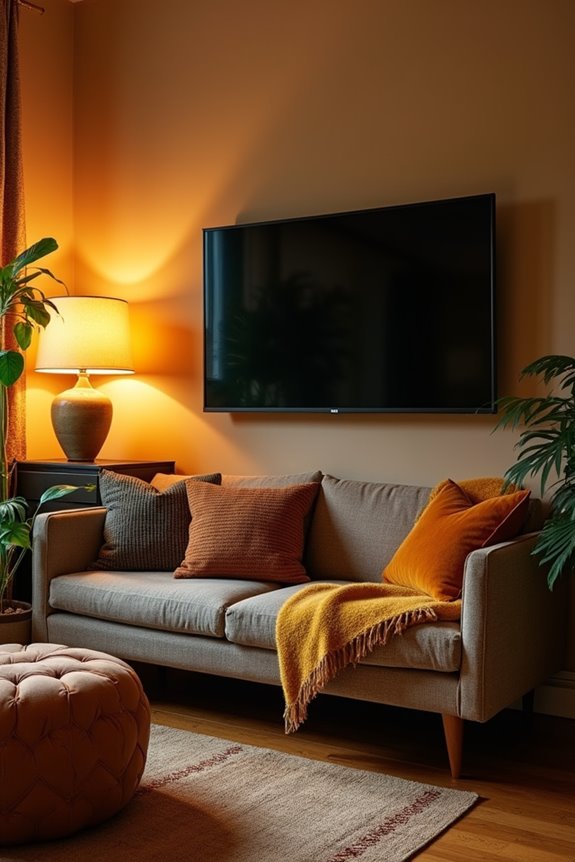
Now that your shelves frame the TV with purposeful layers of art and collections, it’s time to wrap your room in textiles and vintage pieces that deepen its warmth and character.
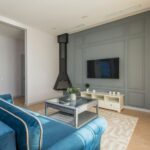
Velvet serves as an excellent choice for coziness. A Pacific Blue velvet sofa anchors the room as your focal point, instantly adding sophistication and luxury appeal. Heavy woven linen window treatments with blackout linings eliminate glare while adding substantial texture. These textiles echo castle-inspired warmth through historic stone-wall tones.
Layer in vintage pieces strategically:
- Oil paintings and vintage artwork on built-in shelving
- A cement bust or sculptural element for visual contrast
- Well-worn books that signal lived-in comfort
- Strategic greenery among collections for organic texture
This combination of textiles and vintage finds creates a sanctuary in your TV room. You’re designing a space where comfort meets sophistication, inviting you to settle in completely.