
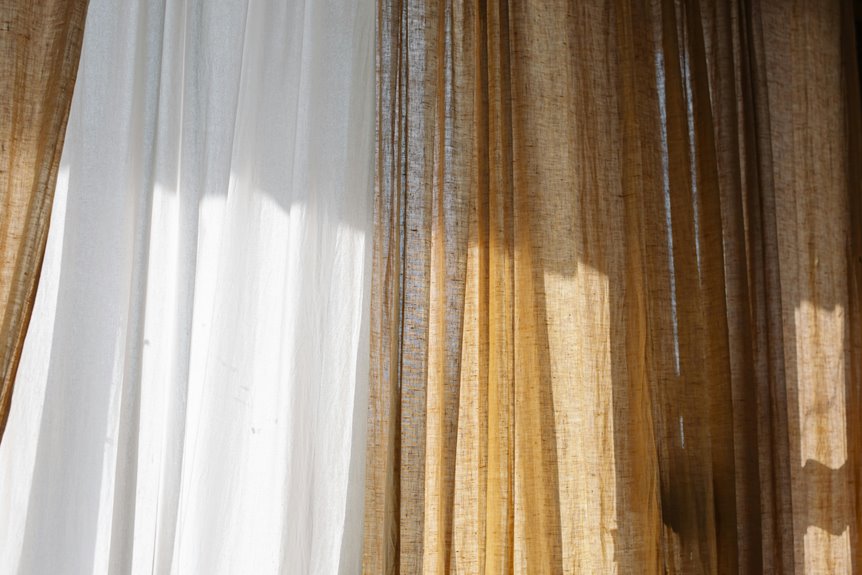
You’ll want to skip matching your curtains exactly to beige walls—that creates a bland, washed-out look. Instead, try charcoal gray, navy, or white curtains for sharp contrast. Use the 60-30-10 rule: let beige walls be your foundation, curtains provide visual pop at 30%, and accent pieces fill in the rest. Add texture through velvet or silk fabrics to prevent flatness. Avoid ultra-dark curtains in bright rooms or mixing too many warm tones together. Get the complete breakdown below for specific color combinations and fabric tips.
Best Curtain Colors for Beige Walls
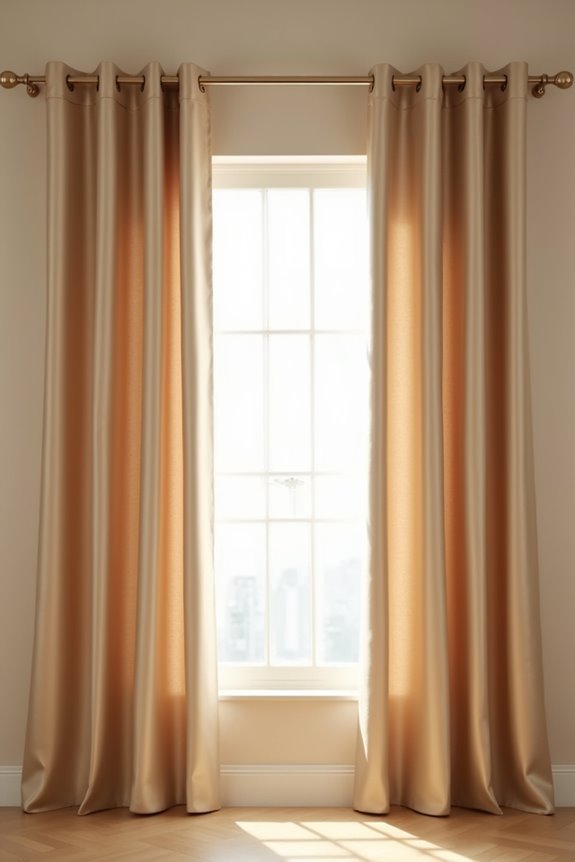
How do you keep beige walls from feeling flat and boring? You have options that will change your space into something you’ll love.
Neutral Contrast works beautifully—try charcoal gray or soft gray curtains for a modern look that keeps things warm. Complementary tones like slightly darker or lighter beige curtains maintain sophistication without drama.
Want to make a statement? Bold accents shine here. Orange or green curtains create standout contrast that’ll catch everyone’s eye. For something grounded, consider earthy shades: rust, dusty rose, olive, or deep blues.
Remember the wall-curtain ratio—aim for 60% wall color, 30% curtain color, and 10% accessories. This balance prevents your space from looking chaotic.
White curtains? They’ll brighten everything right away and feel classically elegant. Your color pairings should reflect what matters to you while creating a room you’re proud to display.
Balance Colors With the 60-30-10 Rule
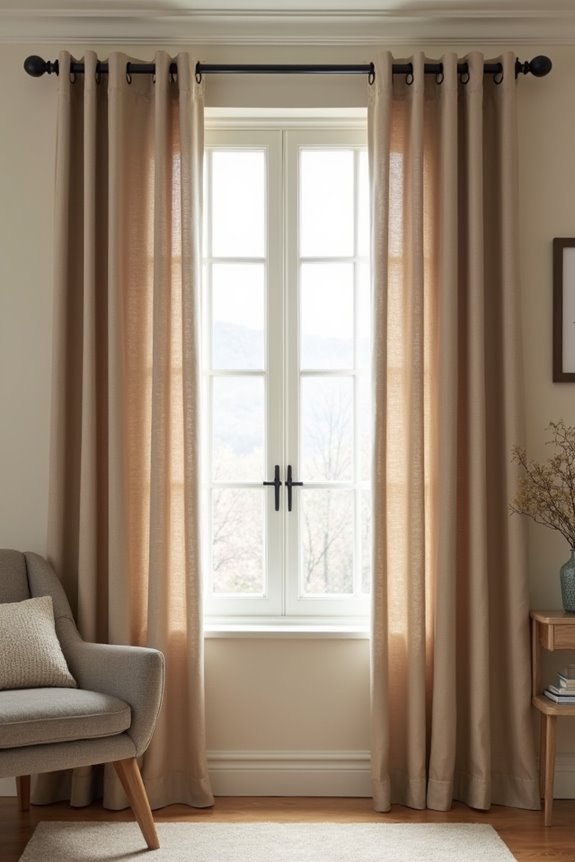
Why does a room with beige walls sometimes feel cohesive while another feels disconnected?
The difference between a cohesive beige room and a disconnected one comes down to intentional color balance and proportion.
The answer’s the 60-30-10 rule. You’ll keep your beige walls as your steady 60% base—that soft, unifying backdrop. Your curtain color becomes the bold 30% element, creating visual contrast without clashing. This is where you make your statement with bold curtains that complement, not compete with, your walls.
Finally, accent pieces fill that remaining 10%, completing your look without overwhelming anything.
Here’s how you apply it: Choose a curtain shade that contrasts beautifully with your specific beige tone—perhaps deep charcoal or rich navy. Then coordinate smaller accent pieces like pillows or artwork to tie everything together. This straightforward approach to room balance creates a space that looks deliberate and welcoming, not accidental.
Light vs. Dark Curtains: Which Suits Your Room
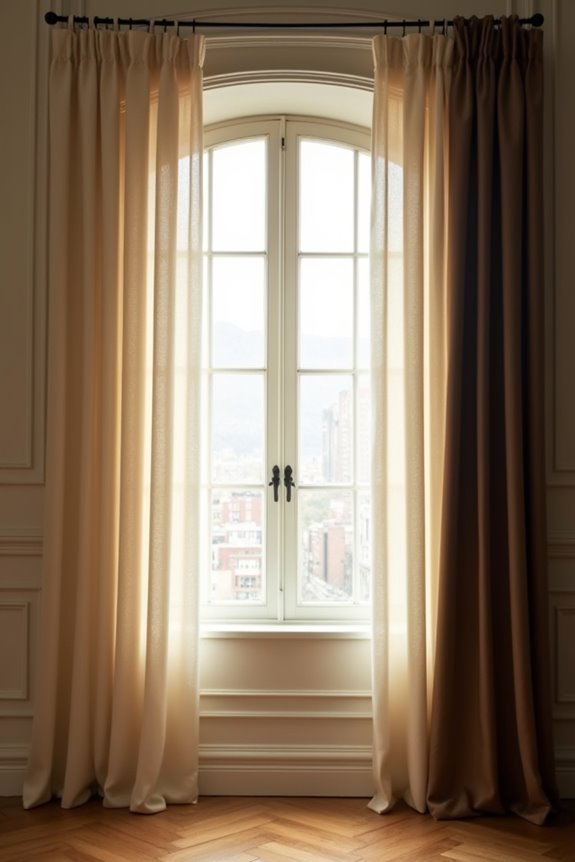
When you’re standing in your beige room trying to decide between light or dark curtains, you’re actually making a choice about the whole feeling of your space.
Light curtains brighten smaller rooms and keep everything feeling open and airy. They work well with your beige walls, creating a cohesive look. Dark curtains bring luxury and coziness, especially in larger rooms with plenty of natural light.
Here’s the trick: balance matters. Pair light curtains with darker accessories to avoid looking washed out. With dark curtains, add more lighting so your room doesn’t feel heavy.
Use textures like silk or velvet to add depth and interest. Remember, your beige walls should stay dominant at 60%, while your curtains become that bold 30% design element. Make your choice with confidence.
Add Depth With Texture and Fabric
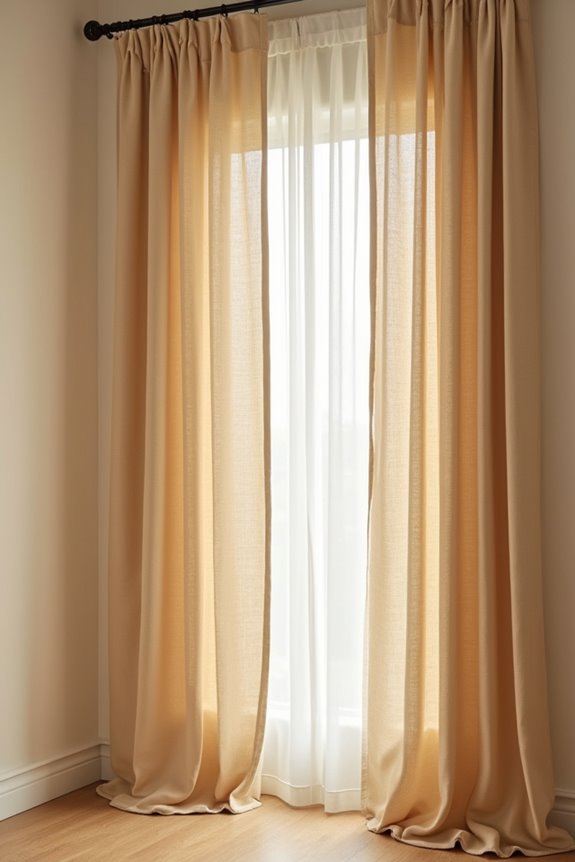
Now that you’ve picked your curtain color and weight, it’s time to think about what they’ll actually feel like. Texture adds depth to beige walls. Pair matte beige with silky or velvet curtains to create visual contrast without overwhelming your space. Try mixing textures within the same color family—flat linen paired with subtle sheen keeps things cohesive and interesting.
Lighter, shinier fabrics bounce light around, making your room feel brighter and bigger. Coarse textures like burlap act as anchors, while delicate sheer fabrics soften everything. Layer a solid textured curtain with a sheer underlayer. You’ll gain depth, flexibility with light control, and a sophisticated look that pulls everything together.
Common Mistakes When Pairing Curtains With Beige
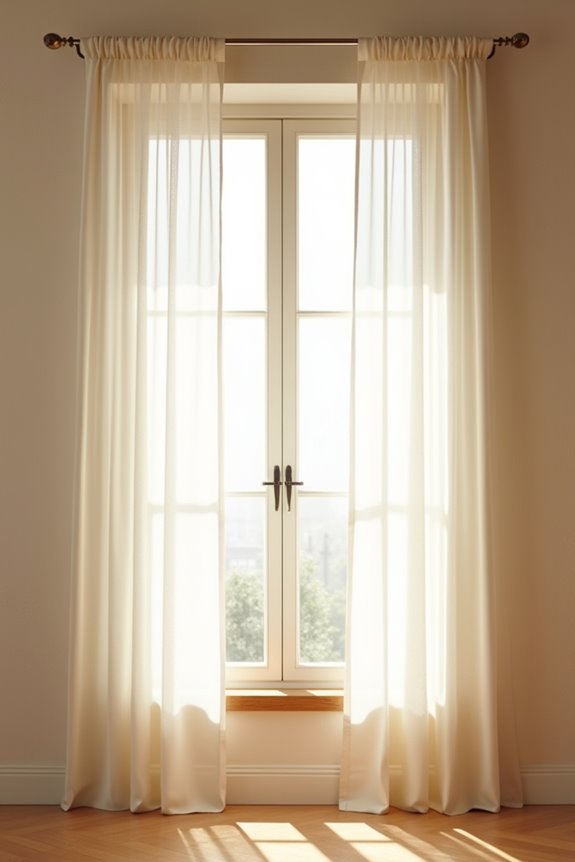
How easily can a room go from cozy to flat? You’d be surprised. When you’re working with beige walls, curtain color mistakes can happen fast. Don’t match your curtains exactly to your wall shade—that creates a bland, one-note look. Instead, choose slightly lighter or darker tones for room depth.
Lighting considerations matter too. If your space gets strong natural light, skip ultra-dark curtains that’ll make everything feel heavy and cramped. Avoid mixing too many warm tones like camel and tan together; balance with cool neutrals instead.
High-contrast combos—like jet-black curtains on beige walls—can shrink small rooms and feel too harsh. Skip busy patterns that compete with your walls. Stick with subtle textures and simple solids for a neutral pairing that works.