

1) Pick your accent wall strategically. Choose a wall that naturally draws the eye—like behind your bed or fireplace.
2) Match the mood you want. Cool colors calm bedrooms; warm hues energize dining areas.
3) Test before committing. Tape large swatches directly on your wall and observe them in both natural and artificial light at different times of day. This simple process prevents expensive mistakes and helps your color choice work with your existing furniture and décor.
Pick Your Accent Wall and Check Its Undertones
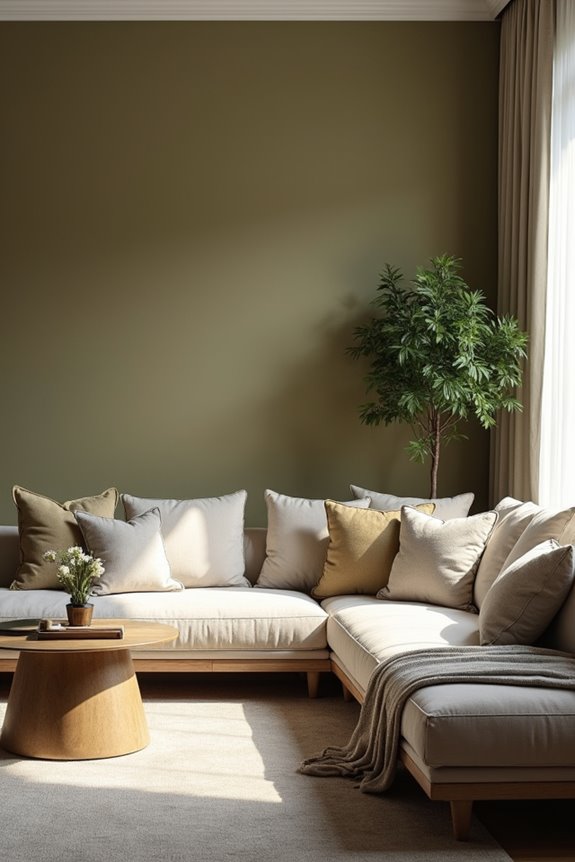
Where should you start when you’re ready to pick an accent wall? Look for a wall that’ll naturally grab attention—maybe the wall behind your bed, a fireplace, or built-ins. This becomes your focal point.
Next, you’ll examine undertones, those subtle colors hiding beneath the main hue. Warm undertones (yellows, reds, oranges) create cozy spaces, while cool undertones (blues, greens, grays) bring calm energy.
Here’s the smart move: grab color swatches and tape them directly onto your chosen wall. Observe them in natural daylight first to spot true undertones. Then check them under artificial lighting—your fixtures change everything.
Compare your swatches with existing furniture and art. You’re aiming for balance, where your wall color works with what’s already there. This thoughtful approach prevents costly mistakes.
Choose Your Accent Wall Color Based on Mood
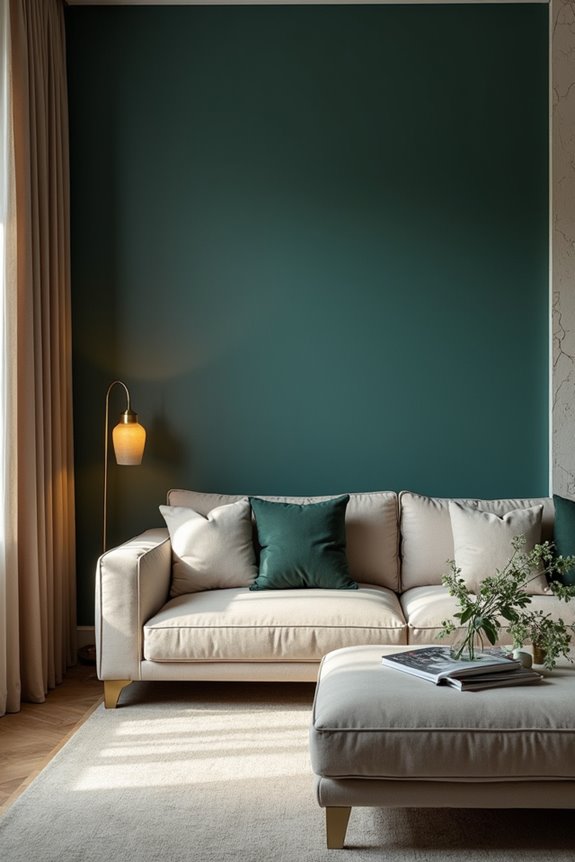
Now that you’ve found your wall and studied those undertones, it’s time to think about how you want the space to *feel*. Your accent wall color sets the mood for the entire room.
Match Your Mood to Your Hues
| Room Type | Best Accent Wall Color | Why It Works |
|---|---|---|
| Bedroom | Cool hues or soft neutrals | Promotes calm and restfulness |
| Dining Area | Warm hues | Encourages conversation and appetite |
| Living Room | Balanced warm or cool tones | Creates a focal point |
| Home Office | Cool or neutral tones | Supports focus and productivity |
| Bathroom | Light cool hues | Feels fresh and spa-like |
Consider color psychology when selecting your accent wall color. Warm hues energize, while cool hues soothe. If you’re painting behind your bed, choose calming tones. For your dining wall, warmer colors invite togetherness. Always echo your existing decor so the accent wall enhances rather than clashes with what you already love.
Test Your Color in Real Light and Existing Conditions
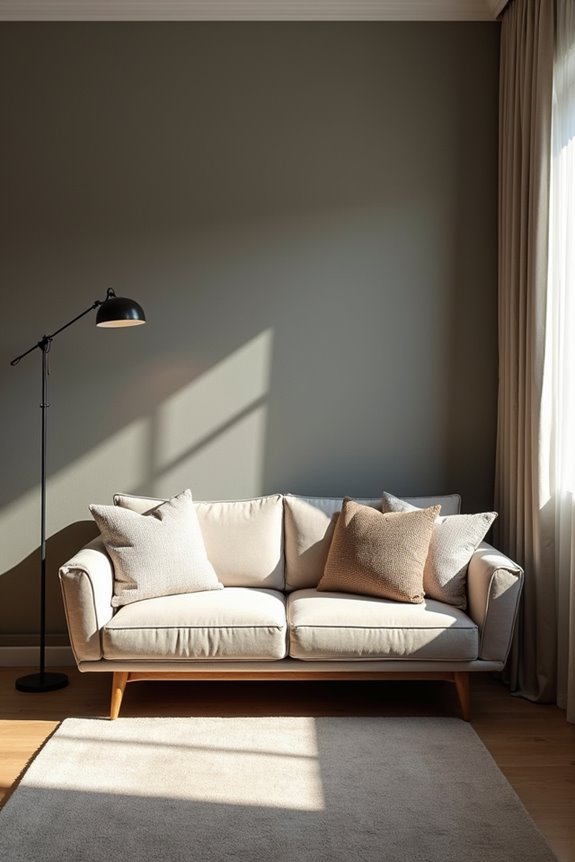
Have you ever bought a paint color that looked perfect in the store, only to bring it home and wonder what you were thinking? That happens because lighting conditions matter more than you’d think. Here’s how to avoid that mistake:
Test in natural daylight to spot undertones, then recheck under your home’s artificial lights. View your swatches at different times of day—morning light behaves differently than evening light.
Tape 3-by-3-foot large swatches on your actual wall rather than using tiny chips. This reveals true depth and saturation. Test in multiple rooms to consider surrounding context and how existing wall colors affect your choice.
Compare samples side-by-side after living with them for a day. This swatch testing confirms color consistency with your desired mood and validates your selection.