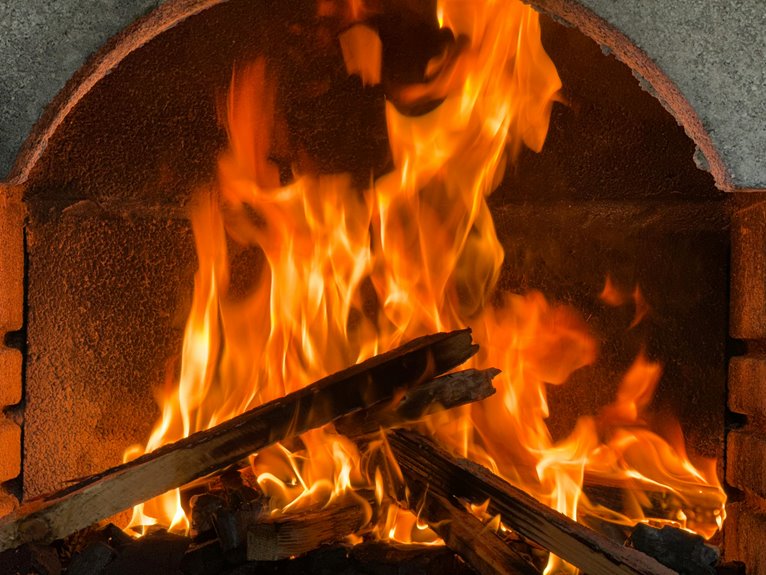
Wood, gas, and ventless fireplaces can all produce carbon monoxide—the dangerous gas you can’t see or smell. Here’s why: wood fireplaces leak CO when chimneys get blocked or drafts fail.
Gas fireplaces release trace amounts normally, but faulty sensors and clogged vents trap it indoors.
Ventless units pump combustion directly into your home and rely on sensors that can fail.
Electric and gel fireplaces? They’re CO-free. Regular inspections catch problems before they become hazardous to your family’s health.
Why Your Fireplace Is Producing Carbon Monoxide
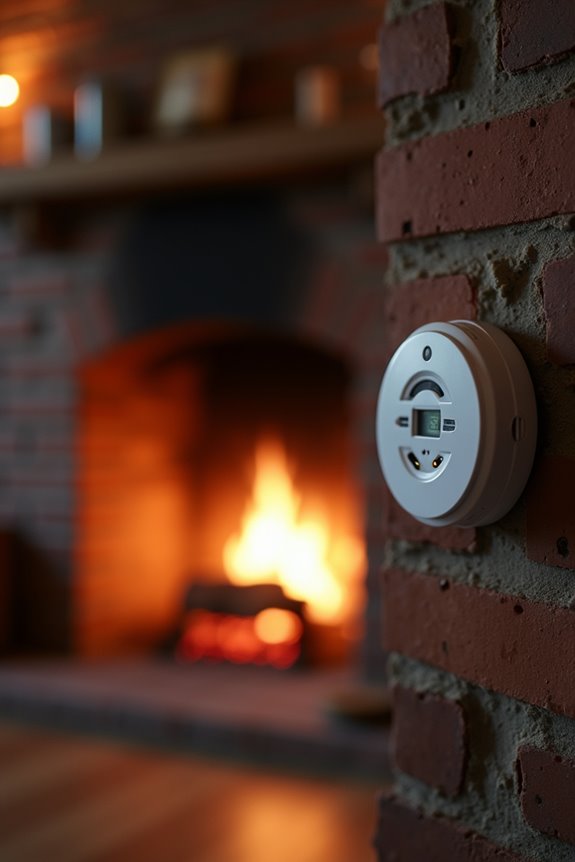
Why would your cozy fireplace suddenly turn into a carbon monoxide hazard? Several issues can cause your fuel-burning appliances to produce dangerous CO levels. Incomplete combustion happens when your fireplace doesn’t burn fuel completely, releasing carbon monoxide into your home. Venting problems are major culprits—a blocked vent, clogged chimney, or disconnected connector pipe forces CO back into your living spaces instead of outside. Gas fireplaces need proper maintenance; faulty sensors, soot buildup, and missing panels all increase CO production. Even ventless fireplaces with oxygen-detection sensors can fail if components malfunction. Your safety precautions matter most: keep chimneys clear, maintain your fireplace annually, and never use charcoal grills or gas stoves as indoor heaters. Regular inspections catch problems before they become dangerous.
How Vented Fireplaces Leak Carbon Monoxide?
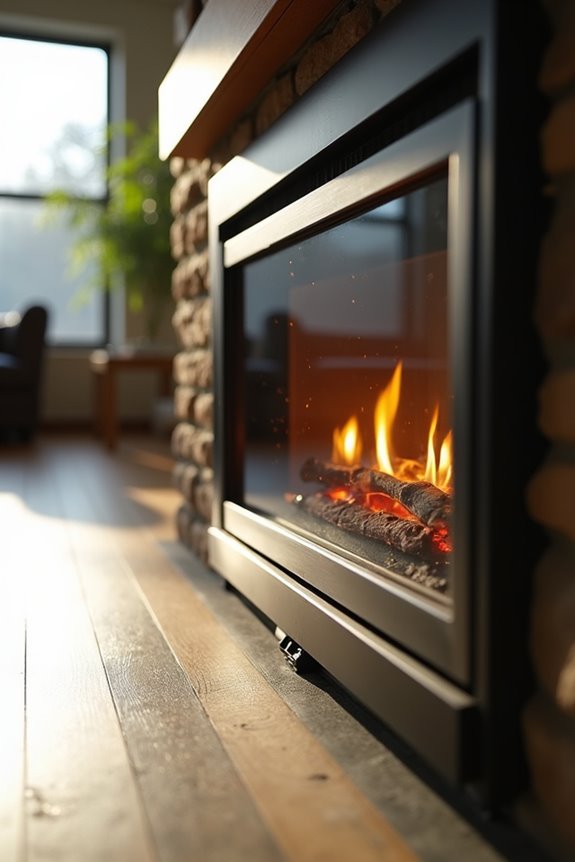
Your vented fireplace is designed to push carbon monoxide safely outside through your chimney, but that system only works when everything’s functioning properly. When your chimney connector gets damaged or loose, CO can backdraft straight into your home instead of escaping outside. Vent blockages from debris, creosote buildup, or nesting animals trap dangerous gases indoors. A weak chimney draft—caused by poor installation or temperature issues—allows combustion gases to reverse direction and seep into living spaces.
You can’t see or smell CO leakage happening. That’s why professional inspection matters. Schedule yearly checks to catch disconnections, cracks, and blockages before they become problems. Don’t skip maintenance on your vented fireplace. Regular cleaning and inspections keep your family safe.
Why Do Ventless Fireplaces Still Pose CO Risk?
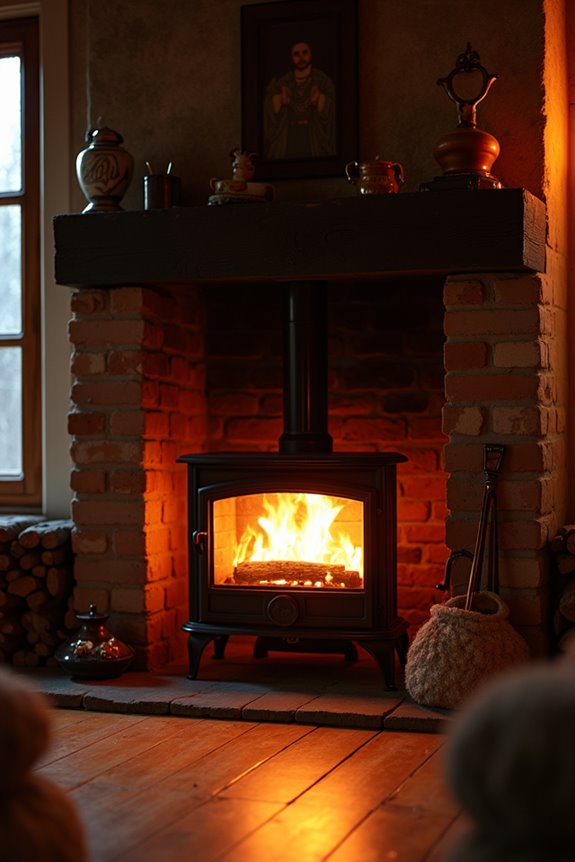
Even though ventless fireplaces have safety sensors built in, they’re still riskier than their vented cousins because they pump combustion byproducts—including carbon monoxide—directly into your living room instead of sending them outside. You’re basically breathing in what the fire produces, which affects your indoor air quality.
Here’s the problem: oxygen-detection sensors can fail or get blocked by dust and debris. When that happens, carbon monoxide accumulates without you knowing it. Clogged components make CO risk increase rapidly.
That’s why you can’t skip annual inspections. Schedule them every year without fail. You’ll also want CO detectors positioned near your ventless fireplace—this step matters. These devices alert you immediately if levels spike, keeping your household safe while you enjoy supplemental warmth.
Can Wood-Burning Fireplaces Cause Carbon Monoxide Buildup?
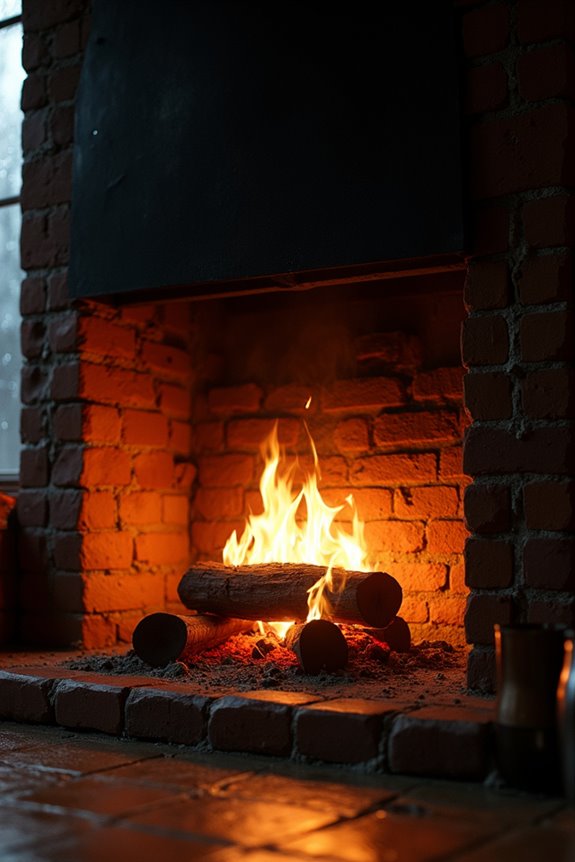
Wood-burning fireplaces are cozy and traditional, but they’re not immune to carbon monoxide problems. You might assume your chimney safely vents all combustion gases outside, yet several issues can trap dangerous CO indoors. A blocked or damaged chimney, creosote buildup, or faulty damper operation creates the perfect conditions for carbon monoxide to seep into your living spaces. Even properly functioning fireplaces risk CO backup from poor ventilation or reverse airflow on certain weather days.
What protects you: schedule regular chimney sweeps yearly, have professionals inspect your venting system, and install CO detectors near sleeping areas. These fireplace safety steps aren’t complicated—they’re necessary habits that let you enjoy your wood-burning fireplace with confidence. You’re not overreacting by taking these precautions; you’re simply being a responsible homeowner.
When Do Gas Fireplaces Emit Carbon Monoxide?
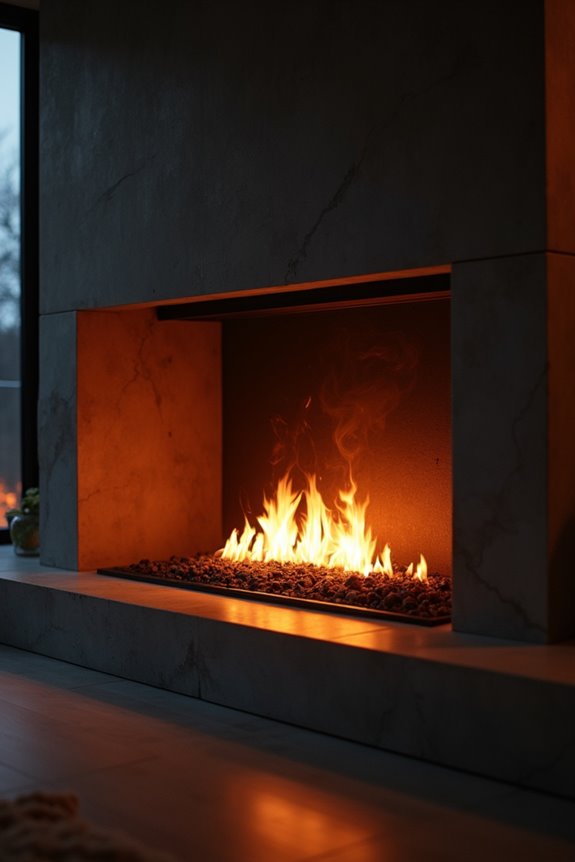
How much carbon monoxide does a gas fireplace actually produce? Gas fireplaces create trace amounts of CO during normal operation. Vented fireplaces safely remove this gas through proper ventilation, but ventless fireplaces rely on oxygen-detection sensors to manage CO buildup.
Your risk increases when vents get clogged, components become dirty, or sensors fail. That’s why you’ll want annual inspections from CSIA-certified technicians who check ventilation, sensors, and burners thoroughly.
Install CO detectors near your gas fireplace—they’ll alert you if dangerous levels rise. Detectors serve as your safety net. Regular maintenance keeps everything running smoothly, protecting your home and family. Schedule those yearly checkups; they’re your best defense against CO problems.
Electric and Gel Fireplaces: The Carbon Monoxide-Free Option
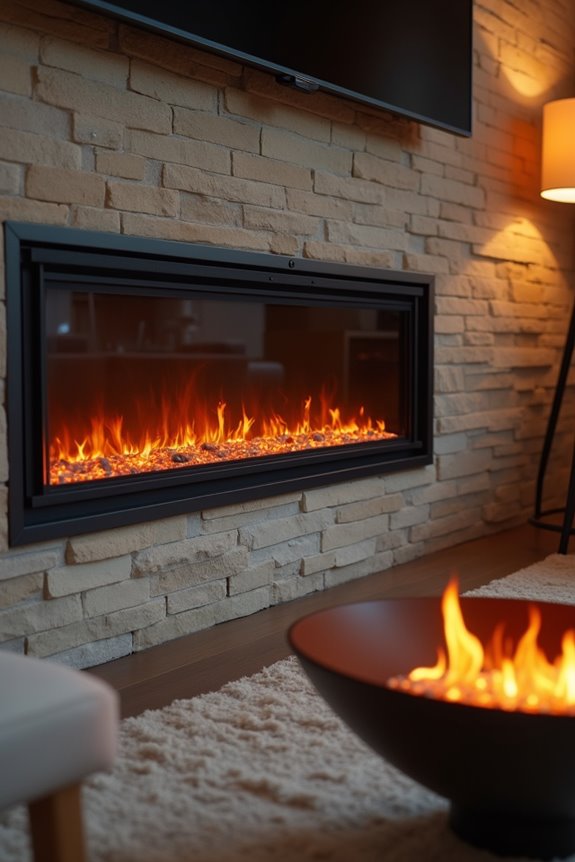
If you’re tired of worrying about carbon monoxide from your fireplace, electric and gel options let you skip that concern entirely since they don’t burn traditional fuels. Electric fireplaces use heating elements to create warmth and flames without any combustion, while gel fireplaces burn specially designed fuel canisters that produce far less CO than wood or gas alternatives. You’ll still want smoke alarms throughout your home for overall fire safety, but you can have peace of mind knowing these fireplace types won’t silently pump dangerous gases into your living space.
Electric Fireplace Safety Benefits
Why would you choose an electric or gel fireplace over traditional options? You gain peace of mind knowing you’re eliminating carbon monoxide risks entirely. Here’s what makes them stand out:
- Zero CO production from electric models since they convert electricity to heat without combustion
- No venting required, meaning you skip dangerous exhaust pathways and chimney dependencies
- Minimal CO exposure with gel fireplaces, which burn cleanly compared to gas or wood alternatives
- No ventless fireplace concerns about gas leaks or incomplete combustion
Electric safety and heat safety remain important—watch electrical cords and maintain clearance around the unit. You’ll eliminate carbon monoxide worries while joining countless homeowners who’ve moved away from traditional fireplace risks. Your family gets that reassurance by choosing an electric fireplace or gel fireplace.
Gel Fireplace Emission Comparison
Electric fireplaces remove CO risk entirely, but gel fireplaces take a different approach—they burn cleanly without producing the dangerous gases that traditional gas or wood models create. When you use a gel fireplace, you’re choosing a combustion option that produces negligible carbon monoxide compared to venting gas alternatives. Here’s what makes them stand out: gel fuel burns with minimal emissions, and you won’t need chimney exhaust or special venting systems. That means CO can’t accumulate in your home the way it might with gas fireplaces. The key? Follow manufacturer instructions carefully to avoid other pollutants. You’ll get that warm fireplace experience without worrying about CO dangers. Gel fireplaces deliver reliable, low-emission warmth that lets you relax with confidence.
Recognizing Carbon Monoxide Leaks From Your Fireplace
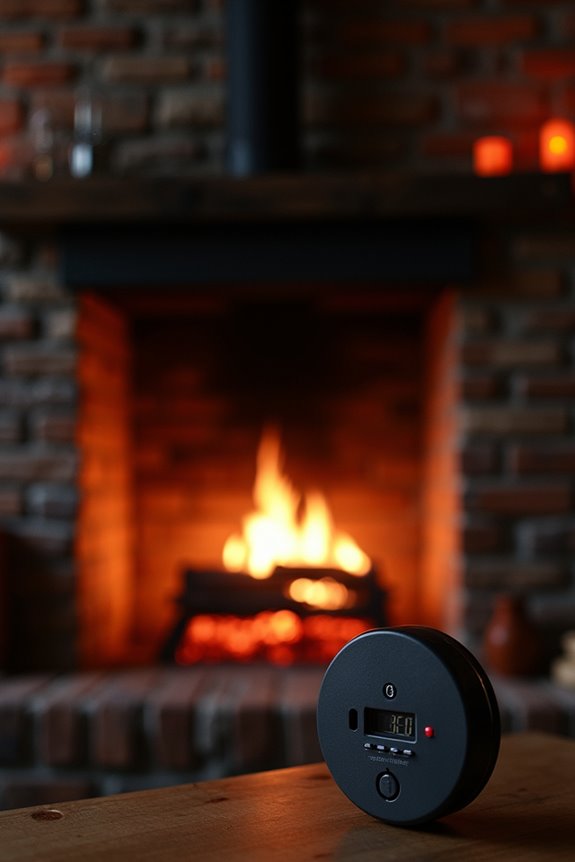
How do you know if your fireplace is leaking carbon monoxide? You’ll want to watch for warning signs that indicate your fireplace ventilation isn’t working properly. Carbon monoxide leaks can happen silently, so paying attention matters.
Watch for these red flags:
- Backdrafts or odd odors near your fireplace or chimney connector
- Soot buildup inside or around your fireplace opening
- Difficulty starting your fireplace or flames that burn oddly
- A restricted chimney or visible debris blocking airflow
Install carbon monoxide detectors on every level of your home. Get a CSIA-certified professional to inspect your fireplace annually. They’ll check your chimney connector, venting system, and overall fireplace condition. Pay attention to these warning signs—they indicate something needs attention.
Annual Inspections and Cleaning That Stop Fireplace CO Buildup
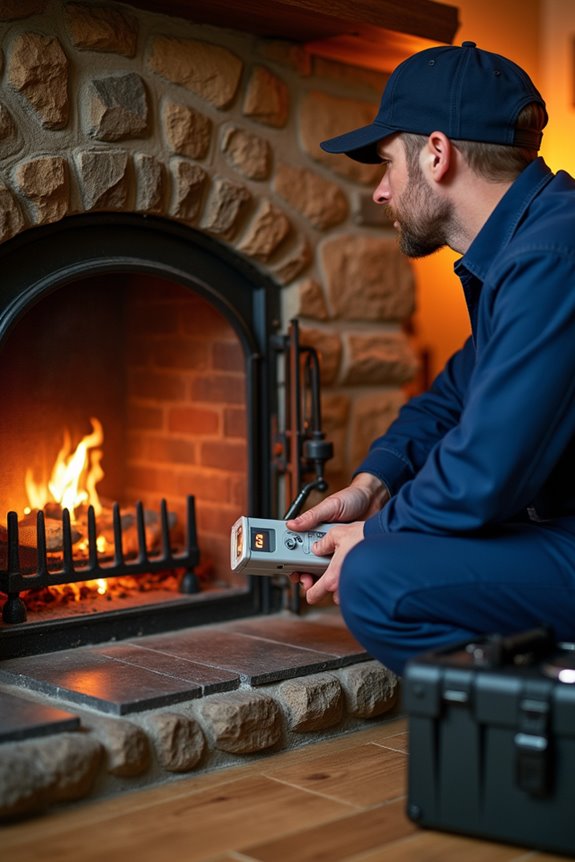
When’s the last time you had your chimney inspected? You’re not alone if you can’t remember. Annual inspections by CSIA-certified technicians are important for keeping your home safe from carbon monoxide buildup.
| Appliance Type | Inspection Need | Key Benefit |
|---|---|---|
| Wood fireplaces | Yearly chimney sweep | Removes creosote and blockages |
| Gas fireplaces | Annual venting check | Verifies proper fuel-burning safety |
| Oil appliances | Seasonal maintenance | Prevents backdrafts and CO exposure |
A professional chimney sweep removes soot, creosote, and blockages that cause backdrafts. They’ll verify your venting works correctly and check that your CO detectors function properly. This protects your family from dangerous carbon monoxide entering your living spaces. Schedule your inspection today—it’s an effective way to stay protected.
When You Need a Professional Fireplace Inspector
You’ll want to call a professional inspector if you notice dark soot around your fireplace opening, smell strange odors when it’s running, or see visible rust on metal parts. Your chimney might also need checking if you hear unusual sounds, spot loose bricks, or realize you haven’t had an inspection in over a year. A CSIA-certified technician can verify your ventilation’s working properly, test your oxygen sensors, and catch problems before they become dangerous.
Signs of Chimney Dysfunction
What’s happening inside your chimney isn’t always obvious from your living room, but certain warning signs can tell you it’s time to call in a professional. You’ll want to watch for these red flags that indicate venting issues or carbon monoxide leaks:
- Water streaking or rusting on your chimney exterior signals moisture intrusion and blocked chimney problems
- Soot buildup near your firebox shows improper combustion requiring immediate chimney inspection
- Missing or loose vent connectors create dangerous gaps where carbon monoxide can escape into your home
- Lack of draft causing smoke to enter your living space means combustion gases aren’t venting properly
Address these signs promptly. A professional inspector can identify whether you’re dealing with fireplace safety issues before they become serious problems affecting your family’s health.
Professional Inspection Benefits
A professional fireplace inspector brings expertise you can’t get from a DIY checklist. A CSIA-certified inspector evaluates your venting integrity, combustion efficiency, and CO risks from gas, wood, or ventless fireplaces. They’ll identify backdraft conditions, loose connections, and deteriorated masonry that push dangerous gases into your home.
During inspection, professionals verify your CO detectors function properly and check that sensors, burners, and ignition systems stay clean and safe. They spot damaged vents before they become serious problems.
You’ll receive actionable recommendations for repairs or replacements that reduce CO exposure and keep your fireplace compliant with safety standards. Annual inspections and chimney sweeps prevent blocked vents and CO buildup, providing confidence that your fireplace operates safely for your family.
Safety Verification Timing
Schedule professional inspections during these times:
- Before heating season starts each fall
- After any fireplace, chimney, or vent maintenance work
- When you notice soot buildup, rust, or water streaking
- Immediately if you suspect backdraft issues
A CSIA-certified technician checks your venting pathways, chimney vent connections, and damper operation. They’ll verify carbon monoxide hazards aren’t hiding in your system. Annual inspections protect your family from dangerous gas accumulation. Think of it as preventative care—catching problems before they become serious keeps everyone breathing safely.