
You don’t actually need a coffee table—interior designers agree they’re optional. Skip one if you’ve got a small room, prefer minimalist vibes, or want that open, airy feeling. Coffee tables work best when they’re about two-thirds your sofa’s width with 15–17 inches of walking space around them. Consider ottomans, nesting tables, or side tables instead.
The real question? Does your lifestyle and space actually benefit from one? There’s more to consider when making your call.
The Coffee Table Debate: Essential or Optional?
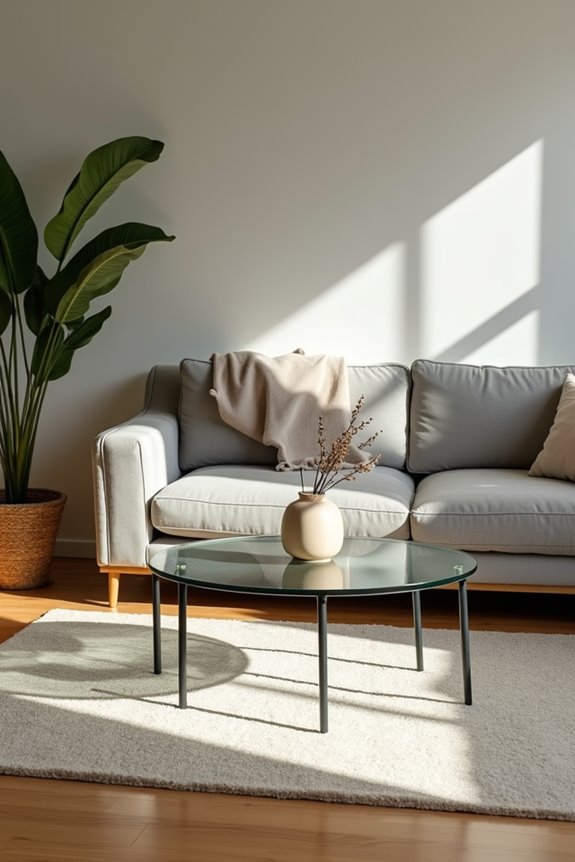
Do you really need a coffee table in your living room? The truth is, it depends on your situation. Interior designers agree that coffee tables aren’t mandatory. You won’t break any decorating rules by skipping one.
Here’s what matters: your lifestyle and space. If you host frequently, a coffee table offers practical surface space for drinks and snacks. If you’ve got a tiny room or prefer minimalist vibes, you can live without one. You can create an open, airy feel without it.
Consider your traffic patterns too. Will a table block your walkway or make sightlines awkward? If yes, skip it. You’ll join plenty of people who are ditching the coffee table trend entirely. The choice is up to you.
How Coffee Tables Anchor Your Living Room’s Function
Your coffee table does more than just hold your remote—it’s the landing zone where your seating arrangement actually makes sense, turning separate chairs and sofas into one connected space. When you position it thoughtfully, you’re creating a visual hub that guides your eye around the room, linking your walls, windows, and carpet into a unified composition. Get the size and height right relative to your sofa, and you’ll find your coffee table balances the whole room while keeping everything within comfortable reaching distance.
The Landing Zone Concept
Ever notice how your phone, coffee mug, and remote seem to migrate everywhere except where you actually want them? A coffee table solves this problem by creating a designated landing zone—a central hub where your everyday items naturally gather. Instead of scrambling to find things scattered across your sofa or floor, you’ve got one predictable spot. Your laptop, puzzle, water glass, and keys all have a home. This simple solution keeps your living room calm and organized while protecting your furniture from clutter creep. You’re not just adding furniture; you’re establishing a system that makes daily life smoother. Your coffee table becomes the anchor point that helps everything stay in place, keeping your space functional and relaxed.
Visual Hub and Flow
How does a piece of furniture become the invisible glue that holds your whole room together? Your coffee table acts as a visual hub, anchoring your seating arrangement and guiding your eye naturally around the space. It creates flow from walls to windows to carpet, tying everything together.
Without this central focal point, your room can feel scattered and disconnected. Your coffee table solves this by creating a practical gathering spot. It’s where you place drinks, remotes, and decor within arm’s reach.
If a traditional coffee table doesn’t work for you, consider alternatives. Ottomans, side tables, or nested tables preserve flow while maintaining clear pathways. The key? Choose something that makes your seating arrangement feel intentional and complete.
Proportion and Intentional Balance
Think of proportion as creating intentional equilibrium. A table that’s too large dominates; one that’s too small feels lost. You’re aiming for that sweet spot where everything feels purposeful and cohesive.
Leave 15–17 inches of walking space around your table. This spacing maintains clear sightlines and allows smooth movement. When proportions align correctly, your living room feels welcoming and complete—like someone thoughtfully designed it just for you.
When a Coffee Table Actually Makes Your Space Feel Smaller
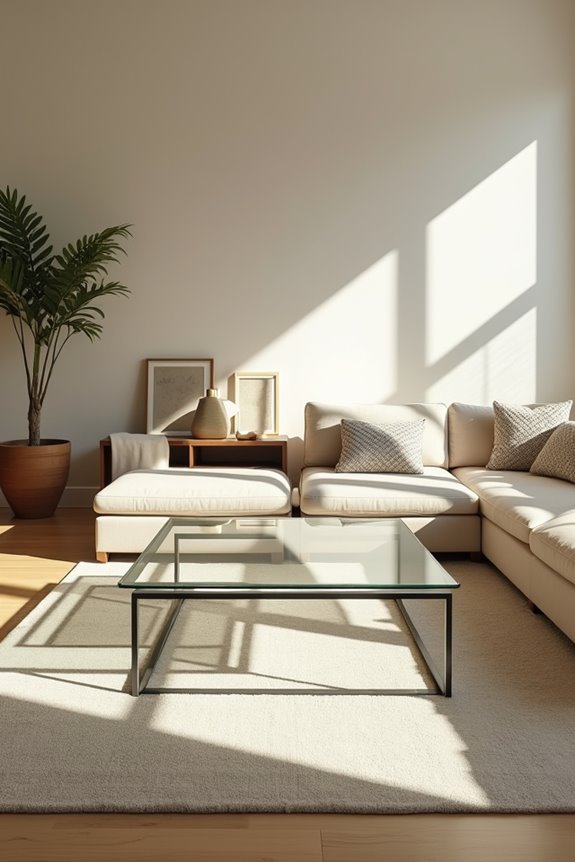
Sometimes the thing that’s supposed to make your living room feel complete actually does the opposite—it shrinks the whole space. Your coffee table’s size perception can work against you, especially in smaller rooms. That bulky surface blocks sightlines, interrupts the flow from one wall to another, and eats up precious floor space you desperately need.
You’re not alone if you’ve felt the difference. Removing your coffee table lets your eyes travel freely across the room, making everything feel more open. Consider swapping it for a nesting table or ottoman instead. These alternatives give you the functionality you want without crowding your layout. Your space will feel airier as a result.
Ottomans: A Better Alternative to Coffee Tables
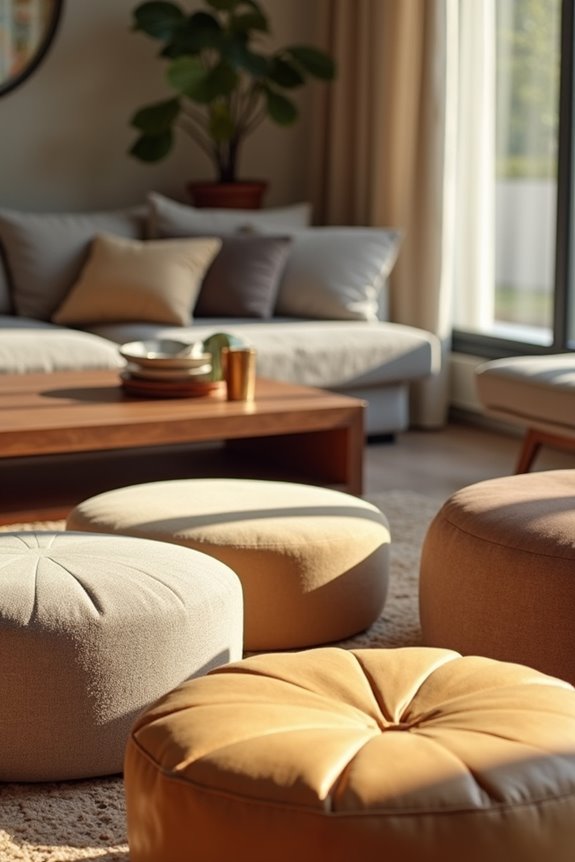
If you’re looking for a smarter way to furnish your living room, an ottoman deserves serious consideration. Unlike traditional coffee tables, ottomans offer flexibility you’ll actually use. You can reposition them to a corner when hosting, instantly opening up your space. A lightweight ottoman gives you surface functionality without the heavy visual bulk of a coffee table.
Here’s what makes them work: top yours with a decorative tray for a defined surface, then quickly remove it when you need room. Pair your ottoman with a large sectional and add side tables for extra surfaces. Want more options? Layer in floor poufs or cushions for casual seating. You’re creating a living room that adapts to your needs, not the other way around.
Side Tables Work Better in Tight Spaces
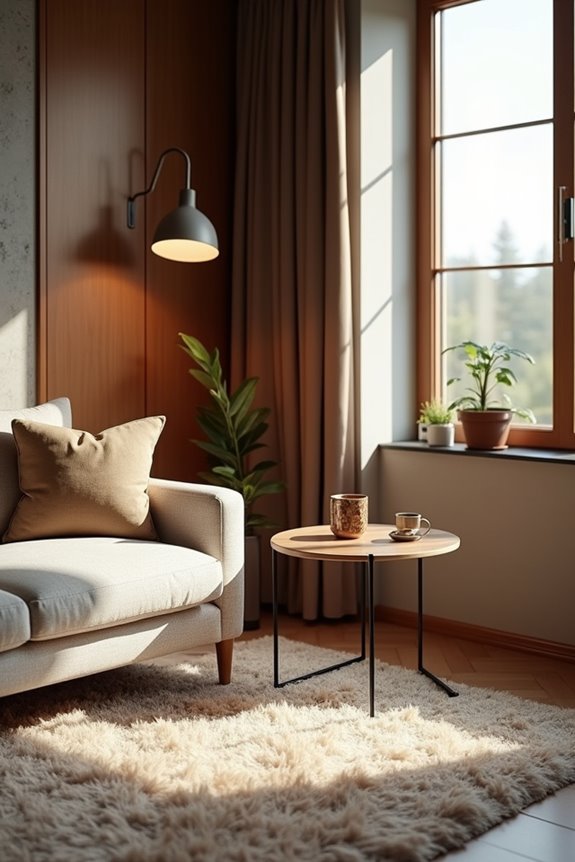
What’s the real problem with cramming a full coffee table into a small living room? You’ll lose valuable floor space and create a cramped, cluttered feeling. Side tables work better in tight spaces because they offer smaller, less obtrusive surfaces that fit comfortably without crowding your room.
Place side tables next to your sofa or chair for convenient access to drinks, remotes, and snacks. You’ll keep your floor open and navigable. Nesting designs let you stack tables and adjust surface availability as your seating changes.
Side tables also help you maintain an organized look. They support storage and decorative display without dominating your sightlines. You’re not sacrificing style or function—you’re just being smart about your space.
Nesting Tables: Flexible Coffee Table Replacements
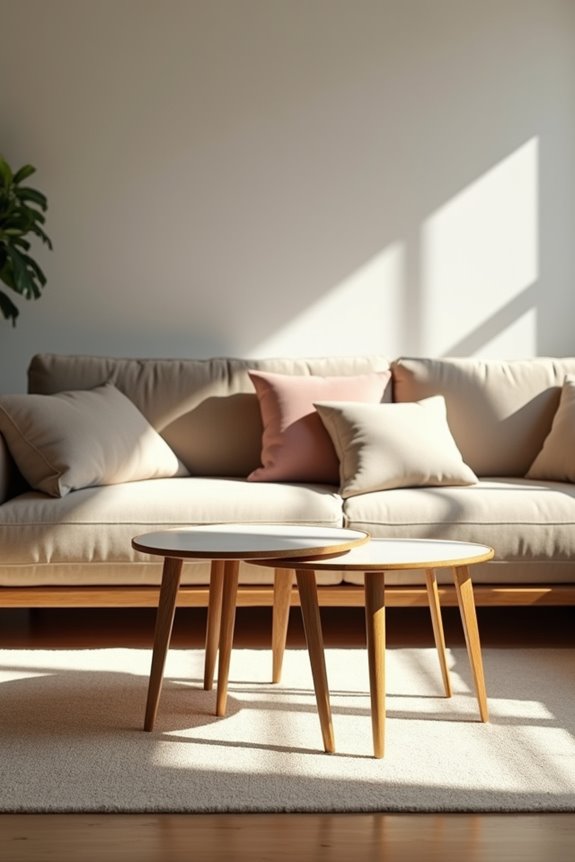
If you’re worried about cramming furniture into a small living room, nesting tables might be your answer—you can stack them when you’re not using them and pull out just the surface you need for drinks or hosting. They’re way more flexible than a bulky coffee table because you can arrange them however works best for your space that day, plus some designs include hidden drawers or shelves for remotes and magazines. You’ll get a polished, put-together look while keeping the open floor space you actually want to move around in.
Space-Saving Stacking Design
Many small living rooms can’t fit a traditional coffee table without feeling cramped, and that’s where nesting tables come in. Their space-saving design helps your room work better.
These clever tables stack neatly when you’re not using them, clearing valuable floor space in seconds. Pull out just one table for your morning coffee, then add another when friends visit. No bulky furniture hogging your living area.
The advantage? You’re creating flexibility without sacrifice. Your room has more breathing room, your guests have surfaces for drinks and snacks, and you’ve gained back precious square footage. It’s the practical solution for anyone who wants a functional living room that doesn’t feel overcrowded.
Nesting tables prove you don’t need a massive coffee table to make your space work harder for you.
Adaptable Surface Solutions
they’re basically the shape-shifters of living room furniture. You get adaptable surface solutions that work exactly how you need them. Pull out one table for your drink, two for snacks and remotes, or stack all three when you’re done. They come in rectangular, square, and round shapes—pick what fits your space and style.
| Table Shape | Best For |
|---|---|
| Rectangular | Long seating arrangements |
| Square | Compact corners |
| Round | Conversation areas |
You’re joining smart decorators who’ve ditched the one-size-fits-all coffee table. These nesting tables give you real flexibility without eating up your floor space. When guests leave, tuck them away and reclaim your room. That’s the adaptable surface solution you’ve been looking for.
Dual-Purpose Functionality Benefits
Nesting tables do double duty in ways a traditional coffee table simply can’t match. You’ll appreciate how they adapt to your living room based on what you need:
- Pull out extra surface space when hosting friends, then stack them away to reclaim your floor
- Access drinks and snacks easily from different seating positions without squeezing around one fixed table
- Keep your décor cohesive while maintaining an open, airy room instead of a cramped one
Unlike bulky coffee tables that dominate your space permanently, nesting tables give you flexibility. You’re not stuck with one setup—you adapt the furniture to fit your life. During gatherings, you’ve got plenty of room for refreshments. Afterward, everything tucks away neatly. This adaptability means you’re creating a home that works harder for you without sacrificing that spacious, welcoming feeling you’re after.
Open Spaces Need Less Surface (Here’s Why)
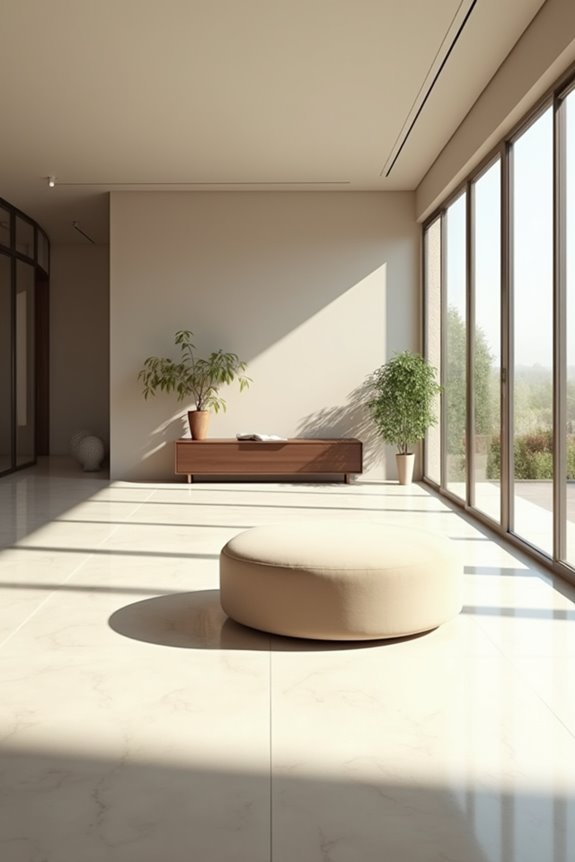
Why does that giant coffee table suddenly feel like an obstacle course in your living room? In open-concept spaces, fewer surfaces actually work better. You don’t need that massive coffee table taking up real estate—it’ll just cramp your flow and make everything feel cramped.
Instead, consider flexible alternatives that meet your surface needs without the bulk. Nesting tables, ottomans with trays, and lightweight side tables do the job well. You can move them around or tuck them away when you’re hosting, keeping your walkways wide and inviting.
Wall-focused layouts with built-in shelves give you storage without stealing floor space. Your sightlines stay clear, and your room has room to expand. Movable surfaces preserve that open, airy feeling you’re after—letting your space work harder for you.
Built-In Storage Instead: When Shelves Beat a Coffee Table
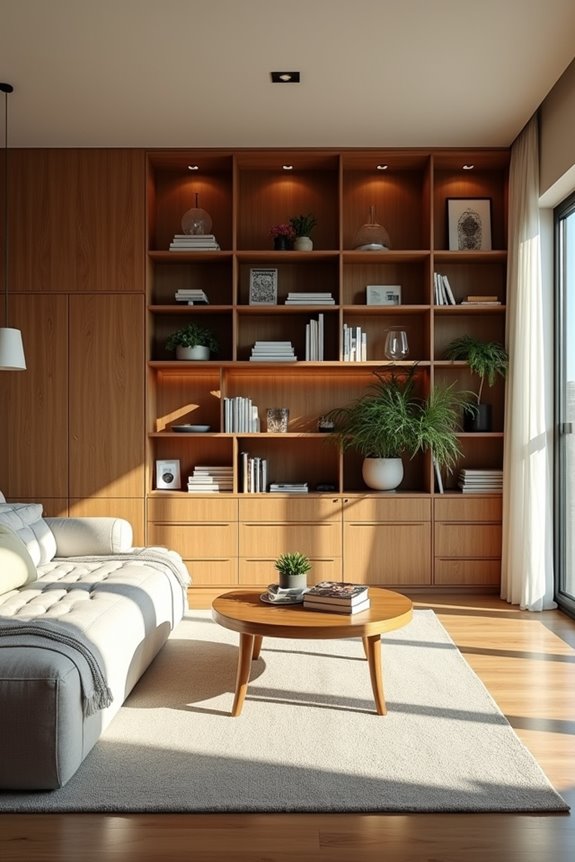
Built-in shelves and cabinets offer a practical way to organize your living room without cluttering the center of the space like a traditional coffee table would. You can display books, candles, and decor on the shelves while hiding everyday items in the cabinets below, keeping everything neat and accessible. This setup allows you to create an open, easy-to-navigate room that works well for hosting guests or daily living.
Shelving Creates Visual Organization
If you’ve got a smaller living room or you’re just tired of dusting a bulky table, wall shelves might be your answer. Shelving creates visual organization in ways a traditional coffee table simply can’t. Here’s how you can make it work:
- Display with purpose: Arrange books, candles, and decorative items with intention. Group similar heights together and alternate between tall and short pieces to create rhythm.
- Keep it balanced: Mix decorative items with functional storage. This prevents your shelves from looking cluttered while keeping everyday items accessible.
- Draw eyes upward: Strategic shelving guides attention away from floor space, making your room feel more open and thoughtfully designed.
You’re building a space that actually works for how you live, not just following convention.
Storage Replaces Surface Clutter
What if the real problem isn’t that you need a coffee table—it’s that you need a place for all your stuff?
Built-in shelving tackles surface clutter head-on. You’re not just decorating; you’re solving a storage problem that usually ends up scattered across a coffee table. Open shelves display your favorite books and candles while closed cabinets below hide the everyday items you actually use—remotes, blankets, magazines.
This setup keeps frequently used things within arm’s reach but completely out of sight. Your living room stays clean without constant tidying. You’ve created a functional home where everything has its place, and you’re not hunting for things buried under magazines and mail.
Built-Ins Maximize Open Space
Ever notice how removing just one piece of furniture can completely change how a room feels?
Built-ins do exactly that. By installing shelves and cabinets along your walls, you’re creating storage that doesn’t steal floor space. You’re reclaiming room to breathe.
Here’s what built-ins give you:
- Clear sightlines that make your space feel bigger and airier
- Hidden storage in cabinets below shelves for books, candles, and papers
- Visual balance that prevents clutter from piling up
When you skip the coffee table and use built-ins instead, your living room changes. You get an open space with purpose—not cramped. Your furniture arrangement flows naturally. Plus, you can style those shelves like a “shelfie”—creating focal moments without needing a central surface demanding attention. That’s smart design working for you.
Get the Scale Right: Why Table Size Matters
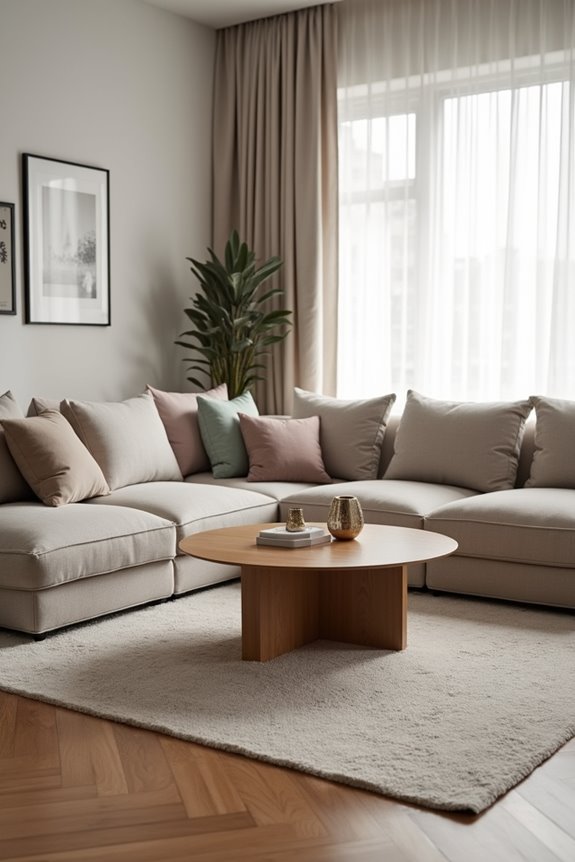
bigger isn’t always better. You’ll want to match your table’s length to about two-thirds of your sofa width. This creates balance and lets you actually reach your coffee without awkward stretching.
| Measurement | Purpose | Your Action |
|---|---|---|
| Table height | Match sofa seat level | Measure your sofa seat |
| Walking space | 15-17 inches around table | Mark clear pathways |
| Table length | Two-thirds sofa width | Calculate and compare |
| Legroom | Comfortable knee clearance | Test sitting positions |
| Visual weight | Prevents dominance | Consider nesting tables |
Getting the scale right anchors your seating area and guides how your eye travels through the room. In smaller spaces, you might skip a traditional coffee table entirely and choose ottomans or nesting tables instead. The goal is keeping your living room functional and welcoming, not cluttered.
How Shape and Material Set the Room’s Mood
Your coffee table’s shape and material set your room’s vibe—wood adds warmth, glass keeps it light and open, and metal delivers a sleek, modern look. Round and oval tables naturally draw people together for conversation, while rectangular ones provide structure and pair well with longer sofas, so choose based on how you actually want to gather. Match your table to your lifestyle: if you’re always moving around, pick a shape that doesn’t block traffic flow, and select a material that fits your home’s personality.
Material Selection and Personality
How much does a coffee table’s material actually matter? It’s honestly everything. Your choice shapes how your whole room feels and whether guests feel welcome in your space.
- Wood textures bring warmth and familiarity, making your living room feel like a gathering spot
- Glass surfaces create lightness and airiness, perfect if you want your room to feel open and modern
- Metal accents add sharp, contemporary touches that show personality and style
The material you pick works with your sofa fabric and rug to create a unified look. Pick surfaces that match your lifestyle too—if you’ve got kids or pets, wipe-clean options keep things practical without sacrificing style. Your coffee table isn’t just furniture; it’s your room’s personality made tangible.
Shape’s Impact on Flow
Ever notice how a round table feels totally different from a rectangular one, even when they’re the same size? That’s because shape dramatically affects your room’s flow and how people interact with the space.
Rectangular tables ground long sofas and create structured, guided movement. They naturally direct eye travel along the seating line. Round and oval tables? They’re the opposite—they soften edges and encourage easier movement around furniture. Ovals especially work well in smaller rooms, balancing that grounded feeling with softer curves that reduce visual heaviness.
Here’s what matters: keeping your table about two-thirds your sofa’s length works across all shapes. Pair glass finishes with round or oval tables for lightness. Choose wood or stone with rectangles to emphasize structure. This pairing sets your room’s entire mood and creates a space that feels deliberately designed.
Define Space Without a Table: Walls, Rugs, Windows
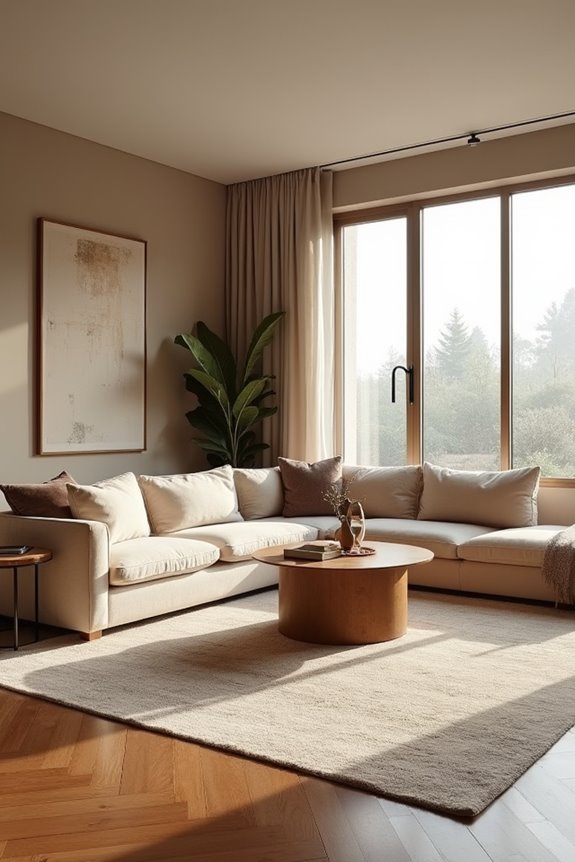
What if your living room actually looked bigger without that coffee table taking up real estate in the middle?
You can absolutely define your space without one. Instead of relying on a central table, let your room’s natural features become the visual anchors:
- Walls and art draw your eye upward, making ceilings feel higher
- Rugs anchor seating areas and create invisible boundaries between zones
- Windows and natural light become focal points, opening up the entire room
Without a coffee table blocking the view, your space opens up. Your guests move freely. The eye travels naturally from your wall art to architectural details to that gorgeous window view. You’re not sacrificing function—you’re gaining openness. Real homes prove this works beautifully.
Family-Friendly: Skip the Table, Reduce Hazards
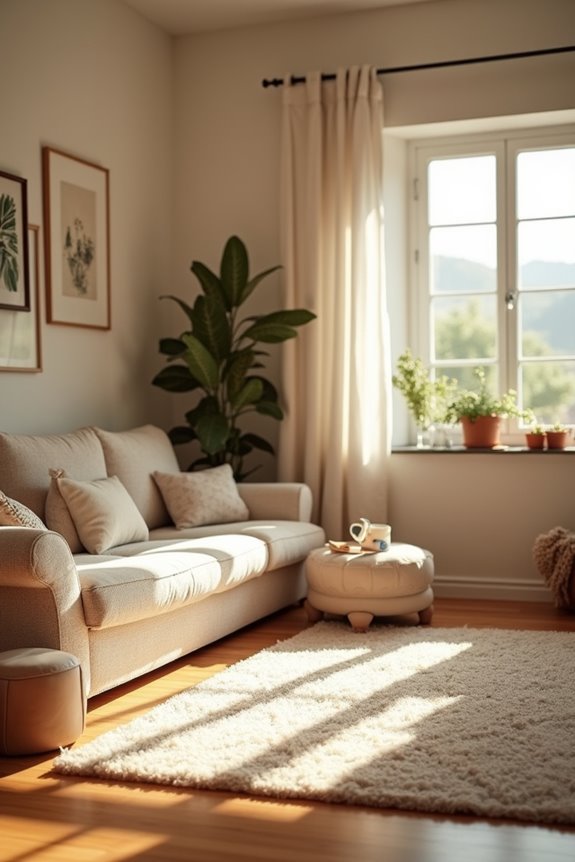
If you’ve got kids or pets running around your living room, that sharp-cornered coffee table in the middle of the floor might be doing more harm than good. You’re trading style for safety when you skip it entirely. Without a bulky table creating hazards, your family gains breathing room—literally. You’ll supervise children more easily and move around freely without bumping into anything dangerous. Spills become less catastrophic when there’s no central surface to knock over drinks. Instead, consider flexible alternatives: ottomans you can tuck away, side tables positioned safely against walls, or built-in storage that serves double duty. Your living room becomes a safer, more open space where everyone belongs, moving comfortably without constant worry about injuries or accidents.
Flexible Hosting: Rearrange Without a Focal Point
The best hosting setup isn’t always anchored to a single piece of furniture.
Without a traditional coffee table, hosting becomes more adaptable. Your guests naturally circulate more freely, and you can rearrange seating on the fly without bumping into a bulky centerpiece. This adaptability creates visual balance across your room—nothing dominates the space.
Consider these movable alternatives:
- Ottomans that slide around when you need extra seating or surfaces
- Nesting tables that nest away when guests arrive, then separate for function
- Side tables scattered strategically for drinks without blocking sightlines
You’re not sacrificing functionality. You’re gaining the ability to shift your layout based on who’s visiting and what works best that day. That’s the kind of hosting freedom that actually works for how you live.
Does Your Lifestyle Actually Need One?
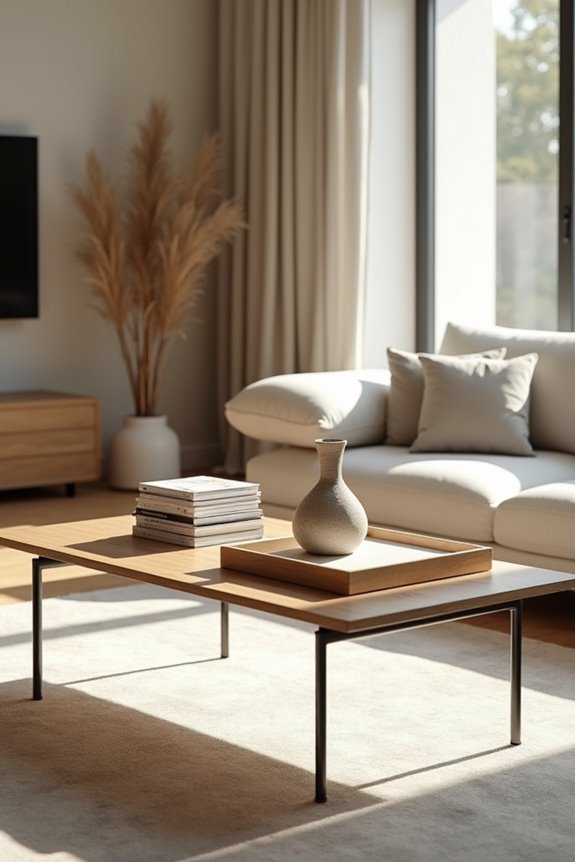
does a coffee table actually fit how you *live*?
Your lifestyle determines whether you need one. Consider your daily habits, entertaining style, and how you use your space. If you’re constantly hosting, a round coffee table or movable ottoman provides flexible surfaces. If you’re minimalist or have kids running around, skipping one keeps your room open and safe.
| Your Lifestyle | Best Solution |
|---|---|
| Frequent entertaining | Movable ottoman with tray |
| Small apartment | Skip the table entirely |
| Minimalist aesthetic | Console or nesting tables |
| Young children | Open floor space |
| Clutter-prone | Wall-mounted shelves |
Think honestly about what you actually need. You’re not failing by choosing alternatives. Many people find that removing a coffee table makes their space more functional and welcoming for how they genuinely live.
Making the Final Call: Checklist for Your Space
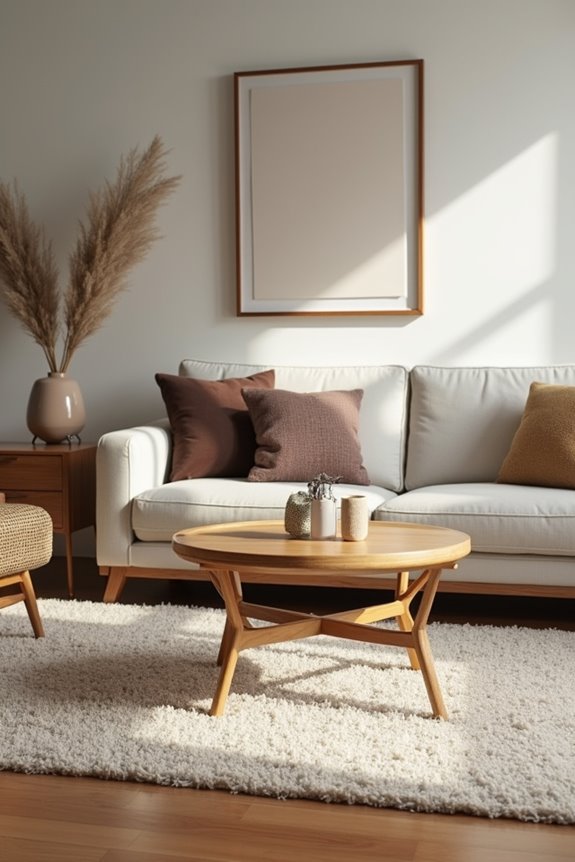
Ready to make your decision? Use this checklist to finalize your living room coffee table choice:
- Measure your space: Allow at least 15–17 inches of walking space around any central surface. This breathing room keeps your layout balanced.
- Test your layout: Arrange furniture to create a cohesive sofa–table–seating triangle. Check that you can easily reach items and see walls without obstruction.
- Evaluate alternatives: Consider ottomans, nesting tables, or built-in shelves if you’d rather maximize openness or flexibility.
Finally, think practically. Does your living room coffee table fit your hosting style? Will it collect clutter or enhance your space? Pick durable, easy-to-clean materials matching your lifestyle. Consider what actually works best for your home and daily routine.