

You don’t have to match your living room chairs—mixing them actually adds personality and texture. The key? Find a unifying element like shared color, wood tone, or fabric type to keep things cohesive instead of chaotic.
Pair a velvet chair with a linen one, or choose two different styles in complementary shades. Balance matters too: make sure chairs relate to your sofa’s scale and ground the space with a rug or table. Get the framework right, and you’ll create a lived-in room.
You Don’t Have to Match: Here’s the Decision Framework
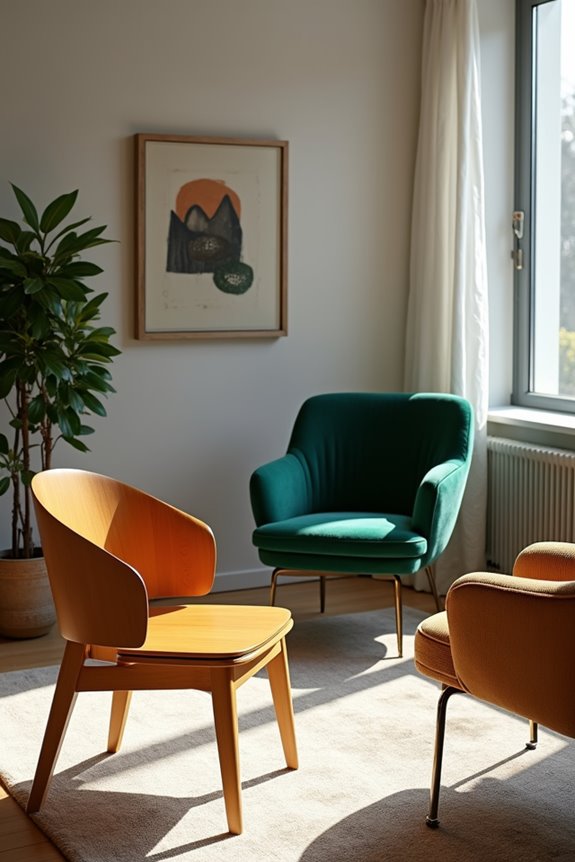
Why does matching your living room chairs feel like a rule written in stone? It doesn’t have to be. You can embrace non-matching chairs to add personality and texture variation to your space. The key? Create a decision framework that works for you.
Start by identifying a unifying element—maybe a color strategy, textile family, or shared silhouette. This keeps your seating layout from feeling chaotic. Use the three-size color approach: large, medium, and small doses of color across your eclectic style choices.
Consider your focal points and how each chair interacts with nearby tables and rugs. This planning creates a balanced palette and cohesive design. Match chairs only for tandem seating or traditional spaces. Otherwise, mix boldly to build depth and character in your living room.
Unify Mismatched Chairs With Shared Color, Finish, and Texture
Now that you’ve decided to skip the matching set route, here’s how you’ll actually pull off the mismatched look—by tying your chairs together through color, finish, and texture.
Start by identifying a unifying element that connects your seating group. You might choose:
Start by identifying a unifying element—color, finish, or texture—that ties your seating group together cohesively.
- Color relationships: Pick two chairs in different shades of the same hue, or select complementary tones that echo your sofa
- Finish consistency: Match wood tones or metal finishes across pieces, even if upholstery differs
- Texture echoes: Pair velvet with linen, or repeat similar materials throughout your arrangement
This approach creates a unified look without requiring identical pieces. Balance matters—your chairs should relate to your sofa’s scale and the room’s overall aesthetic. Place them intentionally around a central rug or artwork, grounding the arrangement and preventing a disjointed appearance.
Mix Styles Intentionally to Serve Function and Personality
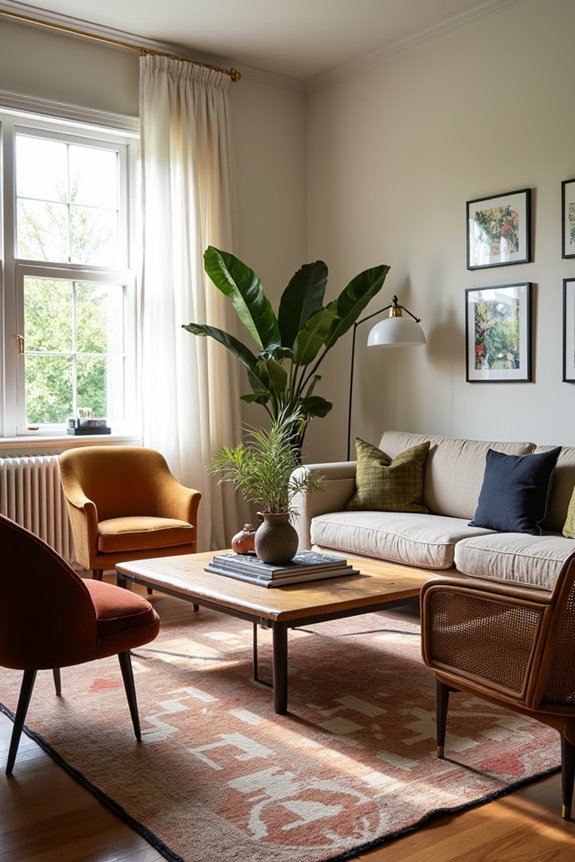
When you’re mixing styles intentionally, you’re creating zones in your living room that serve real purposes. That traditional sofa paired with a modern accent chair? It’s not random—it’s defining where conversation happens versus where you curl up alone.
Consider scale and proportion when selecting non-matching chairs. They should feel balanced with your sofa, not tiny or overwhelming. Layer in complementary textures: smooth leather next to woven fabric adds depth without chaos.
Your cohesive theme ties everything together. Repeat a color accent across different pieces or use matching wood finishes. This keeps non-matching chairs feeling deliberate rather than scattered.
The result? A room that works for how you actually live—functional, personal, and genuinely yours.
Match Pairs When Symmetry, Formality, or Function Demands It
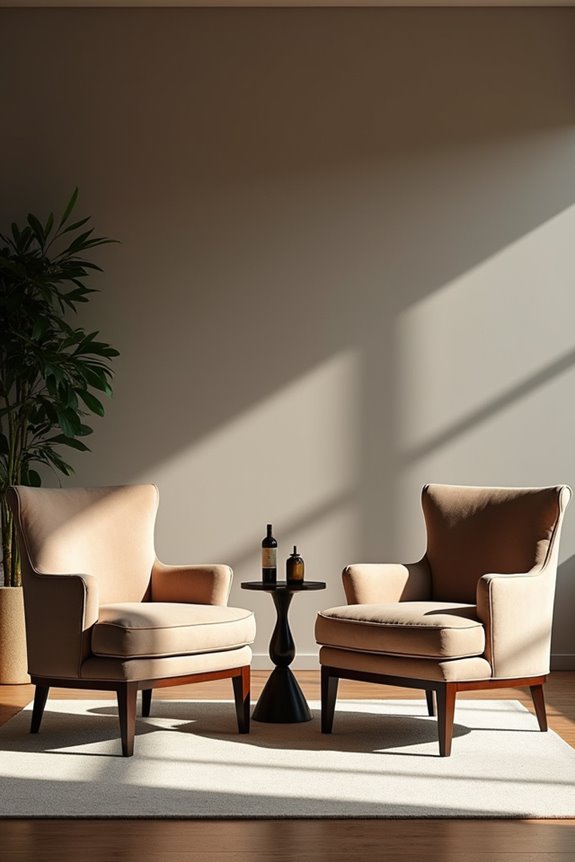
But the matter is—sometimes you don’t want intentional mixing. Matching pairs create the polished symmetry that formal living rooms and traditional spaces demand. You’re building a design that feels deliberate and well-considered.
Consider these situations where paired chairs work best:
- Traditional or Scandinavian rooms where tandem seating arrangements benefit from matching furniture
- Formal settings that need a refined, symmetrical appearance
- Functional layouts where two identical chairs anchor a conversation area
When you do match, add a third chair with different fabric and design to keep things from feeling too uniform. A simple between-seat table creates visual contrast and prevents that showroom effect. Matching chairs placed side by side act as one unified seating unit, giving your living room that gathered-together feeling you’re after.
5 Mistakes That Make Mismatched Chairs Look Chaotic
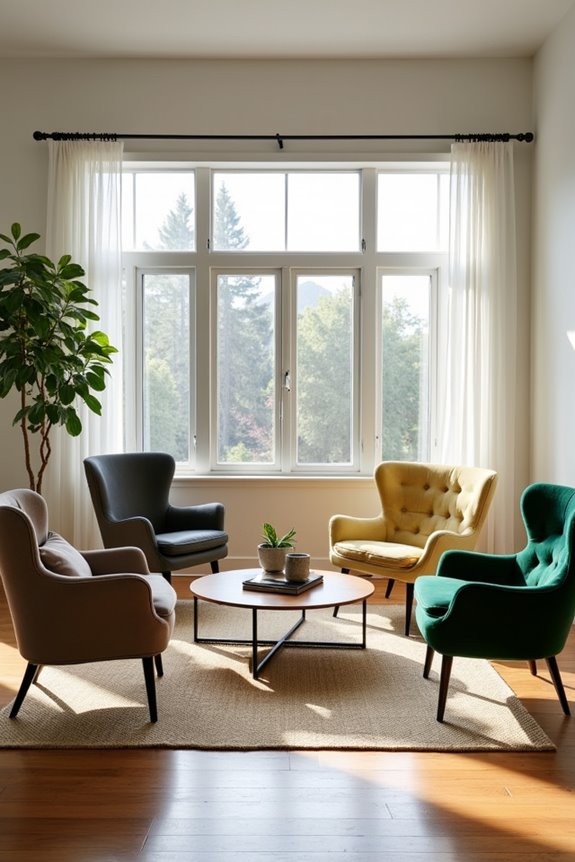
How do you keep mismatched chairs from looking like you grabbed them from different garage sales?
Skip random placement. Don’t scatter non-matching chairs throughout your room without intention. You’ll create a disjointed look that feels disconnected.
Ignore your color palette. Deliberate mismatching requires restraint. Stick to two or three colors that tie everything together as your unifying element.
Forget to space each chair. Give every piece breathing room with thoughtful spacing. Position them deliberately within your layout, not haphazardly.
Anchor your space poorly. A rug, art piece, or coffee table creates a unified vignette that grounds your chairs together.
Overlook balance. Your non-matching chairs must balance function and aesthetics through smart space planning. Each chair should feel purposeful, not like an afterthought.