
Yes, curtains really do help. You’ll reduce heat loss by 10–25% when you install them correctly—that’s meaningful savings over a cold season. Heavy fabric traps still air against your window, and thermal lining reflects warmth back inside. Floor-to-ceiling panels with snug side seals work best. Pair them with other methods like caulk or window film for even better results. The details on setup and timing reveal where most people leave heat-saving potential untapped.
How Much Heat Do Curtains Actually Stop From Escaping?
Just how much warmth can you actually trap by hanging curtains? Well, you’re looking at roughly 10–25% heat loss reduction, which isn’t huge but definitely counts. The key? Your curtains need to work hard for that payoff.
Here’s what makes the difference. Floor-to-ceiling thermal lining curtains create an air barrier between your cold window and warm room, blocking drafts effectively. They’ll perform best when they’re heavy, fit snugly, and seal tightly at the sides and edges—no gaps allowed.
Blackout thermal lining boosts insulation further, while adding a separate thermal backing actually reflects heat back into your space. Combine curtains with other methods like window films, and you’ll see better results.
The bottom line? Curtains work, especially when you install them properly.
Air Pockets: Why They’re Essential to Heat Retention
When you hang insulated curtains, you’re basically trapping still air between the fabric and your window glass, and that motionless air is what actually does the heavy lifting to stop heat from escaping. The denser your curtain fabric and the more layers you stack, the better you’ll keep that air pocket from moving around—and moving air loses its insulating power fast. You can maximize this effect even more by making sure your curtains fit snugly with no gaps on the sides, which stops warm air from sneaking around the edges and touching that cold glass.
How Air Pockets Insulate
Air is one of nature’s best insulators, and your curtains can harness that power by trapping it between the fabric and your window. When you hang thermal curtains or layered curtains properly, you’re creating an air gap that acts like an invisible shield. Still air doesn’t move, so it can’t carry heat away from your room. Dense fabrics and multiple layers expand this air pocket, making your insulation stronger. The trapped air slows heat loss significantly, whether you’re fighting winter cold or summer heat. Floor-to-ceiling curtains with side seals work best because they seal the entire window area. You’re building a barrier that keeps your home’s warmth exactly where it belongs—inside.
Maximizing Stillness Between Layers
Why does the air trapped in your curtains matter so much? You’re creating an invisible shield that keeps warmth exactly where you want it—inside your home.
When you install insulated curtains properly, you’re trapping still air that resists heat movement. Here’s how you maximize that protection:
- Install curtains floor-to-ceiling to eliminate gaps where drafts escape
- Seal the sides tightly against your window frame to block edge leaks
- Layer multiple drapes to enlarge your air pocket significantly
- Choose heavy fabrics like velvet or thick cotton for denser construction
- Add thermal lining as a separate backing layer for enhanced insulation
The key? Stillness wins. Moving air leaks heat fast. Your layered curtains create calm, trapped air that works overtime. Seal those edges, layer generously, and you’ve built a thermal barrier that actually performs.
Fabric Weight and Thermal Lining: What Actually Matters
When you’re picking out curtains for better heat retention, you’ll want to focus on two key features: a heavier, denser fabric that blocks heat from escaping, and a thermal lining on the back that bounces warmth right back into your room. Think of it like wearing a winter coat with a fleece lining—the outer layer stops the cold, while the inner layer reflects your body heat back to you. Together, these two elements work better than a single thin curtain.
Dense Fabric Blocks Heat
Got a flimsy curtain hanging on your window? It’s time to upgrade. Dense fabrics work hard to block heat loss and keep your home cozy. When you choose heavier materials, you’re trapping air that would otherwise escape through edge sealing gaps and air leakage points.
What makes dense fabric effective:
- Velvet or suede face fabrics create thick barriers against cold
- Thermal lining adds an extra insulation layer underneath
- Heavy woven cotton resists air movement near windows
- Multiple fabric layers stack protection together
- Proper fit with no gaps maximizes heat retention
The thicker your curtains, the better your insulation performance. You’re building a barrier against temperature loss. Dense fabric combined with thermal lining turns ordinary windows into practical heat-saving assets for your home.
Thermal Backing Reflects Warmth
How much heat are you actually losing through your windows right now? When you add thermal backing to your curtains, you’re getting a practical solution for heat retention. That reflective backing bounces warmth right back into your room instead of letting it escape. Pair heavy-weight curtains with this technology, and you’ve created an enclosed air pocket that reduces heat transfer.
| Feature | Without Backing | With Thermal Backing |
|---|---|---|
| Heat Loss | High | Low |
| Air Barrier | Weak | Strong |
| Winter Savings | Minimal | Noticeable |
| Edge Sealing | Poor | Excellent |
| Insulation Efficiency | Basic | Superior |
Make sure your curtains fully cover your windows with minimal gaps. That edge sealing matters. You’re building a protective shield that keeps your warmth exactly where it belongs—inside your home.
Building the Best Curtain Setup for Winter Heat Retention
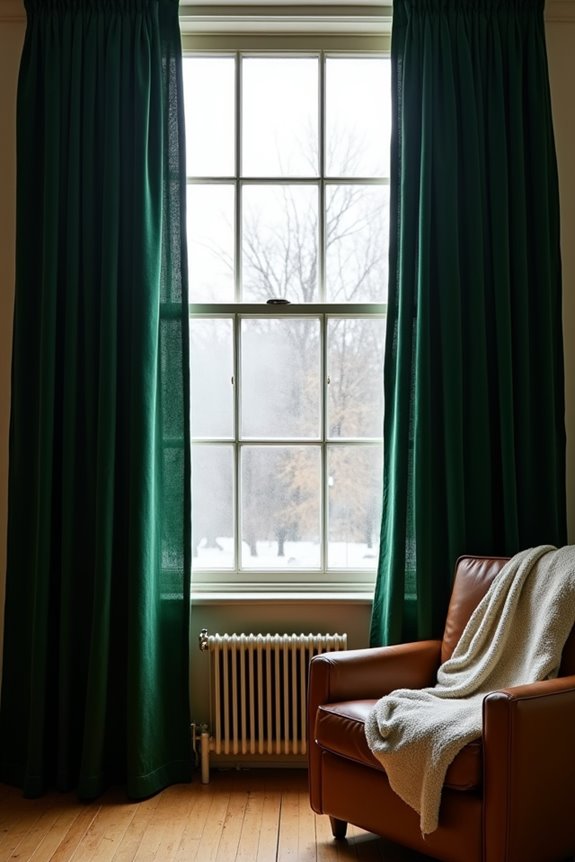
Why do some people’s curtains actually work while others just look nice and do nothing? You’re building an insulation system, not just hanging fabric.
Start with floor-to-ceiling curtains featuring thermal lining. This creates an air pocket between your window and room, cutting heat loss by 10–25%. Layer a decorative curtain over thermal backing to block drafts and reflect warmth back inside.
Here’s your winning setup:
- Measure from ceiling to floor, covering the entire window frame
- Eliminate side gaps completely—they leak precious warmth
- Skip windows above radiators to avoid blocking heat
- Choose dense fabric with quality thermal lining underneath
- Close curtains at dusk when outdoor temps drop
Proper window framing with layering makes curtains function as genuine insulation rather than decoration. You’ll notice the difference in your heating bills and comfort level.
Measure and Install to Seal the Sides
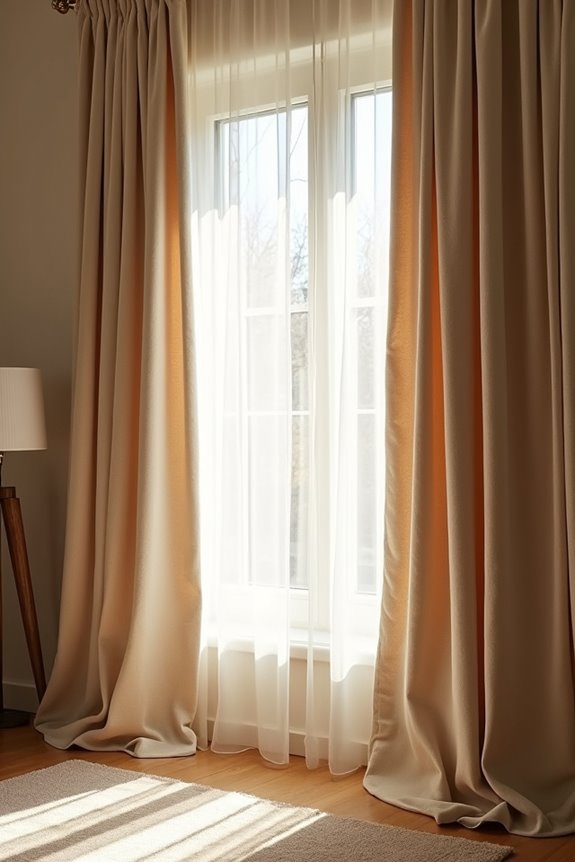
Ever notice how heat seems to escape around your curtain edges like it’s sneaking out the back door? You’re not alone. Those side gaps undermine everything you’re trying to achieve. Sealing your curtain edges makes your setup work better.
Here’s what makes the difference: measure your window width, then add 8–12 inches on each side. This overlap lets you create a tight air barrier against the wall. Install your curtain rod high and wide. Use heavy, dense fabric with thermal lining. Mount side tracks or guide systems to keep edges flush against the wall.
| Installation Step | Why It Matters |
|---|---|
| Measure 8–12 inches beyond window | Prevents edge leaks |
| Mount rod high and wide | Covers gaps completely |
| Use thermal-lined fabric | Traps air effectively |
| Add side tracks | Reduces air leakage |
| Fit tightly to wall | Maximizes thermal performance |
Timing Curtains to Capture Free Solar Heat
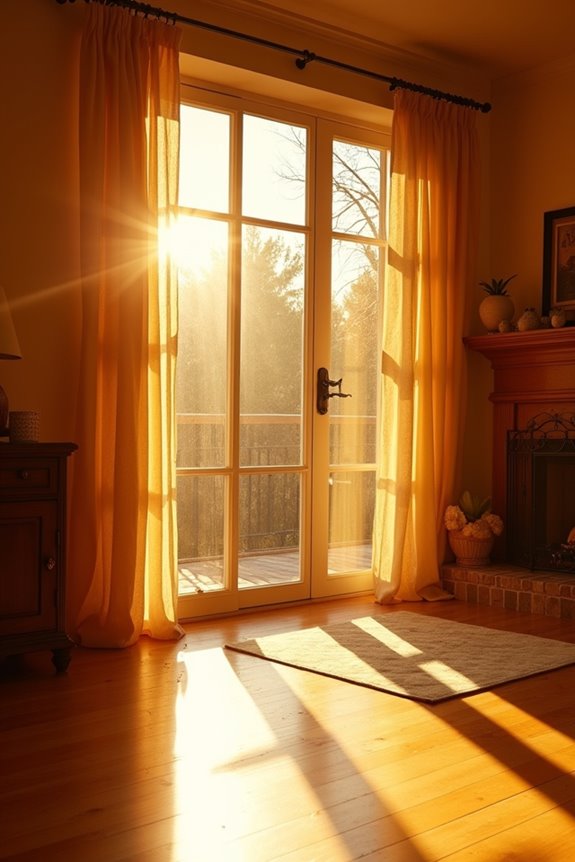
Timing Curtains to Capture Free Solar Heat
Your curtains can work double duty—letting free solar heat in during the day, then locking that warmth inside once the sun goes down. You’ll capture valuable daytime sunlight by opening curtains during peak hours, especially on south-facing or west-facing windows where solar gain matters most. This simple timing strategy costs nothing but saves real energy.
Your Daily Curtain Schedule:
- Open curtains at sunrise to invite warm air into your rooms
- Keep them drawn during the coldest evening hours for heat retention
- Use thermal or layered window treatments for maximum performance
- Close curtains at dusk before temperatures drop outside
- Adjust based on your home’s sun exposure and climate
This approach works alongside your sealed window edges, creating a complete heating system you control.
Blackout vs. Thermal Curtains: Which Insulates Better?
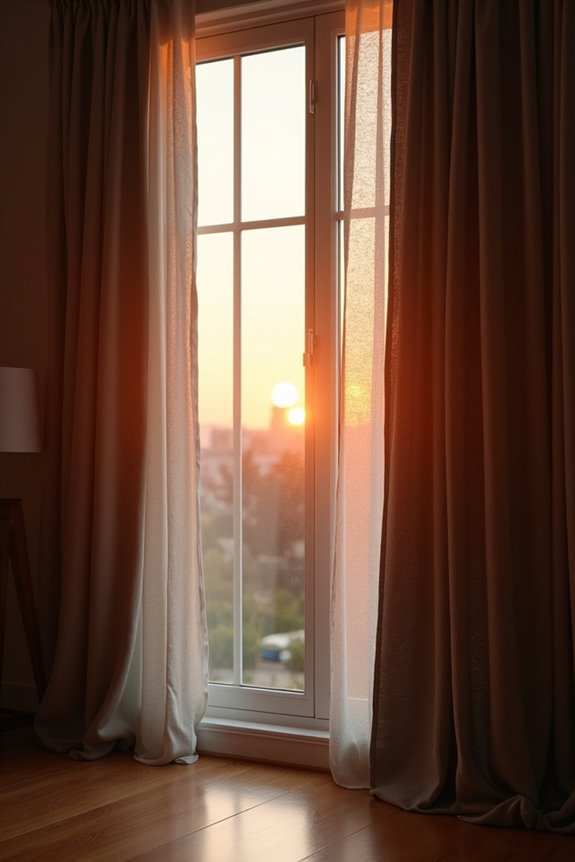
When you’re shopping for curtains that actually keep heat inside, you’ll notice two heavy hitters competing for your attention: blackout and thermal curtains.
Both types reduce heat loss significantly—we’re talking up to 25% under the right conditions. Blackout curtains use dense, multi-layer fabrics that trap an air pocket against your window, slowing heat escape. Thermal curtains take it further with dedicated thermal linings designed to minimize edge leaks and stop convection cold.
| Feature | Blackout Curtains | Thermal Curtains |
|---|---|---|
| Primary Purpose | Block light | Insulate homes |
| Air Pocket Creation | Yes | Yes, enhanced |
| Edge Leak Prevention | Good | Better |
| Heat Loss Reduction | ~25% | ~25% |
| Best Installation | Floor-to-ceiling | Floor-to-ceiling |
Here’s the real deal: thermal curtains perform better because they’re specifically engineered for insulation. However, pairing either option with proper installation—covering edges and reaching the floor—maximizes performance for your space.
Pair Curtains With Other Insulation for Better Results
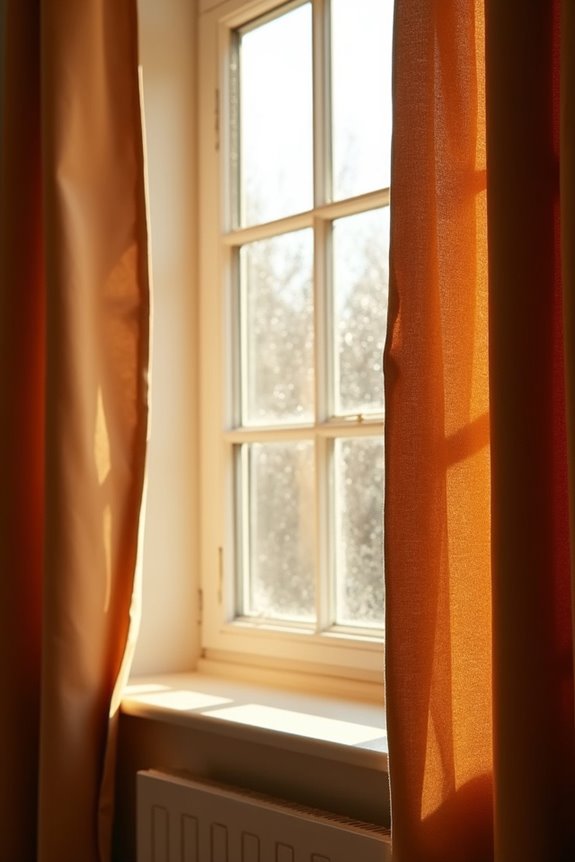
What if your curtains alone aren’t doing all the work you need? You’re not alone—that’s why pairing curtains with other insulation creates a powerful thermal barrier against energy loss.
Combine these window treatments for maximum energy efficiency:
- Thick curtains layered with thermal lining and backing
- Window films that reflect heat away from glass
- Rope caulk sealing gaps around frame edges
- Door sweeps blocking drafts at thresholds
- Plastic sheeting on interior or exterior surfaces
When you stack these solutions together, you’ll cut air leaks significantly. Floor-to-ceiling curtains extending beyond window edges work best. Add draft-blocking measures around doors and problem areas. This layering approach reduces heating energy by 10–25% or more. You’re building a comprehensive defense against heat loss, creating a cozy, efficient home.
Troubleshoot Your Curtains Before Trying Other Methods
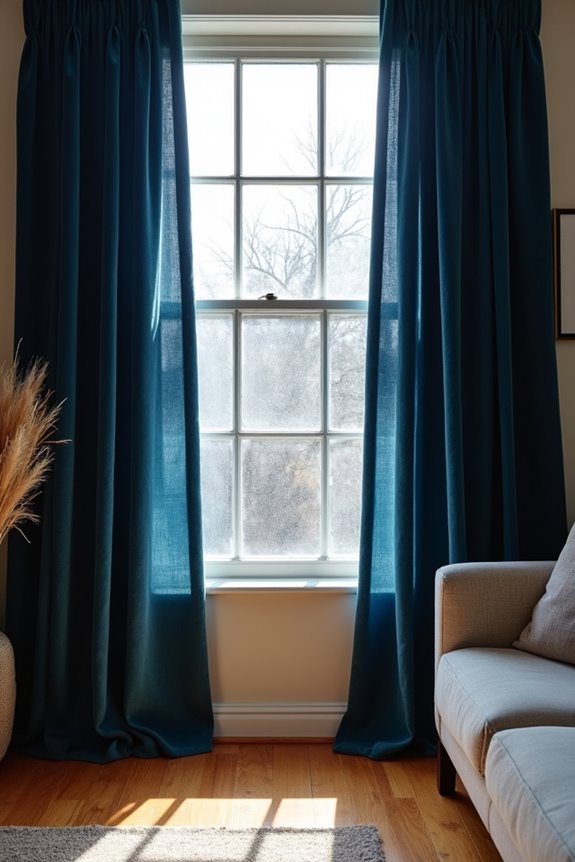
Before you invest in extra insulation or call in reinforcements, take a closer look at your current curtains—they might not be performing as well as they could simply because of how they’re installed or fitted.
Check these common culprits first:
| Problem | Solution | Result |
|---|---|---|
| Side gaps letting cold in | Extend rods wider or add thermal curtains | Better airtight sealing |
| Curtains too short | Install floor-to-ceiling panels | Stops heat loss completely |
| Thin fabric used | Layer curtains or add backing | Creates insulating air pocket |
Your thermal curtains work best when you’ve sealed every gap. Measure twice—confirm your rods extend past window edges. Stack multiple layers for draft-blocking power. These fixes often cost less than hiring professionals, yet they deliver real results. You’ve already got the foundation; now you’re just optimizing it.