
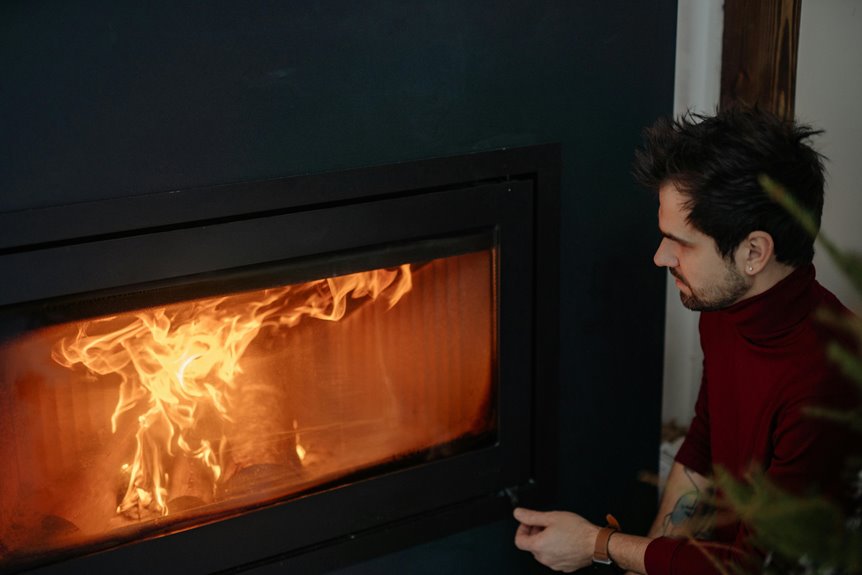
Fireplace inserts typically cost $1,000 to $4,500 depending on fuel type—electric models start around $1,000, while gas, wood, and pellet options range $1,500–$4,500. You’ll also need to budget for installation, venting, and professional chimney inspection, which vary by region and your home’s setup.
Your climate matters too; colder areas might benefit from high-output wood inserts that can lower energy bills. Factor in maintenance costs, and you can evaluate whether your investment pays off.
Fireplace Insert Prices by Fuel Type and Quality Tier
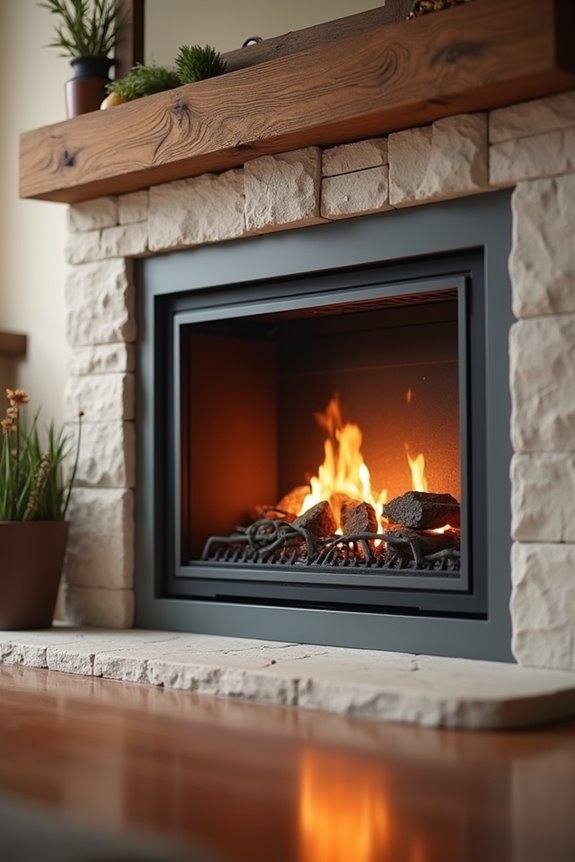
Ever wonder why fireplace insert prices vary significantly from one option to the next? It all comes down to your fuel type and quality tier. Electric inserts are your most affordable choice, starting around $1,000 with no venting requirements. Gas inserts run $2,000–$4,500 and deliver real flames with convenient fuel. Wood-burning models range from $1,500–$4,000, offering strong heating output. Pellet inserts land at $2,000–$4,500 thanks to their automatic feeding systems.
Within each fuel type, you’ll find basic, mid-range, and premium options. Quality increases in price—sometimes by thousands—based on burn efficiency, appearance, and features like blowers or remote controls. Pick the fuel type that fits your home and budget, then decide what extras matter most to you.
Installation and Venting Costs That Impact Your Total Budget
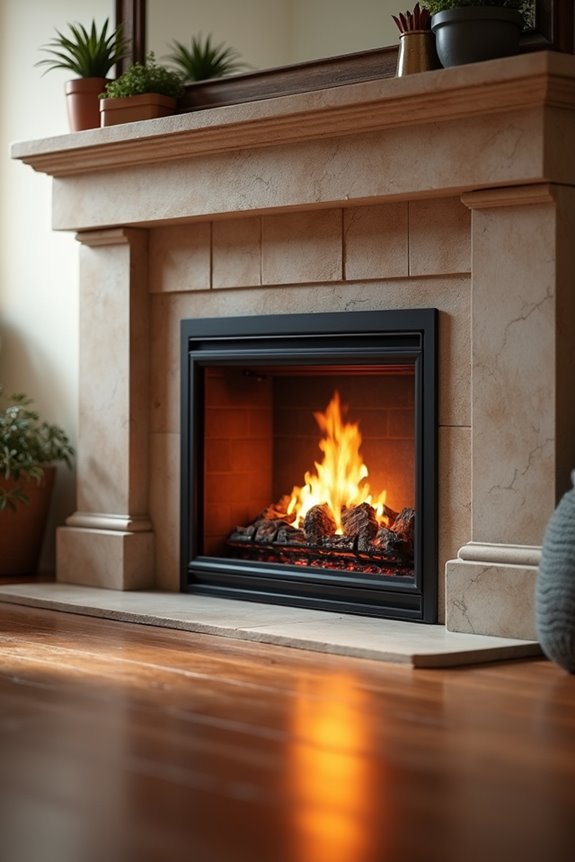
Once you’ve picked your fireplace insert, you’ll need to factor in installation and venting—and that’s where your budget can grow. Your installation costs depend on who you hire and where you live. Plumbers and electricians charge different rates by region, so getting local quotes helps you plan ahead.
Venting costs vary significantly based on your fuel type. Gas and pellet inserts need different setups than wood, often requiring a chimney liner and additional materials. Before installation, budget for a Level II CSIA chimney inspection and professional cleaning—these catch hidden issues like tile misalignment or unused thimbles that’ll cost more later.
Don’t skip professional venting design help. Some retailers offer vent-system planning that reduces complexity and prevents expensive mistakes down the road.
Climate and Heat Output: How They Drive Fireplace Insert Costs
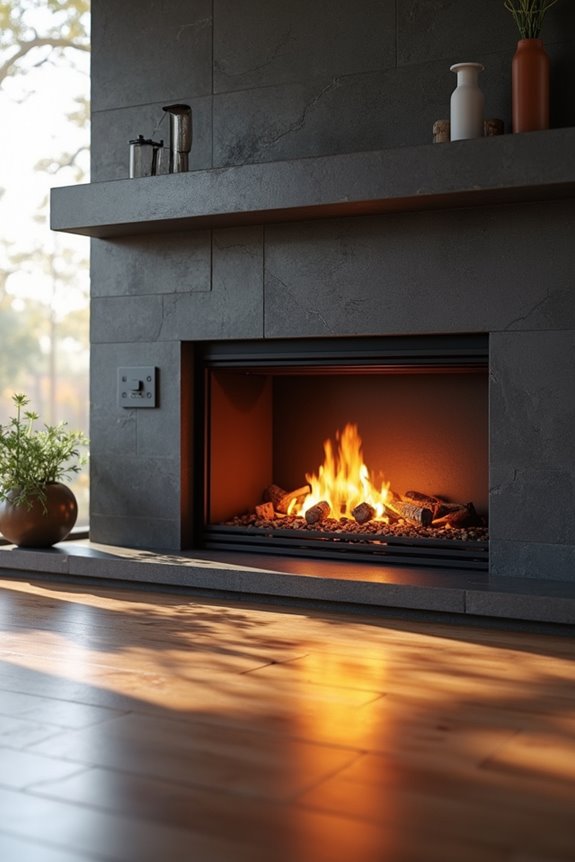
Now that you’ve got the installation details sorted, it’s time to think about what your insert actually needs to do—and that depends a lot on where you live.
Your climate directly shapes your heat output needs and installation costs. In milder regions like Florida, you’ll want efficient electric or high-efficiency units that won’t overheat your space. Cold climates demand serious performers: wood-burning inserts delivering up to 110,000 BTU justify their higher price tags because they actually work harder for you.
Think strategically about your goals. Supplementing your furnace? A high-output insert lowers your overall energy bills despite upfront expenses. Heating one room? You don’t need maximum capacity. Match your insert’s power to your climate and needs, and you’ll feel confident in your investment.
Long-Term Costs: Maintenance and Accessories
What happens after you’ve installed your fireplace insert and enjoyed those first cozy nights? You’ll find that maintenance and accessories keep your investment running smoothly. Gas inserts need annual thermocouple cleaning and potential sensor replacement—budget around $100-$300 yearly for professional service. Wood inserts demand annual chimney sweeps and ash removal, while pellet inserts require monthly ash pot cleaning plus weekly pan care.
Beyond routine maintenance, you’ll encounter accessory costs. Glass-front inserts need periodic cleaning with water and a rag—skip ammonia-based cleaners. Venting components and replacement parts like blowers or electronic controls add expenses, especially for gas systems. Electric inserts cost less to service since they have fewer moving parts. Regular maintenance extends your insert’s life and efficiency, potentially reducing overall heating bills compared to aging open fireplaces.
Does a Fireplace Insert Pay for Itself?
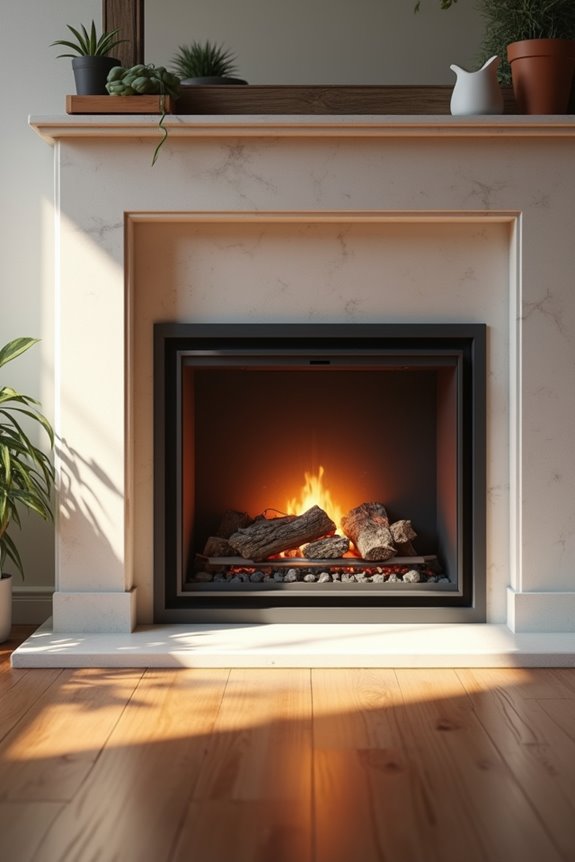
When you’re staring at a $2,000–$5,000 bill for a fireplace insert, you’re probably wondering if this investment will actually save you money down the road.
The short answer? Yes, many homeowners do recoup their costs. Here’s what typically happens:
- Lower heating bills: Your insert concentrates warmth in one room, reducing furnace use and cutting energy costs significantly
- Faster payback: Some owners see returns within 5–10 years through improved efficiency alone
- Hidden costs matter: Don’t forget installation expenses—chimney work, venting, or gas line setup adds hundreds to your initial cost
Your actual payoff depends on fuel type, maintenance needs, and how often you use it. Electric inserts have the lowest upkeep, while wood and gas models require ongoing expenses. Track your heating bills before and after installation to see your real savings.