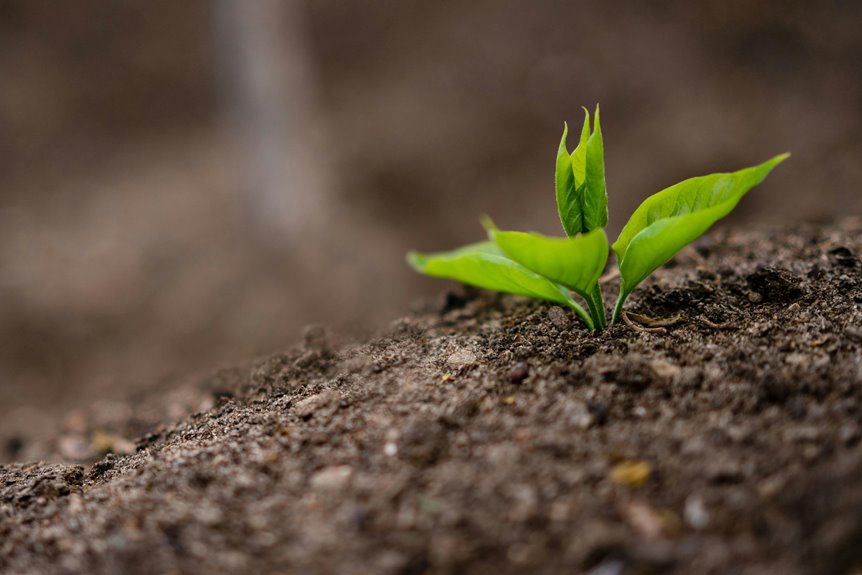
Fireplace ash can benefit your garden, but test your soil first. It’s packed with calcium and potassium, raising pH to balance acidic soil.
However, if your soil’s already neutral or alkaline, skip it—ash can push things too high and lock up nutrients.
Use only untreated wood ash, sift out chunks, and apply no more than 10 pounds per 100 square feet yearly.
Get the specifics right, and you’ll see real benefits from that ash.
What’s in Fireplace Ash and How It Changes Soil
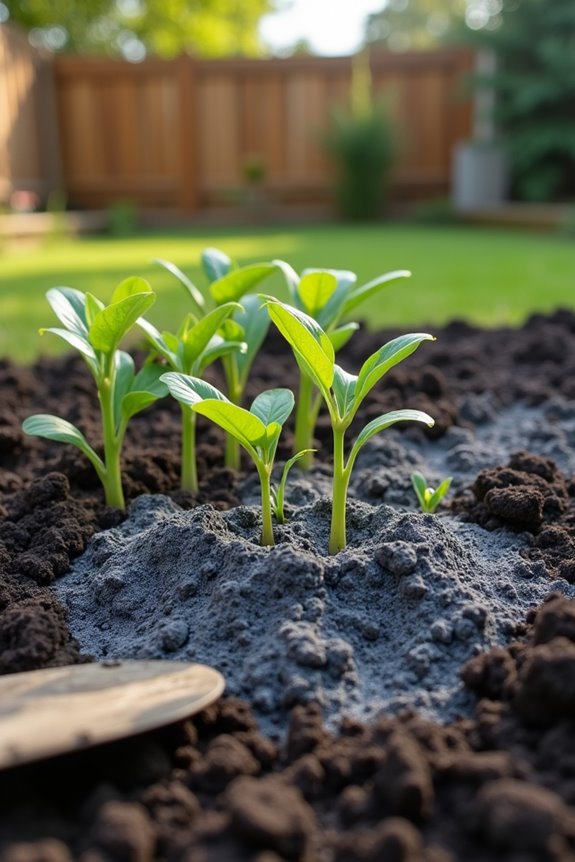
Ever wonder what you’re actually sweeping out of your fireplace? You’re looking at a powerful soil amendment packed with nutrients. Wood ash contains calcium (often 20% or more), potassium up to 5%, magnesium, phosphorus, and sulfur. You’ll also find trace nutrients like iron, manganese, zinc, and boron.
Here’s what makes it valuable: ash is alkaline, meaning it raises your soil pH by neutralizing acidity. This pH neutralization effect works like a lime substitute. However, it’s only about half as strong as commercial lime—roughly four cups of wood ash equal one pound of lime.
One important note: ash composition varies based on wood type and burning method, affecting nutrient availability. Before applying it, test your ash’s source to avoid potential contaminants like cadmium and lead.
When Fireplace Ash Helps Your Garden (and When It Doesn’t)
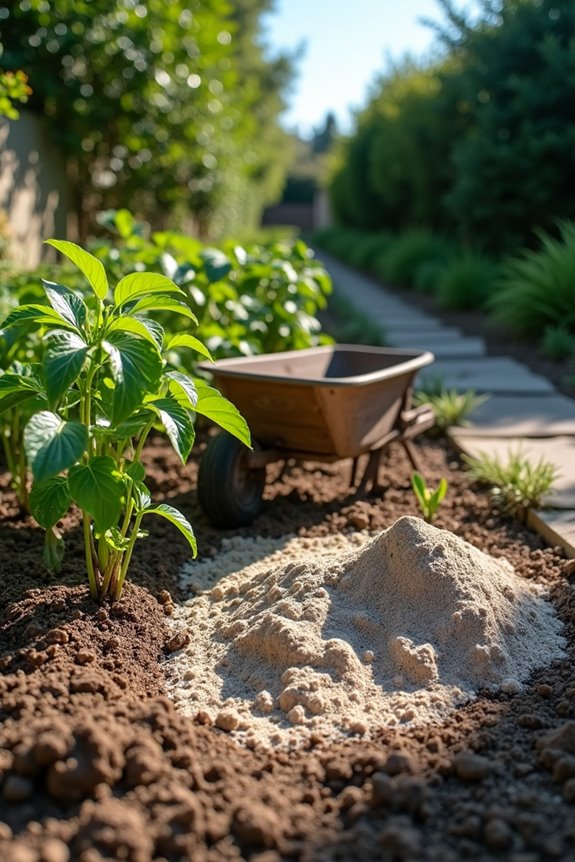
So, should you dump your fireplace ash straight into the garden bed? Not quite. Wood ash works well for some gardeners but can backfire for others. Before you apply anything, you’ve got to know your soil.
Wood ash works for some gardeners but can backfire for others. Know your soil before applying anything.
Your ash helps when you have:
- Acidic garden soil that needs balancing
- Untreated wood ash ready to use
- Space to apply ash at safe rates (about 10 pounds per 100 square feet yearly)
Here’s the catch: if your soil pH testing shows alkaline soil near 7.5 or higher, skip the ash entirely. Extra ash raises pH further, making nutrients harder for plants to grab. Get your soil tested first. This simple step prevents costly mistakes and keeps your garden healthy.
Know Your Soil pH Before You Apply
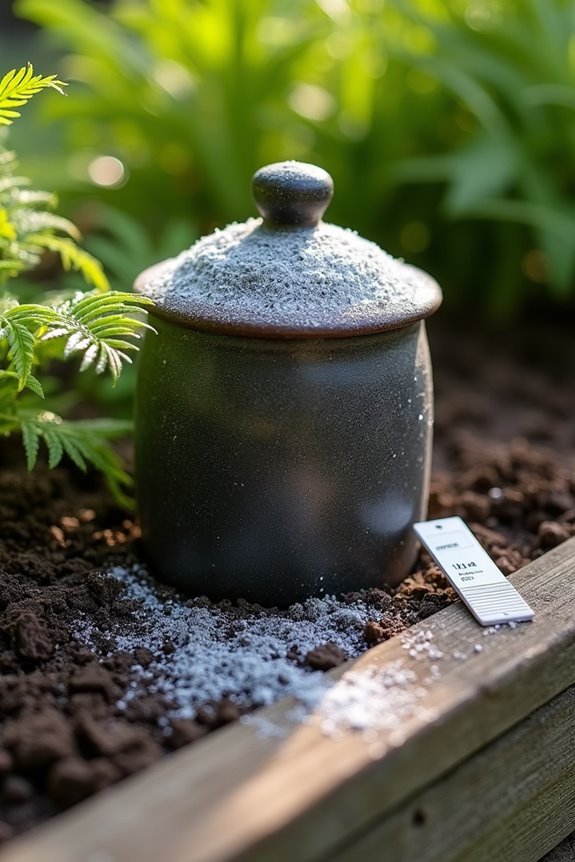
Getting your soil tested isn’t just a good idea—it’s the foundation for using ash safely in your garden. Here’s why: wood ash raises soil pH, and you need to know where you’re starting from.
Test your garden soil first. A simple pH test reveals whether your soil leans acidic or alkaline. If it’s already neutral or alkaline, skip the ash application entirely—you’ll lock out nutrient availability instead of improving it.
Wood ash can push pH up to 7.5, which is too high for many plants. Aim to keep your soil pH below that threshold through careful ash application rates.
Don’t guess. Regular pH testing guides your decisions and prevents pH management mistakes. When you know your soil’s acidity/alkalinity balance, you’ll apply ash with confidence, protecting your garden’s long-term health.
How to Apply Fireplace Ash Without Damaging Plants
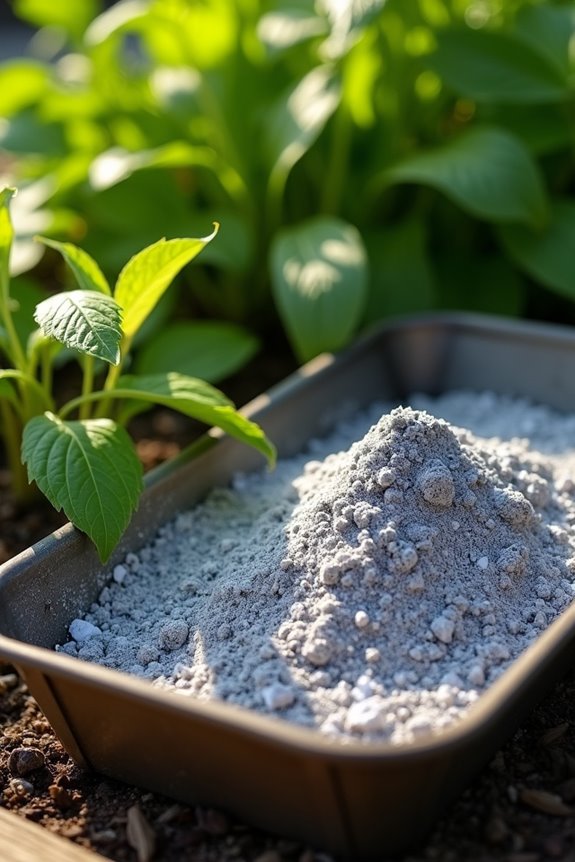
Now that you know your soil’s pH, you’re ready to apply ash the right way—and it’s simpler than you’d think. Wood ash is a solid fertilizer alternative when you follow a few straightforward steps.
Wood ash is a solid fertilizer alternative when you follow a few straightforward steps.
Here’s what you need to do:
- Sift your ash first using hardware cloth or window screening (1/4 to 1/2 inch mesh) to remove large chunks
- Limit your ash application rate to 10 pounds per 100 square feet yearly, and wait two weeks after planting
- Apply to moist soil, then rake or dig it in deeply
Timing matters too. Winter applications work best because they minimize nutrient loss from washing away.
Skip ash near germinating seeds and acid-loving plants. Never use contaminated wood sources. These simple precautions keep your garden soil healthy and your plants thriving.
Wood Sources to Avoid and How to Stay Safe
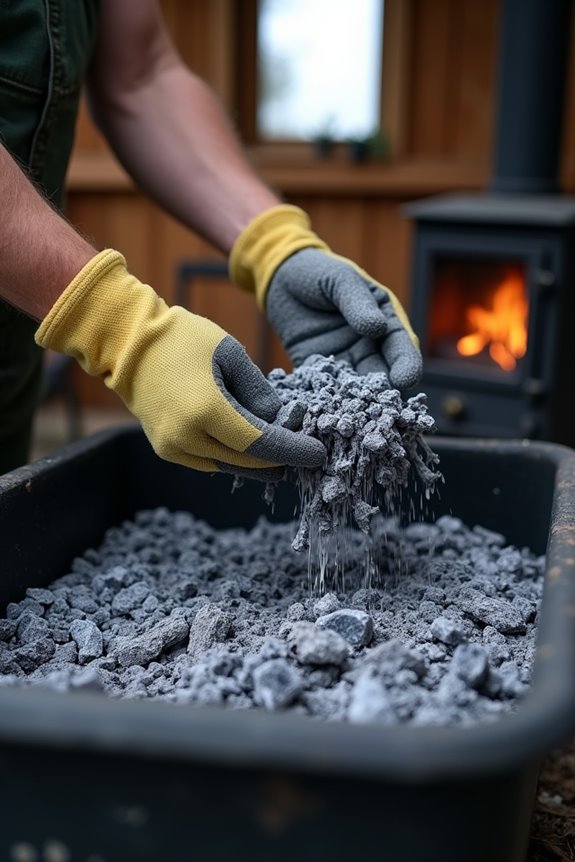
What ash can you safely use in your garden? Stick with ashes from untreated wood only. Never use ash from treated wood, waste oil, plastics, coal, or charcoal briquettes—these contain contaminants that harm your soil and plants.
Before you apply anything:
Always sift ash to remove big chunks and debris. Let it cool completely; hot ash risks burns and garden damage. Test your soil pH first, since wood ash raises alkalinity and can injure acid-loving plants like blueberries.
Application limits matter:
Don’t exceed 10 pounds per 100 square feet yearly. Apply ash during winter or before planting when possible. Regular ash testing helps you avoid over-application.
Storage and disposal:
Keep cooled ashes outdoors away from structures in a metal bucket or bag. Proper storage prevents environmental runoff and keeps your garden safe.