Start by checking for gas leaks—sniff around your fireplace and open windows if you smell anything odd. Next, open your fireplace doors and wipe away dust so you can actually see inside. Look for two small metal parts near the burner: your pilot light and thermocouple. Find the control knob labeled PILOT, ON, and OFF, then locate your main gas valve. If you’re stuck or smell gas, call a professional immediately. The specifics vary by model, so check your owner’s manual for your exact setup and what comes next.
Check for Gas Leaks Before You Start
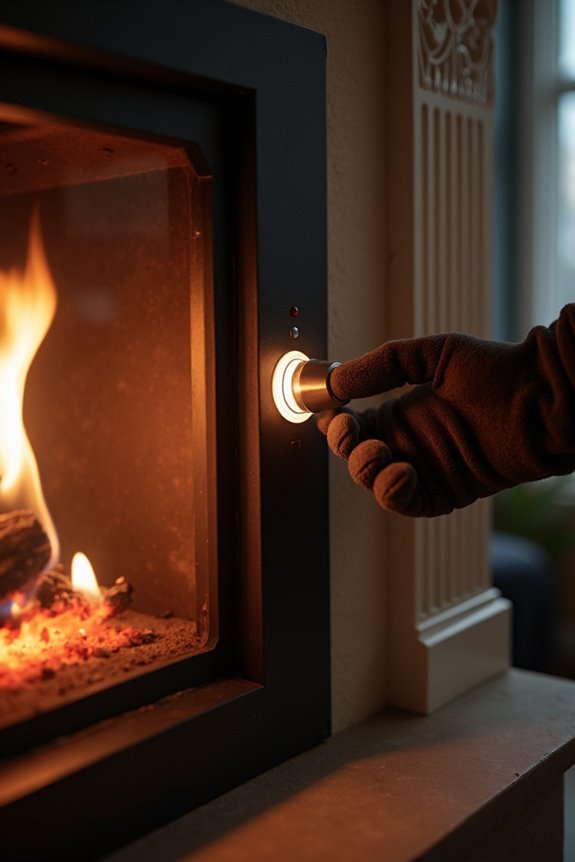
Before you even think about locating that pilot light, here’s the most important step: checking for gas leaks. You’ll want to sniff around your fireplace area carefully. If you detect a gas odor, stop immediately—don’t light anything. Instead, open doors and windows to ventilate the room right away.
No smell? Good. You’re cleared to continue. But if you’re still worried, that’s normal. Use the dedicated gas shut-off valve near your fireplace to turn off the gas supply while you investigate further.
Once you’ve confirmed there’s no leak and your area’s well-ventilated with no ignition sources nearby, you’re ready to proceed. If concerns persist, contact your local gas utility or a certified technician. Safety first makes finding that pilot light easier.
Open Your Fireplace and Clear the View
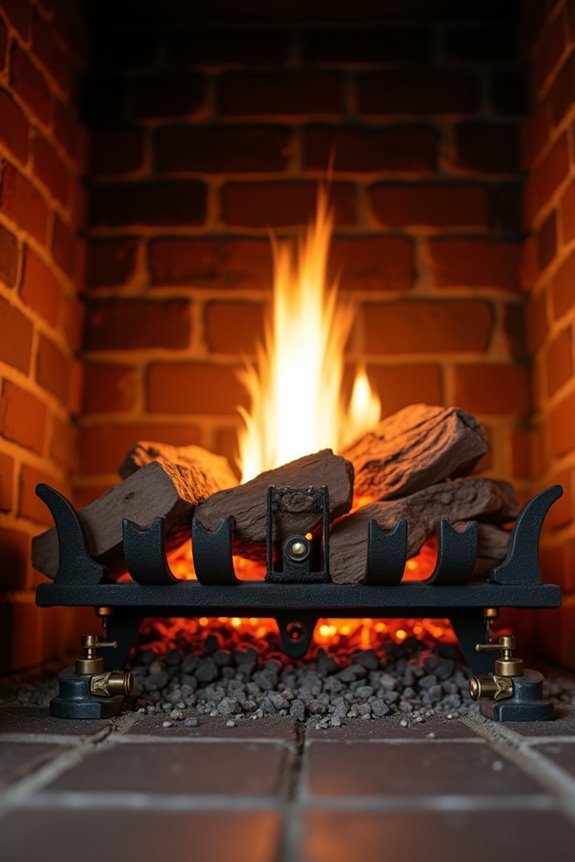
You’ll want to open the fireplace doors or front panel first so you can actually see what you’re working with inside. Grab a cloth or soft brush and wipe away any dust and debris around the pilot area—you’d be astounded how much gunk builds up in there and blocks your view. Once you’ve cleared the space, you’ll have a much better shot at spotting the pilot light and thermocouple without squinting like you’re reading the fine print on a receipt.
Remove Fireplace Access Panels
Where do you even start with all those panels and doors? Don’t worry—you’re not alone in feeling overwhelmed. Your fireplace has multiple layers protecting the pilot area, access panel, and gas valve, but removing them is straightforward.
First, take off any decorative fireplace doors or screens blocking your view. Next, locate the bottom access panel using your manufacturer’s manual as your guide. Gently open it to reveal the pilot area and gas valve underneath.
| Component | Location | Purpose |
|---|---|---|
| Decorative doors | Front exterior | Visual appeal |
| Access panel | Bottom section | Protection |
| Pilot area | Interior chamber | Ignition source |
| Gas valve | Near pilot | Flow control |
| Thermocouple | Beside pilot | Safety sensor |
Once you’ve opened everything, wipe away dust and debris. This improves visibility significantly. You’re now ready to locate your pilot light.
Wipe Away Dust And Debris
Now that you’ve got those panels off, it’s time to get a real look inside. You’ll probably notice dust and soot coating the interior surfaces—that’s totally normal. Grab a soft brush or compressed air and gently clear away debris, especially around the pilot light region and thermocouple area. Pay attention to metal lips and ledges where soot loves to hide.
Be careful not to dislodge any small components while cleaning. Next, inspect near the pilot tube, gas control knob, and igniter for visible dirt or obstructions blocking gas flow. Once you’ve cleared the dust away, wipe down your viewing glass so you’ll see that pilot flame clearly once relit. You’re almost ready to reassemble everything!
Identify the Pilot Light and Thermocouple
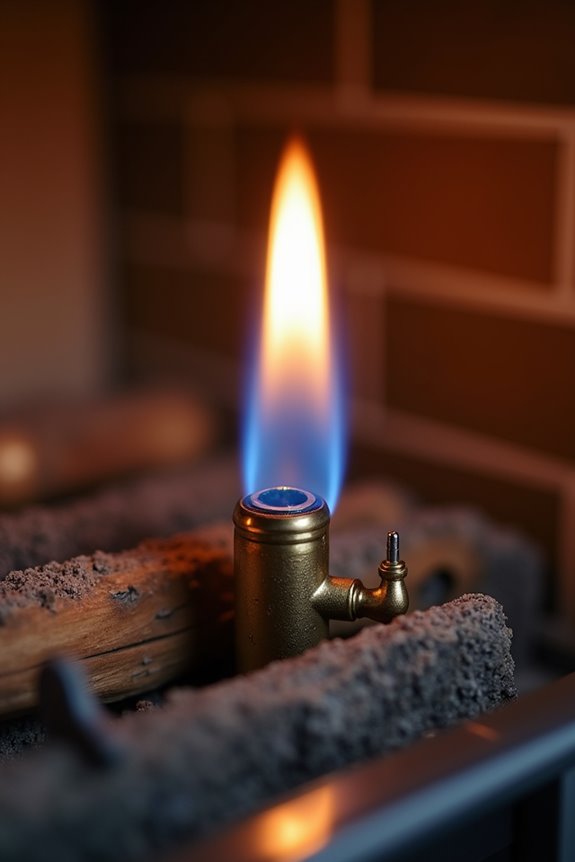
Have you ever wondered what those small metal tubes near your fireplace’s firebox actually do? You’re looking at your pilot light and thermocouple—two essential parts that work together to keep your fireplace running safely.
Here’s how to spot them. Look for two protrusions near the firebox. One creates the pilot flame, and the other is your thermocouple, which sits slightly offset. If you’re squinting and can’t quite see them, press the ignition button. You’ll notice a blue electric arc that pinpoints the pilot area perfectly.
Check your pilot control knob too—it’ll show PILOT, ON, and OFF labels, directing your attention exactly where you need it. Still struggling? Remove the decorative cover or open the bottom panel for a clearer view. These simple steps make identification manageable.
Locate the Pilot Light’s Control Knob
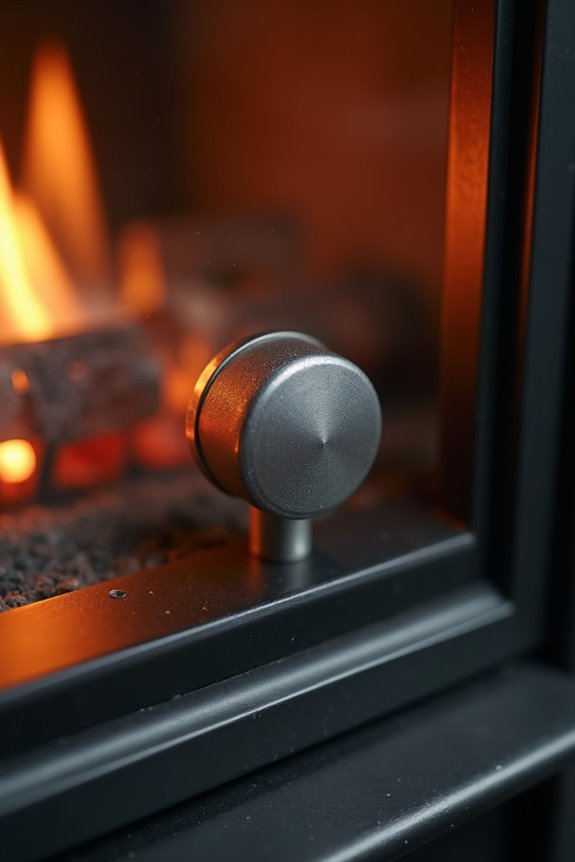
Now you’ll need to find the control knob that manages your pilot light, which is usually hiding behind a panel at the bottom of your fireplace near the gas valve. Look for a knob labeled with PILOT, ON, and OFF—it might be right on the fireplace itself, on a nearby control panel, or tucked away on an accessible valve in the same room. Once you spot it, you’re ready to move forward with getting that pilot light lit.
Control Knob Identification
The control knob you’re looking for lights the pilot, and it’s probably closer than you think. You’ll find this small but mighty knob near your gas valve, typically hiding behind a bottom panel or access cover. Here’s what to look for:
- Three labeled positions: Off on the outside, Pilot in the middle, and On for regular use
- A red or black push-button igniter sitting right beside the knob
- Location clues: Check where the gas line enters your fireplace unit
- Hidden spots: Remove decorative fronts or panels if you can’t spot it immediately
Can’t find yours? Your owner’s manual is your best friend here. Once you’ve located this knob, you’re halfway to getting that pilot lit.
Locating The Gas Valve
Where exactly is that gas valve hiding? You’re not alone in wondering. The gas valve typically sits behind a decorative panel or at the bottom front of your fireplace, near the control knob or shut-off switch. Start by removing the access panel—it’s usually held with a few screws or clips. Once you’ve got it open, you’ll spot the pilot light control knob labeled with OFF, PILOT, and ON positions. The gas valve sits right beside it. Some models have remote or wall-mounted valves instead. Check your manual to confirm which setup you have. Before lighting anything, verify the main gas valve is turned on.
Find the Main Gas Valve
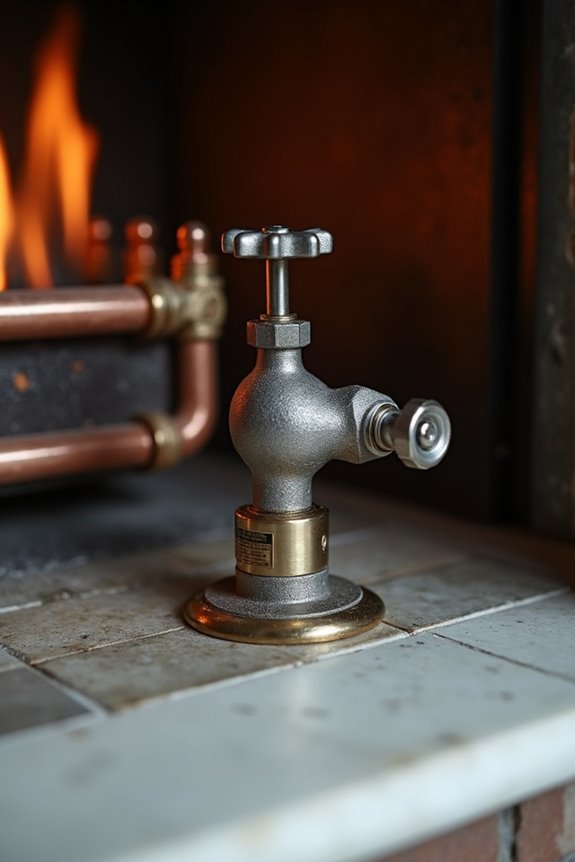
Locating your fireplace’s main gas valve is simpler than you might think, and it’s an important step before you go hunting for that pilot light. You’re looking for a valve that controls gas flow to your entire fireplace containment system.
Check these common locations:
- Behind a front panel or removable grate
- Inside a cabinet beside your fireplace
- On a wall-mounted box nearby
- Near the appliance with clear labeling
The main gas valve typically sits between your gas supply line and the pilot light controls. You’ll recognize it by its lever handle—turn it parallel to the gas line to open, perpendicular to close. Before touching anything, smell the air around it. If you detect gas, evacuate immediately and call a professional technician. Your sense of smell is a reliable safety tool here.
Know What a Lit Pilot Light Looks Like
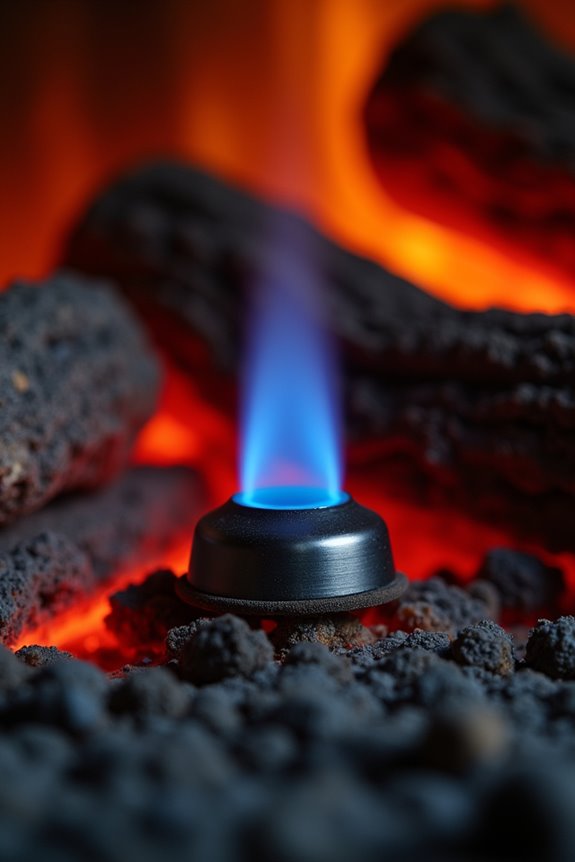
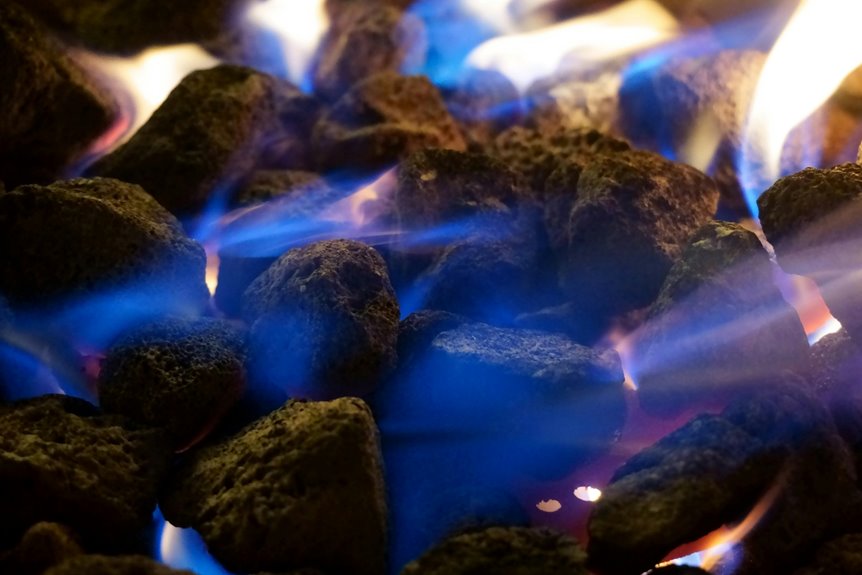
Once you’ve found the main gas valve, you’re ready to spot what you’re actually looking for: that tiny blue flame. A lit pilot light appears as a small, steady blue flame—not flickering or faint. You’ll typically find it above the gas control knob or near the pilot tube inside your fireplace.
Many units have a viewing window at the bottom of the firebox where you can see the flame distinctly. Look for that constant, reliable blue glow when your control knob is set to Pilot or On.
Here’s the important part: if you see a yellow or orange flame instead, that’s a safety warning. An absent flame means your pilot’s out and needs relighting. This is a common issue that’s straightforward to fix once you understand what to look for.
What to Do If You Can’t Find Your Pilot
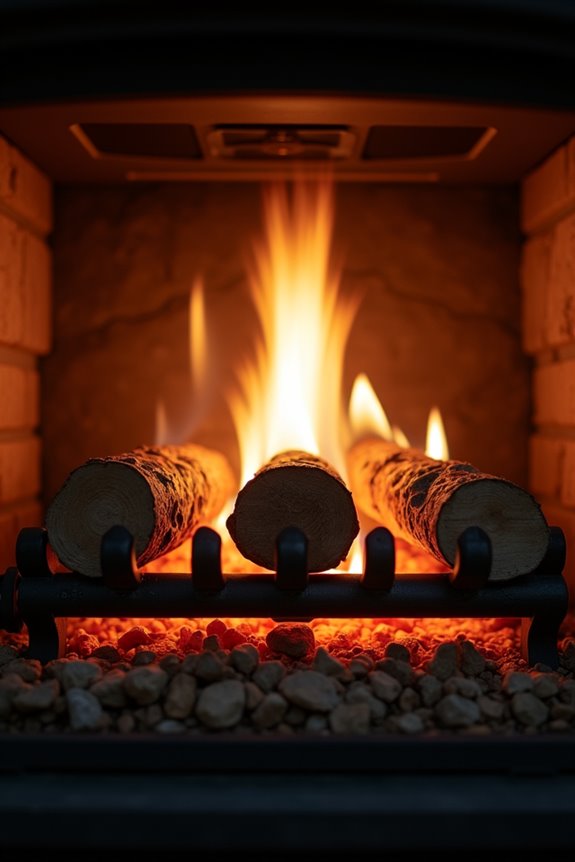
Can’t spot that tiny blue flame anywhere? Don’t worry—you’re not alone. Here’s how to track down your pilot light:
- Remove the fireplace doors or decorative front to access the interior and look behind the bottom panel where the gas valve sits.
- Check for a small blue flame above the control knob, or locate the red/black push-button igniter that confirms ignition components exist.
- Find the gas control knob labeled with PILOT, ON, and OFF positions, then search nearby for a piezo ignitor or ignition wiring.
- Consult your owner’s manual or manufacturer’s label inside the firebox—it’ll map out exact pilot and thermocouple locations.
Still stuck? Contact a licensed gas fireplace technician. They’ll locate everything safely without risking gas leaks.
When to Stop and Call a Professional
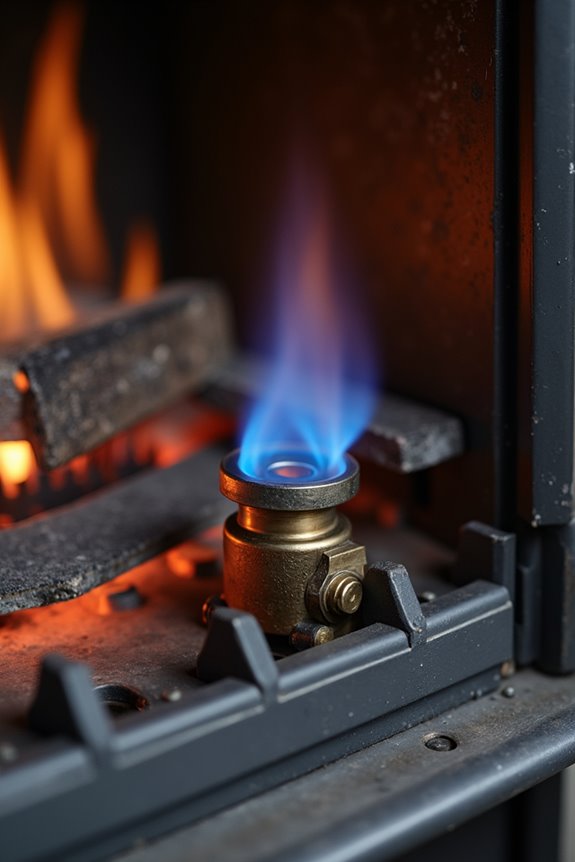
How do you know when it’s time to step back and let an expert take over?
You’re not failing—you’re being smart. Stop and call a professional immediately if you smell gas, hear hissing sounds, or suspect a leak. Don’t keep trying. If your pilot light won’t stay lit after several attempts, that’s your cue to reach out for help.
| Warning Sign | What It Means | Your Next Step |
|---|---|---|
| Gas smell or hissing | Possible gas leak | Call gas emergency services now |
| Pilot won’t light repeatedly | Ignition system issue | Schedule professional service |
| Cracked logs or weak flames | Damage present | Contact certified technician |
| You’re unsure about your system | Unknown ignition type | Call manufacturer or dealer |
When you’re uncertain, professional service protects your home and family. We’re here supporting you—getting help is always the right choice.
Pilot Light Locations by Fireplace Model
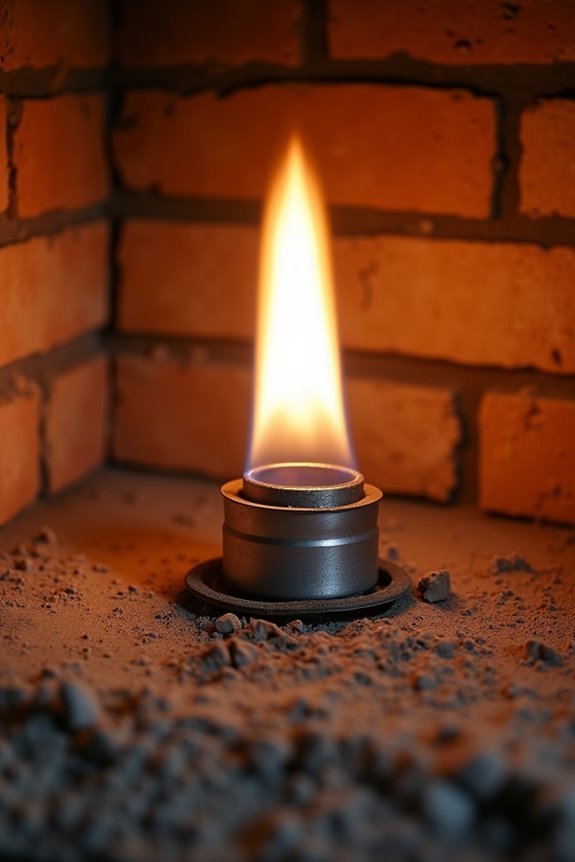
Now that you know when to call for backup, let’s focus on finding your pilot light in the first place—and this part’s actually easier than you’d think. Your fireplace model determines exactly where you’ll look:
- Bottom access panel models — Remove the lower front panel to find the pilot assembly and gas valve tucked inside the firebox
- Side panel designs — Look behind removable decorative fronts or inner panels on either side for quicker access
- Direct-vent and sealed units — Check higher in the firebox or behind protective glass, since these models position pilots differently
- Control knob proximity — Locate your ignition components and thermostat near the main control knob for reference
You’re not alone if you’re unsure—most of us need our manual handy. Grab yours and match your fireplace’s specific design.
Keep Your Pilot Light Clear of Debris
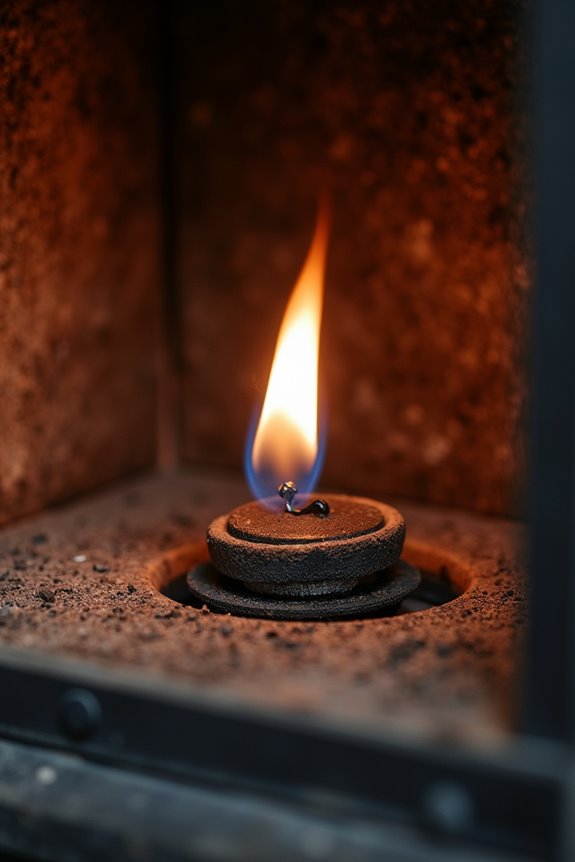
Your pilot light needs a clear path to burn properly, and dust or debris can block that flame faster than you’d think. You’ll want to learn how to spot common blockages, grab the right cleaning tools, and set up a simple maintenance routine so you’re not dealing with a clogged pilot every few months. Let’s walk through what to look for and how to keep things running smoothly.
Identifying Common Blockages
Why won’t your pilot light stay lit? Common blockages are usually the culprit. You’ve likely got a debris blockage or gas line obstruction somewhere in your burner assembly. Let’s identify what’s stopping your flame:
- Dust and ash accumulate around the pilot area, choking off gas flow
- Spider webs and soot cling to components and prevent ignition
- Dirty pilot tubes restrict gas from reaching the flame properly
- Thermocouple residue shuts down your gas supply automatically
You can inspect these spots yourself. Use a straight tool to check inside the pilot tube from the burner end—never pump air through it. A small pin or brush clears stubborn blockages quickly. Regular maintenance keeps everything flowing smoothly, so your pilot stays reliable and steady.
Cleaning Techniques And Tools
Keeping debris out of your pilot light is one of the easiest ways to prevent problems down the road. You don’t need fancy equipment—just the right tools and a gentle touch.
Start by using a soft brush or compressed air canister to remove dust and cobwebs around your pilot light and thermocouple. Avoid metal tools; they’ll damage delicate components. A narrow vacuum nozzle works well for capturing loose debris in the firebox without disturbing gas lines.
For tougher grime, wipe surfaces with a damp cloth and mild detergent. Just keep moisture away from pilot and ignition ports.
Schedule annual professional maintenance. Technicians clean internal passages and test for gas leaks, keeping your pilot light running smoothly all season long.
Prevention And Regular Maintenance
How often do you actually think about the tiny space around your pilot light? You’d be surprised how much dust and debris can sneak in there. Keeping your pilot light clear isn’t just about comfort—it’s about safety and reliability.
Here’s what you should do regularly:
- Inspect monthly for dust, spider webs, and debris blocking gas flow
- Clean gently with a soft brush or compressed air when safe
- Remove clutter and combustible materials from the surrounding area
- Schedule annual maintenance to have a technician clean the pilot tube and thermocouple
Pilot light maintenance prevents ignition issues and keeps your gas fireplace safety standards high. A quick monthly cleaning and inspection takes minutes but protects your home. Don’t ignore yellow flames or frequent outages—contact a professional immediately.