Your fireplace works through three simple elements: fuel, air, and heat. The firebox is where they meet—wood or gas burns inside a heat-resistant chamber while a damper controls airflow. Your chimney acts like an engine, pulling hot smoke upward and outside through natural draft. Seasoned wood burns better than damp wood, and a clean, properly-sized chimney keeps everything running smoothly. When these parts work together, you get consistent warmth; when they don’t, you’ll notice smoke backup or weak flames—problems you can actually fix.
Fireplace Combustion: The Three Essential Elements
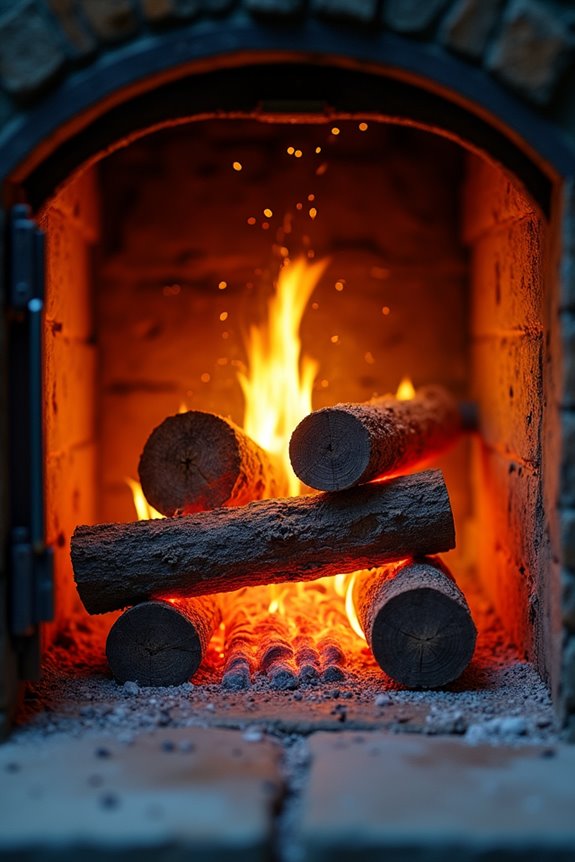
Your chimney/venting system acts like an engine, pulling smoke and gases upward and out. Without proper draft, you’re stuck with smoky, inefficient burns. Combustion air controls—the openings regulating oxygen flow—let you adjust flame intensity and heat output. Think of it like this: more air means hotter, livelier flames; less air creates smoldering and creosote buildup. Get these basics right, and you’ll have a fireplace that actually performs.
The Firebox: Where Fuel and Air Ignite
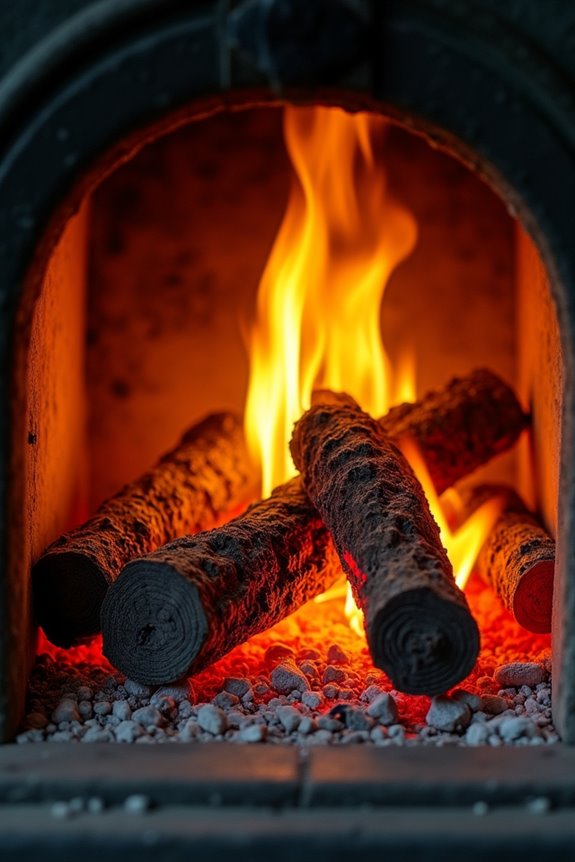
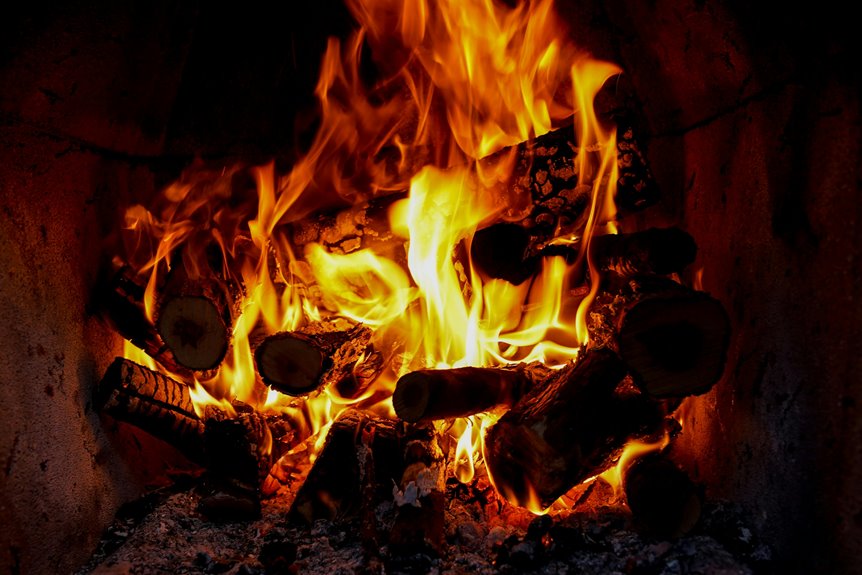
The firebox is the heart of the whole operation—it’s the combustion chamber where fuel and oxygen meet and create fire. You’ll find it lined with special firebrick or ceramic material, which protects everything around it from extreme heat. Think of it as your fireplace’s fortress.
Inside the firebox, fuel sits ready while air flows in, creating the combustion reaction. Wood-burning models have a grate underneath, while gas setups house the burner assembly. A damper mechanism up top lets you control airflow and prevent smoke from backing up into your home.
The firebox rests on your hearth, which acts like a shield for surrounding components. When you’re ready to enjoy your fire, everything happens right here—fuel ignites, heat builds, and smoke travels up the flue system.
The Chimney as Your Fireplace’s Engine
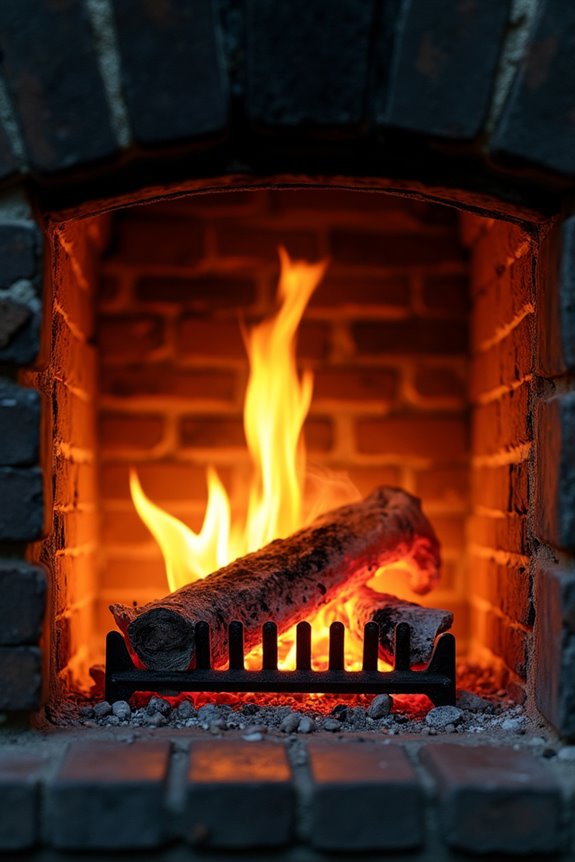
Your chimney works like an engine by creating a natural pull—what we call draft—that sucks smoke and gases up and out of your home through pressure differences between your firebox and the top of the flue. You’ll want to keep your chimney in good shape, because a dirty or damaged one won’t pull properly, and that means less efficient burning and smoke backing up into your living room. Think of it this way: the taller and properly sized your chimney is, the stronger that pull becomes, which is why building codes require it to stick at least 3 feet above your roof.
Draft Creates The Draw
Ever wonder why some fireplaces work beautifully while others seem to push smoke back into your living room?
The answer lies in chimney draft—the invisible force that pulls smoke and gases up and out. Your chimney creates draft through air pressure differences between your firebox and the top of the chimney. Think of it as your fireplace’s engine.
Here’s what makes draft work:
- Flue height matters—aim for 12–15 feet minimum, up to 35–45 feet maximum
- Air pressure pulls smoke upward when hot gases rise faster than cool air enters
- Proper sizing prevents problems—undersized or oversized flues reduce combustion efficiency
- Clearance above your roof keeps draft strong—extend 3 feet above the roofline
Get these elements right, and your chimney draft keeps smoke where it belongs: outside your home.
Pressure Differences Drive Performance
How does air actually move smoke up and out of your fireplace? It’s all about air pressure. Your chimney works like an engine, using pressure differences between your firebox and the outside air to create draft. When you light a fire, hot gases rise naturally, but your chimney height determines how strong this pull becomes. You’ll want at least 12–15 feet of chimney height for solid performance. The flue size matters too—it can’t be too small or smoke backs up, and it can’t be too large or creosote builds up. Keep your chimney cap and maintenance current. These straightforward steps maintain steady air pressure, keeping your fireplace running smoothly and safely.
Maintenance Ensures Proper Function
Maintaining that pressure difference we just talked about isn’t automatic—it takes some work on your part. You’re basically the keeper of your fireplace’s engine, and that’s actually pretty cool. Here’s what keeps everything running smoothly:
- Clean your chimney regularly to prevent creosote buildup, which blocks draft and creates fire hazards
- Check your flue sizing to match your fireplace—wrong sizes kill performance
- Install a chimney cap to block pests, weather, and regulate draft with wind
- Inspect height and clearance around your 12–15 foot minimum chimney yearly
Think of chimney maintenance like changing your car’s oil. Skip it, and things get expensive fast. Stay on top of these basics, and your fireplace stays efficient, safe, and ready whenever you need it.
What Impacts Draft: Height, Sizing, and Maintenance
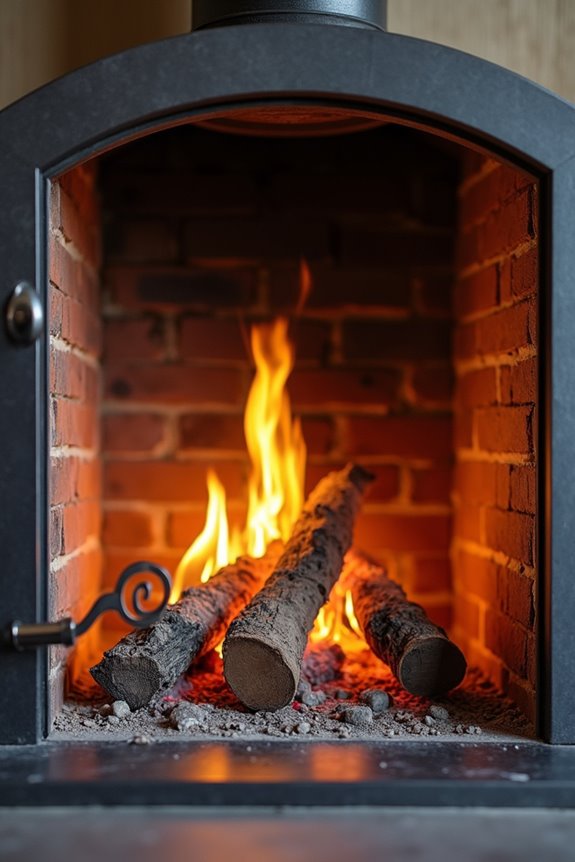
What’s the key to a fireplace that actually works well? It’s all about draft—and you’ve got three main controls.
Chimney Height matters more than you’d think. You’ll want it extending at least 3 feet above your roof, with 12–15 feet minimum overall. Too short? Smoke backs up. Too tall (over 45 feet)? Burn efficiency drops.
Flue Sizing is equally important. Your flue diameter must match your fireplace’s BTU output. A too-small flue causes backup; a too-large one cools gases, creating creosote buildup.
Regular Maintenance keeps everything flowing smoothly. Annual chimney inspections catch blockages and creosote before they become problems.
Get these three elements right, and your fireplace becomes enjoyable rather than frustrating.
Safety and Efficiency: Why Every Part Matters
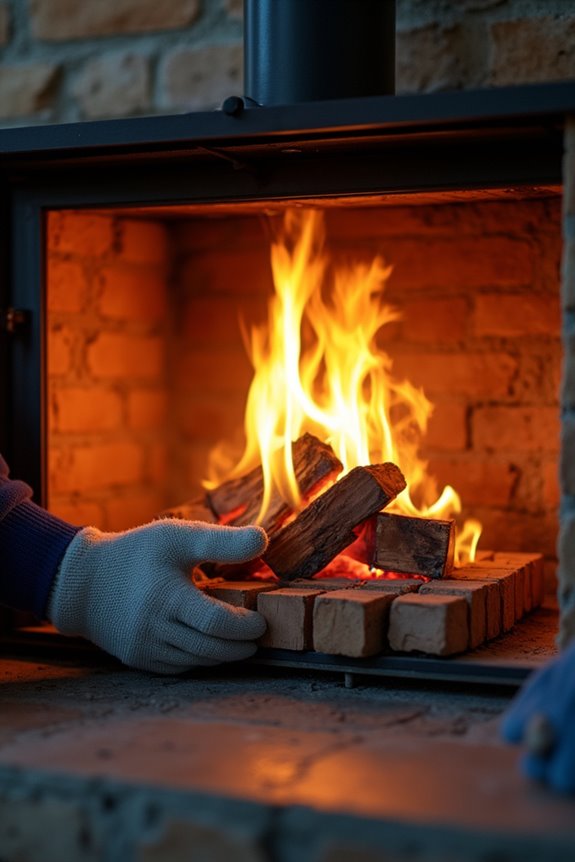
You’ll want to keep your fireplace running safely and efficiently by understanding how each component works together—from proper ventilation that keeps smoke flowing outside to maintenance that prevents parts from wearing down. When you follow emission control standards and inspect your chimney regularly, you’re protecting both your home’s air quality and your family’s health. Getting these details right doesn’t require special expertise; it just takes knowing what to watch for and staying on top of simple upkeep.
Proper Ventilation Requirements
Because smoke and dangerous gases need somewhere to go, your fireplace depends on proper ventilation to work safely and efficiently. You’ll want to understand how combustion air and your chimney/damper work together to create the draft that removes harmful gases through your flue to the outdoors.
Here’s what keeps your fireplace running right:
- Sufficient combustion air enters your firebox to keep the fire burning cleanly
- A well-functioning chimney/damper prevents downdrafts and directs smoke upward
- Proper flue sizing maintains adequate draft and reduces creosote buildup
- Ventilation safety features like oxygen sensors shut down your fireplace if air becomes inadequate
Getting these elements right means you’re protecting your family while enjoying reliable warmth.
Component Deterioration Prevention
Just like anything that gets hot and stays in use, your fireplace’s components largely wear down over time—but you can slow that process considerably with regular maintenance.
Start with firebox maintenance. Inspect your firebox regularly and clean it to prevent creosote buildup, which reduces draft and creates fire hazards. Avoid rapid temperature changes and overloading with fuel, since these crack protective linings.
Check your flue integrity and chimney cap for damage or animal intrusion. Monitor your gas burner components—the gas supply tube, orifice, and Venturi—for corrosion or soot that compromise flame stability.
Clear access panels and ashpits of obstructions, since blocked ventilation increases backdraft risk and kills combustion efficiency.
These simple steps keep your fireplace running safely and effectively for years.
Emission Control Standards
While your fireplace’s components work hard to keep your home warm, they’re also responsible for managing what comes out of your chimney—and that’s where emission control standards step in. These regulations help you burn safely and efficiently. Here’s what you need to know:
- Combustion air regulation controls oxygen flow, which directly affects how completely your fuel burns
- Venting systems remove harmful gases, keeping your indoor air clean
- Chimney draft creates the engine that pulls smoke and byproducts outside
- Oxygen depletion sensors automatically shut down vent-free fireplaces if room air becomes insufficient
Different fireplace types—direct vent, B-vent, and vent-free—follow different emission standards. Your sealed front, damper, and firebox liner all work together to minimize creosote and pollutants. When everything’s properly maintained, you’ll enjoy warmth with confidence.
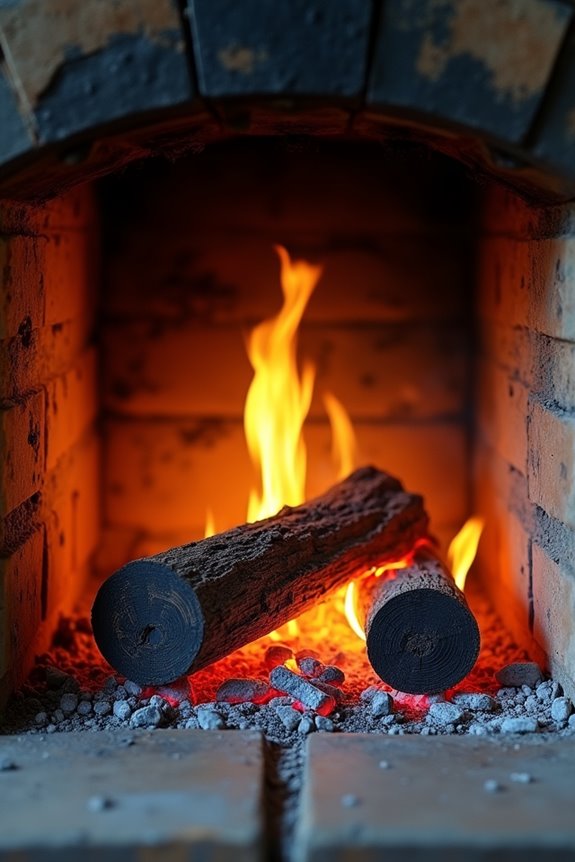
Smoke Backup, Poor Draft, and Incomplete Burning: Diagnosis Basics
When smoke backup happens, your chimney’s draft isn’t pulling smoke outside like it should. You’ll notice lazy flames and incomplete burning—clear signs something’s wrong. Check your damper first; make sure it’s fully open. Next, inspect your flue for blockages or creosote buildup that restricts airflow. Your wood matters too—burn only seasoned wood with moisture below 25%, since damp wood burns poorly. Look up at your chimney cap and screen for debris blocking the opening. If these steps don’t help, you likely have a draft problem that requires professional inspection. A qualified chimney sweep can confirm whether your flue is properly sized and your chimney height is adequate.