
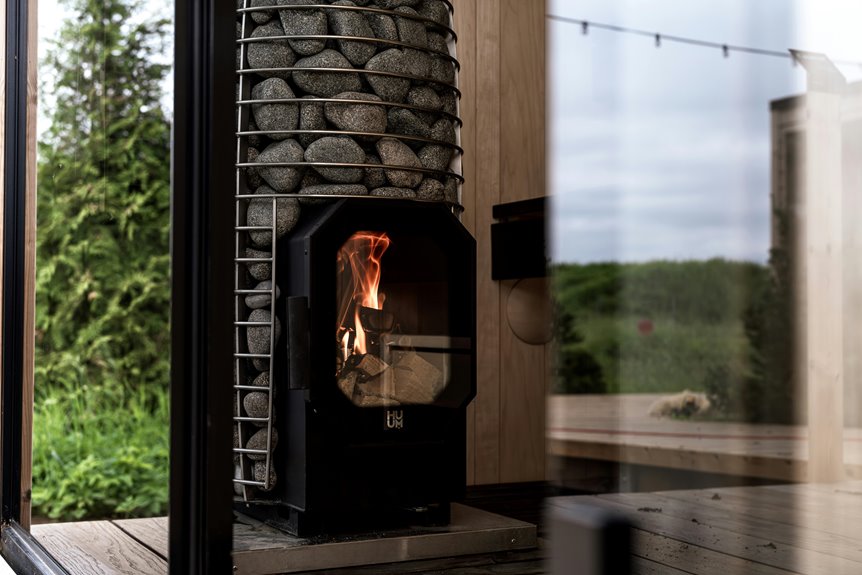
Your electric fireplace converts electricity into heat through a heating coil or ceramic plate inside the unit.
Meanwhile, LED lights bounce off rotating mirrors to create flickering flames that look realistic—without any actual fire.
A blower then pushes warm air into your room.
The best part? You can run the flames solo for ambiance or pair them with heat.
Want to understand exactly how each piece works together?
How Electric Fireplaces Generate Heat
Electric fireplaces work by converting electricity into heat through one of three main methods: a heating coil, a ceramic plate, or an infrared element. Each method converts electrical power into thermal energy efficiently. If your model uses a heating coil, electricity flows through it, creating warmth that a fan then distributes throughout your room. Ceramic plate models work differently—they radiate heat directly, creating a gentler warmth. Infrared elements offer another option, emitting heat similar to the sun’s rays. The benefit of electric fireplaces is their simplicity: you’re just converting electricity into usable heat. No complicated combustion, no gas lines needed. You control everything through adjustable settings, choosing exactly how much warmth you want. It’s straightforward heating technology that puts comfort in your hands.
Understanding Your Heating Element and Blower
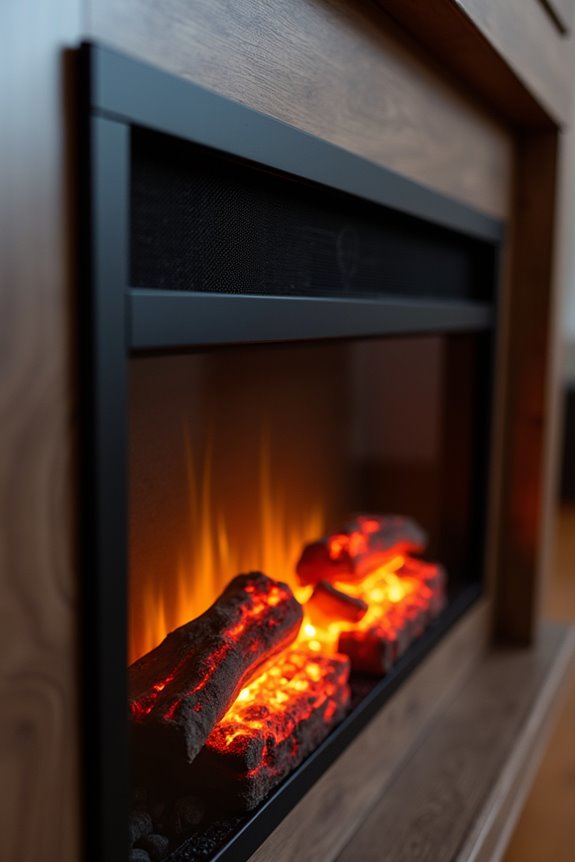
How does your fireplace actually warm up a room? Two key parts work together: your heating element and blower. The heating element—whether it’s a metal coil or ceramic plate—converts electric energy into heat. Then your blower kicks in, pushing that warmth out through vents into your space. This tag-team approach means you’re not just getting random hot spots; you’re getting consistent, even warmth throughout the room. Some electric fireplaces combine both a heating coil and ceramic element, giving you flexibility. You can adjust heat levels to match your needs, or turn the heating off entirely while keeping those cozy flames going. It’s that simple partnership that makes electric fireplaces so practical and welcoming.
Creating Realistic Flames With LED Technology
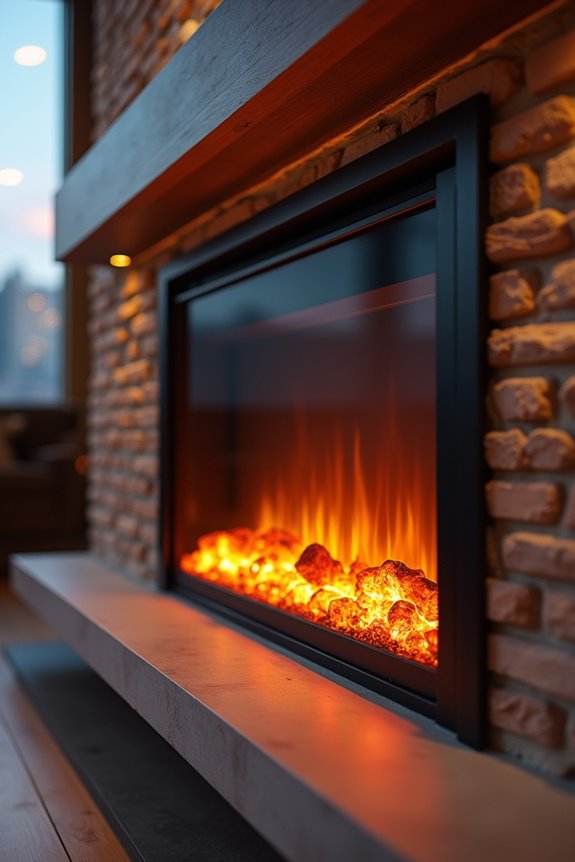
While your heating element and blower handle the warmth side of things, the visual component relies on LED technology. LEDs emit light that bounces off mirrors and refractors, creating depth and movement that simulates dancing flames.
Many models include rotating silver refractors and crackling sounds, making the effect more convincing. You can enjoy the flame visuals independently of heat. Want ambient lighting without warming your room? That’s possible.
Higher-end units use complex LED layouts and sometimes water vapor for smoke-like effects, increasing realism. No combustion occurs—just lighting technology creating the fireplace experience you’re looking for.
How Light Reflection Produces the Flicker Effect
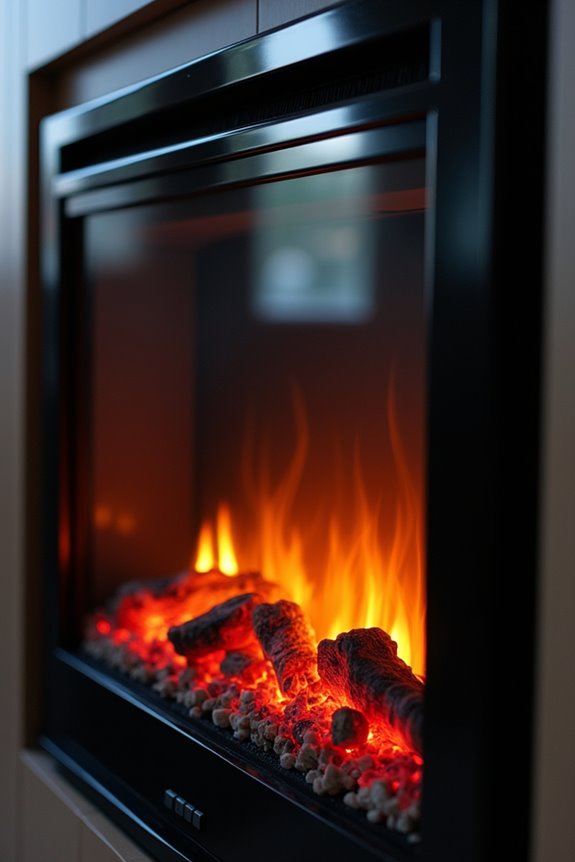
Ever wonder why the flames in your electric fireplace seem to dance and flicker so naturally? You’re actually watching light do all the work. Here’s what’s happening: LED lights shine onto a rotating, silver refractor—think of it like a mirror on a spin cycle. As it turns, the light bounces around and creates shifting shadows and bright spots that mimic real flames moving. The refractor catches the LED lights at different angles, producing that mesmerizing flicker effect you see. Some fancier models add more realism by using multiple LED lights positioned strategically, plus a crackling sound to complete the experience. No actual fire needed—just light, reflection, and a little mechanical action creating the appearance of genuine flames warming your space.
Water Vapor and Rotation: Advanced Flame Effects Explained
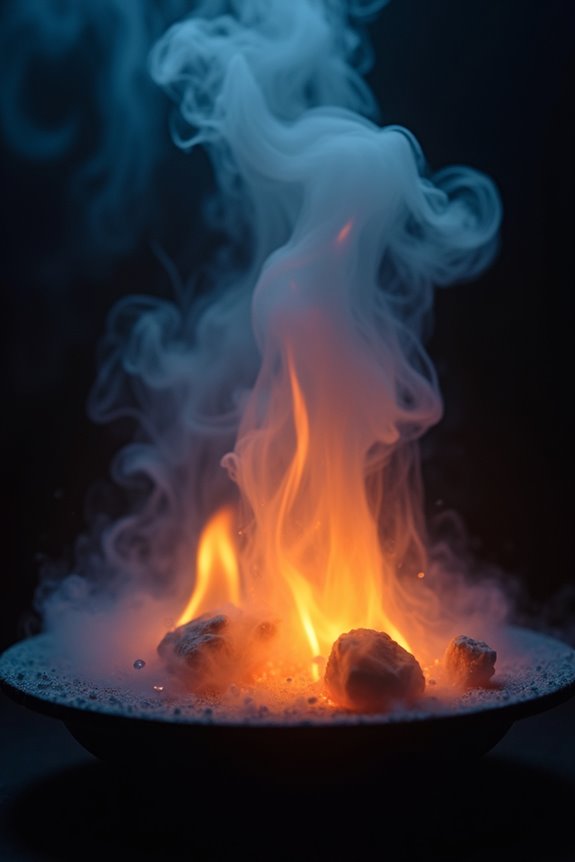
When you look at the most realistic electric fireplaces, you’re actually watching water vapor and spinning light work together to fool your eyes into seeing real flames. The unit releases fine mist from an ultrasonic device, and as LED lights hit those tiny water droplets, rotating mirrors and refractors spin the light around to create that natural flickering motion you’d see in a real fire. It’s basically a clever combo of moisture, electricity, and moving reflections—no actual fire needed.
Water Vapor Technology Basics
How do you create flames without actual fire? You’re using water vapor flame effects, which create mist into light displays. Here’s what’s happening inside your electric fireplace:
| Component | Function | Result |
|---|---|---|
| Ultrasonic Mechanism | Generates fine water particles | Realistic mist cloud |
| LED Lights | Illuminates the vapor | Glowing flame appearance |
| Rotating Refractor | Scatters light dynamically | Three-dimensional movement |
| Digital Control System | Adjusts settings in real time | Customizable flame look |
| Audio Sync | Pairs crackling sounds | Enhanced realism |
You’re creating a light show with water. The ultrasonic or spray mechanism breaks water into tiny droplets. LED lights then illuminate these particles, making them flicker and glow like real flames. Some systems add rotation to scatter light further, creating that authentic dancing movement you’d see in an actual fire.
Rotation Mechanisms Create Movement
Your electric fireplace’s rotating refractor is basically a spinning mirror that does the work for realistic flames. This device scatters LED light across your logs and mist, creating movement that mimics a real fire’s flicker.
Here’s what makes rotation effective:
- Spinning action breaks up steady light into dancing patterns
- Quick rotations trick your eyes into seeing natural flame movement
- Light scattering creates depth between logs and mist layers
- Synchronized timing with LEDs enhances the whole effect
The wheel or refractor spins continuously while your water vapor rises, and the combination feels lifelike. Some models even pair this rotation with crackling audio, so you’re getting visual and sound cues together. You’ll notice how the movement pulls your attention—that’s the rotation doing its job.
LED Integration With Effects
Advanced models combine bright LEDs with rotating mirrors or refractors. These components work together to scatter light in random patterns, creating flames that flicker and dance in a natural manner. Water vapor systems add another layer—they produce misty wisps that drift upward, mimicking real smoke.
You control everything. You can adjust brightness, tweak the flame color from orange to blue, and change how quickly the flames flicker. This customization lets you match any mood or season in your space.
The result? A fireplace that looks genuinely alive without any actual fire.
Remote Controls and Smart App Integration
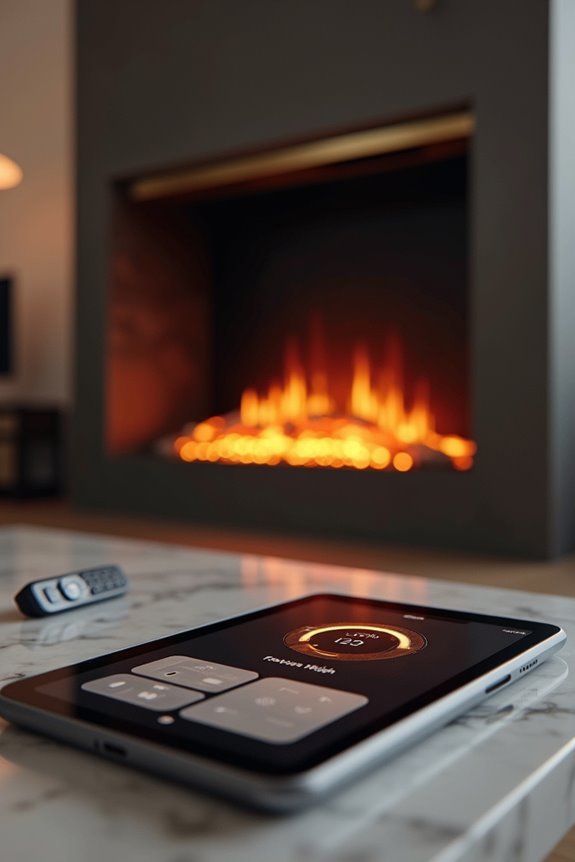
Because controlling your electric fireplace should be simple, most models come with a remote control or wall-mounted buttons that let you adjust the temperature, flame intensity, and lighting without getting up. Here’s what you get:
- Remote controls run on standard batteries, making them portable and reliable
- Many units now include smartphone apps, letting you adjust settings from anywhere in your home
- Smart models support voice commands through compatible devices for hands-free control
- You can operate flame effects and heat independently or together, giving you total flexibility
The best part? You can manage your fireplace settings from your couch. Whether you’re using traditional remote controls or downloading an app, operating your fireplace becomes straightforward. Smart integration means you’re never dealing with complicated controls again.
No Venting or Chimney Needed: Why That Matters
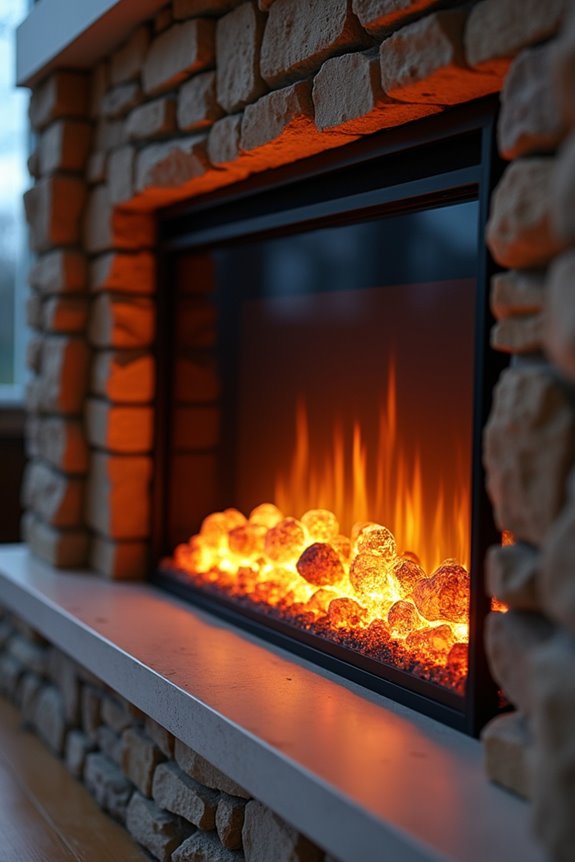
Ever wonder why electric fireplaces are so much easier to install than traditional ones? You don’t need a chimney or venting system because there’s no real combustion happening. Since electric fireplaces don’t burn fuel, they don’t produce exhaust gases or smoke that need to escape your home.
This matters because you can place your electric fireplace almost anywhere. You’re not stuck with a specific wall location like you’d be with a wood-burning fireplace. You can even move it to different rooms as your needs change.
Installation becomes simple too. Most electric fireplaces plug directly into a standard outlet—no professional installation required. This saves you money and hassle while giving you warmth whenever you want it.
Safety Features That Protect Your Home and Family
Electric fireplaces come packed with safety features you won’t find in traditional fireplaces, starting with cool-to-touch surfaces that won’t burn your skin even after hours of use. They’ll automatically shut themselves off if they overheat, and since there’s no actual fire or harmful emissions like carbon monoxide, you’re protecting your family from serious hazards. Plus, built-in tip-over protection means you don’t have to worry if someone accidentally knocks the unit over.
Cool-To-Touch Surfaces
How safe are your family and pets around a fireplace? Electric fireplaces keep everyone protected with specially designed cool-to-touch surfaces. Unlike traditional fireplaces, your unit’s exterior stays warm but not hot—safe enough that you won’t worry about accidental burns.
Here’s what makes this protection work:
- The heating element stays safely contained inside the unit
- Outer surfaces remain touchable without causing injury
- Kids and pets can play nearby without constant supervision
- You reduce fire hazards significantly compared to wood-burning options
Your electric fireplace uses smart design to distribute heat evenly throughout your room. The fan or infrared technology warms your space without creating dangerously hot exterior panels. You get cozy warmth and genuine peace of mind, knowing your loved ones stay safe while enjoying the ambiance you’ve created together.
Automatic Shutdown Protection
Beyond keeping surfaces touchable, your electric fireplace has built-in smarts that work behind the scenes to stop problems before they start. Your unit includes automatic shutdown features designed to protect your home and family. If the fireplace detects overheating, it’ll power down immediately, preventing dangerous temperature spikes. Many models also have tip-over protection—if someone accidentally knocks the unit over, it automatically shuts off. You’ll find obstruction sensors too, which detect when vents get blocked and trigger an automatic shutdown to maintain safe operation. Some fireplaces include status indicators that alert you when maintenance is needed, catching issues early. These layered safety systems work quietly in the background, letting you enjoy warmth without worry. You’re getting peace of mind built right in.
No Harmful Emissions
Since there’s no actual combustion happening, harmful emissions simply don’t exist. Your family gets cozy warmth without the risks that come with traditional fireplaces. Here’s what you’re avoiding:
- No carbon monoxide buildup that can cause headaches, dizziness, or worse
- Zero smoke that irritates lungs and stains your walls
- No ash or soot to clean up constantly
- Clean air circulating through your home naturally
Your room ventilation stays normal—you don’t need special vents or chimney maintenance. The contained heating system means all emissions stay inside the unit itself. You’re creating a safer indoor environment for everyone under your roof, without sacrificing that inviting fireplace atmosphere you want.
Styling Your Electric Fireplace With Bed Materials
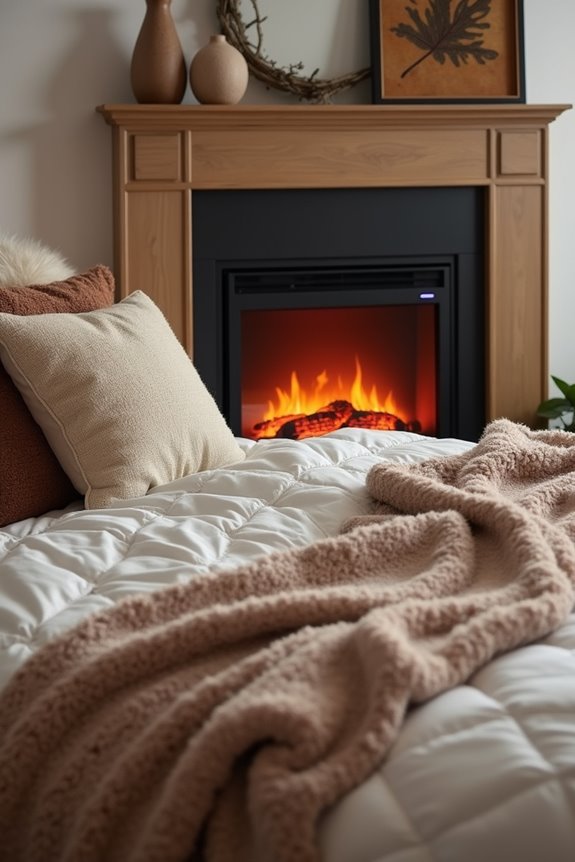
The finishing touches around your electric fireplace’s flame bed shape how realistic and inviting your unit appears. You have several fireplace decor options to choose from that’ll customize your space.
Consider adding faux logs for a traditional wood-burning feel. If logs aren’t your style, try decorative coal pieces for a classic appearance. River stones create a modern, streamlined look that works with any room design. Metal piping offers an industrial edge if you’re going for contemporary vibes.
Mix and match these bed materials to suit your taste. Layer different textures together—combine logs with stones, or coal with piping. The combination you choose reflects what you prefer while enhancing those realistic flames you’re displaying. Don’t stress about getting it perfect; you’ll find what works for your space.
What Room Size Can Your Fireplace Heat?
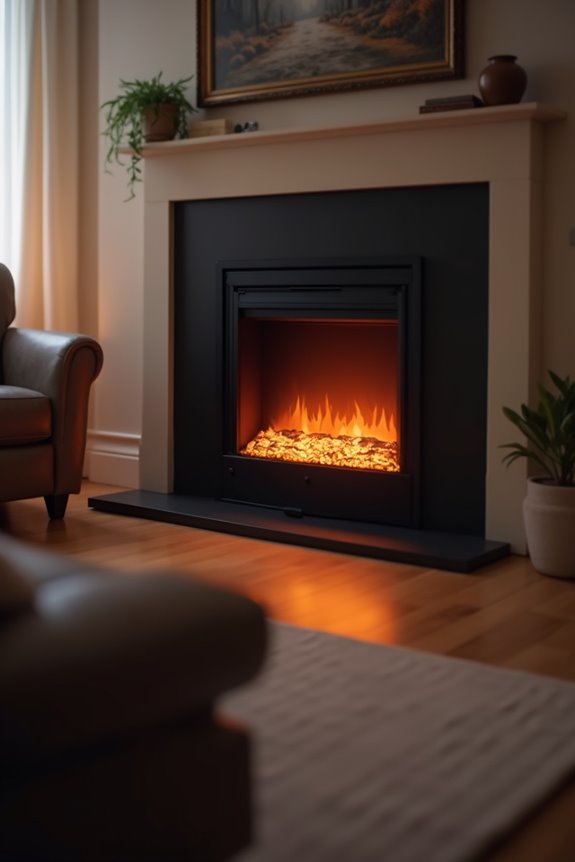
Now that your flame bed is set up, let’s discuss what your electric fireplace can actually do regarding keeping you warm.
Most electric fireplaces heat rooms up to about 400–1000 square feet, depending on your specific model and how well your space is insulated. You’re looking at supplementary warmth rather than a complete heating solution, especially if you live somewhere cold like Wisconsin.
Here’s what affects your fireplace’s performance:
- Insulation quality — Better insulation means more efficient heating
- Adjustable heat settings — You control how much warmth you want
- Heating method — Radiant panels or fan-based circulation
- Room layout — Open spaces heat differently than enclosed areas
Your electric fireplace works as an additional heat source during cold months, not as your primary heating system.
Comparing Electric Fireplaces to Gas and Wood Alternatives
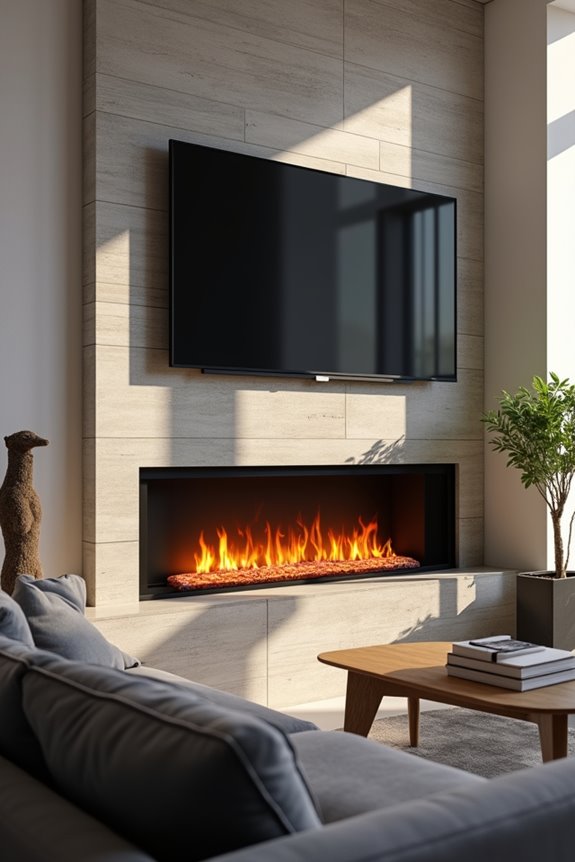
When you’re choosing between electric, gas, and wood fireplaces, you’ll find that electric models win big on setup—they plug into any standard outlet without permits or professional installation. You’ll also spend less on operating costs in most areas since electricity’s cheaper than gas or wood, and you can use flame-only mode year-round without heating if you want. The trade-off is that while electric fireplaces heat smaller to medium rooms well and offer safe, clean operation, gas and wood versions deliver more intense heat and that authentic fire feeling for larger spaces.
Installation and Setup Simplicity
Why spend a weekend wrestling with gas lines or chimney requirements when you could have a fireplace running in minutes? Electric fireplaces plug straight into any standard outlet, eliminating complicated installation headaches. You’ll skip costly professional help and messy setup processes entirely.
What makes electric fireplaces so simple:
- No venting required—install anywhere without worrying about ventilation systems
- No fuel storage needed—forget hauling wood or scheduling gas deliveries
- No permits or inspections—avoid bureaucratic delays and expenses
- Plug-and-play operation—just position, connect, and enjoy
You control everything with a remote or wall switch. Adjust heat levels independently from flame effects. Want cozy ambiance without warmth? Select flame-only mode seasonally. This straightforward approach means you’re not stuck with complicated maintenance or professional servicing. Your fireplace works when you want it, exactly how you want it.
Operating Costs and Efficiency
How much will your electric fireplace actually cost to run each month? Your electricity cost depends on local rates and how often you use it. Electric fireplaces typically cost more to operate than gas in high-electricity areas, but they win on installation. You’ll skip expensive venting systems and fuel delivery fees.
Here’s what makes them efficient: electric models convert nearly all electricity into heat with zone heating capabilities. You warm only the rooms you’re using, cutting waste. Plus, their cool-to-touch surfaces mean safer operation around kids and pets.
Gas fireplaces might offer lower running costs in some regions, but they demand professional installation and ongoing maintenance. Electric options deliver reliable, straightforward heating without the extra hassle or upfront expense.
Why Your Electric Fireplace Isn’t Working (and How to Fix It)
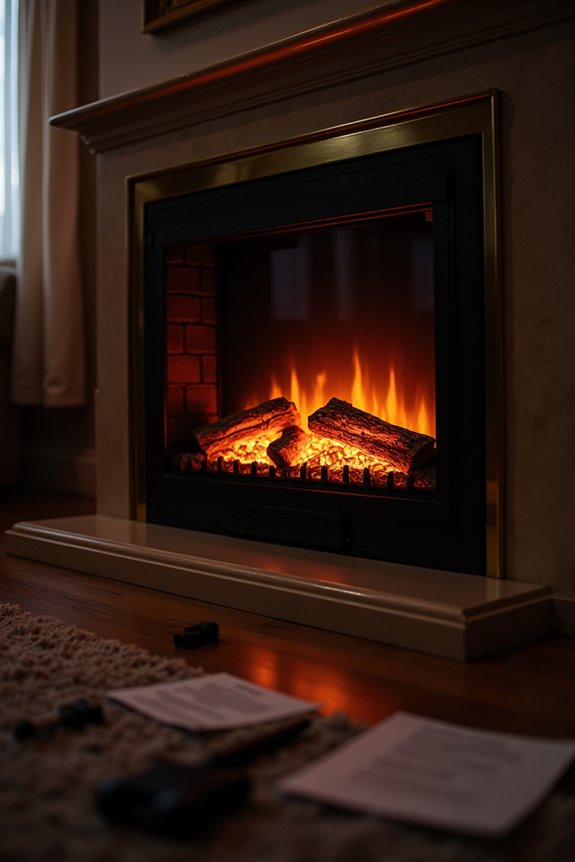
Nothing’s quite as disappointing as settling in for a cozy evening only to find your electric fireplace won’t turn on—or worse, it stops working mid-relaxation.
Nothing’s quite as disappointing as settling in for a cozy evening only to find your electric fireplace won’t turn on.
Don’t worry—most issues are simple fixes you can handle yourself:
- Check your outlet’s power: Verify it’s working by plugging in another device, and check you haven’t accidentally tripped a circuit breaker
- Inspect remote batteries: Replace them with fresh ones, since dead batteries are common culprits
- Reset the unit: Unplug it for 30 seconds, then plug it back in to clear minor glitches
- Clear blocked vents: Remove dust or debris that might trigger the overheating safety shutoff
Allow your fireplace to cool for 15–20 minutes if its auto-shutoff has engaged. These troubleshooting steps solve most problems, getting you back to comfort quickly.
Is an Electric Fireplace Right for You?
Before you decide whether an electric fireplace fits your home, it helps to understand what you’re actually getting. You’ll want to consider your heating needs, space, and lifestyle. Here’s how to evaluate if one’s right for you:
| Feature | Benefit | Consider |
|---|---|---|
| No venting needed | Easy installation anywhere | Still needs outlet access |
| Heats ~1,000 sq ft | Efficient zone heating | Won’t heat entire homes |
| Flame-only mode | Ambiance without heat | Uses minimal electricity |
Electric fireplaces work well if you’re renting, want supplemental warmth, or prefer fireplace aesthetics without maintenance. They’re safer around kids and pets thanks to cool-to-touch surfaces and automatic shut-off features. However, they won’t replace your main heating system. Think honestly about your actual needs before buying.