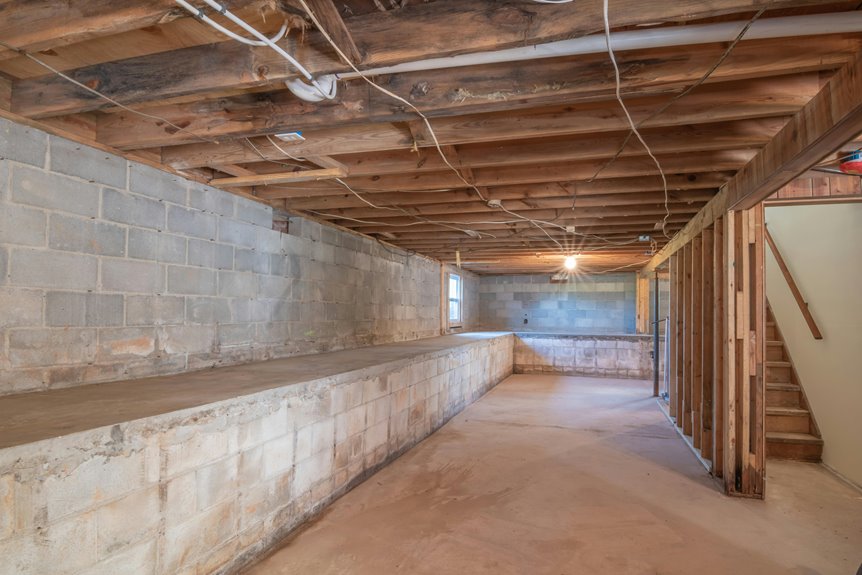
You’ll typically spend between $2,800 and $100,000 to finish your basement, though most homeowners budget around $32,000 for a livable space.
The actual cost depends on your basement’s size and what you’re creating—a simple recreation room costs way less than adding bathrooms or wet bars.
Per-square-foot rates range from $7 to $23, depending on finishes and complexity.
Want specifics on where your money actually goes?
Average Basement Finishing Costs: What You’ll Actually Pay
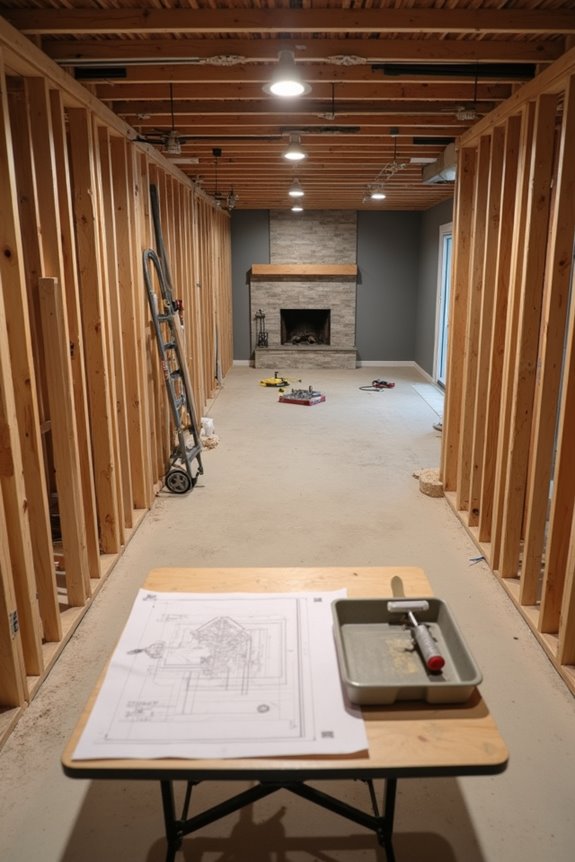
How much should you actually expect to spend on a basement renovation? You’re looking at roughly $7 to $23 per square foot, though your total project cost typically lands around $32,000. Of course, basement finishing costs can range dramatically from $2,800 to $100,000+ depending on what you’re doing.
Your biggest cost drivers are space size, layout complexity, and finish quality. Core remodeling work averages $49–$55 per square foot, while permits and inspections add $1,000–$6,000. Adding a bathroom? That’ll significantly increase expenses—a full bath runs $8,000–$12,000, and a half bath costs $4,000–$8,000.
Here’s the good news: finishing a basement delivers about 70–75% ROI when selling and boosts your home value by roughly 10–20%, depending on renovation quality and your local market.
Why Costs Vary So Much: The Real Price Drivers
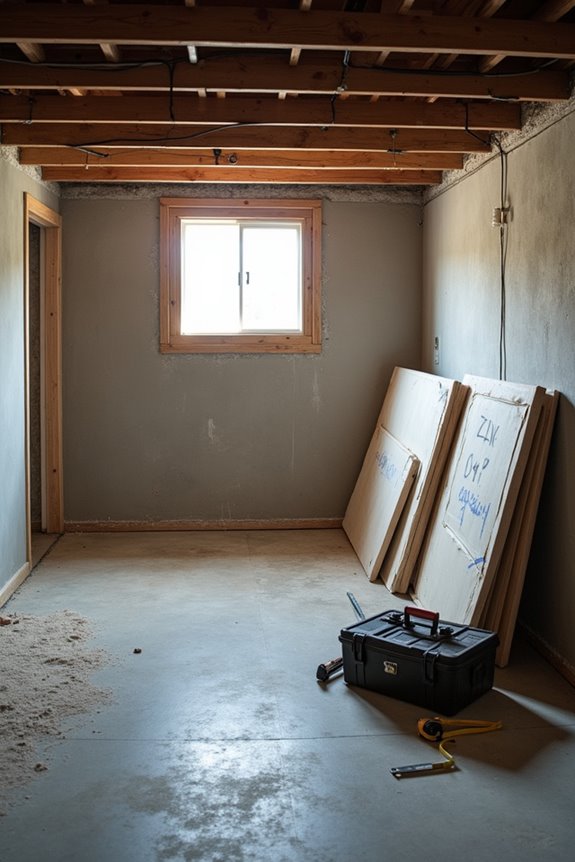
That $32,000 average? It’s just a starting point. Your actual costs depend on several major factors that’ll shape your budget.
Basement size matters most—finishing 500 square feet costs way less than 1,500. Your scope of work also shifts the price significantly. Creating one open recreation space differs from building multiple finished rooms with separate purposes.
Moisture control and existing conditions can affect your budget. If your basement needs serious cleanup or waterproofing, expect higher expenses upfront.
Finish materials like flooring and wall treatments directly impact costs. Carpet runs cheaper than luxury vinyl plank. Standard drywall beats custom finishes.
Adding plumbing/electrical work for bathrooms or wet bars increases complexity and expenses. Don’t forget permits either—they typically run 1% to 10% of your total project.
Labor costs and your project timeline round out the picture. Design-build approaches often improve efficiency and save money overall.
Cost Breakdown by Finishing Level: Basic, Premium, and Luxury
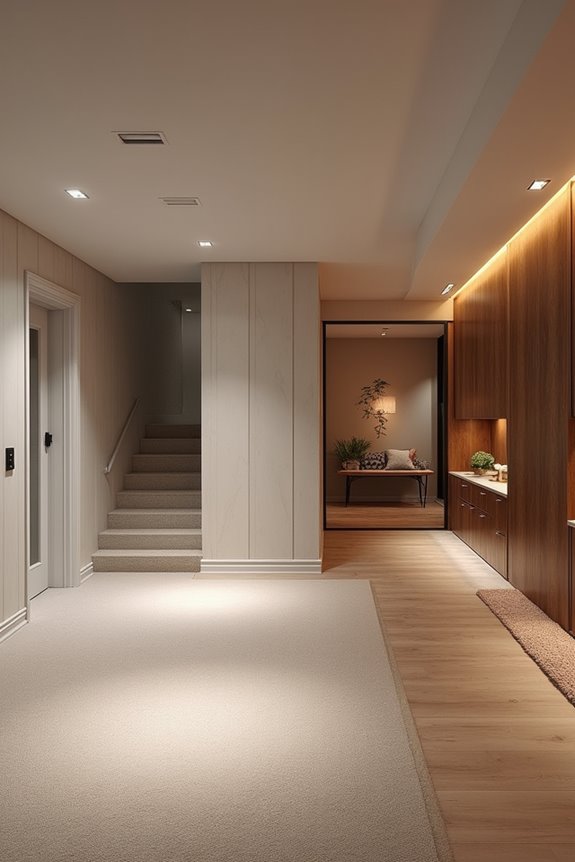
Luxury finishes exceed $150,000 when you want custom spaces and high-end materials. Your square footage, permits, and structural work impact basement finishing costs considerably. Factor in these variables when planning your project budget. Multiple options exist at every price point.
The Priciest Basement Finishing Components
If you’re wondering where your basement finishing budget will actually go, you’ll want to know that structural framing and drywall take the biggest slice of the pie because they literally define your rooms and require careful planning. Adding mechanical systems—think HVAC ducts, plumbing lines, and electrical wiring—can cost you thousands more, especially when you’re bringing everything up to current building codes. Then there’s the fun part: if you’re interested in a home bar, theater setup, or custom built-ins, those specialty features will push your total even higher because they demand specialized skills and premium finishes.
Structural Framing And Drywall
Why does framing and drywall consume so much of your basement budget? These two components form the backbone of your space, and they’re expensive because they require skilled labor and materials. When you’re finishing your basement, you’re looking at core remodeling work running $49–$55 per square foot.
Here’s what that covers:
- Structural framing and drywall to create defined rooms and walls
- Insulation, electrical, and HVAC systems integrated throughout
- Permits and inspections required for compliance
The square footage of your basement directly impacts your total basement finishing costs. Larger spaces need more materials and labor hours. Adding permits, insulation, and electrical work on top of framing and drywall quickly adds up. However, planning these elements upfront prevents costly mistakes later.
Mechanical Systems Extensions
When you’re stretching HVAC ducts, plumbing lines, and electrical wiring down to your basement, you’re also stretching your budget—sometimes considerably.
These mechanical systems extensions represent the most expensive basement finishing costs you’ll face. Your HVAC system needs proper zoning and ductwork, running $2,000 to $11,000. Plumbing extensions for a full bathroom cost $8,000 to $12,000, while half baths run $4,000 to $8,000. Electrical upgrades and additional outlets add $1,000 to $6,000.
Waterproofing and moisture barriers ($1,900 to $6,500) plus potential sump pump installation ($600 to $1,600) protect your mechanical investments from water damage.
| System | Basic Cost Range | Variables |
|---|---|---|
| HVAC | $2,000–$11,000 | Existing ductwork, zoning |
| Plumbing (Full Bath) | $8,000–$12,000 | Layout complexity |
| Electrical | $1,000–$6,000 | Outlet quantity |
| Waterproofing | $1,900–$6,500 | Moisture levels |
| Sump Pump | $600–$1,600 | Drainage needs |
Check local codes before starting any mechanical work.
Custom Feature Installations
Once you’ve got your mechanical systems running smoothly, you’ll face the real budget-stretchers: the fun stuff. Custom features like wet bars, home theaters, and built-ins drive your basement finishing cost way up because they need specialized plumbing, electrical, and premium materials work.
You’re looking at some serious expenses here:
- Wet bars require custom plumbing runs and finishing touches
- Home theaters demand electrical expertise and soundproofing installation
- Game rooms or exercise areas extend your permit timeline and labor costs
Here’s the thing: these additions aren’t cheap, but they’re what personalize your basement. Design time and permits add thousands beyond standard finishing. While high-end custom features boost perceived value, remember that ROI depends heavily on local market demand and quality execution.
Cut Your Costs Without Cutting Quality
You don’t have to spend a fortune to get a basement you’ll love—smart planning, strategic DIY work, and choosing where to invest your money matters. Keep your design straightforward with clean lines and simple layouts, focus your budget on the areas you’ll actually use most (like a family room or bedroom), and tackle tasks you’re comfortable with yourself, such as painting or basic demolition. By making these smart choices, you’ll reduce costs while building a space that looks finished and well-considered.
Design Simple and Smart
How’d you like to slash your basement costs without making it look cheap?
You can keep your design simple and smart by focusing your budget where it counts most. Here’s your approach:
- Pick high-impact areas – Spend on your bathroom and living spaces, where you’ll actually spend time
- Choose budget-friendly finishes – Use standard finishes and stock cabinets to cut costs dramatically
- Save on less-used zones – Apply cheaper flooring and finishes in storage or utility areas
This approach drops your cost per square foot significantly. You’re not skimping on quality in spaces that matter. A completely unfinished basement runs $30–$100 per square foot, but smart design choices bring that down. By keeping your design straightforward, you’ll reduce waste and complexity. You’re making deliberate choices that stretch your budget further while creating a space you’ll actually use.
Prioritize High-Impact Areas
Where should your money actually go in a basement project? Focus on the bones of your space first. Your basement finishing costs spike when you tackle framing, drywall, and extending HVAC, electrical, and plumbing lines. These high-impact areas eat up roughly 60% of your budget, but they’re worth it—they literally build your usable space.
Skip the fancy finishes for now. Mid-range luxury vinyl plank flooring and standard drywall deliver solid quality at reasonable costs. Save the granite countertops and custom lighting for later upgrades.
Here’s the smart move: finish one room completely before spreading yourself thin across the whole basement. You’ll get actual living space faster, stay within budget, and leave room for future improvements. Smart prioritization beats wasteful spending every time.
DIY Strategic Project Tasks
Once you’ve mapped out your budget priorities, it’s time to get strategic about what you can tackle yourself. You’ll cut basement finishing costs by roughly 20% when you handle certain tasks personally. Focus your DIY efforts on:
- Painting walls and ceilings — the biggest savings opportunity
- Installing insulation and window coverings — straightforward and impactful
- Adding decor and finishing touches — personalize without professional costs
This approach optimizes your budget while preserving quality where it matters most. Defer complex work like electrical or plumbing to professionals, but handle simpler essential vs. luxury upgrades yourself. By strategically choosing which basement finishing tasks to DIY, you’ll reduce cost per square foot significantly. Budget-friendly materials paired with your own labor makes budget optimization realistic and achievable.
Your ROI on a Basement Finish: Will You Recoup Your Investment?
Does your finished basement investment actually pay off when you sell? Yes, but here’s the reality: you’ll recoup about 70% to 75% of your renovation costs. So if you spend $60,000, you’re looking at roughly $42,000 to $45,000 added to your home’s value.
That’s not a total loss—it’s actually solid. Your finished basement increases usable square footage that buyers want. In Missouri’s market, a quality basement renovation typically boosts your overall home value by 10% to 20%, depending on renovation quality and local demand.
The key? Don’t overspend on luxury features you won’t recover. Focus on durable flooring, proper framing, and functional spaces. You’re investing in both immediate enjoyment and future resale appeal.
Basement Finishing Timeline and Permits
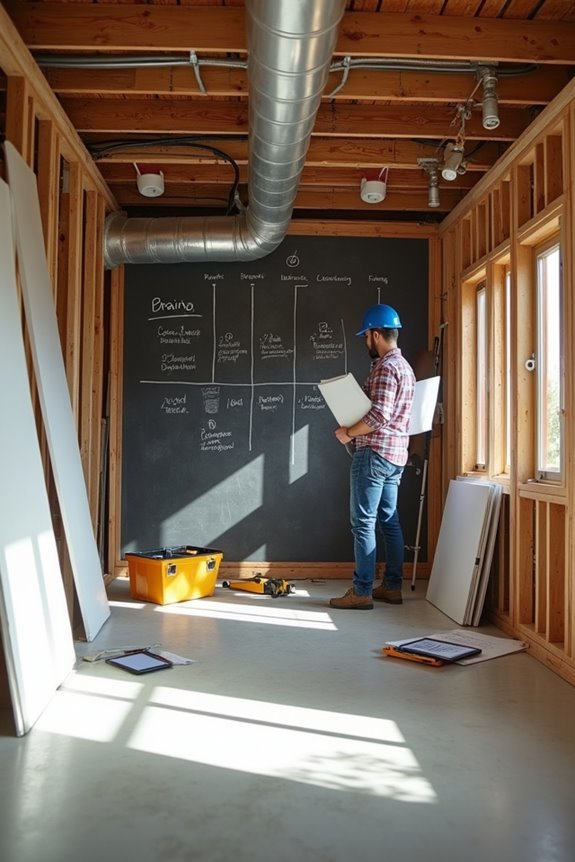
How long will your basement project actually take? Your basement finishing timeline typically spans 6 to 12 weeks, though complexity matters. Here’s what influences your schedule:
- Permits and inspections – Some municipalities require them, costing $1,000 to $6,000, though certain providers include permits in core packages
- Custom features – Bars, bathrooms, and egress windows extend timelines significantly
- Contractor experience – Skilled contractors navigate scope complexity and inspections more efficiently
Your contractor choice directly impacts your project schedule. If you’re planning a bedroom, remember that egress window requirements (IRC Section R310) affect both planning and timeline. Account for permit costs in your budget—factor them in early. Understanding these variables helps you set realistic expectations and keeps your basement finishing timeline on track.