
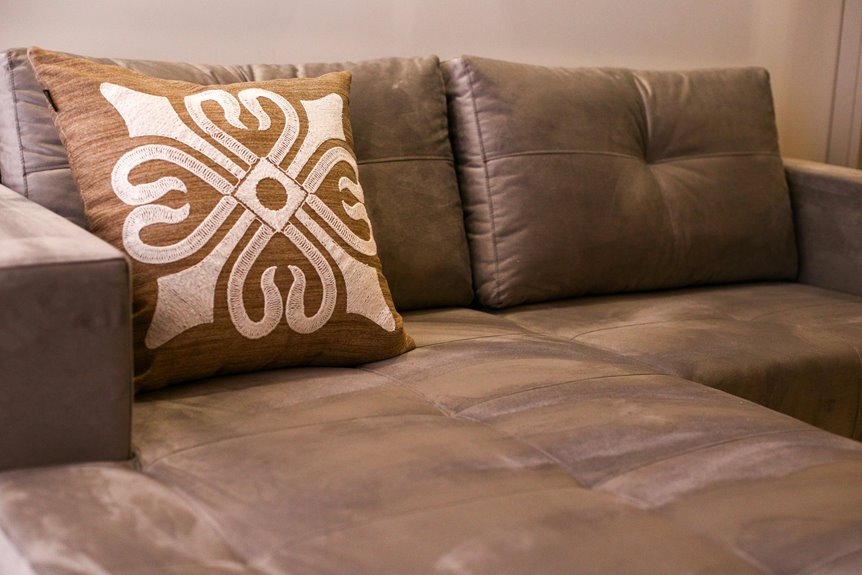
Start with a neutral color palette—soft whites, warm grays, or beiges—then add two or three accent colors like navy or forest green. Anchor your room with a large rug (8×10 works great) and position your sofa’s front legs on it. Skip matching furniture sets; instead, mix textures with throws and pillows. Layer lighting using different lamps at varying heights, and tuck storage into consoles or baskets. These simple steps create a pulled-together space at a reasonable cost—but there’s much more to discover about fine-tuning each element.
Define Your Living Room’s Color Palette First
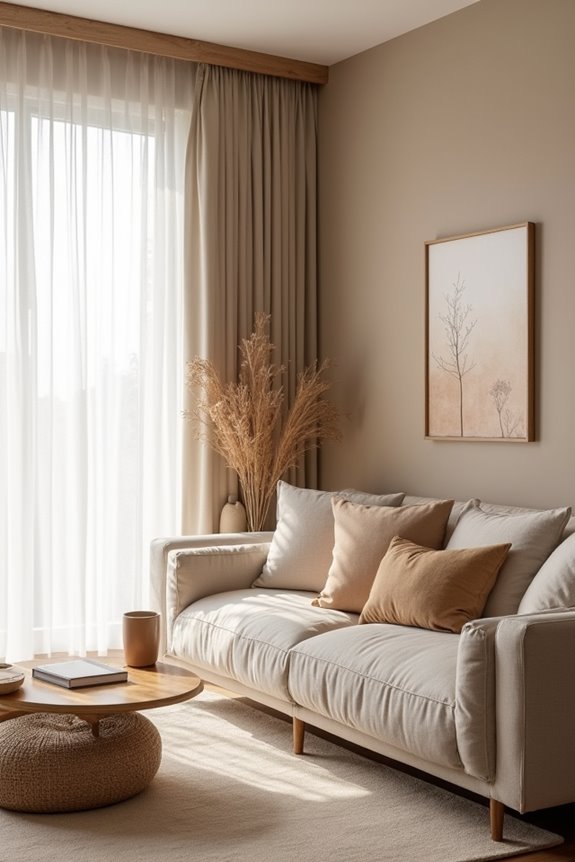
Before you pick out a single piece of furniture or hang anything on your walls, you’ll want to nail down your color palette—think of it as your room’s personality blueprint. Start with neutrals like soft whites, warm grays, or gentle beiges as your foundation. These calming bases won’t fight for attention and make your space feel larger and brighter.
Next, choose two or three accent colors that make you happy. Maybe it’s a deep navy, forest green, or warm terracotta. These pops of color add personality without overwhelming the room.
Finally, pick consistent finishes for your walls, trim, and key furniture pieces. Matching paint types and sheens creates harmony throughout your space. This straightforward strategy keeps everything feeling connected and deliberate, making decorating less complicated.
Anchor Your Space With a Large Rug
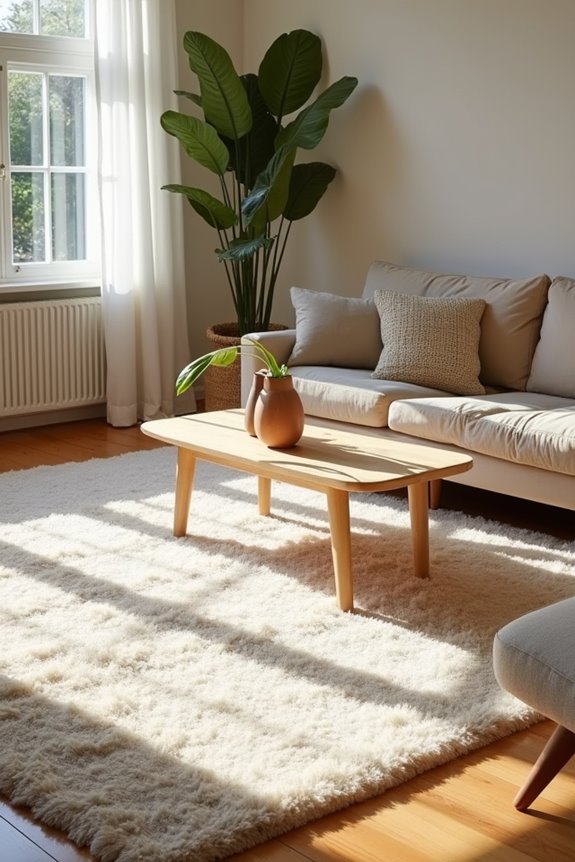
You’ll want to start by picking a rug size that fits your room—think 8×10 or 9×12—and position it so your sofa’s front legs land right on it, which grounds your seating area. Fortunately, you don’t need an expensive rug; budget options work just as well if they match your color palette and give you enough walking space (about 18–36 inches) around your furniture. When you’re unsure, go bigger rather than smaller, since a properly sized rug ties everything together and makes your space feel organized rather than scattered.
Size Guidelines And Standards
Choose a rug that’s at least 6 inches wider than your sofa on both sides—8 inches is ideal. Common sizes like 8×10 or 9×12 ground most living rooms well. Position your seating’s front legs on the rug to anchor everything together.
Balance matters, though. Your room layout and traffic flow affect the equation. You’ll need 30 to 36 inches between large furniture pieces for comfortable movement, or 18 to 24 inches in tight spaces.
Don’t automatically go huge. An oversized rug can overwhelm smaller rooms and make them feel cramped. Instead, match your scale balance to your room’s actual size. This creates breathing room while keeping everything connected.
Placement And Furniture Positioning
Now that you’ve selected the right rug size, position it strategically so your seating area feels deliberate and cohesive. Start by placing your rug as the foundation—this grounds everything. Position your sofa with its front legs on the rug, leaving 6–8 inches of rug visible on both sides for balance.
Arrange your furniture layout around this anchor point. Place your coffee table on the rug too, then maintain clear walkways of 18–24 inches between pieces. This prevents your seating arrangement from feeling cramped or blocking doorways.
For your furniture layout, consider how people actually move through the space. You’re not just decorating—you’re creating a room where friends and family can gather and feel at ease.
Budget-Friendly Rug Selection
Why do so many living rooms feel disconnected? Often, it’s because the furniture floats around without anything to tie it together. A large rug anchors furniture and creates the gathering space you’re looking for.
Choose the Right Rug Size
Don’t skimp on dimensions. Aim for a rug that’s at least 6 inches wider than your sofa on both sides. Sizes like 9×12 or 10×14 work best when possible. Position your rug so the front legs of seating rest on it—this grounds your arrangement.
Save Money Smart
Your budget-conscious living room doesn’t need expensive rugs. Check budget retailers and sales for large, natural fiber options that cost less than specialty rugs. When you go bigger, you’ll tie everything together and define your sitting area clearly.
Choose a Quality Sofa (Skip the Matching Set)
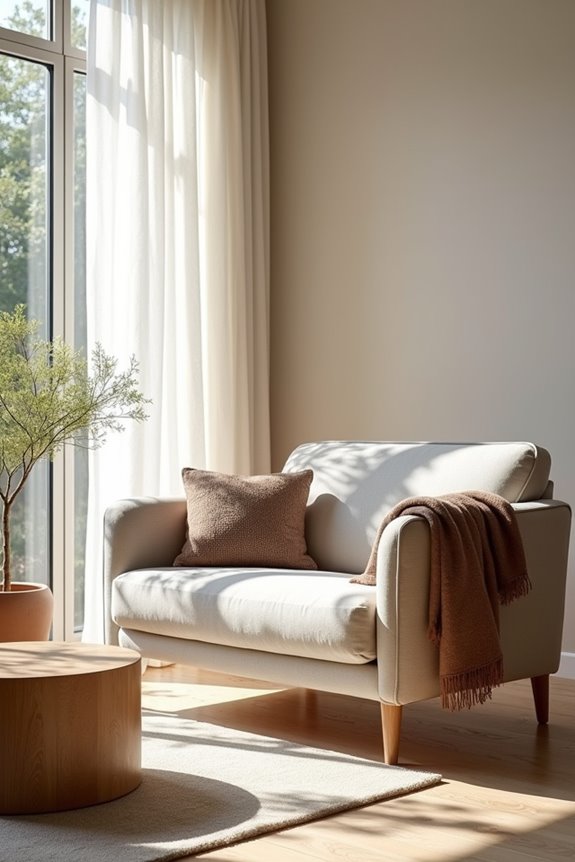
Your sofa is basically the main character of your living room, so it deserves some real thought. This is the one investment piece you shouldn’t skip on. A quality sofa anchors your entire space and actually lasts longer, saving you money down the road.
Skip matching furniture sets—they’re boring and feel stiff. Instead, mix different shapes, fabrics, and wood tones to create depth and visual interest.
Layout matters. Place your sofa thoughtfully so it doesn’t push all your seating against walls. You want room to breathe and arrange other chairs naturally around it.
Size your coffee table right. Make it about half your sofa’s length and keep the height within four inches of your seat. This creates balance without cluttering.
Finally, layer in lighting, art, and storage around your sofa to prevent the room from feeling heavy or one-dimensional.
Layer Your Lighting for Warmth and Depth
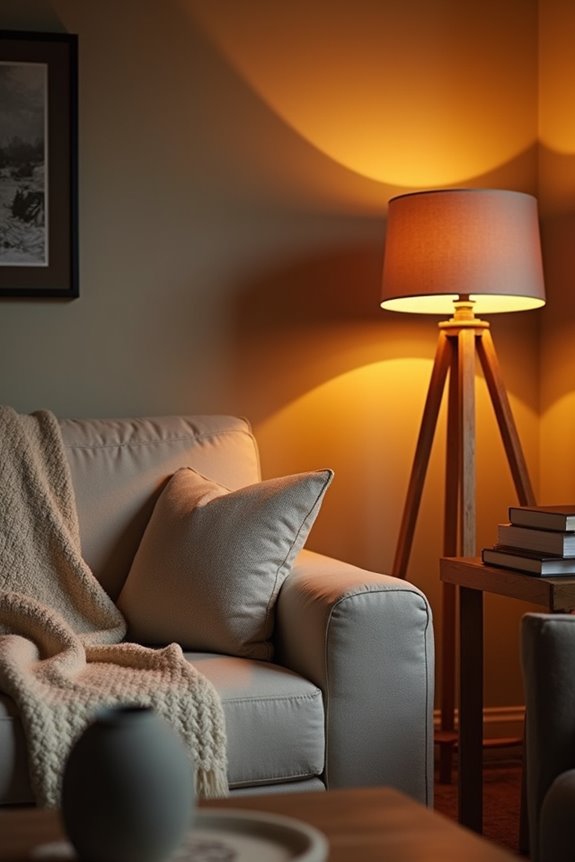
Most living rooms fall flat because they rely on one overhead light that makes everything look harsh and boring. You’ll improve your space by layering your lighting instead.
Mix table lamps, floor lamps, and overheads to create warmth and depth. Place lamps at different heights around your room—this guides your eye naturally and keeps things interesting. Skip matching pairs; one standing lamp and one table lamp work better together.
Your lamps become a mood tool too. During the day, use all your lighting. At night, turn off those overheads and rely on strategic lamps for a calmer atmosphere.
Finally, coordinate your lamp colors and finishes with your other decor. This creates a unified look that feels deliberate and welcoming—the kind of space where you actually want to spend time.
Add Hidden Storage to Hide Clutter
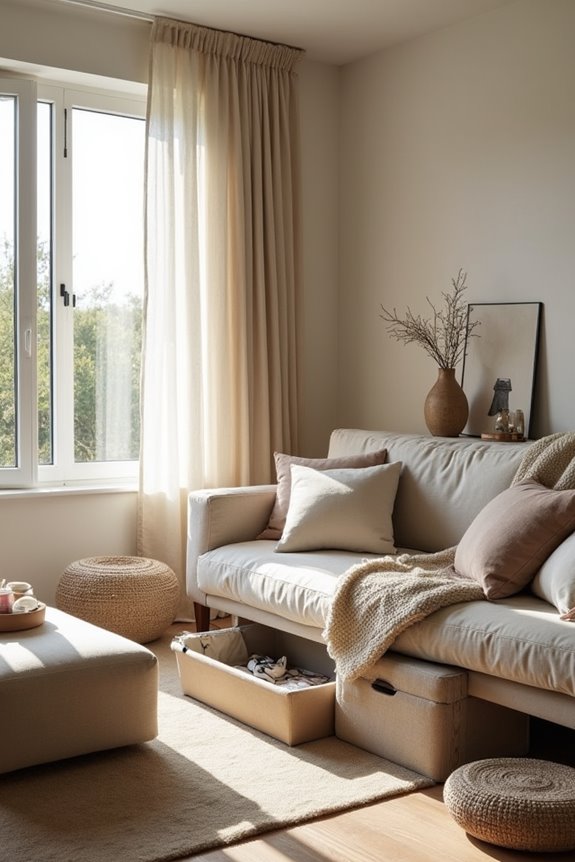
You’ll want to strike a balance between displaying your favorite items and hiding the rest, so your living room stays organized without feeling bare. Built-in storage solutions like consoles, benches, and shelves work well because they tuck away toys, books, and clutter while keeping your space looking neat and calm. Try pairing a TV console with storage beneath it and side tables that match your couch’s depth—this combo gives you plenty of hidden spots while maintaining that clean, pulled-together appearance you’re after.
Storage Solutions For Clutter
How do you keep a living room looking calm and organized when you’ve got books, toys, and random stuff everywhere? You don’t have to live with chaos. Smart storage solutions help your space feel more livable.
Here’s what works:
- Built-in consoles hide toys and books while displaying your favorite items on top
- Shelves and benches organize clutter and create visual breathing room
- Side tables with storage provide surface space without taking up extra room
- Decorative baskets conceal miscellaneous items while looking intentional
The key to great organization is balancing display with concealment. Keep only what you love visible, then store everything else. This approach prevents your living room from feeling cluttered and busy. You’ll create a space that feels calm and inviting—without stress.
Display And Concealment Balance
What does a well-organized living room require? Learning to balance display and concealment. You don’t need to hide everything—just the right things.
Store overflow items smartly. Built-in consoles and shelves let you showcase favorite pieces while concealing toys, books, and clutter behind closed doors. Leaning art and extra décor? Store them away rather than stacking them visibly around your room.
Use trays strategically. Corralling items on your coffee table with a tray organizes the space while looking intentional and textured.
Choose furniture wisely. Side tables shouldn’t exceed your couch’s depth, preventing clutter from spilling outward. Multiple storage solutions—shelves, benches, consoles—work together to keep your space tidy without sacrificing the personal touches you love displaying.
Select a Coffee Table That Fits Your Layout
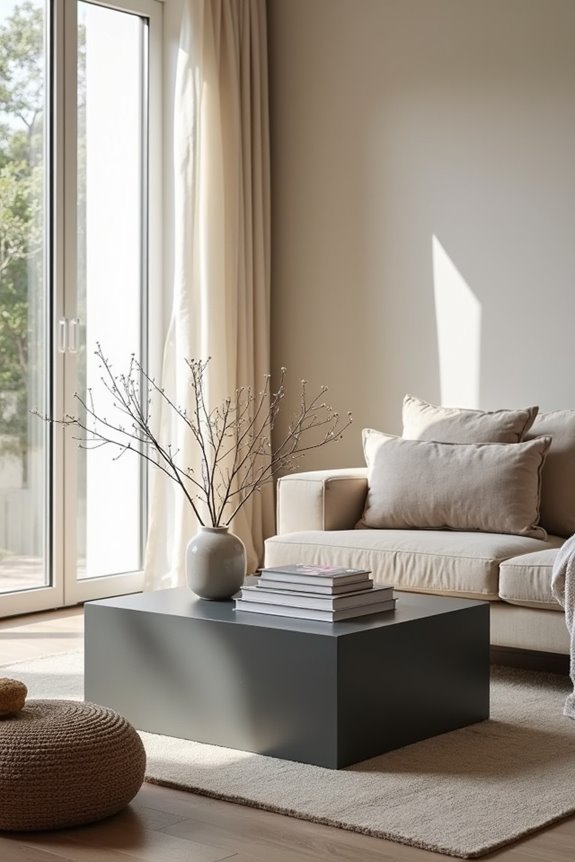
Since a coffee table anchors your whole seating area, picking the right one makes a real difference in how your living room feels. You’ll want to focus on getting the coffee table size and proportion just right so everything feels balanced together.
Here’s what matters most:
- Match the sofa length — your table should be roughly half as long as your couch
- Keep heights close — stay within 4 inches of your sofa’s height for visual harmony
- Maintain clearance — leave 16–18 inches of walking space around the table
- Break up angles — choose a round table if your room has lots of straight lines
These simple choices create layout balance and prevent your space from feeling cramped or awkward.
Place Side Tables for Function and Balance
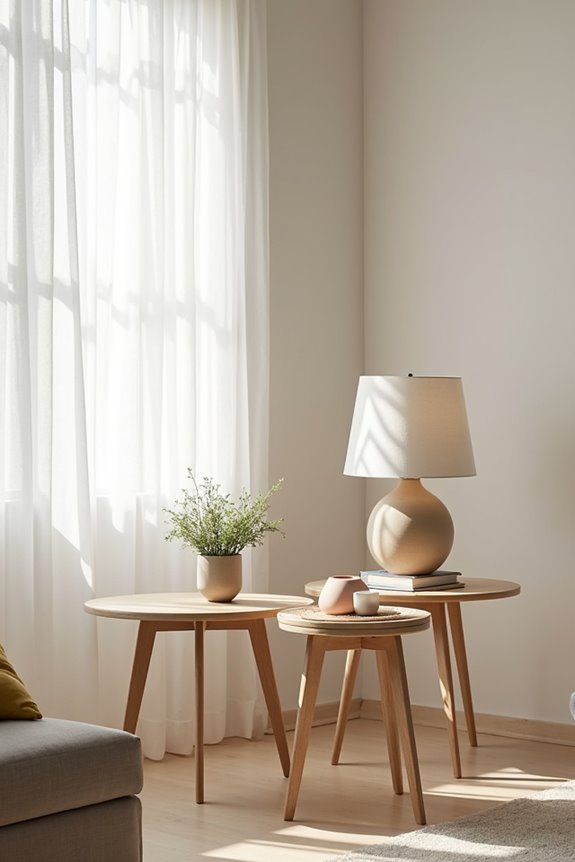
You’ll want to position side tables next to your couch to create handy spots for drinks, lamps, and remote controls without cluttering your space. Keep them at roughly the same depth as your couch, and align their height with your armrests so they don’t block your view or interrupt conversations. Placing two tables—one on each end or staggered across the room—creates a balanced look that anchors your seating area while keeping everything organized and within arm’s reach.
Functional Surface Space Solutions
Functional Surface Space Solutions
Where do your guests set their drinks when they visit, or where does your lamp actually go? Side tables solve this problem by creating functional surface space throughout your living room.
- Keep tables shallow—match your couch depth so they don’t block walkways or feel cramped
- Use multiple smaller tables instead of one huge piece to balance your seating area naturally
- Add storage options like trays or decorative baskets for clutter control of remotes and coasters
- Vary shapes and heights—round tables break up straight angles while creating visual interest
Position your side tables within arm’s reach of where you sit. This setup supports conversations, snacking, and drink placement without overwhelming your space. Smart surface space solutions keep your living room both welcoming and organized.
Strategic Placement And Balance
How do you turn a random collection of furniture into a room that feels deliberate? Strategic side table placement does the heavy lifting.
Position side tables within arm’s reach of your seating arrangement, flanking your sofa or positioning them beside chairs. This grounds your furniture and naturally encourages conversation. Keep them shallow—don’t let them exceed your couch’s depth, or they’ll eat up walkway space.
Balance matters too. Pair rectangular side tables with curved coffee tables, or vice versa, creating visual interest without chaos.
Here’s what works: place a lamp on at least one side table. This simple move improves your lighting. You’ll escape harsh overhead lights and create a welcoming, layered glow that makes your space feel deliberate and genuinely comfortable.
Layer Textures and Throws for Coziness
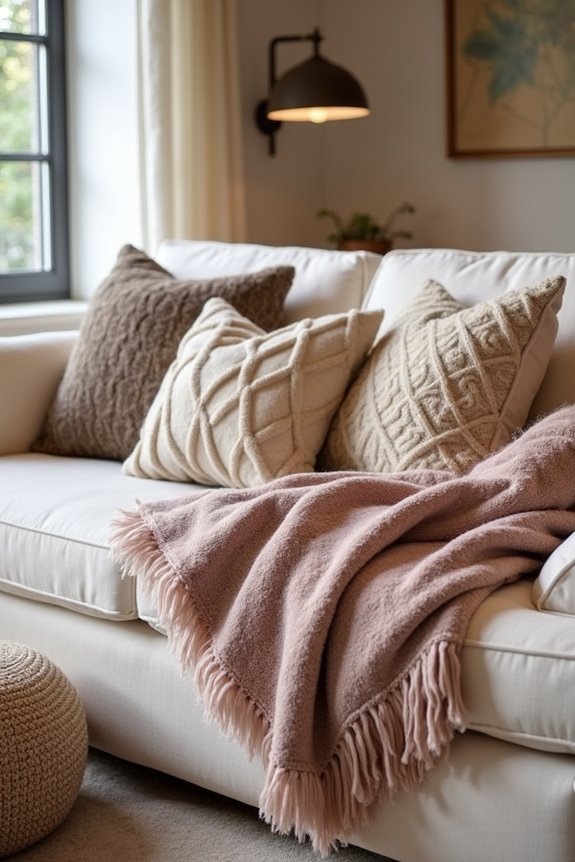
Want to refresh your seating area without buying new furniture? Throws and textures are practical tools for creating a cozy, inviting space that looks thoughtfully arranged.
- Choose the right fabric weight – Pick throws that won’t bulk up your couch or make it feel heavy and cluttered
- Layer strategically – Drape your throw slightly off-center, then add pillows with different textures for depth and visual interest
- Match your palette – Coordinate throw colors and fabrics with your walls and other textiles to tie everything together
- Experiment with placement – Try folding, casual draping, or bunching your throw until you achieve that relaxed, lived-in vibe
This approach gives you a polished, effortless look that still feels purposeful. You’re creating coziness without the commitment or cost of reupholstering. Your space becomes a reflection of your taste through simple layering techniques.
Arrange Seating to Spark Conversation
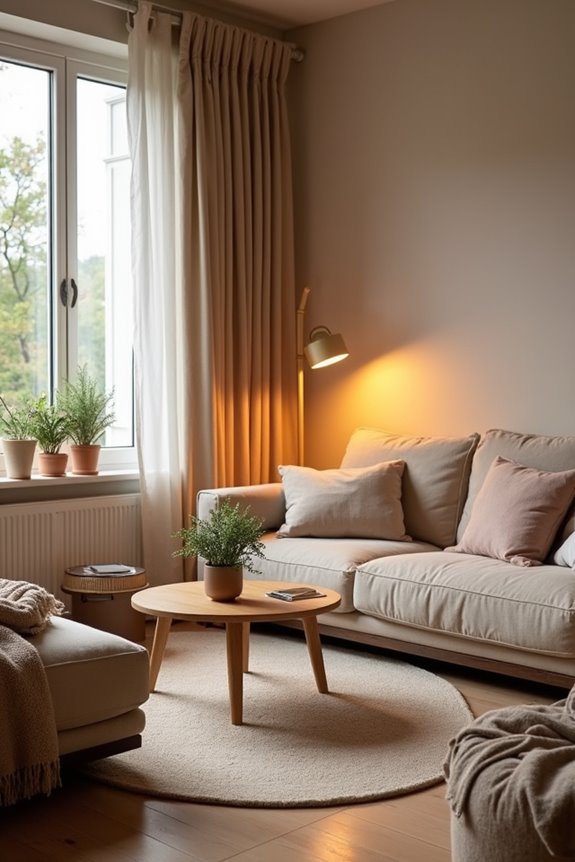
The foundation of a great living room is arranging seating so people actually want to talk to each other. You’ll create better conversation when you position your seating to face inward, forming a central gathering point. Place chairs opposite your sofa or on either side, allowing guests to see each other naturally.
Skip pushing everything against walls. Instead, distribute your flexible seating throughout the room to encourage eye contact and connection. A coffee table within arm’s reach anchors the space and gives everyone a shared surface.
Consider mixing lightweight chairs and stools over one bulky sofa. This approach keeps your room feeling open while letting you rearrange easily for different gatherings. Your seating becomes the foundation for real belonging.
Add Plants and Decorative Accents
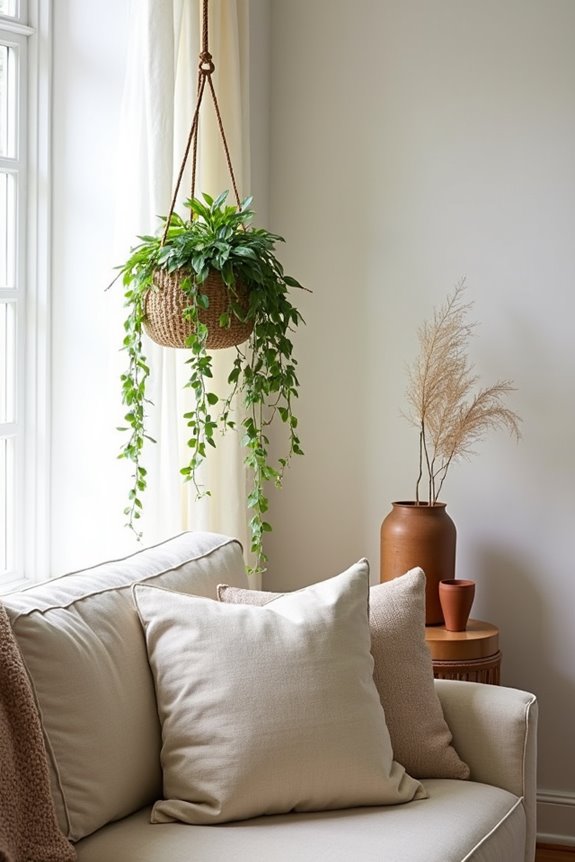
Once you’ve got your seating arranged for great conversation, plants and decorative accents will make your living room feel alive and complete. You don’t need expensive additions—just smart choices that bring personality and warmth.
- Place potted plants as a coffee table centerpiece to draw the eye and create an inviting focal point
- Fill empty corners with hanging plants to add height and draw attention upward
- Choose plants with interesting leaf shapes and colorful foliage for texture and visual interest
- Combine greenery with decorative accessories like trays, throws, and cushions for cohesive styling
Consider a faux olive tree in a basket near the TV for added dimension. Mix low-maintenance varieties with your decorative pieces, and you’ll create a space that feels thoughtfully designed—without the high cost.
Shop Smart: Where to Splurge and Save
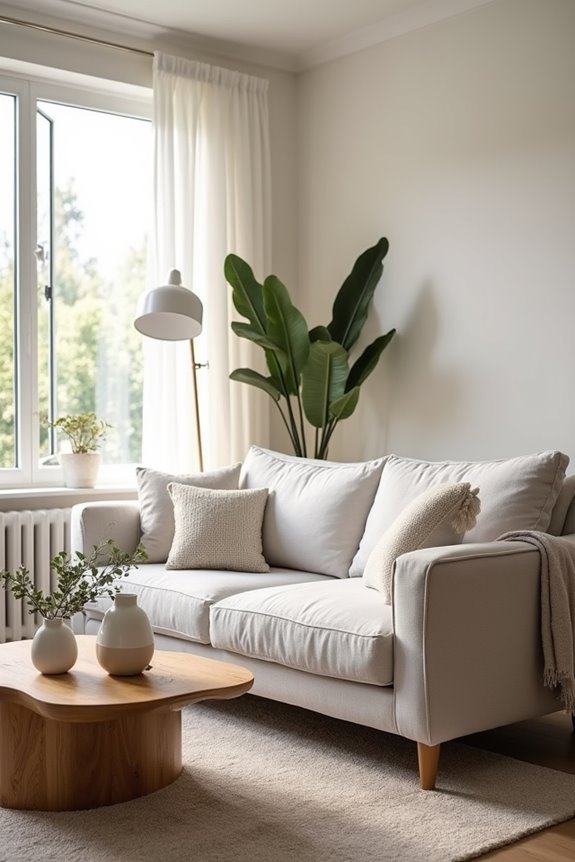
How do you stretch your budget without sacrificing style? You’ve got to be strategic about where you invest your money. Put your dollars toward a quality sofa and smart storage solutions—these pieces anchor your room and last for years. Skip the expensive rugs; instead, grab a large natural fiber option from HomeGoods or Target in sizes like 9×12 or 8×10. Your rug’s front legs should sit on it, so go bigger when you’re uncertain. Save on accessories, lighting, and throws by shopping budget-friendly stores. Consider DIY projects like creating marble side tables for a high-end look at a lower cost. This approach lets you build a living room that reflects who you are while staying within your budget.