
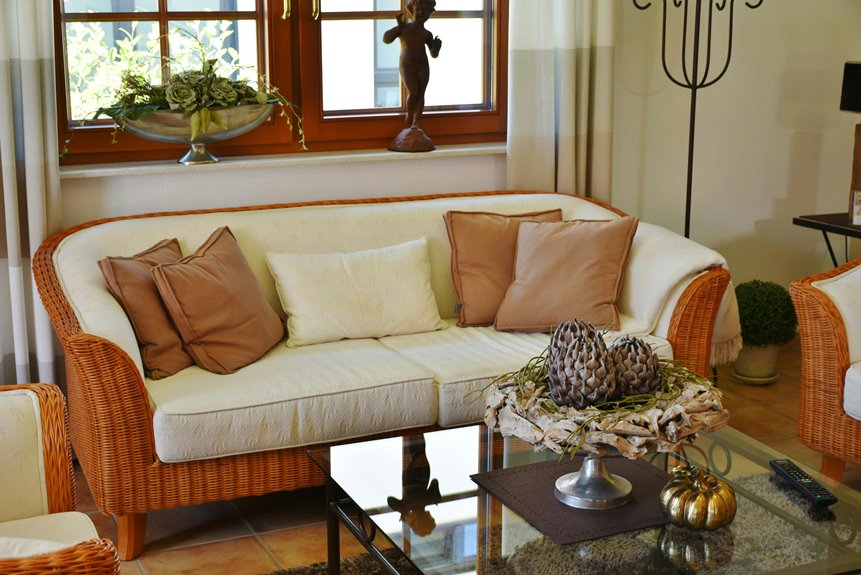
Start by arranging your seating to define the room’s flow and purpose. Next, pick a paint color that fits your space’s size and light—light shades open cramped rooms, while dark tones add warmth to sprawling areas. Layer in texture through rugs and wallpaper, then add art and plants to your walls. Control mood with smart lighting and window treatments. Make your coffee table bold and functional. Balance any vibrant colors with grounding neutrals. Each step builds your room’s story naturally.
Arrange Seating First to Define Your Space and Flow
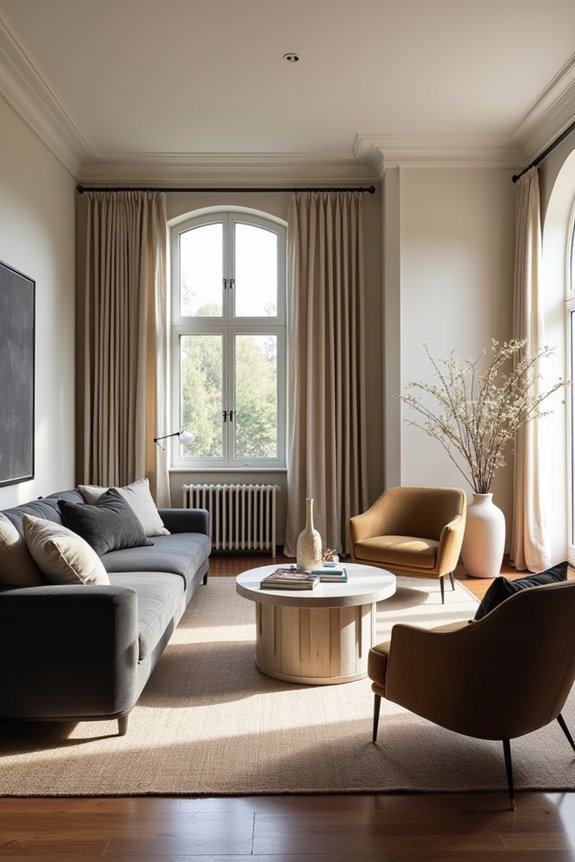
When you’re redesigning your living room, don’t start with paint colors or fancy décor—start with where people will sit. Your seating arrangement is the foundation of everything else.
Begin by choosing furniture that creates natural conversation areas. Two facing sofas or a corner setup works well for intimate chats. This simple choice defines your entire room layout and gives your space purpose.
Choose furniture that creates natural conversation areas—this simple decision defines your entire room layout and gives your space purpose.
Next, think about traffic flow. Position your furniture to keep pathways clear around coffee tables so guests move comfortably. Consider creating multiple seating clusters instead of one large group—this gives people options and makes your space more welcoming.
Finally, angle your main seating toward your best focal point: a fireplace, window, or artwork. This anchors everything and makes your room feel intentional and inviting.
Choose a Paint Color That Matches Your Room’s Size and Light
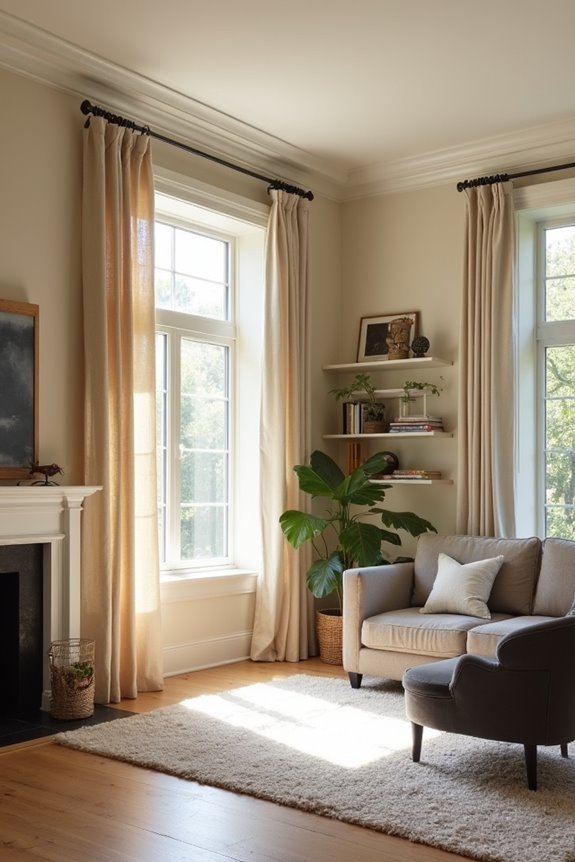
You’ve got two powerful color strategies at your disposal: light shades that make cramped rooms feel airier, and dark tones that create cozy spaces in sprawling areas. If your living room’s flooded with natural light, you’ll want brighter, softer hues that keep things open and fresh without washing out your décor. When you’re working with a smaller space or limited windows, skip the dark colors that’ll close everything in—stick with lighter neutrals instead.
Dark Tones Create Magic
Why do so many stylish living rooms look exceptional when the sun goes down? Dark tones give your space a distinctive quality. You’ll find that deep colors like Hague Blue or Studio Green create visual interest in your living room, particularly during evening hours.
Consider contrasting tones of equal intensity on your walls and ceiling for added dimension. This approach adds visual interest without feeling overwhelming. You can also use dark tones to guide the eye from one room to another, creating smooth transitions throughout your home.
Try deep options like Down Pipe, Railings, London Clay, or Inchyra Blue. These colors work well for living rooms that need personality. Don’t worry about darkness—you’re creating an inviting retreat that shows your style and belongs entirely to you.
Light Colors Expand Space
If your living room feels cramped or dark, light colors can help. You’ll notice that lighter wall colors immediately bounce brightness around your space, making everything feel more open and inviting.
Try soft neutrals like Setting Plaster or Parma Gray—they create a calm backdrop without overwhelming your room. Pair these lighter walls with a slightly lighter ceiling to visually lift the height and enhance space perception.
Here’s the key: carry your wall color up onto baseboards and chair rails. This simple technique extends your color field, tricking your eyes into seeing more square footage than you actually have.
In open-plan living areas, lighter finishes like Estate Emulsion maximize brightness and eliminate that cramped feeling. You’re not just painting walls—you’re expanding your entire space.
Layer Texture and Pattern Through Rugs and Wallpaper
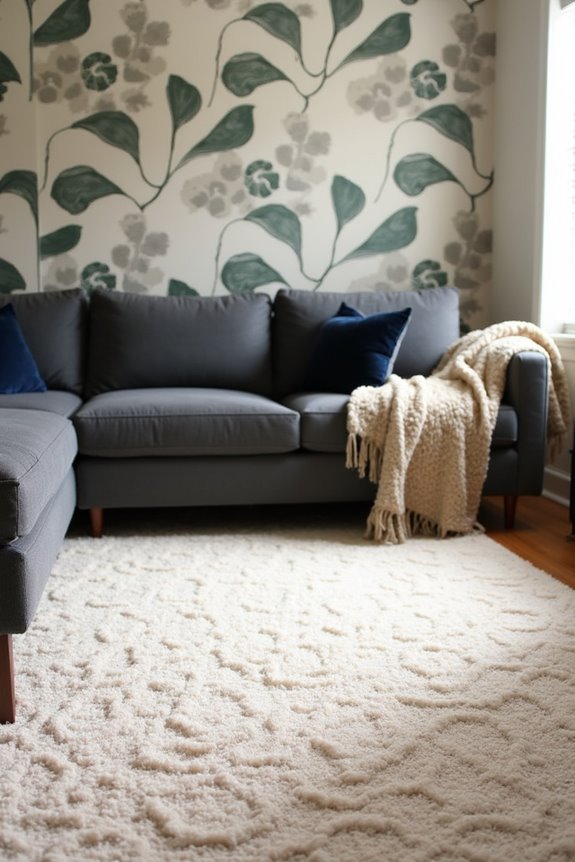
How do you make a plain living room feel like your own? Layering texture and pattern through rugs and wallpaper creates depth and tells your room’s story.
Start by choosing cohesive color families that work together:
- Select a bold rug as your focal point, then add subtler wallpaper to balance the energy
- Mix pattern scales so smaller designs don’t compete with larger statement pieces
- Experiment with materials like wool rugs or textured wallpaper to add tactile interest
- Try contrasting wall and ceiling tones of equal intensity for visual punch
Wallpaper offers decorating freedom that painting can’t match—think unusual patterns and rich colors. Your rug brings warmth while wallpaper expands possibilities beyond standard walls. Together, they create a distinctive, quirky mood that belongs to you.
Decorate Walls With Art, Plants, and Statement Focal Points
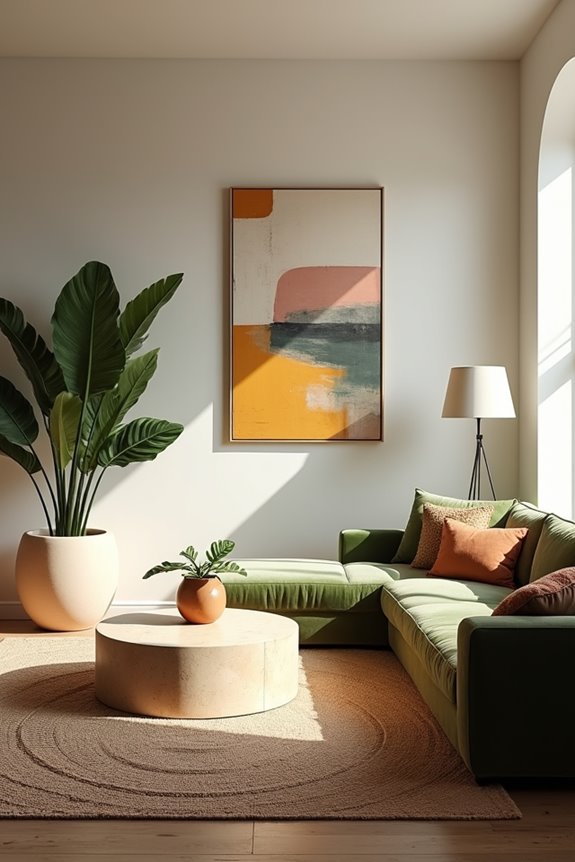
Once you’ve layered in your rug and wallpaper, your walls are ready for art, plants, and those striking focal points that capture attention. Wall art brings a living room from ordinary to memorable by adding personality, color, and life to otherwise blank surfaces.
Start with a gallery wall featuring framed photos and bold canvases against a soft white backdrop. This centerpiece allows your art to stand out. Next, introduce plants and greenery—hanging varieties, statement plants, or small botanical accents—to brighten the space and create a calming environment. Pair these elements with a focal point like a chandelier, fireplace, or architectural feature to anchor everything together. This combination reinforces your color palette while guiding the eye naturally throughout the room.
Control Light and Mood With Fixtures, Blinds, and Shutters
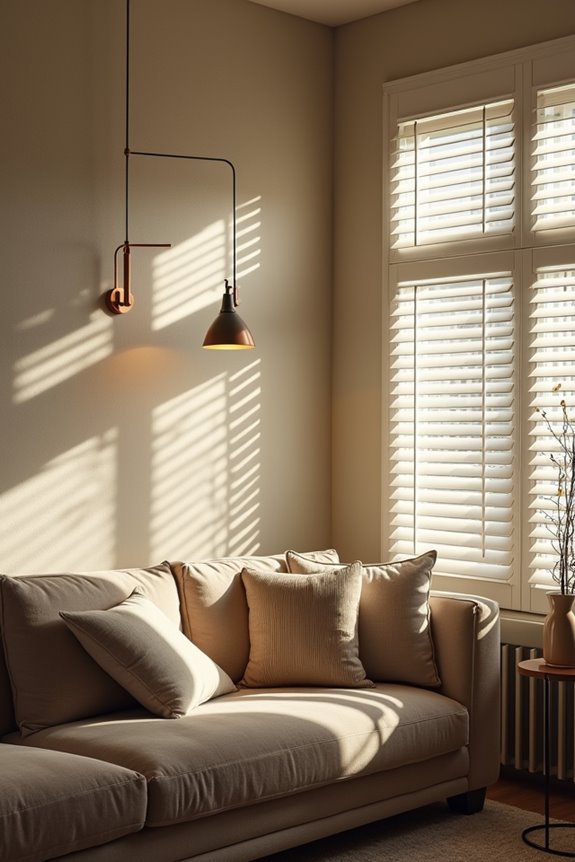
Consider these options to control your room’s mood:
- Shutters give you precise light control and privacy while boosting energy efficiency
- Plantation shutters deliver blackout potential for complete darkness when you need it
- Made-to-measure options fit perfectly in any window size, including tricky spaces
- Professional installation ensures everything works smoothly across your windows
Choosing the right window treatments creates the exact atmosphere you’re after. You’ll feel the difference immediately when you control both your lighting and room temperature together.
Make Your Coffee Table a Conversation Starter
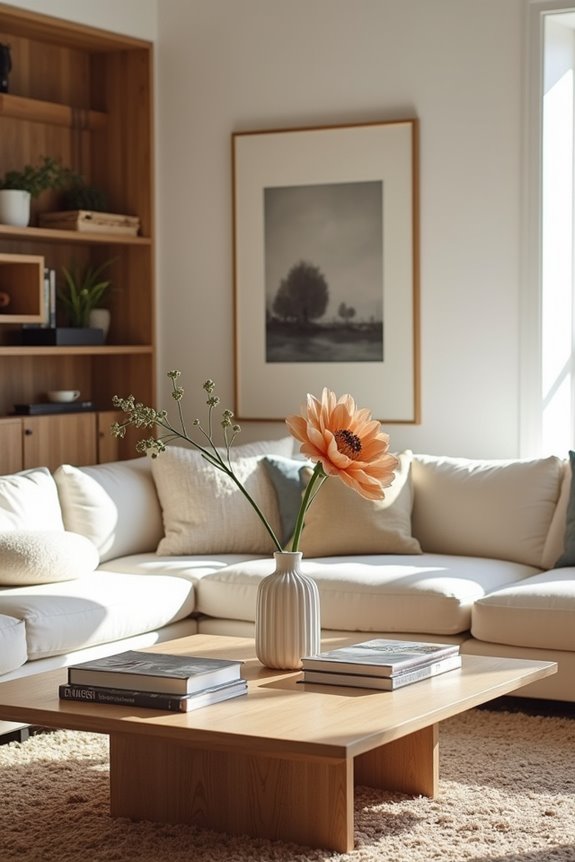
Your coffee table is more than just a surface; it’s your room’s centerpiece that draws attention. Choose bold materials like marble, rustic wood, or sleek glass to anchor your seating arrangement. The right scale matters too—aim for about one-third your sofa’s length to keep proportions balanced and foot traffic flowing smoothly.
| Style | Best For | Texture Pairing |
|---|---|---|
| Marble | Modern spaces | Soft velvet |
| Rustic wood | Cozy rooms | Mohair upholstery |
| Glass | Small areas | Woven rugs |
Pair your distinctive table with complementary textures nearby. This creates visual warmth and cohesion throughout your living area, making guests feel welcome and at ease.
Mix Bold Colors and Textures With Grounding Neutrals
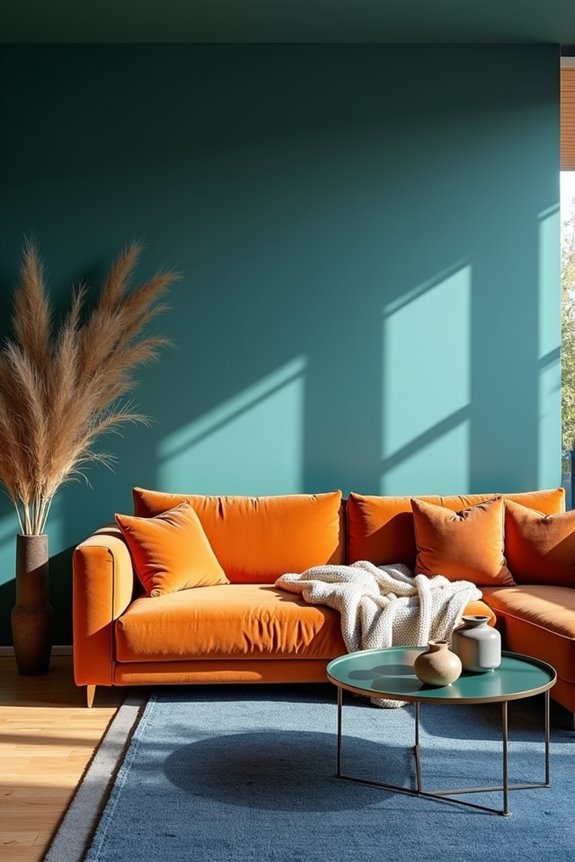
Why does a room painted entirely in deep blue feel so cramped, while the same blue with cream-colored furniture feels spacious and inviting? The answer’s balance.
You’ll achieve this by mixing bold colors with grounding neutrals. Here’s how:
- Pair bold accent walls with soft neutrals on adjacent surfaces to create contrast without overwhelming the room
- Use color-blocking on walls and ceilings with equal intensity for visual interest
- Layer dark hues like deep blue or black with lighter neutrals such as gray or cream to keep your palette cohesive
- Anchor bold tones with natural textures—think wood, plants, and linens—so the space feels warm and inviting
This approach lets you embrace bold colors while maintaining a calm, welcoming atmosphere. You’re creating a room that feels both stylish and livable.