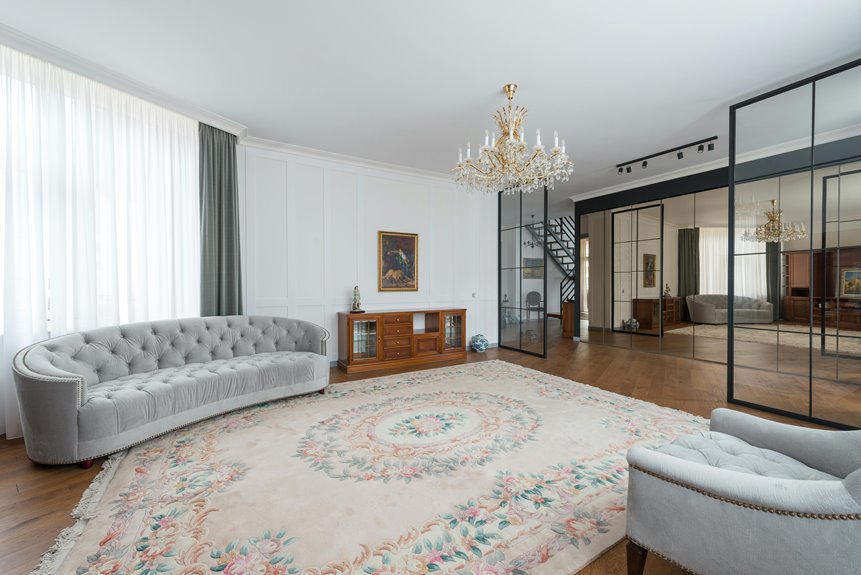
Big living room rugs typically come in three standard sizes: 8×10 feet for smaller to medium rooms, 9×12 feet for larger spaces, and 10×14 feet for really spacious layouts. You’ll want to match your rug size to your actual room dimensions rather than automatically picking the biggest option.
The key is leaving 18–36 inches of visible floor around the edges for balance and grounding your furniture properly on the rug.
There’s more to contemplate about placement and your specific layout ahead.
Pick Your Rug Size: 8×10, 9×12, or 10×14
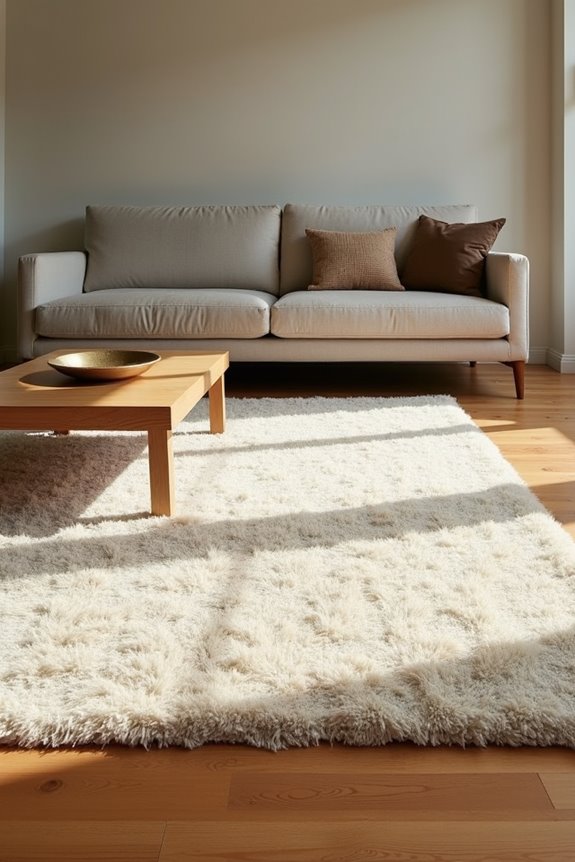
How do you know which rug sizing will actually work in your living room? You’ve got three solid options: 8×10, 9×12, or 10×14 feet.
An 8×10 rug works great for standard-sized rooms and anchors your furniture nicely. It’s the go-to choice that most people use. If your space feels bigger or you’ve got an open layout, a 9×12 rug provides better grounding across the area. For your larger rooms measuring around 11.5 by 15.5 feet or more, the 10×14 gives you excellent coverage while keeping 18 to 36 inches of floor visible around the edges.
Whichever size you pick, aim to get most seating pieces on the rug. Front legs touching the rug works for mid-sized spaces, while all legs sitting on it suits bigger rooms perfectly.
Why These Rug Sizes Work Best
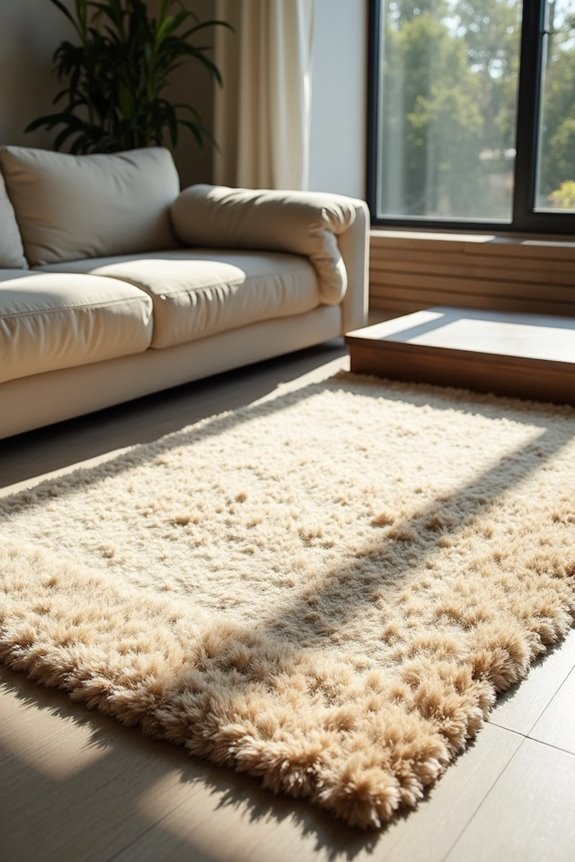
These three sizes work because they match how you’ll actually use your living room—they’re big enough to ground your furniture without overwhelming the space. When you place your seating with front legs on the rug (or all four legs for larger rooms), you’re creating a visual anchor that defines where the room’s heart is. The 18 to 36 inches of floor showing around the edges provides the breathing room that keeps everything from feeling cramped or off-balance.
Room Scale & Proportions
Why does a big living room rug need to actually match your room’s size? Getting room scale and proportions right prevents your rug from looking lost or cramped in your space.
Here’s what you’re balancing:
- Furniture placement – Your rug should extend under major pieces so front legs (or all legs in bigger rooms) sit anchored on it, leaving 18–36 inches of visible floor to walls.
- Visual balance – A 9×12 or 10×14 rug grounds multiple seating pieces in spacious layouts, while an 8×10 works for standard-to-large spaces depending on how you’ve arranged things.
- Layout flow – In very large rooms, one overwhelmed rug actually hurts your space. Multiple rugs or a single larger one define distinct zones instead.
Furniture Anchoring Principles
Now that you’ve figured out your room’s layout, it’s time to nail down exactly how your rug should sit under your furniture. The key to anchoring your seating is positioning your rug so the front legs of your sofa rest directly on it—aim for about 3 to 8 inches under those front legs. This creates a grounded, intentional look that pulls your conversation area together.
| Rug Size | Front Leg Placement |
|---|---|
| 8×10 | 4-6 inches under |
| 9×12 | 5-7 inches under |
| 10×14 | 6-8 inches under |
Keep 6 to 18 inches of visible floor between your rug’s edge and walls. Too little space feels cramped; too much creates disconnection. This balance prevents that awkward postage-stamp effect while making your anchoring intentional and welcoming.
Matching Big Rugs to Your Room Size
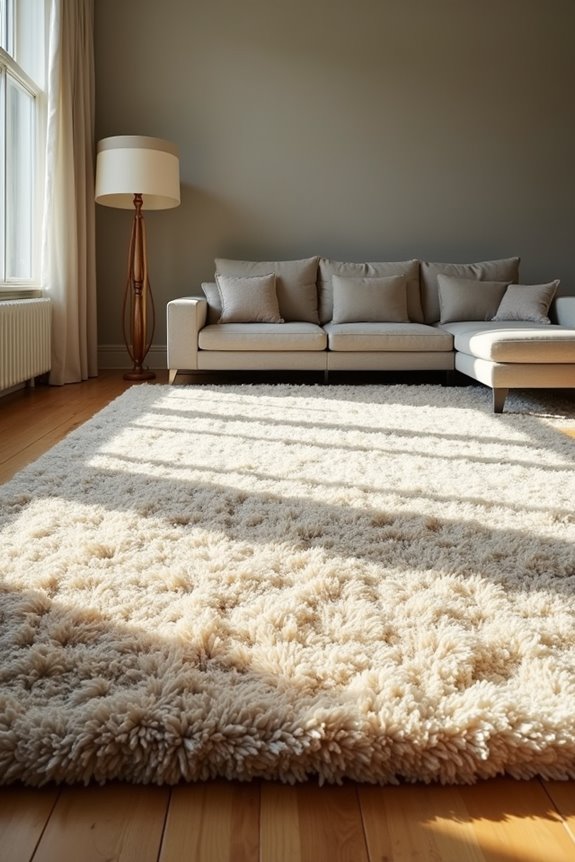
Getting the right rug size for your living room comes down to understanding how your furniture and floor space work together. You’ll want to match your rug dimensions to your actual room size and layout, not just pick the biggest option available.
Match your rug dimensions to your room size and layout, not just picking the biggest option available.
- Small to medium rooms (under 200 sq ft): An 8×10 rug works well, allowing you to ground seating without overwhelming the space.
- Larger rooms (200-400 sq ft): Step up to 9×12 or 10×14 feet for proper furniture grounding and visual balance.
- Spacious, open-concept areas: Consider multiple rugs to define different zones while keeping the room feeling connected.
Leave 18–24 inches of bare floor around your rug’s edges. This breathing room prevents your living room from feeling cramped and creates a polished, deliberate look.
Front Legs Only vs. All Legs On
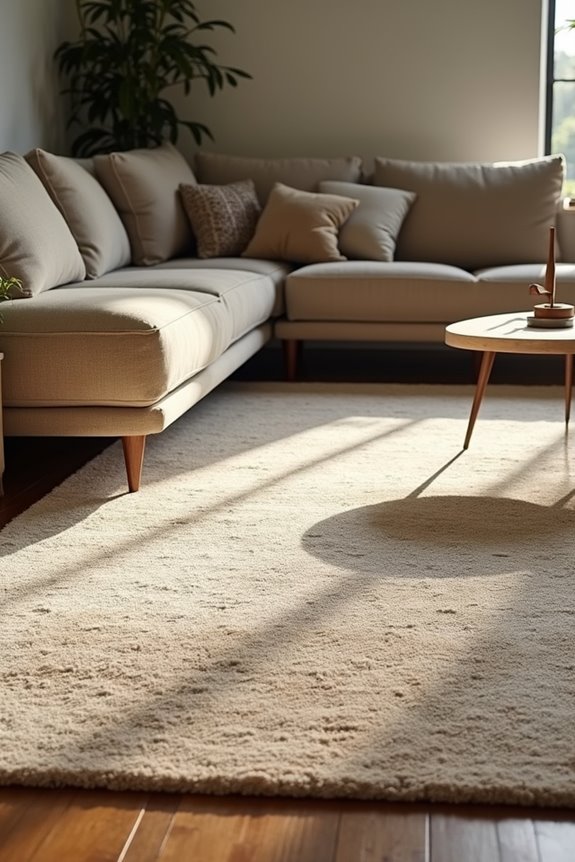
Should your sofa’s back legs touch the rug, or can they float in the air?
You’ve got two solid approaches. The Front Legs Only method works great for mid-sized rooms—position front legs on the rug while back legs hover off it. This creates an anchored footprint without feeling cramped.
The All Legs On strategy grounds everything completely. You’ll need a larger rug size, like 9×12 or 10×14, so all four legs of your main seating sit fully on it. This approach suits bigger rooms and delivers a polished look.
Here’s the catch: undersized rugs create a disconnected, postage-stamp effect. Center your rug under seating and extend it enough to cover front legs across both sofas and chairs. Pick whichever method matches your space and furniture layout best.
Open-Concept Spaces: Go Bigger
Why do open-concept living rooms feel disconnected when you use a small rug? Larger rugs anchor multiple seating groups and create natural zones. When you go bigger, you’re investing in your home’s flow and comfort.
Consider these benefits:
- Create clear zones – A 9×12 or 10×14 rug visibly separates your living area from the dining space without physical walls.
- Ground your furniture – Larger rugs let you position major pieces with front legs on the rug, establishing stability and intentional arrangement.
- Define the space – You’ll maintain 18–36 inches of visible floor between rug and wall, which actually makes rooms feel more balanced and connected.
Open-concept living demands bigger thinking. Use those larger rug sizes, and your spaces will feel like they belong together.
The 6–8 Inch Spacing Rule
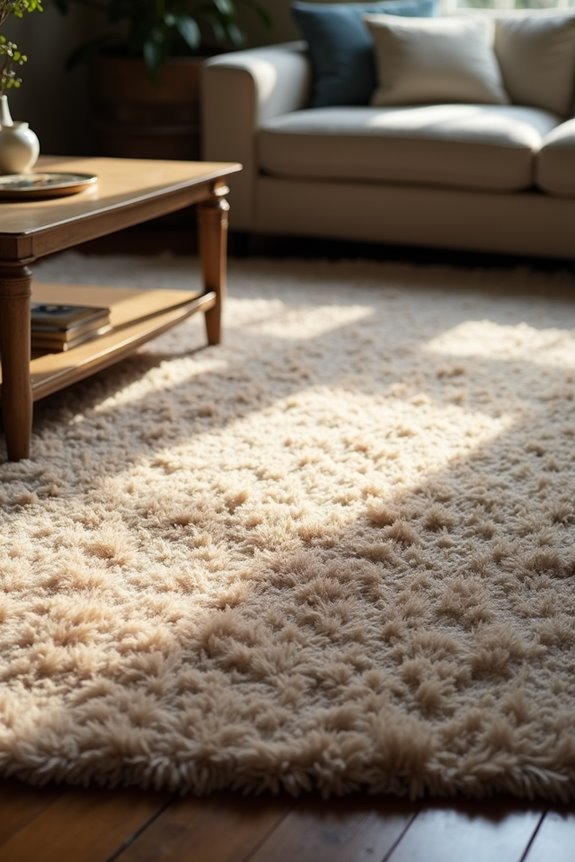
When you’re sizing your big living room rug, you’ll want to follow the 6–8 inch spacing rule—basically, leave that much visible floor between your rug’s edge and the wall so the room doesn’t feel cramped. This spacing works with your furniture placement too, since you’re keeping your sofa and chairs comfortably positioned on the rug without pushing everything right up against the walls. You’ll also use this rule to plan your walkways, making sure people can move through the room naturally while the rug provides balance and openness.
Ideal Spacing Measurements
Ideal Spacing Measurements
Getting your rug spacing right matters between a room that feels intentional and one that looks like furniture just happened to land there.
You’ll want to master these key measurements:
- Edge-to-wall clearance: Keep 10–18 inches between your rug’s edge and the walls, extending to 24 inches if you’ve got room. This creates balance and shows off your floor.
- Rug margin from furniture: Maintain 6–8 inches of visible rug edge beyond your seating. This grounds your furniture without making the space feel cramped or disconnected.
- Walkway space: Leave 30–36 inches between large pieces so you can move freely. You’re creating pathways that make your room feel open and welcoming.
These measurements work together to give your space a planned appearance.
Sofa Placement Balance
Now that you’ve got the overall spacing down, let’s zoom in on the most important piece in your living room—your sofa. You’ll want to nail the sofa placement by using the classic 6–8 inch rule. This means leaving about 6 to 8 inches between your rug edge and the front of your seating. Here’s what makes this work: your sofa’s front legs should rest comfortably on the rug while the back legs hang slightly off. This creates that grounded feeling you’re after. Think of it like anchoring your conversation space. If you’ve got multiple seating pieces, apply this same floor clearance principle to each one. You’re creating visual harmony and making sure everything looks deliberate, not randomly scattered.
Walkway Coverage Standards
Why does the spacing around your rug matter so much? It’s a practical asset for creating a balanced, welcoming living room that actually functions well.
The 6–8 inch spacing guideline keeps your space feeling organized and deliberate. Here’s what you’re really doing:
- Creating a furniture anchor – Your seating stays grounded on the rug, defining the conversation zone
- Maintaining clear pathways – You’ll preserve clear walkways throughout your room, preventing that cramped feeling
- Framing your arrangement – Visible floor around your rug’s edges showcases your design choice
This rug placement strategy works well with larger sizes like 9×12 or 10×14. You’re not just following rules; you’re building a space where guests feel comfortable moving around. Your room has proper circulation, traffic flows naturally, and everything feels deliberate. That’s what respecting that spacing guideline accomplishes.
When to Skip Standard Sizes and Go Custom
What if your living room doesn’t fit the mold?
Standard sizes won’t always work, and that’s totally okay. Custom rugs solve this problem by giving you exact room fit without compromising your space’s proportion and flow. You’ll skip cutting off beautiful patterns or awkwardly cramming furniture around ill-fitting edges.
Custom rugs solve standard size problems by providing exact room fit without compromising your space’s proportion and flow.
Here’s what you need to do:
Measure twice. Use a tape measure and lay painter’s tape on your floor to test dimensions. This simple step prevents expensive mistakes.
Consider your layout. Irregular spaces, great rooms, and unique dimensions all benefit from custom options. You’re not locked into standard measurements anymore.
Explore alternatives. Vintage or non-traditional dimensions maintain visual balance while accommodating your specific needs. Custom broadloom carpeting even works for wall-to-wall coverage or extended entryway runners.
Your space deserves a rug that actually fits it.
Measuring Your Room Before Buying a Big Rug
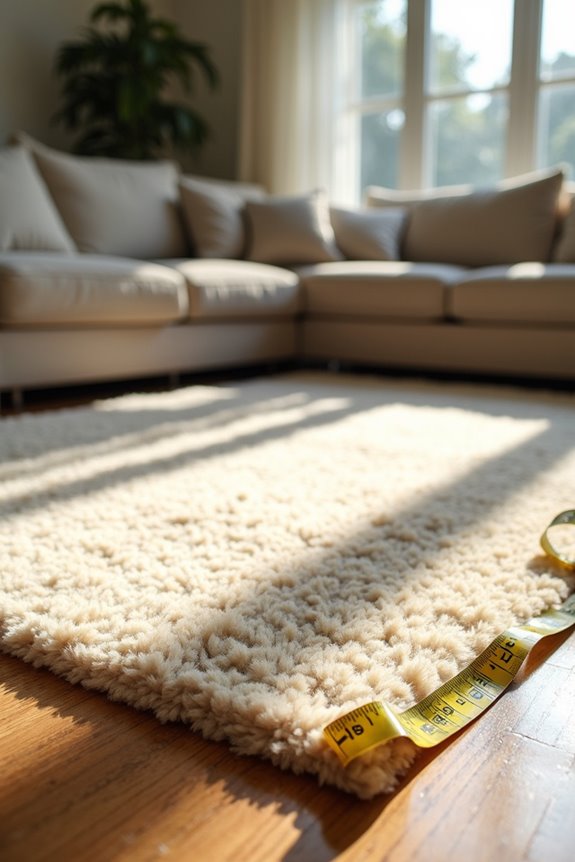
Getting the right rug size starts with understanding your actual space, not just picking a number that sounds big.
Start your measuring room process by grabbing a tape measure and checking your living room dimensions wall-to-wall. Then, visualize your rug placement using painter’s tape to outline where your rug will sit. This simple trick helps you see exactly how your living room rug will look before spending money.
Next, follow these rug sizing guidelines:
- Leave 6–8 inches of visible floor between the rug edge and walls for balance
- Position front sofa legs on the rug while maintaining 18–24 inches clearance to furniture
- Create 30–36 inches of walkway space between large pieces for comfortable flow
These measurements will help your rug work with your seating arrangement.
Rug Sizing Mistakes That Backfire
You’ll want to avoid buying a rug that’s too small—going below 8×10 feet in a large living room creates what designers call the postage stamp effect, where your furniture looks awkwardly scattered instead of pulled together. On the flip side, choosing a rug that’s way too big can overwhelm your space and make the room feel cramped, especially if you don’t leave that essential 18–24 inches of space between the rug’s edge and your walls. Stick with standard sizes like 9×12 or 10×14 feet, and you’ll achieve the right balance between grounding your furniture and keeping your room feeling open.
The Postage Stamp Effect
Ever walked into a living room and felt like the rug was just sitting there, lonely and disconnected from everything else?
That’s the postage stamp effect—and you’ll want to avoid it. This happens when your rug sizing is too small for the floor space, making the room feel broken up instead of cohesive. Here’s how to prevent this misstep:
- Choose the right scale: Standard sizes like 8×10, 9×12, or 10×14 feet ground most living rooms effectively.
- Leave breathing room: Aim for 6–8 inches of visible floor around the rug edges so it doesn’t look cramped.
- Use scale visualization: Lay painter’s tape on your floor to test dimensions before buying.
Position furniture thoughtfully—front legs on the rug, back legs off, or all legs on for larger spaces.
Overwhelming Room Proportions
| Rug Size | Room Feel | Flow Impact | Better Choice |
|---|---|---|---|
| 12×16 ft | Cramped | Blocks movement | 10×14 ft |
| Too much coverage | Suffocating | Reduces walkways | Smaller option |
| Wall-to-wall effect | Claustrophobic | Awkward traffic | Proper spacing |
| Excess fabric | Heavy | Disrupts zones | Right fit |
Leave 18–24 inches of visible floor between your rug’s edge and walls. This spacing keeps your space feeling open. When selecting sizes for your layout, measure twice. Anchor furniture strategically—all four legs on the rug works best in larger areas, creating defined zones without cramping your actual living space.
Awkward Layouts: Fireplaces, Angles, Great Rooms
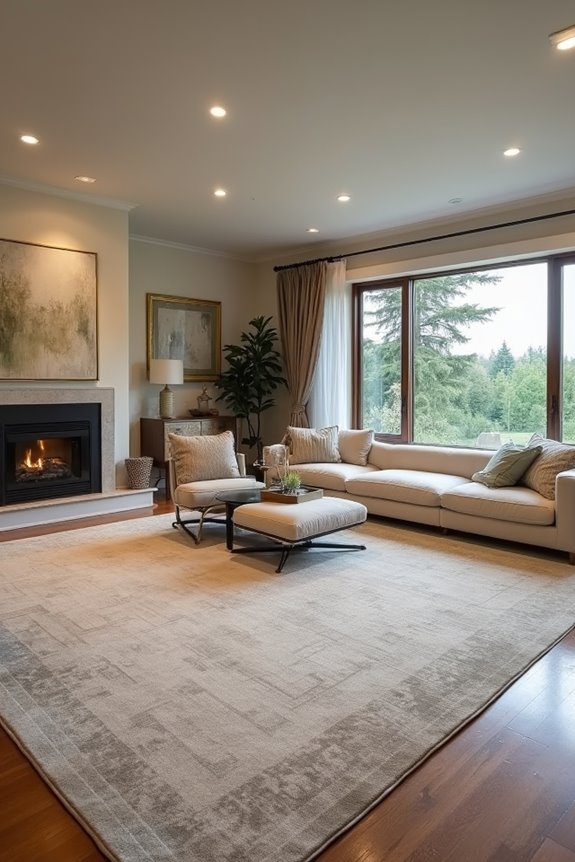
What makes a living room tricky to decorate? Fireplaces, angled walls, and awkward corners can throw your design plans off balance. But you have workable solutions.
- Choose an oversized rug (9×12 or 10×14) to anchor your great room and unify multiple seating areas with all legs sitting on the rug.
- Layer rugs strategically by placing a smaller rug on top of a larger base rug, which handles irregular layouts and accommodates difficult geometry.
- Leave breathing room of 18–36 inches between your rug’s edge and the walls, keeping proportions feel natural even in awkward spaces.
Use painter’s tape to preview dimensions before buying. Custom or non-standard sizes work perfectly for unusual configurations. You’ll create a space that feels designed just for you.
How Rug Placement Changes the Room
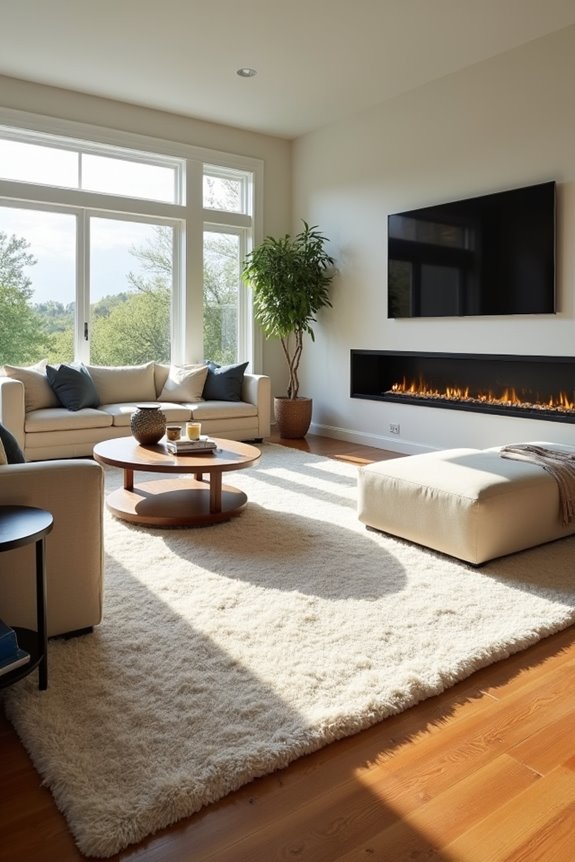
Once you’ve picked the right rug size for your space, where you actually place it matters just as much. Smart rug placement organizes your room layout by anchoring your seating and creating distinct zones.
Start by centering your rug under the sofa, letting about three inches of front furniture legs rest on it. This seating anchoring technique grounds your conversation area without overwhelming the room. For bare floor margins, aim for 18–24 inches of visible flooring between your rug edges and walls—this breathing room keeps things balanced and prevents a cramped feeling.
In larger spaces, push all furniture legs onto the rug for maximum anchoring power. These strategic placement choices don’t just look better; they actually make your living room feel more organized and deliberate.
Positioning Furniture on Your Big Rug
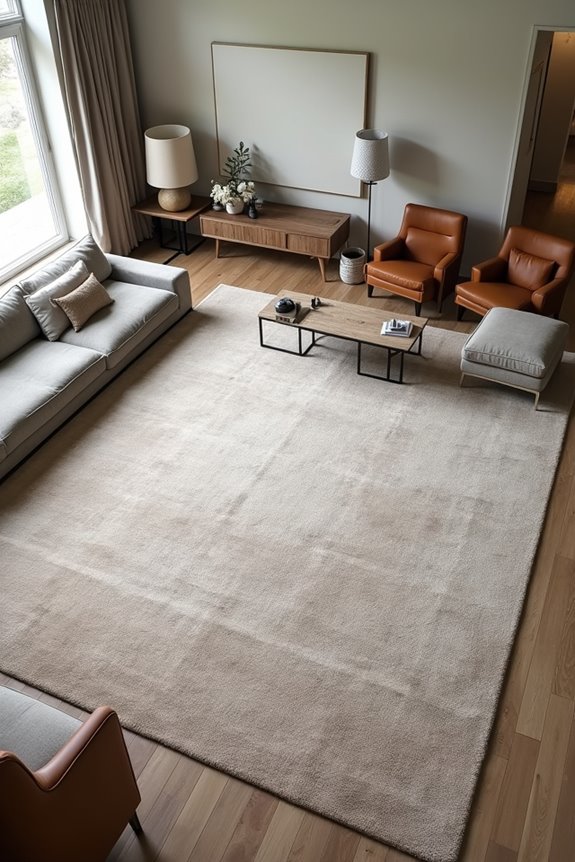
Positioning Furniture on Your Big Rug
How you arrange your furniture on a big rug affects whether a room feels pulled together or scattered.
- Center your seating arrangement on the rug so the sofa and chairs anchor the space naturally, extending the rug under front legs by at least 3 inches.
- Keep most furniture on the rug in large rooms by choosing rug sizing like 9×12 or 10×14, with all four legs staying grounded for a unified appearance.
- Use the front legs only rule for mid-sized layouts, positioning front legs on the rug while rear legs rest off, which frees up floor space without sacrificing style.
Positioning furniture on your large room rug this way creates balance and a sense of belonging in your space.
Comparing Rug Prices and Quality
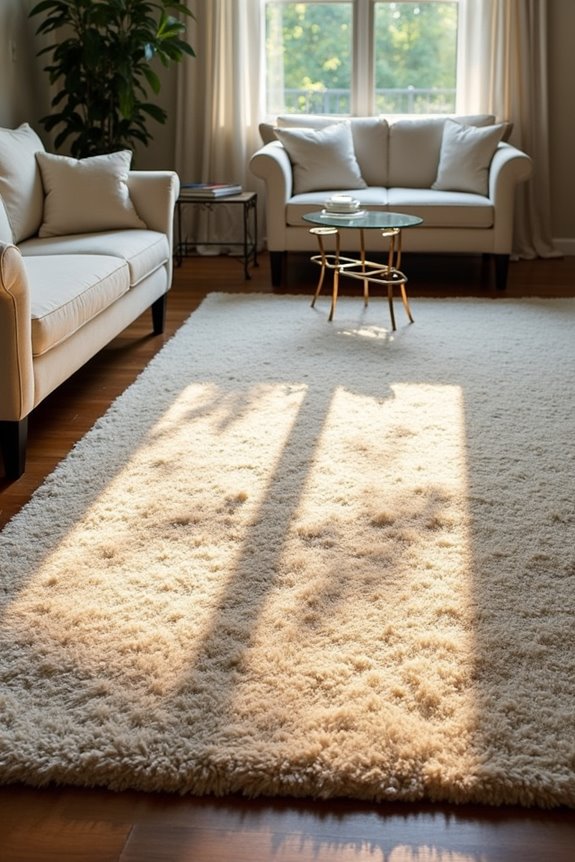
Now that you’ve figured out the perfect placement for your furniture, the next question is probably about cost. When comparing rug prices and quality, you’ll find that size matters, but it’s not everything. Larger rugs like 9×12 and 10×14 feet cost more simply because they use more material. However, the fiber quality and construction can actually impact value more than rug sizes alone.
| Rug Size | Price Range | Best For |
|---|---|---|
| 8×10 | $300–$800 | Standard spaces |
| 9×12 | $500–$1,200 | Large living room rugs |
| 10×14 | $800–$2,000+ | Spacious rooms |
Standard large rug sizes offer good value for most homes. You’re investing in quality that lasts when you choose durable fibers. Don’t assume bigger always means better—focus on price versus quality balance instead.