
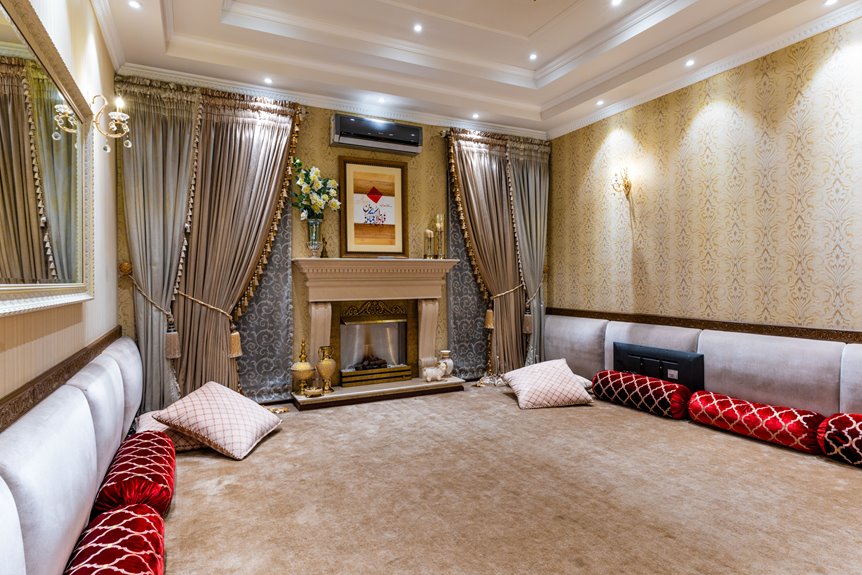
You’re spelling it right when you write “living room” as two separate words—that’s the standard everywhere. Think of it like “dining room” or “family room”—they’re all two words. You won’t capitalize it in regular sentences (“I love my living room”), but you will in titles (“My Living Room Makeover”). It’s not “livingroom” or “living-room”—just two words, plain and simple. If you want to know why some rooms merged into one word while others didn’t, there’s plenty more to discover.
The Correct Spelling: Two Words, Not One
Ever wondered if you should write “living room,” “livingroom,” or “living-room”? You’re not alone in questioning this. The correct answer is straightforward: use two words, “living room,” every single time.
Many people mistakenly combine these words into one or add a hyphen, but that’s simply incorrect. “Living room” is a compound noun made from the gerund “living” and the noun “room.” Style guides across the board recommend keeping them separate.
In your everyday writing, keep it lowercase: “the living room is comfortable.” However, when you’re labeling it in headings or titles, capitalize it: “Living Room.” This simple rule applies consistently whether you’re writing emails, essays, or home descriptions. Remember: two words, no hyphen, no exceptions.
Why “Bedroom” Is One Word, “Living Room” Isn’t
Why do some room names stay as one word while others split into two? You might wonder why “bedroom” became one solid word while “living room” stayed separate. The difference comes down to how language evolves. “Bedroom” combined because people used it so frequently that it naturally fused together over time. “Living room,” however, resisted this merger. Since it contains an “-ing” ending, it follows a different pattern—these compounds typically stay open with space between words. Think of it like this: your brain recognizes “bedroom” as one complete concept, but “living room” maintains its two-word identity because that’s how English handles “-ing” compounds. Understanding this quirk helps you spell it correctly every single time.
Common “Living Room” Spelling Mistakes

You’ll commonly see “living room” misspelled as one word—”livingroom”—even though dictionaries don’t support it. Another mistake you might encounter is the hyphenated version, “living-room,” which looks official but isn’t standard in modern English. While regional differences exist in how people casually write it, you’re safest sticking with the two-word form that style guides and dictionaries recommend.
Livingroom As One Word
Why do people combine them? It feels natural to merge words together, especially compound nouns. However, “living room” resists this temptation in English.
| Spelling | Correct? | Usage |
|---|---|---|
| living room | ✓ Yes | All formal and casual writing |
| livingroom | ✗ No | Never acceptable |
| living-room | ✗ No | Nonstandard in modern English |
| Living Room | ✓ Yes | Titles and labels |
| LIVING ROOM | ✓ Yes | Signs and caps |
Remember: stick with two words, separated by a space. You’ll maintain correctness every single time you reference your living room.
Living-Room With Hyphenation
A dash between “living” and “room” is tempting—it looks official, right?—but it’s actually a common mistake you’ll want to avoid. You’re not alone if you’ve written it this way. Many people add hyphens thinking it’ll make their writing stronger. Here’s why that hyphen doesn’t belong in “living room”:
- Standard English doesn’t hyphenate this common compound noun
- Hyphens typically appear in adjective phrases, not standalone nouns
- Your readers expect the two-word form, so alternatives confuse them
When you use “living-room,” you’re going against established spelling rules that most style guides follow. Stick with the two-word form—”living room”—and you’ll match what you see in published books, magazines, and professional writing.
Regional Spelling Variations
Now that we’ve covered why the hyphenated version doesn’t work, let’s look at what actually happens across different English-speaking regions. You might worry that spelling changes depending on where you live, but here’s the good news: it doesn’t. Whether you’re in America, Britain, Australia, or Canada, “living room” stays exactly the same—two separate words, no hyphens, no exceptions.
Sure, you’ll hear British folks say “lounge” instead, and Americans sometimes call it a “family room,” but those are different words entirely, not alternate spellings. The two-word format for “living room” is genuinely universal across English-speaking countries. So you can confidently write it the standard way everywhere, knowing you’re getting it right.
Should You Capitalize “Living Room”?
Capitalization rules for “living room” depend on where and how you’re using it. You’ll want to follow these guidelines:
Capitalization rules for “living room” depend on where and how you’re using it—follow context-specific guidelines for clarity.
- In regular text: Use lowercase—”we’re decorating the living room this weekend.”
- In headings or titles: Capitalize it—”Living Room Design Tips.”
- On floor plans or labels: Use title case—”Living Room” to identify that specific space.
Think of it like other rooms in your home. You wouldn’t capitalize “kitchen” or “bedroom” in everyday sentences, right? Same rule applies here. The only exception is when you’re treating “living room” as a proper name or using it formally in documents.
This consistency helps you look polished and professional, whether you’re writing emails, decorating blogs, or real estate listings. Once you understand this pattern, you can use it correctly every time.
What Else Can You Call It? (Lounge, Family Room, Sitting Room)
That relaxing space where you kick back with your family? You’ve got options for what to call it. Depending on where you live, you might hear “lounge” in British English or “family room” in American homes. “Sitting room” works well too, especially in formal settings. Here’s what each term means:
| Term | Region | Best Used | Vibe |
|---|---|---|---|
| Living Room | Everywhere | General use | Neutral, standard |
| Lounge | British English | Casual spaces | Relaxed, modern |
| Family Room | American English | Homes with kids | Warm, gathering |
| Sitting Room | Formal contexts | Traditional homes | Elegant, formal |
Your choice depends on your house design and how you use the space. Pick whichever term fits your home and community.
Is “Living-Room” With a Hyphen Ever Correct?
You might’ve noticed some people throw a hyphen between “living” and “room,” and you’d be forgiven for wondering if that’s actually a thing.
Here’s the truth: hyphenated forms aren’t standard in modern English. Here’s why you should stick with two words:
- Style guides disagree – Major authorities like AP and Chicago Manual of Style recommend the two-word form exclusively
- It confuses readers – Hyphens signal compound modifiers, but “living room” works perfectly fine as two separate words
- Professional writing avoids it – Newspapers, magazines, and websites consistently use “living room” without hyphens
You won’t find “living-room” in dictionaries as an accepted spelling. While you might spot it occasionally in informal writing or regional variations, it’s simply not correct. Stick with “living room”—two words, no hyphen. You’re making the right choice every time you write it that way.
Why “Living Room” Has Stayed Two Words Since 1787
The two-word form “living room” has maintained consistent usage in English for over two centuries. Compounds ending in “-ing” naturally resist becoming single words—they simply don’t align with typical English patterns. Since 1787, when the term first appeared in dictionaries, writers have kept these two words separate. English spelling rules favor open compounds over closed ones in these cases. The form “ingroom” never appeared in historical texts because it failed to gain acceptance. Hyphenated versions like “living-room” remain uncommon compared to the standard two-word form. Writing “living room” as two words reflects centuries of established usage and represents the standard choice in proper English convention.
Living Room vs. Lounge vs. Family Room
When you’re deciding which term to use, you’ll find that regional preferences matter more than you’d think—British English speakers tend to favor “lounge,” while Americans typically stick with “living room.” Your choice between these terms and “family room” also depends on what you’re describing: a formal gathering space, a casual media hangout, or a multipurpose social area. Understanding these distinctions helps you communicate more clearly, whether you’re writing a real estate listing, decorating a home, or just chatting with friends about your space.
Regional Usage And Preferences
How’d you guess that “living room” means something slightly different depending on where you live?
You’re not imagining it. Regional preferences shape how people talk about this common space:
- British English speakers typically say “lounge” instead of living room, making it their preferred term for relaxation areas
- North Americans prefer “living room” for formal settings, but swap it for “family room” when emphasizing casual, media-focused gatherings
- Casual contexts might use “den” or “sitting room,” depending on your local community’s habits
When you’re talking with friends or family across different regions, these variations matter. Your living room might be someone else’s lounge. Knowing these preferences helps you connect better with people everywhere. Pick the term that fits your area, and you’ll sound right at home.
Contextual Applications And Distinctions
| Term | Best Use | Formality Level |
|---|---|---|
| Living room | General conversation, formal writing | Neutral |
| Lounge | British English, relaxed settings | Casual |
| Family room | Marketing, home descriptions | Friendly |
You’ll find “living room” works everywhere—real estate listings, furniture ads, everyday chat. It’s your safest bet. “Lounge” feels more sophisticated but sounds odd in American contexts. “Family room” emphasizes togetherness, perfect when describing that gathering space.
The living room label matters most in formal documents and professional settings. Choose what matches your audience and comfort level. You’re not wrong with any option—just pick what fits your situation.
Spelling Rules for Similar Compound Nouns
Why do some compound nouns stay separate while others join together or get a hyphen? You’re not alone if you’ve wondered this. English spelling rules for compound nouns can feel confusing, but patterns do exist.
Consider these common examples:
- Two separate words: living room, dining room, bedroom (used frequently)
- Single words: bedroom, bathroom, kitchen (merged through repeated usage over time)
- Hyphenated forms: mother-in-law, well-being (showing relationships between word parts)
The key difference? “Living room” stays separate because it’s a newer compound noun that hasn’t fully merged. Other terms like “bedroom” combined long ago through constant use. Older, more familiar compounds tend toward single words, while newer ones remain spaced. When you’re writing, follow established dictionaries as your guide. They reflect how English speakers actually use these terms daily.
What the Major Style Guides Actually Say
The good news: major style guides all agree on this one. You’re not imagining things—they all say “living room” as two separate words, not one or hyphenated. The Oxford English Dictionary backs this up, showing the two-word form has been standard since at least the 1700s. When you’re writing, you’ll want to follow these conventions:
| Style Guide | Format | Usage |
|---|---|---|
| AP Stylebook | living room | Running text |
| Chicago Manual | Living Room | Titles/headings |
| MLA | living room | Standard writing |
| APA | living room | Lowercase sentences |
| Oxford | living room | Two words always |
This consistency makes your job easier. You can confidently write “living room” knowing you’re following professional standards across the board.
4-Step Checklist: Catching “Living Room” Spelling Errors

4-Step Checklist: Catching “Living Room” Spelling Errors
Once you know the rule—two words, always—it’s time to put your proofreading skills to work. You’ll catch those sneaky mistakes before they embarrass you in front of others who care about clear writing.
Follow these steps:
- Read your text aloud, paying attention to how “living room” sounds as two distinct beats
- Search your document for “livingroom” and “living-room” to flag incorrect versions
- Check your style guide to confirm capitalization rules for your specific context
After you’ve completed these checks, you’re part of a community that values precision. You’ve learned the standard, two-word form that editors and style guides support everywhere.
Is “Living Room” Spelled Differently in British English?
You might wonder if the British swap out their spelling rules when it comes to “living room,” but here’s the good news: they don’t. Whether you’re reading a British magazine or an American one, you’ll find the same two-word spelling across both regions, though the British do sometimes use the term “lounge” to describe that comfortable space instead. So you can drop the worry about regional spelling differences—”living room” stays consistent whether you’re in London or Los Angeles.
British Spelling Conventions
Does British English treat “living room” any differently than American English does? Not really. You’ll find that British spelling conventions align closely with American usage here. Let me break down what you need to know:
- Two words remain standard – British English uses “living room” as two separate words, just like American English
- Hyphens aren’t acceptable – You won’t see “living-room” in formal British writing
- Capitalization follows normal rules – Use lowercase in sentences, but capitalize in titles or floor plan labels
The bottom line? You’re safe spelling it as two words whether you’re writing for a British or American audience. No regional confusion here. This consistency makes it easier for you to communicate clearly without worrying about which English variety you’re using.
Regional Terminology Differences
How much does British English really differ from American English when regarding naming rooms in your home? You might think the answer’s complicated, but here’s the truth: it’s not. Both British and American speakers use “living room” as two words, making spelling consistent across the Atlantic.
| Region | Primary Term | Spelling |
|---|---|---|
| American English | Living room | Two words |
| British English | Living room | Two words |
| Both Dialects | Lounge (casual) | Two words |
You’ll notice that while Brits casually say “lounge” in conversation, they still write “living room” as two separate words in formal contexts. Floor plans and official documents follow the same standard. So you’re safe using “living room” anywhere—no regional confusion needed.