Start by picking one focal point—fireplace, TV, or window—then arrange your furniture facing it instead of pushing everything against walls. Float your sofa a few feet out, center a large rug underneath to ground the space, and position chairs opposite each other for conversation. Add layered lighting from different angles, hide cables in baseboards, and test your layout for a full week before making permanent changes. There’s much more to discover about balancing two focal points and solving tricky room shapes.
Choose Your Living Room’s Focal Point to Anchor the Layout
Ever notice how your eyes naturally travel to the same spot whenever you walk into a room?
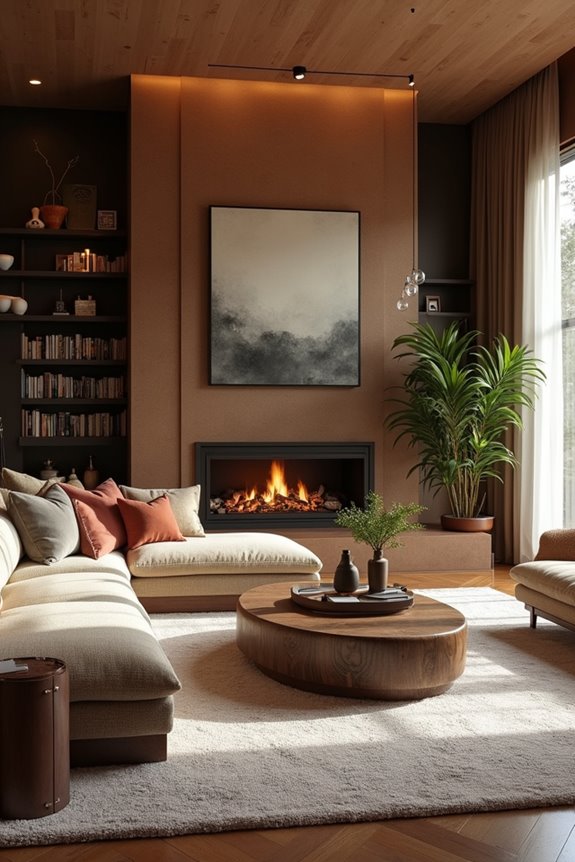
That’s your focal point, and it’s the anchor for your entire seating layout. Choose one primary focus—a fireplace, TV, or large window—and arrange your furniture to face it. This creates natural conversation flow and gives everyone a clear visual anchor.
Choose one primary focal point—fireplace, TV, or window—and arrange furniture to face it for natural conversation flow.
Once you’ve identified your focal point, position your sofa opposite it. Then center your rug on the fireplace to tie everything together and create a balanced, cohesive arrangement. This deliberate rug placement grounds your seating area and improves room flow.
Don’t push furniture against walls; instead, float your pieces to give the space breathing room. Leave white space around and behind furniture for depth. This approach makes your room feel thoughtful and organized.
Float Your Furniture Away From Walls for Better Flow
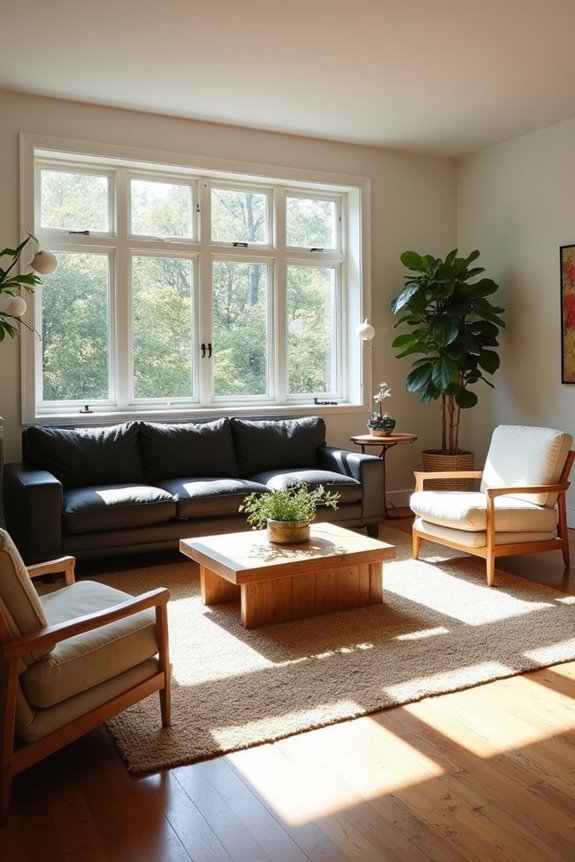
Pushing your sofa against the wall might seem like the logical move—it saves space, right?—but it actually does the opposite of what you want. When you float your furniture away from walls, you create breathing room and improve room flow throughout your space.
Start by positioning your seating arrangement a few feet from the wall. Center a rug underneath to anchor the group together. This rug anchoring prevents your setup from feeling scattered and disconnected.
With floating furniture, you’ll notice the space feels more inviting and connected to activity points like your fireplace or TV. You can even add extra chairs around the rug to encourage conversation from multiple angles.
Remember: maintain clear circulation paths around your pieces, and check that you have adequate lighting and power outlets nearby.
Pick the Right Rug to Center Your Seating Area
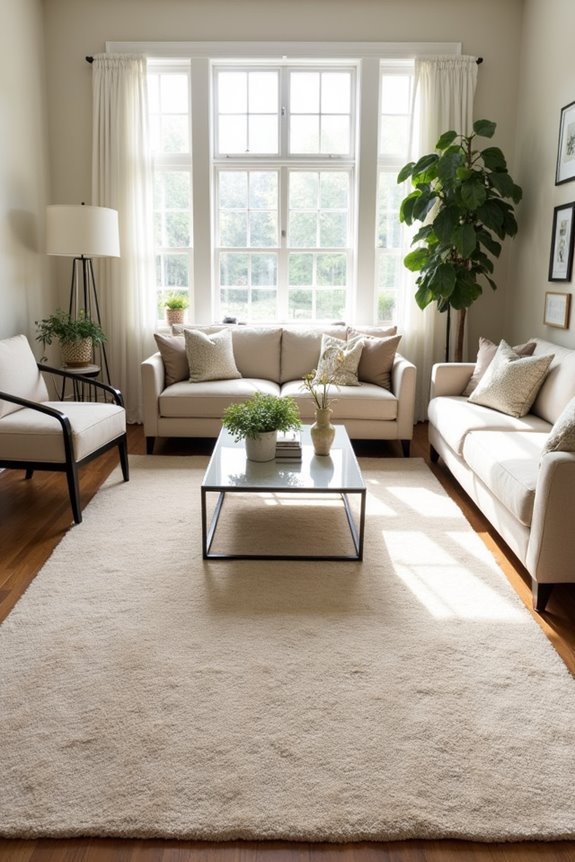
Now that you’ve pulled your furniture away from the walls, you need something to tie everything together—and that’s where your rug comes in.
Your rug anchors the seating area and creates a defined zone for conversation. Choose one large enough so all main furniture—your sofa plus chairs—fits on it, with at least 24–30 inches extending beyond. This balance prevents chairs from sitting awkwardly on bare flooring.
For your room layout, place the rug perpendicular to the room’s width if you’ve got a long space. This approach emphasizes your room and keeps things from feeling cramped.
Pick a muted color with low-contrast patterns. This reduces visual noise and keeps focus on your focal points, whether that’s a fireplace or TV. A unified rug brings together your floating furniture into one cohesive, deliberate seating area.
Arrange Seating to Encourage Conversation Around Your Focal Point
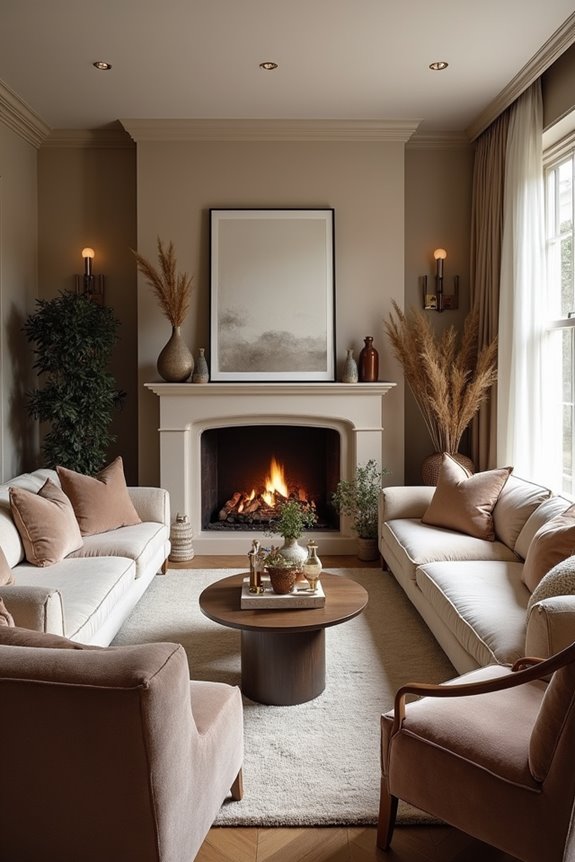
Once you’ve anchored your rug, move your sofa away from the walls and float it toward the center of the room to create a real conversation hub. Pull your seating pieces inward so they naturally face your fireplace or TV, then position two chairs on either side of the rug to balance out the space and make cross-table chats actually happen. This setup breaks that awkward “everyone staring at the wall” vibe and creates a living room where people want to gather.
Float Your Seating Away
Pull your sofa away from the wall, and you’ll create a living room centered around conversation. This floating seating arrangement establishes a central gathering area that naturally brings people together, making your layout feel purposeful and welcoming.
Start by centering your rug on the fireplace, which anchors your floating furniture and keeps it in place. Add two chairs opposite each other in front of the sofa, creating balanced sightlines.
| Element | Purpose | Placement |
|---|---|---|
| Rug | Anchors floating arrangement | Center on fireplace |
| Chairs | Multi-directional seating | Opposite sides |
| Side tables | Functional surfaces | Flanking chairs |
Leave white space behind your seating to maintain flow. Consider a slim console behind the sofa for storage without cluttering your open layout. You’ve created a gathering spot that works for how you live.
Center Your Rug Strategically
Where should your rug actually go if you want people to naturally face each other instead of staring at the back of someone’s head?
Center your rug on the fireplace. This creates a unifying anchor for your seating area and sets the stage for real conversation. When you float your sofa away from walls, a centered rug grounds everything and makes the space work better.
Choose the right rug size. A larger rug defines your entire seating zone and improves proportions in longer rooms. Position one chair on each side of the rug in front of the sofa for balanced sightlines.
This arrangement respects both your focal points—the fireplace and TV—while encouraging people to actually look at each other. You’ll create a gathering spot where conversation naturally flows instead of feeling forced.
Split Awkward Room Shapes Into Two Distinct Zones
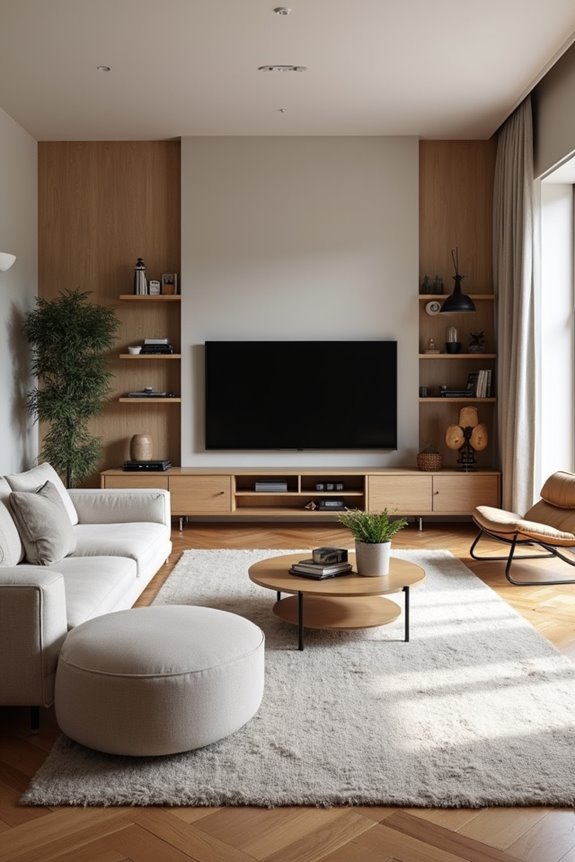
Create your primary zone near the fireplace or TV with a larger rug anchoring the seating area. Float your sofa away from walls to open up breathing room. Then establish a secondary, lighter zone at the opposite end.
Bind these zones together using bookshelves, consoles, or media cabinets along the dividing line. This furniture arrangement maintains separation without blocking sightlines.
Position chairs and occasional tables to face both focal points. Test your layout for a week, watching circulation flow from entryways carefully. Adjust placement as needed to maintain easy movement between zones. You’ve created two purposeful spaces from one awkward stretch.
Add Layered Lighting: It’s Essential When Your Sofa Floats
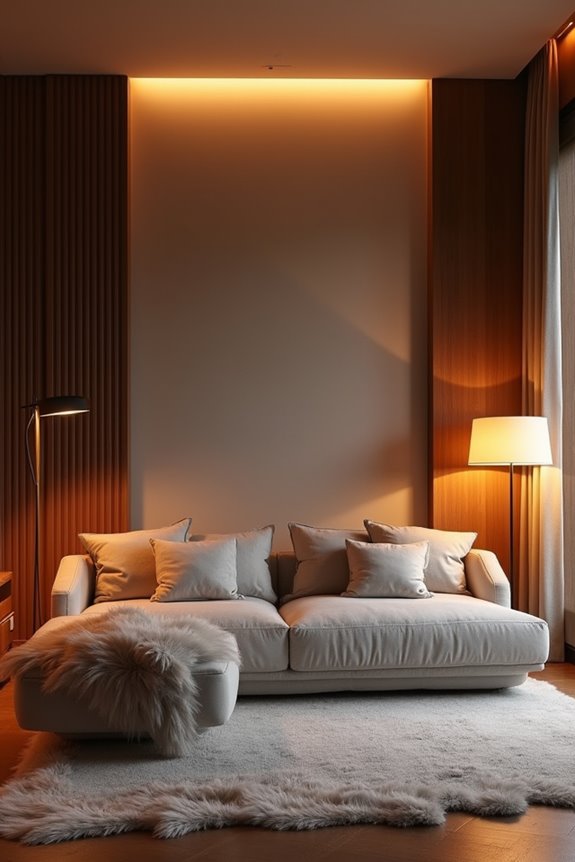
When your sofa floats in the middle of the room, standard wall lighting will leave dark shadows behind and around your furniture, making the space feel incomplete. You’ll need to layer your lighting—combining floor lamps, table lamps, and wall sconces at different heights—to brighten the seating area from multiple angles while highlighting your focal points like the TV or fireplace without creating glare. The practical challenge is figuring out where to plug in all these lamps and keeping them flexible enough to move as you rearrange, which is why battery-powered options and smart outlet placement become valuable solutions.
Lighting Challenges With Floating Furniture
Floating your sofa away from the walls looks great, but it can leave you sitting in shadows—literally. When your seating floats in the middle of the room, your existing ceiling fixtures and lamps don’t reach all the spots you need them to. You’ll notice uneven lighting across your seating area, with dim corners and bright spots that create an uncomfortable viewing experience.
Here’s what you’re really dealing with:
- Shadows gathering behind and beside your sofa
- Ceiling lights that miss the back zones entirely
- Glare on your TV screen from overhead fixtures
- Cold spots that make reading difficult
Fix this by adding floor lamps, wall sconces, and outlets strategically around your floating furniture. Using multiple lighting layers—combining ambient, task, and accent lighting—gives you comfortable visibility everywhere you sit.
Strategic Placement For Ambient Glow
How do you banish those annoying shadows that follow your floating sofa around the room? Strategic lighting placement is your answer. Layer your lighting by combining floor lamps, wall sconces, and table lamps throughout your layout. This approach creates warm ambiance without depending entirely on overhead ceiling lights.
Position a floor lamp or wall light on the sofa’s outer edge to illuminate your seating area effectively. Use dimmable fixtures with warm white bulbs (2700–3000K) that shift smoothly into evening hours.
Don’t forget about safety. Install lighting near pathways and entry points along your rug’s edges to guide circulation naturally. Consider plug-in task lights near reading corners, keeping cords hidden to preserve your open feel. This thoughtful combination works with your floating arrangement to create a cohesive, welcoming space where shadows disappear and comfort is evident.
Electrical Considerations And Solutions
Why does your floating sofa setup need special attention to electrical planning? Because your couch isn’t tucked against a wall anymore, you’ll need smart power management to keep everything running smoothly.
Here’s what you’ll want to tackle:
- Install 2-3 electrical outlets near your seating area so lamps, chargers, and devices stay within reach without tangled cords everywhere.
- Use dimmable fixtures with separate lighting controls for ambient, task, and accent layers that you can adjust based on your mood.
- Add backlighting behind or near windows to reduce screen glare and create depth in your floating layout.
- Consider smart lighting systems that let you save scene presets like “TV time” or “reading,” so you’re not constantly adjusting switches.
This approach makes your floating sofa a functional gathering spot.
Balance a Fireplace and TV When Both Demand Attention
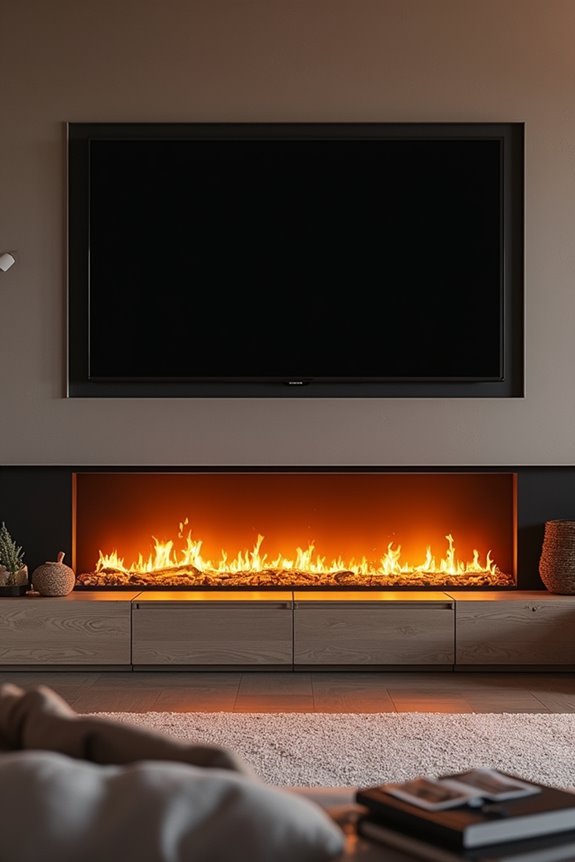
When you have a fireplace and a TV, your living room needs to accommodate two focal points—and this works well with proper planning. Position your TV on a wall opposite or adjacent to your fireplace so you’re not twisting your neck like an owl. Float your seating away from walls to create a centered conversation zone facing both focal points. Lower a high-mounted TV by adjusting your fireplace top, aligning the screen with seated eye level. Add a slim media cabinet beneath the TV for balance and storage.
| Strategy | Benefit | Best For |
|---|---|---|
| Opposite wall placement | Direct viewing sightlines | Most living rooms |
| Adjacent positioning | Space-saving option | Smaller rooms |
| Lowered TV height | Comfortable viewing angle | High ceilings |
| Floated seating | Conversation-friendly layout | Open spaces |
| Secondary chairs | Multiple viewing angles | Larger gatherings |
Reduce Visual Clutter With Hidden Storage and Concealed Cables
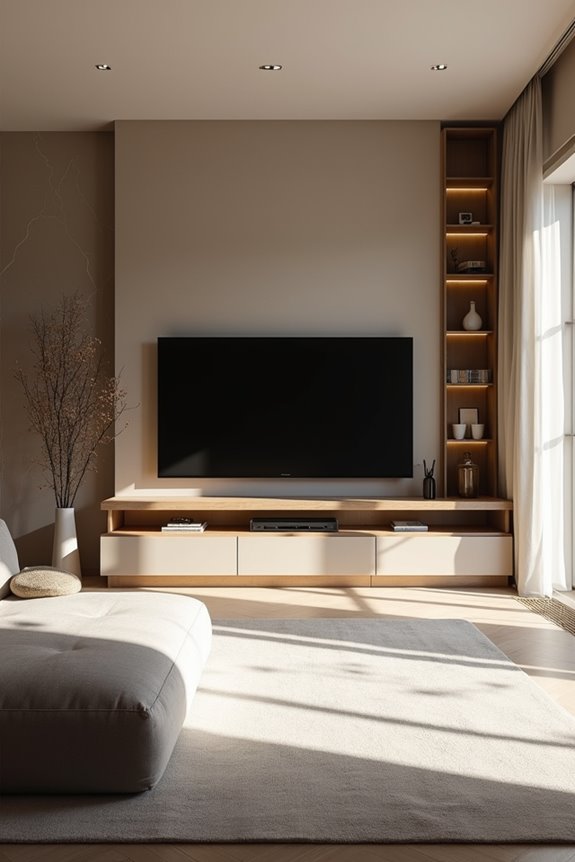
A tangle of cords behind your TV and magazines stacked on every surface can make even a stylish living room feel chaotic. You can create a calm, organized space by hiding what clutters your view.
Smart decluttering starts with these practical solutions:
Smart decluttering begins with practical solutions: hidden cables, furniture storage, wall-mounted cabinets, and wireless charging to transform chaos into calm.
- Route cables invisibly using in-wall raceways or cord-hiding channels along baseboards
- Install furniture with storage—ottomans with lift-top lids or benches under windows—to tuck blankets and remotes away
- Choose wall-mounted cabinets with doors to conceal electronics while keeping devices accessible
- Use wireless charging pads and labeled cable clips to minimize visible cords
Hidden storage makes your living room more peaceful and organized. When you invest in concealed cables and smart furniture solutions, you’re building a space where everyone can relax comfortably. Your living room becomes a functional retreat, not a storage unit.
Test Your Layout for At Least a Week Before Committing
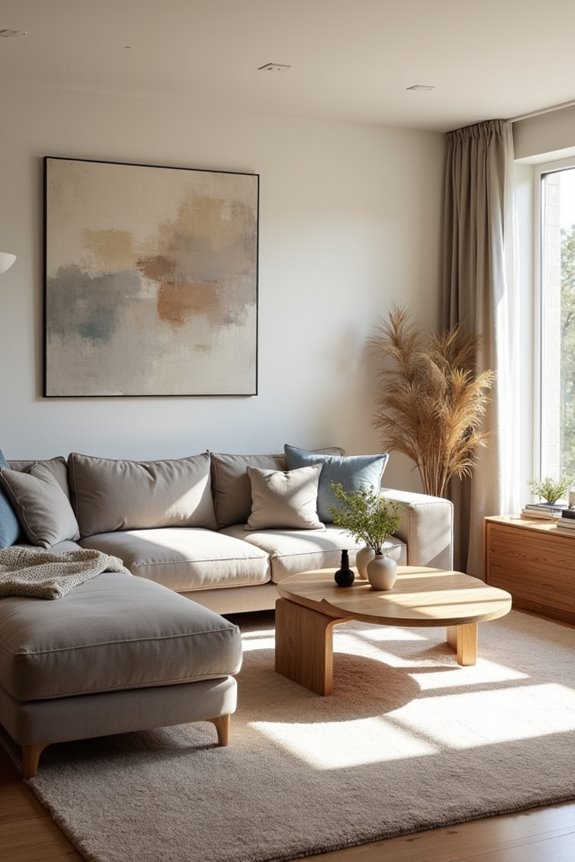
How tempting it is to arrange your living room furniture once and call it done—but this is the key point: what looks good in theory might feel awkward when you’re actually living in the space.
Before you drill holes or buy permanent pieces, test your layout for seven full days. Notice how your seating arrangement works during real activities: reading, watching TV, conversations. Does your rug size work well in the space, or does it feel off?
Watch your room flow carefully. Can you move freely from the front door to the kitchen? Do chairs block sightlines to the TV or fireplace? Track whether traffic bottlenecks happen near your sofa.
After a week, you’ll know exactly what works. This patience saves you from expensive mistakes and regret.