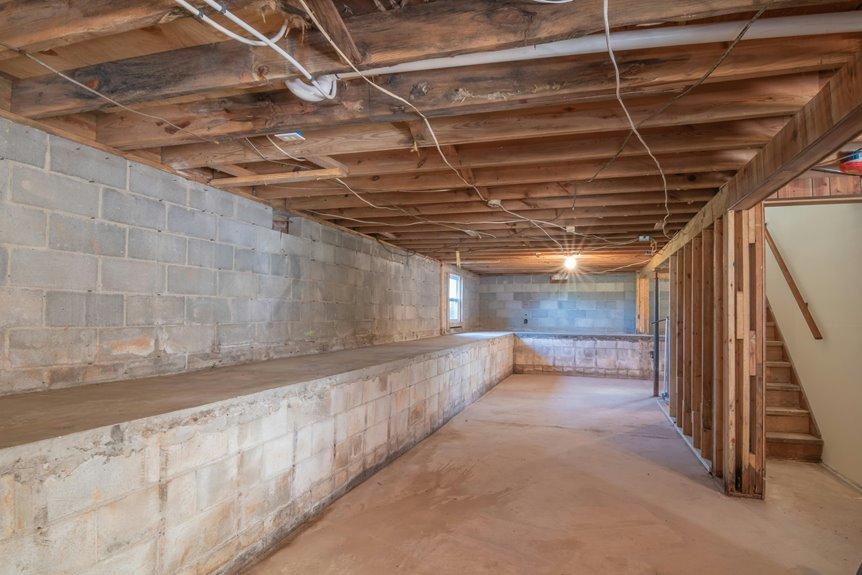
You should aim for 30–50% relative humidity in your basement to keep it healthy and comfortable. Below 30%, you’ll notice creaky floors and gaps around windows. Above 50%, mold becomes a real concern. This range protects your belongings, foundation, and breathing environment. Use a digital hygrometer to monitor levels, and set alerts at 30%, 50%, and 60%. Stick to this range, and you’ll prevent major problems before they start.
The Ideal Basement Humidity Range: 30–50
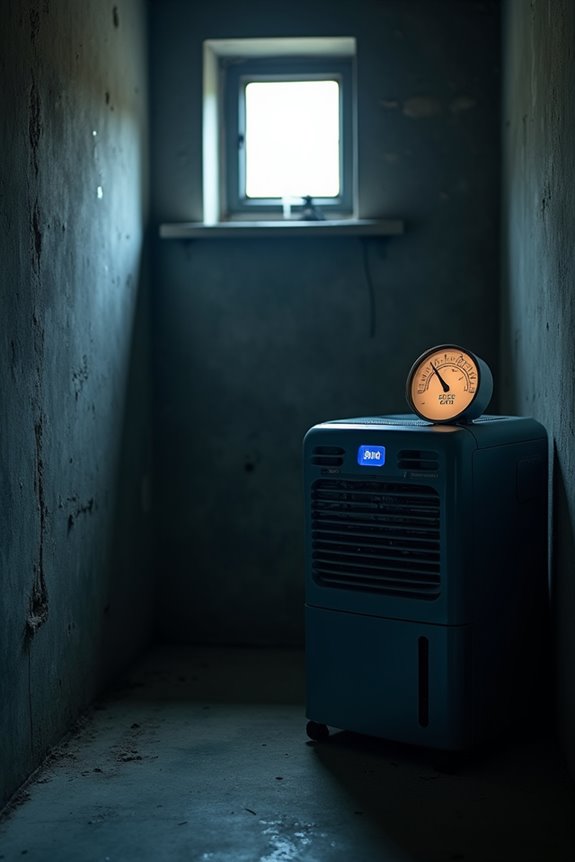
Ever wonder why your basement sometimes smells musty or feels sticky? You’re likely dealing with humidity problems. Your basement humidity should stay between 30–50% relative humidity—that sweet spot keeps your space healthy and comfortable.
Why does this range matter? When humidity climbs above 50%, mold prevention becomes urgent. Mold and mildew love damp environments and can damage your stored items and foundation. Drop below 30%, and you’ll notice gaps forming around windows and doors, plus annoying creaky floors.
The ideal range of 30–50% protects everything you care about. Your belongings stay safe, your foundation stays strong, and you breathe easier.
To maintain this balance year-round, grab a digital hygrometer with alerts. These handy devices monitor your basement humidity constantly, letting you catch problems before they start.
Why Basements Struggle With Excess Moisture
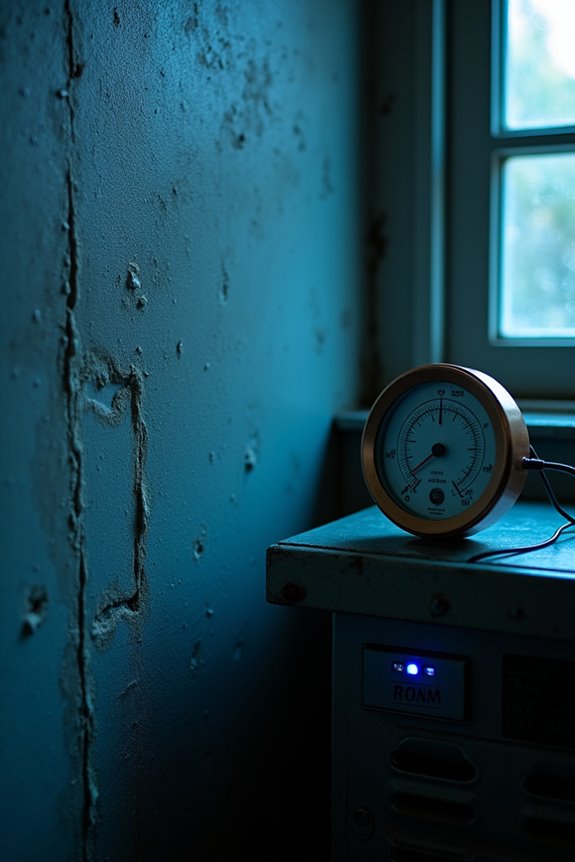
Your basement struggles with excess moisture for three main reasons: its underground location traps humid air since it’s cut off from sunlight and fresh air, poor ventilation and airflow let that moisture build up without escape, and water seeps through your foundation and cracks as soil around your home pushes moisture inward. You’re naturally working against gravity and nature, which means understanding these sources helps you tackle the problem effectively. The good news is that once you know what’s working against you, you can take targeted steps to fight back.
Underground Location Traps Moisture
Why does moisture seem to love basements so much? Your underground location is basically a moisture magnet. Being below ground means you’re surrounded by soil that holds water, and that moisture naturally seeps toward your basement. You’ve also got fewer windows and less airflow down there, so humid air gets trapped and builds up. Poor drainage around your foundation makes things worse—water collects near your walls and pushes through cracks. Even your window wells can leak if they’re not properly maintained. All this trapped moisture creates the perfect breeding ground for mold and basement humidity problems. The solution lies in understanding why your basement struggles with moisture. Focus on improving drainage, sealing cracks, and increasing airflow to combat that stubborn moisture.
Poor Ventilation and Airflow
How much air actually moves through your basement on any given day? If you’re like most homeowners, probably not enough. Your basement has fewer windows and less natural airflow than upstairs, which means outdoor moisture seeping through soil and cracks builds up inside. Without adequate circulation, you’re trapped with high basement humidity levels that won’t budge.
Daily activities make it worse. Washing clothes, showering, and cooking release moisture directly into your basement air. Since ventilation can’t efficiently remove it, your relative humidity climbs above the ideal 30%–50% range.
Here’s the truth: opening windows won’t always help, especially on humid days. You’ll likely need mechanical ventilation or dehumidification to actually control basement humidity. It’s a worthwhile investment for your home’s health.
Water Seepage Through Foundation
Ever wonder why your basement feels damp even when it hasn’t rained in days? Your foundation’s the culprit. Water seeps through cracks and poorly sealed walls, bringing soil moisture directly into your space. This foundation moisture constantly raises your humidity level, creating that sticky feeling you can’t shake.
| Problem | Cause | Solution |
|---|---|---|
| Cracks in walls | Foundation settling | Seal with caulk |
| Poor basement drainage | Inadequate gutters | Install proper downspouts |
| Seepage near corners | Foundation gaps | Apply waterproof coating |
| Rising dampness | Soil contact | Improve grading away from home |
You can’t stop water seepage entirely, but you can manage it. Check your foundation quarterly for new cracks. Improve your basement drainage by ensuring gutters direct water at least 4-6 feet away. These steps reduce foundation moisture and help maintain a healthier humidity level throughout your basement.
Use a Dehumidifier to Control Basement Humidity
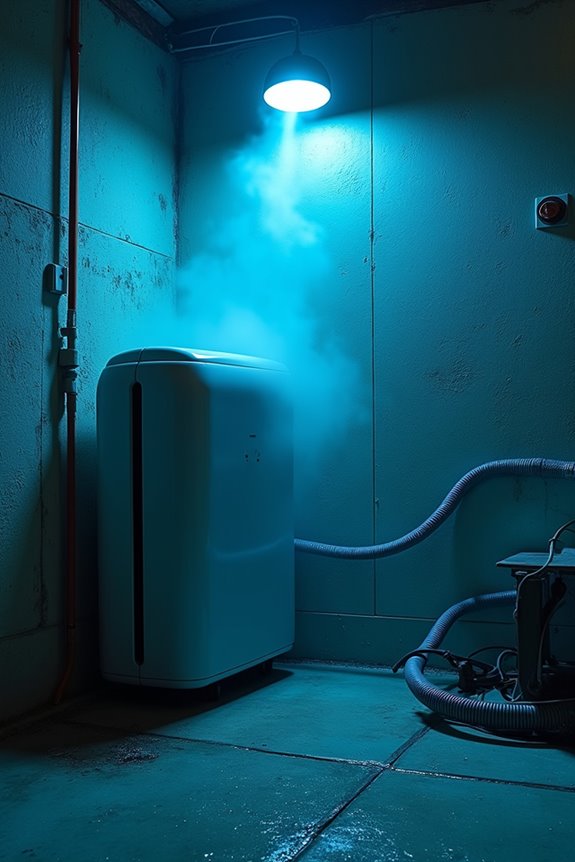
You’ll want to pick between refrigerant and desiccant dehumidifiers, making sure yours is sized right for your basement’s square footage and can handle your moisture load. Set your dehumidifier to maintain 30–50% humidity, using automatic controls so it doesn’t over-dry your space, especially during muggy summers. If your basement runs cold or sits below 60°F, grab a basement-rated unit since standard models perform poorly in chilly conditions.
Types Of Dehumidifiers
Types Of Dehumidifiers
When it comes to picking the right dehumidifier, understanding what’s actually available makes the whole process less intimidating. You’ve got two main dehumidifier types to consider for your basement humidity needs.
Refrigerant models pull moisture out while cooling your space—basically doing double duty. They work great in warmer basements but can struggle when temperatures drop below 60°F.
Desiccant dehumidifiers use silica-based technology and perform better in cold basements, making them ideal if you’re dealing with chilly conditions. They’re your go-to for RH control in those frigid spaces.
You’ll also find whole-house systems that integrate with your home’s existing setup for comprehensive basement humidity management. Choose based on your basement’s temperature and your target 30–50% RH range.
Sizing And Tank Capacity
How do you know what size dehumidifier actually fits your basement? Match your dehumidifier capacity to your space’s square footage and moisture problem. A 1,000–1,500 square foot basement typically needs a 50–70 pints-per-day unit, while larger spaces demand higher capacity models.
Your tank size matters too. Smaller tanks mean frequent emptying—annoying if you’re busy. Choose a model with a tank capacity matching your basement’s typical moisture load, or better yet, select one with a continuous drainage setup using a drain hose.
Don’t overlook your drainage setup. Connect your dehumidifier to a sump pump, floor drain, or window for continuous operation. This prevents constant tank emptying and lets your unit run continuously, keeping humidity stable without extra work from you.
Maintaining Optimal Humidity Levels
Once you’ve picked the right dehumidifier size for your space, the next step is keeping your basement’s humidity in the sweet spot. You’ll want to maintain your humidity range between 30%–50%, which keeps moisture under control without overdrying the air. Use a dehumidifier with automatic humidity controls—they’ll do the heavy lifting for you. Grab a hygrometer to monitor basement humidity regularly, then adjust your dehumidifier settings as needed. During winter, aim toward the lower end around 30%–40% to prevent condensation on windows. In summer’s sticky months, you can relax slightly to 55%–60%. If outdoor humidity spikes, boost your dehumidifier’s power with better ventilation and sealed gaps. This balanced approach keeps your basement comfortable while protecting it from moisture damage.
Open Basement Windows Daily to Exchange Humid Air
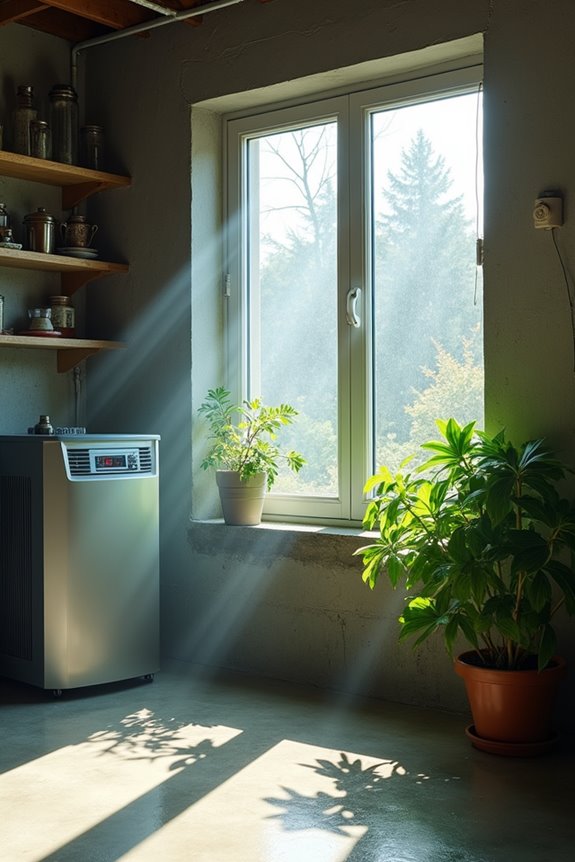
One simple way to fight basement humidity is to crack open your windows for 10–15 minutes each day. You’ll swap that heavy, damp indoor air for fresher outdoor air, which naturally helps with humidity control. The best times? Early morning and evening, when you’ll notice less condensation building up on your windows and walls.
Here’s the catch: this outdoor air exchange only works when outside air is actually drier than what’s inside your basement. On muggy days, you’ll want to skip window opening and rely on dehumidification instead.
Can’t always time it right? No problem. Whole-house ventilation systems help regulate airflow when conditions aren’t ideal. Just remember to seal gaps afterward—you don’t want moisture sneaking back in and undoing your progress.
Seal Drafts and Gaps to Prevent Moisture Intrusion
Where does moisture sneak into your basement? Through gaps around windows and doors, cracks in walls, and hidden drafts you’ve probably never noticed. You’ll want to seal these entry points to stop moisture intrusion before it raises your humidity levels.
Start by applying weatherstripping around window and door frames—it’s an easy fix that works well. Next, use caulking or sealants to close wall cracks, even small ones. These simple steps reduce how much humid outside air enters your space.
Draft sealing isn’t glamorous, but it’s important. When you limit external moisture from sneaking in, your dehumidifier and sump pump don’t have to work as hard. You’re basically building a barrier that helps you maintain that ideal 30–50% humidity range without constant fighting.
Fix Leaks Before They Worsen Humidity Problems
Sealing gaps stops outside moisture from entering, but what about water that’s already inside your basement? That’s where fixing leaks becomes essential for your humidity control strategy.
Leaking pipes and foundation cracks don’t just create wet spots—they actively feed moisture into your air, making your dehumidifier work overtime. You’ll want to address these problems quickly because:
- Leaks increase humidity levels faster than you’d expect, undoing your other efforts
- Mold prevention depends on it—moisture-loving mold thrives in damp conditions
- Basement drainage improves when you seal the source, not just the symptoms
- Structural damage accelerates if you wait, costing you more later
Don’t ignore dripping sounds or damp patches. Get a professional assessment to pinpoint leak sources accurately. Catching problems early protects your home’s health and keeps your basement environment stable.
Insulate Basement Walls to Lower Humidity
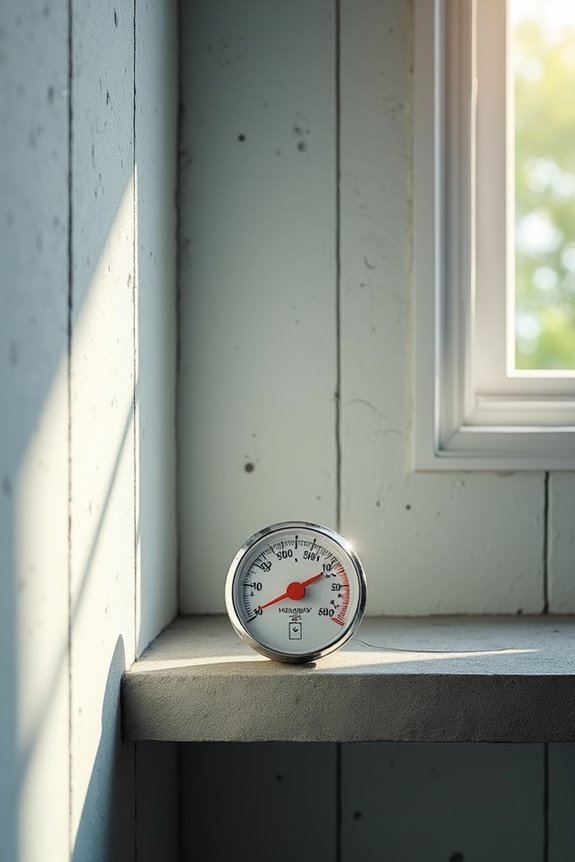
Have you noticed condensation beading up on your basement walls when it’s cold outside? That’s your cue to consider insulation. When you insulate basement walls, you’re raising their surface temperature, which stops moisture from collecting on chilly concrete. This upgrade addresses humidity problems effectively.
Here’s why it works: insulation creates a barrier that keeps walls warmer. Warmer surfaces mean less condensation, leading to better moisture control overall. Your basement will feel drier and more comfortable.
For best results, pair wall insulation with waterproofing and proper drainage. Together, these steps maintain that ideal humidity range of 30–50%. Plus, you’ll enjoy improved energy efficiency and fewer temperature swings. It’s a practical investment that improves your basement environment while protecting your home’s foundation.
Replace Old Windows and Wells to Control Basement Humidity
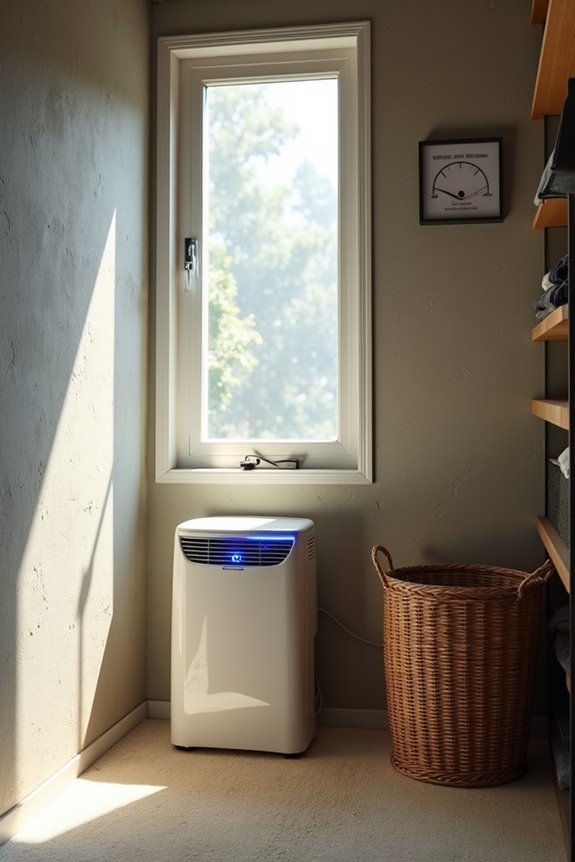
Your old windows might be letting in more moisture than you realize—poor insulation and worn seals create cold surfaces where humidity condenses, making your basement damper and harder to control. Modern energy-efficient windows, paired with repaired or replaced window wells, work together to block water intrusion from the outside and reduce those sudden humidity spikes. By addressing these structural weak points, you’ll stop moisture problems at their source and give your dehumidifier a much easier job.
Why Old Windows Fail
Because they’re often single-paned and poorly sealed, old windows can’t stop moisture from sneaking into your basement the way modern ones do. Over time, windows failure becomes inevitable, and you’ll notice real problems developing.
Here’s what happens with old windows:
- Seals crack and deteriorate, letting humid air slip through gaps
- Single panes don’t insulate well, causing condensation on cold surfaces
- Frames warp and shrink, creating uneven gaps around edges
- Drainage issues develop when window wells collect debris and water
These failures create the perfect setup for moisture intrusion in your basement. When water pools around your foundation, humidity climbs quickly—sometimes hitting 60% or higher. That’s well above the healthy 30–50% range you want to maintain. Replacing those aging windows with modern, insulated versions paired with cleaned drainage systems keeps moisture out and your basement dry.
Modern Window Installation Benefits
Swapping out those drafty old windows for new, energy-efficient ones is one of the smartest moves you can make to control basement humidity. Modern windows seal better, so you’ll stop moisture from sneaking in through cracks and gaps. They also help regulate temperature, which keeps your basement drier and less inviting to mold.
When you upgrade your window wells too—and add a cover—you’re preventing water from pooling around basement openings. This combination of new windows and better drainage keeps moisture out where it belongs: outside.
Better sealing means fewer drafts, less moisture intrusion, and humidity levels that stay right where you want them: between 30–50%. That’s the optimal range for a healthy basement.
Window Well Drainage Solutions
Have you noticed water pooling around your basement windows after a heavy rain? That’s your window wells telling you they need attention. Proper drainage around these areas is necessary for keeping your humidity levels between 30–50%.
Here’s what you can do:
- Install window well covers to block water and debris from entering
- Clear debris regularly from wells to maintain free water flow
- Grade soil away from your foundation to direct water elsewhere
- Check downspouts to ensure they’re directing water at least 4–6 feet away
When you address drainage issues, you’re preventing water buildup that raises humidity and promotes mold. You’re also reducing moisture control problems before they start. Taking these steps now protects your basement and keeps your home healthier for everyone living there.
Maintain Your Sump Pump and Drainage Systems
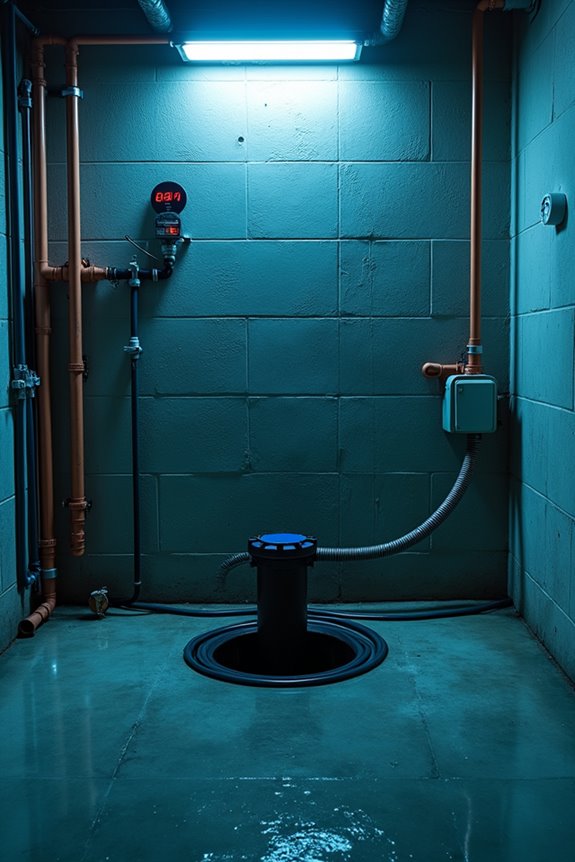
Why does your sump pump matter so much? It’s your basement’s hardest worker, constantly battling moisture and humidity. You’ll want to inspect it regularly and confirm it’s got a working battery backup for power outages. A functional sump pump directly supports your moisture control efforts.
Keep your sump pit sealed tight—this prevents moisture from creeping into your basement. Schedule professional checks every 3–4 months to catch wear or drainage problems early. Make sure discharge lines extend away from your foundation, directing water safely outside and reducing basement humidity.
If persistent moisture lingers despite these efforts, consider adding waterproof coatings or interior French drains. These upgrades work alongside your sump pump, creating a comprehensive moisture control plan that keeps your space dry and comfortable.
Install Exhaust Fans to Boost Basement Airflow
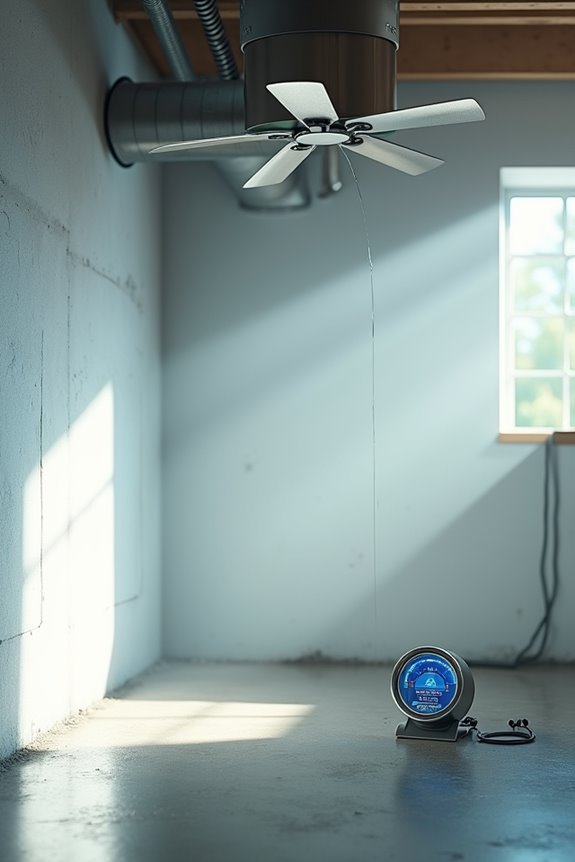
Once you’ve got your sump pump running smoothly, it’s time to tackle airflow—because even the best drainage system can’t do all the difficult work alone. Exhaust fans boost basement ventilation by removing moist air and exchanging it with drier outdoor air. This directly supports your humidity control efforts.
Here’s how to make them work for you:
- Run fans during high humidity or moisture-producing activities like showering and laundry
- Vent fans directly outside to prevent moist air from recirculating back inside
- Clean fan housings and ducts regularly to maintain airflow and prevent mold
- Pair fans with dehumidifiers and sealed gaps for complete moisture management
Think of exhaust fans as your basement’s lungs. They’re essential partners in keeping humidity levels balanced and your space healthier.
Use Chemical Absorbents for Fast Moisture Reduction
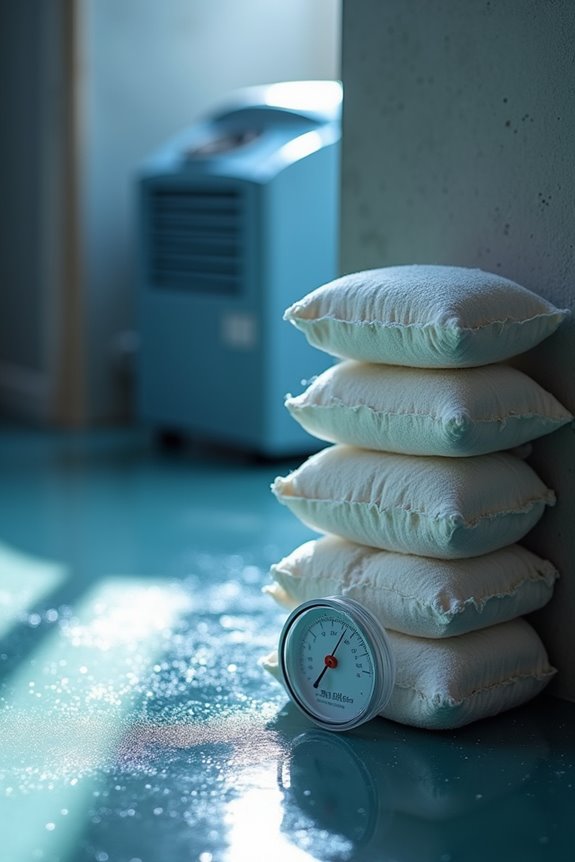
You can use chemical absorbents like silica gel to quickly soak up moisture in your basement without needing to plug anything in or run a dehumidifier. These desiccants work by binding water vapor from the air around them, which makes them suitable for small spaces or as a backup method, though they’ll eventually get saturated and need replacing. For the best results in keeping your whole basement dry long-term, you’ll want to combine these absorbents with active solutions like fans or dehumidifiers rather than relying on them alone.
Types Of Chemical Absorbents
How quickly do you need to dry out that damp basement corner? You’ve got options for chemical absorbents that work fast without electricity or complicated equipment.
When you’re choosing humidity control solutions, consider these popular types:
- Silica gel – absorbs moisture rapidly and works great in small spaces
- Calcium chloride – pulls water from the air effectively in larger areas
- Activated charcoal – removes odors while reducing moisture at the same time
- Desiccant dehumidifiers – combine chemical absorbents for steady, long-term performance
Each option tackles moisture reduction differently based on your basement’s size and needs. Silica gel works well in closets or tight corners. Calcium chloride handles bigger spaces better. You’ll need to replace or recharge these absorbents regularly as they reach capacity. Think of them as your humidity control team members—reliable helpers that keep working until they’re exhausted.
Application And Effectiveness
Most chemical absorbents work best when you think of them as spot treatments rather than whole-basement solutions. You’ll get fast results in small, enclosed spaces—like under stairs or in closets—where they quickly lower humidity levels. Place silica gel packets or similar absorbers in your moisture hotspots, then monitor effectiveness with a humidity monitor to track real improvements.
Here’s the practical truth: chemical absorbents don’t remove bulk moisture or fix leaks, so they won’t replace a dehumidifier for serious basement humidity problems. Instead, use them alongside your moisture management strategy. Check your humidity monitor weekly, replace saturated packets promptly, and supplement with dehumidification when needed. This combination approach keeps your basement comfortable while addressing what’s actually causing excess moisture in your space.
Signs Your Basement Humidity Is Too High
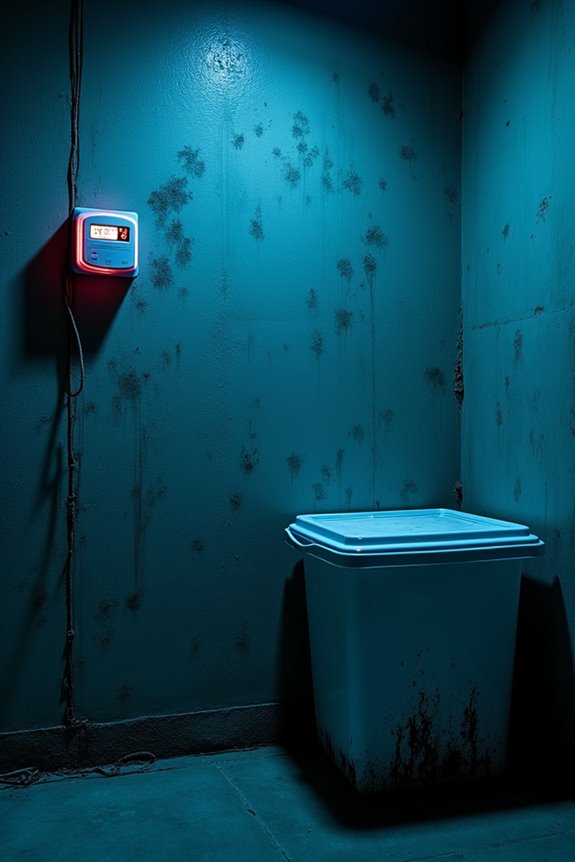
When does a basement stop feeling pleasantly cool and start feeling uncomfortably damp? You’ve probably noticed it—that sticky, unwelcoming air that signals high humidity.
Several warning signs tell you it’s time to act:
- Musty odors that won’t disappear, even after cleaning
- Condensation collecting on windows and cold pipes
- Visible mold growth on walls or ceilings
- Peeling paint and discolored surfaces
You might also spot rust forming on metal objects or water stains creeping across walls. These aren’t just cosmetic issues. High humidity creates the perfect environment for mold growth, which can trigger allergies and respiratory problems for you and your family.
A digital hygrometer gives you real-time readings, helping you catch problems early. If you’re seeing these signs, a dehumidifier could be your next best option.
Why High Humidity Damages Your Health and Home
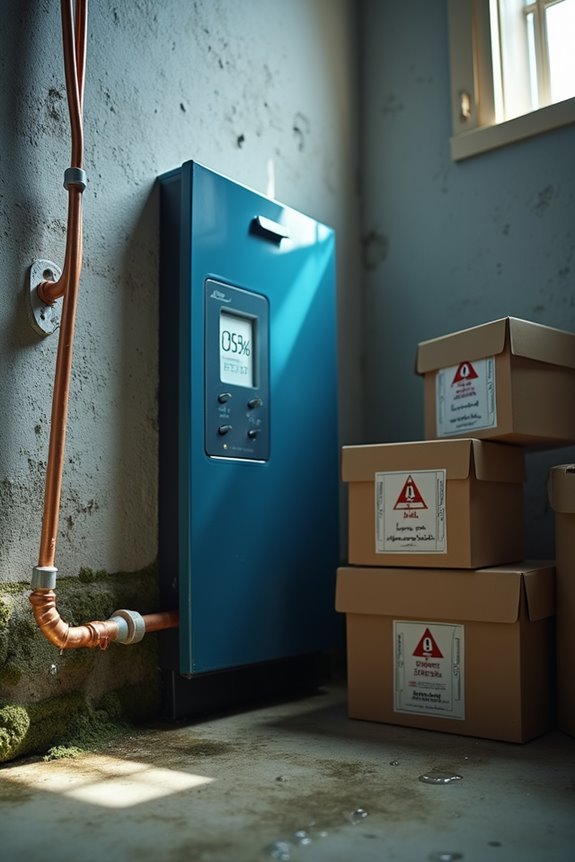
Those warning signs you’ve spotted aren’t just annoying—they’re your basement’s way of telling you something’s seriously wrong.
Your basement’s warning signs aren’t just annoying—they’re telling you something’s seriously wrong.
High humidity damages both your home and health in ways you might not realize. When moisture lingers, it creates the perfect environment for mold growth, which spreads rapidly above 60% humidity. You’re breathing in mold spores that worsen allergies and respiratory infections—not ideal when you’re just trying to relax downstairs.
Your home suffers too. Prolonged moisture causes wood rot, rust on metal items, and water stains that make everything look dingy. Your cooling system works overtime but stays ineffective, while musty odors settle into fabrics and furniture.
The good news? Moisture removal through dehumidifiers and proper ventilation addresses these problems directly, improving your indoor air quality and protecting your family’s health and your home’s structure at the same time.
The Hidden Costs of Air That’s Too Dry
You’ve probably heard plenty about basement moisture problems, but here’s what catches most homeowners off guard: air that’s too dry causes real damage too. When your indoor humidity drops below 30%, you’re inviting trouble into your home.
Dry air attacks your basement in sneaky ways:
- Wooden structures crack and gap, creating spaces around windows and doors
- Floor boards creak loudly, signaling internal stress from moisture loss
- Your skin and airways dry out, making colds easier to catch
- Belongings deteriorate faster, from furniture to electronics
Balancing moisture with a dehumidifier and proper ventilation prevents both mold growth and excessive dryness. Aim for 30–50% humidity to avoid condensation issues while keeping your space comfortable. You’re protecting your family’s health and your home’s structure simultaneously—that’s smart investing.
Track Humidity With Digital Monitors and Detectors
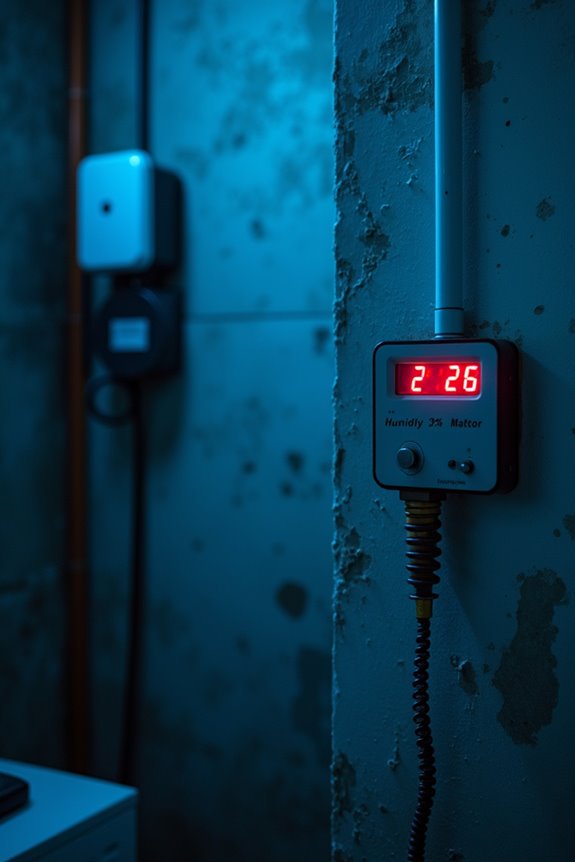
How do you know if your basement humidity is actually in the safe zone? You’ll need the right tools to measure what’s happening in your space.
Digital hygrometers are practical devices that display your humidity levels in real time, letting you see exactly what you’re dealing with. Set humidity alerts at key thresholds—30%, 50%, and 60%—so you’re notified before problems develop.
Pair your humidity monitoring system with moisture detectors to catch water leaks early. When a detector alerts you to dampness, you’ve found trouble before it spreads. Check your readings regularly, especially during seasonal changes when humidity fluctuates most.
Log your data continuously. You’ll spot patterns that help you adjust ventilation and dehumidification strategies. Keep your basement between 30–50% humidity, and let these monitors guide your decisions.