
Your basement’s cold because air leaks through gaps around the rim joist—responsible for 90% of basement chill—and heat escapes through uninsulated concrete walls. Cold air sinks to your lowest level while warm air rises upstairs, leaving your basement behind. Your furnace isn’t pushing heated air down low enough, and return vents positioned too high pull warmth away. You can address this with sealing, insulation, and smarter airflow placement. A straightforward approach tackles each problem.
Rim Joist Leaks Are Causing 90% of Your Basement Cold
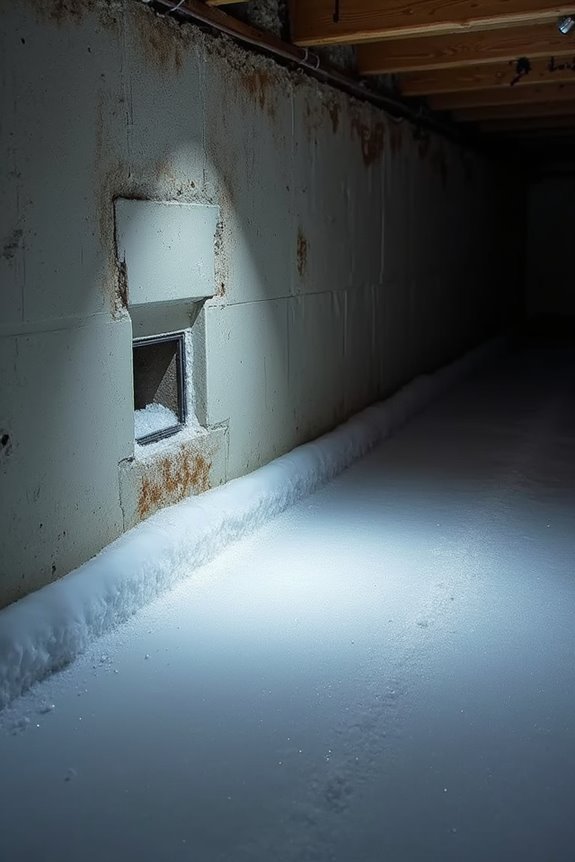
Rim joist leaks cause 90% of basement cold. You can find and fix them using a blower-door test or smoke pen to identify leaks around your rim joist area. Once you’ve spotted the problem, seal these gaps with high-performance foam or caulk to improve your basement airtightness and reduce drafts.
This simple fix is the first step toward a warmer, more comfortable basement.
The Stack Effect: Why Cold Air Settles in Your Basement

Your basement gets cold because warm air naturally rises through your home, and here’s the thing—cold air has to go somewhere, so it sinks down to replace it, creating what’s called the stack effect. This pressure difference pulls frigid outside air down through leaks around your rim joists and upper foundation, which then settles in your basement. Understanding this cycle helps explain why sealing those upper-level gaps matters for keeping your basement warmer.
How Warm Air Rises
Ever wonder why your basement feels like a walk-in freezer while your upstairs is toasty? It’s all about the stack effect. Here’s what’s happening: warm air naturally rises through your home, escaping through upper-level cracks and openings. As that warm air leaves, it creates pressure that pulls cold air down from outside—right into your basement. Think of your house like a chimney. Cold air’s heavier than warm air, so it sinks and settles in lower spaces. This constant exchange means your basement temperature drops while upper floors stay comfortable. Understanding this cycle helps you see why basement chill isn’t random—it’s physics. The good news? You can fight back with strategic sealing and insulation improvements to rebalance your home’s temperature.
Cold Air Settling Patterns
The stack effect doesn’t just push warm air upward—it’s also pulling cold air down, and that’s where your basement’s real problem starts. Cold, dense air naturally sinks, pooling at your home’s lowest levels. This cold air mass enters through rim joist gaps, foundation cracks, and other air leaks around doors and windows. Once inside, it settles and stagnates in your basement, creating that persistent chill you’re fighting. As heated air rises to upper floors, your basement gets left behind with minimal warm air mixing in. Pressure differences from wind and air movement reinforce this downward flow, establishing a continuous cycle. Sealing those rim joist areas addresses 90% of basement cold issues, making your space noticeably warmer.
Basement Depressurization Effects
While warm air rises through your home, it’s actually creating a vacuum effect downstairs that sucks cold air right into your basement. This stack effect happens because your upstairs needs somewhere to go, so it escapes through upper openings. That pressure difference? It pulls outside air through foundation cracks and rim joist gaps like a straw.
| Stack Effect Stage | What Happens |
|---|---|
| Warm air rises upstairs | Creates low pressure below |
| Pressure drops in basement | Air gets sucked inward |
| Cold enters through leaks | Foundation cracks pull outdoor air |
| Basement stays chilled | Cycle continues all day |
| Sealing stops the cycle | Air leaks close, comfort improves |
Your basement depressurization won’t stop until you seal those air leaks. Address the stack effect by plugging those entry points.
Inadequate Insulation Lets Heat Escape Through Concrete
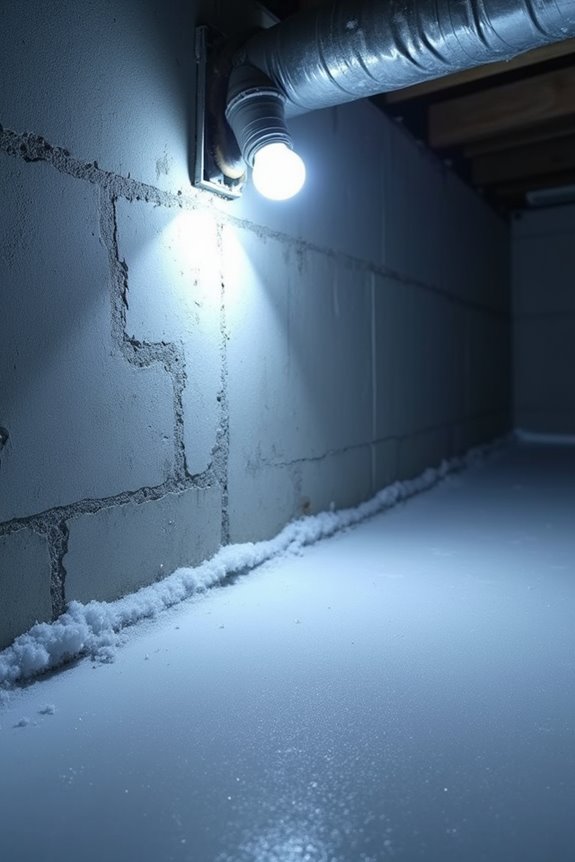
How much heat are you losing through those bare concrete walls? If your basement’s unfinished, you’re probably losing plenty. Concrete conducts cold effectively, so without proper basement insulation, warmth escapes straight through those walls into the ground outside.
Even finished basements can trick you. Behind that drywall might be little to nothing protecting you from heat loss. Grab an infrared thermometer and check your walls—cold spots reveal where insulation’s missing or doing a poor job.
Here’s the fix: Add moisture-resistant insulation like EPS or XPS foam directly to your concrete walls. This boosts your R-value and stops heat from escaping. Peek behind outlet boxes too—if you see fiberglass insulation there, your walls are already protected.
Moisture and Humidity Make Your Basement Feel Even Colder
Mold growth from excess moisture compounds the problem, further reducing comfort. Air leaks and poor ventilation amplify this cycle, allowing moisture to linger and multiply.
Many basement owners face this exact issue. Addressing moisture intrusion directly tackles both the dampness and that persistent cold feeling, making your basement livable again.
Your HVAC System Is Skipping the Basement Entirely
Ever wonder why your basement stays chilly even when the upstairs feels toasty warm? Your HVAC system might be skipping your basement entirely. Here’s the thing: your furnace prioritizes upper floors because that’s where your thermostat lives. Without proper basement zoning, your system short-cycles, pushing warm air upstairs before reaching below.
Ductwork design matters significantly. If your ducts are undersized or poorly positioned, they can’t deliver enough heat downstairs. Closed vents upstairs actually starve your basement of warmth—air takes the path of least resistance.
The real culprit? Insufficient return air paths. Your system needs that cool air flowing back up to reheat. Add a lower return vent, balance your dampers, and position supply ducts to reach basement level. These straightforward fixes improve your basement’s heating performance considerably.
Concrete Acts as a Thermal Mass That Drains Warmth
Your basement’s concrete walls and floors act like a sponge for heat, constantly pulling warmth from the air and slowly releasing it back out—which sounds helpful, but it actually keeps your basement feeling chilly overall. Here’s the real problem: that concrete sits right against cool soil underground, which continuously drains heat away from your space, making it nearly impossible to warm up naturally. Even when the rest of your house feels warm, you’ll notice the concrete floor feels cold under your feet because it conducts that exterior chill straight into your basement.
Concrete’s Heat-Absorbing Properties
Have you ever wondered why your basement feels like a walk-in freezer even when the upstairs is toasty warm? Your concrete is the culprit. Concrete acts as a thermal mass, which means it absorbs heat from your living space and stores it like a sponge. This heat transfer works against you, pulling warmth from the air around it.
Here’s what’s happening:
- Concrete absorbs warmth from your heated basement air
- High heat capacity slows temperature changes, keeping spaces feeling cold longer
- Surrounding soil continuously cools your concrete walls and floors
Since bare concrete is poorly insulating, it can’t fight back. The slab and walls draw heat inward, making your basement stay chilly. Understanding this thermal mass behavior helps you address the problem with better insulation and radiant heating strategies.
Thermal Mass and Temperature Loss
Now that you know concrete absorbs heat, let’s look at the bigger picture: that absorbed warmth doesn’t stick around. Your basement’s concrete slab and walls act as a thermal mass, constantly drawing warmth from the air around you. Here’s what’s happening: heat moves from your living space into the concrete, then travels deeper into the surrounding soil. This process never really stops.
Without proper insulation, you’re fighting an uphill battle. The concrete keeps pulling warmth away, making your heating system work overtime just to reach comfortable temperatures. That’s why adding insulation and thermal breaks—like underlayment under floors or insulated wall coverings—matters so much. These barriers slow heat loss and help your basement feel comfortable. You’re not imagining that chill; your concrete’s thermal mass is genuinely working against you.
Cold Basement Floor Effects
Ever notice how your basement floor feels colder than the air around it, even when both are reportedly the same temperature?
That’s your concrete acting as a thermal mass. Here’s what’s happening:
- Concrete draws heat away – The material’s high thermal conductivity pulls warmth from your feet and the air above it
- No insulation layer means faster heat loss – Without underlayment or flooring finishes, heat escapes directly into the slab
- The floor stays perpetually cold – Even heated basement air can’t warm that concrete quickly
You’re not imagining things. That chill you feel is real. The upside? Adding insulating underlayment and finishing your basement floor creates a barrier that traps warmth. This straightforward fix stops your thermal mass from stealing heat, making your basement feel warmer and more comfortable.
Poor Air Circulation Traps Cold Air Below
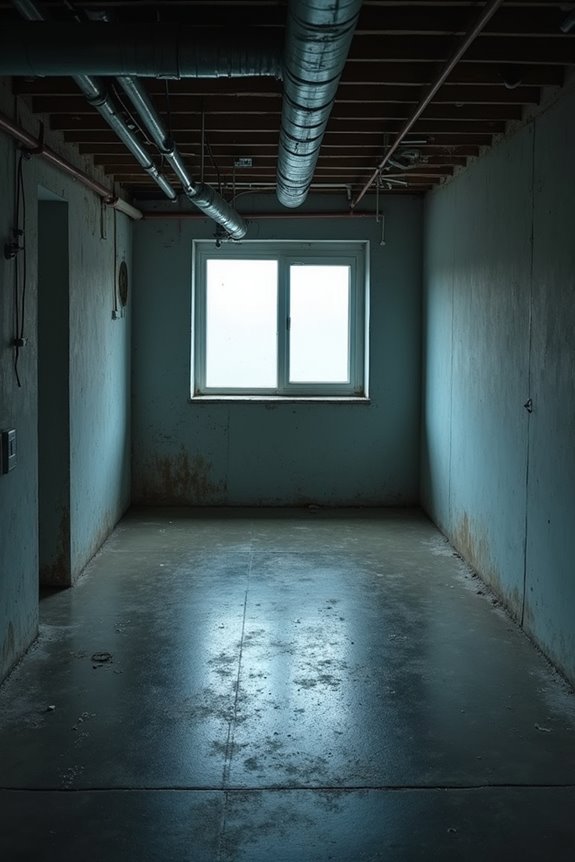
Why does your basement feel like a freezer while upstairs stays cozy? Poor air circulation is likely the culprit. When your basement lacks proper airflow, cold air pools at the bottom of the room, especially near the floor and basement walls. Warm air from your heating system doesn’t mix down there, leaving you with stubborn chilly pockets that won’t budge.
Here’s what’s happening: stagnant air gets trapped below, creating temperature gaps between levels. Your return vents sit too high up, pulling warm air away before it reaches down low. That means your basement stays noticeably cooler than the rest of your home.
The fix? Install a lower-level return vent and position supply vents to reach your basement directly. Better air circulation means more uniform warmth throughout.
Seal Air Leaks at the Rim Joist and Foundation
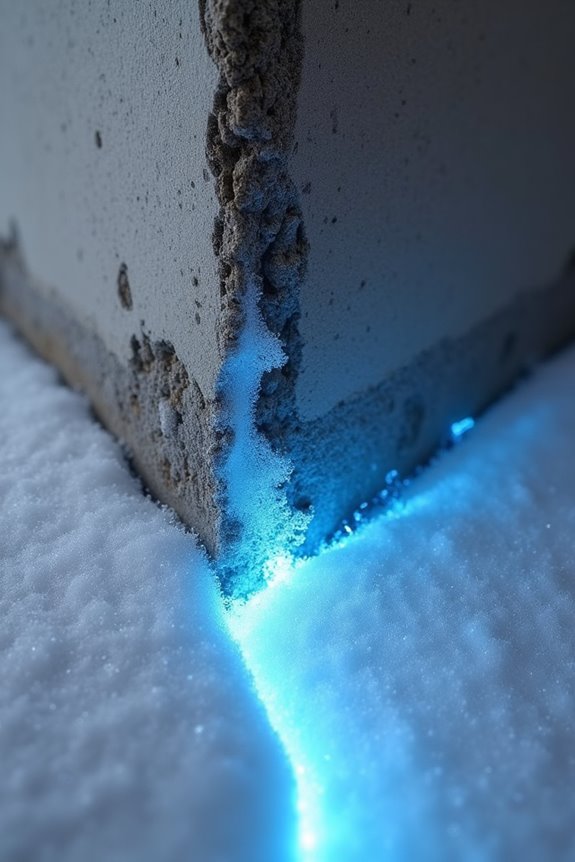
Cold air sneaks into your basement through tiny gaps you probably can’t even see. Your rim joist—where your house sits on the foundation—is a major culprit. These hidden air leaks let outdoor cold drop straight into your basement, especially when upper floors pull air downward.
You’ll want to tackle basement sealing strategically:
- Use blower-door testing and infrared imaging to locate cracks and gaps
- Seal the rim joist and foundation sills with caulk or foam
- Address exterior basement walls, doors, and windows first
Sealing exterior areas works better than just fixing interior walls. Once you’ve plugged these leaks, your basement temperature will rise noticeably. You’re stopping cold air at the source, which means your main floor stays warmer too. It’s one of the smartest moves you can make.
Identify and Close Hidden Leaks With a Blower Door
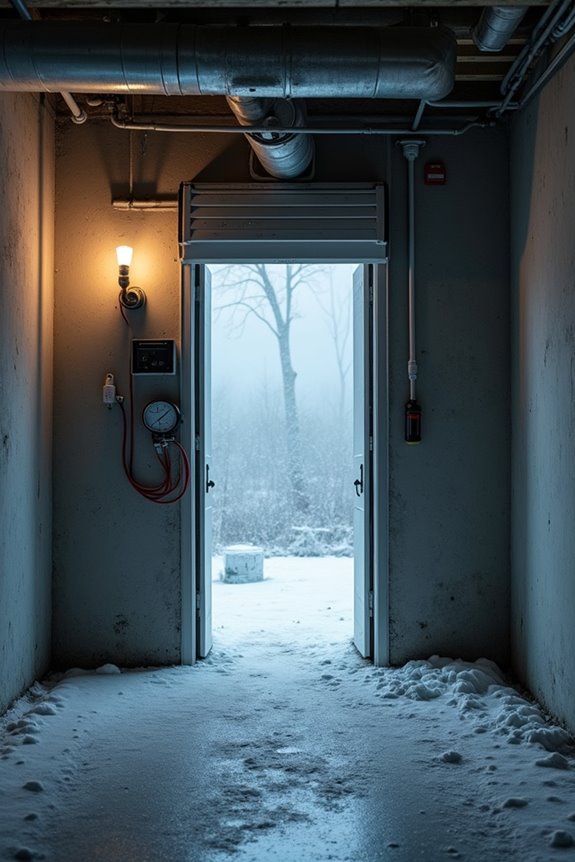
Now that you know where to look, you need a way to actually find those sneaky air leaks hiding in your basement. A blower door test pressurizes your house to reveal hidden gaps you’d never spot otherwise. During testing, use a smoke pen to watch where air actually moves—it’ll trace leaks from inside to outside like a map. You’ll identify problems at the rim joist, foundation sills, and sump holes that substantially drive basement chill. This professional technique pinpoints exactly which leaks matter most. Once you’ve located them, you can prioritize sealing exterior basement walls, doors, and windows first. These exterior seals beat interior fixes every time for real comfort improvement. The blower door confirms what needs sealing, making your basement insulation investment effective.
Insulate Your Foundation Walls and Basement Ceiling
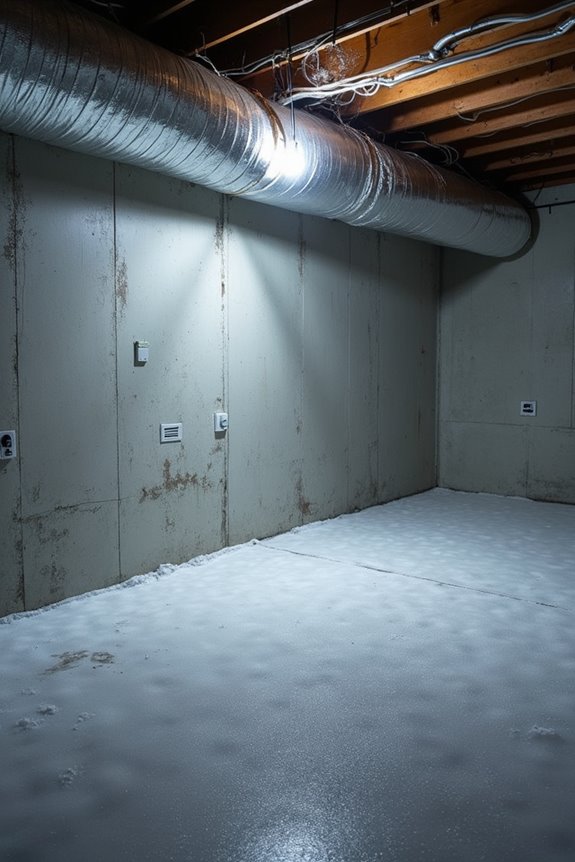
About basement walls—they’re in constant contact with cold soil, and that earth draws heat away quickly. You need insulation to prevent this heat loss.
Basement walls lose heat rapidly to cold soil. Proper insulation is essential to prevent this heat transfer and improve energy efficiency.
Start by insulating your foundation walls with moisture-resistant materials like EPS or XPS foam. These materials withstand dampness without degrading. Then, address your basement ceiling—it allows warmth to escape to upper floors.
Your action plan:
- Install rigid foam insulation on concrete walls
- Add insulation batts or spray foam to basement ceilings
- Seal rim joists and foundation sills to stop air leaks
In finished basements, remove drywall strategically, retrofit insulation, then refinish. This combination makes your basement feel functional and comfortable, integrating it properly with the rest of your home.
Add Heat Near the Floor With Low-Level Registers

You can fight that basement chill by installing low-level registers near the floor, which pushes warm air exactly where it pools and makes the biggest temperature difference. Strategic damper adjustments let you direct more heat downstairs while preventing your upstairs from overheating, and pairing floor registers with a low return vent on the basement wall keeps air circulating smoothly. This floor-level approach works with your heating system’s natural tendency—warm air rises anyway—so you’re just giving it a smarter starting point.
Floor-Level Heat Distribution
Why does warm air seem to abandon your basement floor and float up toward the ceiling instead? That’s because warm air naturally rises, leaving your feet freezing while the top stays toasty. You’ll fix this with floor-level heat distribution.
Low-level registers push warmth exactly where you need it—right at ground level. Here’s what makes this work:
- Heat added near the floor counters warm air’s natural rise
- Direct contact with concrete warms the slab itself
- Proper return placement mixes air and eliminates cold pockets
Pair floor-level heat with sealed, insulated basement walls from the slab up to the rim joist. This combination keeps your basement feeling consistently comfortable throughout. You’re not fighting physics anymore—you’re working with it. That’s how you actually warm a cold basement.
Register Placement And Dampers
add dampers to your basement supply lines. These let you balance airflow between your basement and upper floors, preventing heat from short-cycling upstairs. Warm air mixes throughout your space instead of escaping through open stairwells.
The result? More uniform basement temperatures, faster heat distribution to living zones, and reduced thermostat demands. You’re not just adding registers—you’re working with the physics of your home’s airflow to improve comfort.
Create a Dedicated Heating Zone for Your Basement
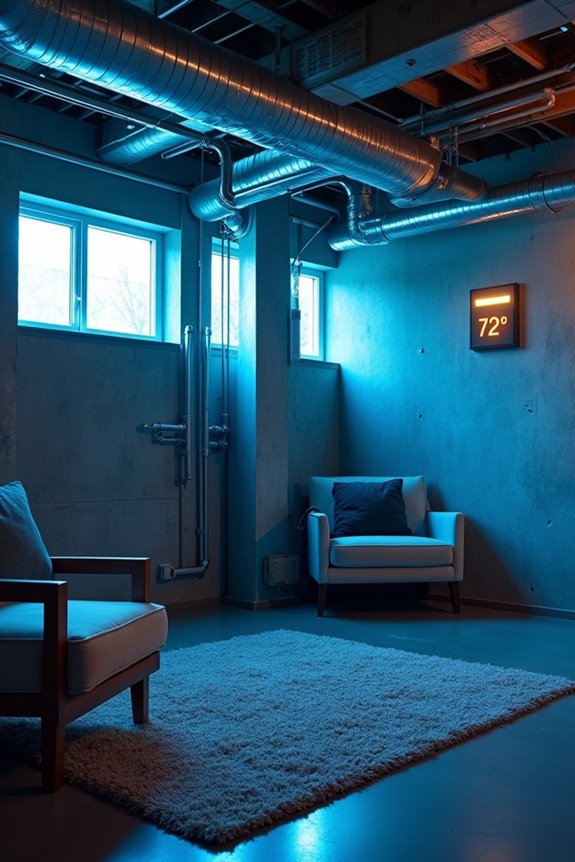
One of the smartest moves you can make is installing a separate heating zone just for your basement. This dedicated basement heating zone gives you independent control, so you’re not waiting for upstairs temperatures to reach their set point before your basement finally gets warm.
Installing a separate heating zone for your basement gives you independent control and eliminates waiting for upstairs temperatures to warm your space.
Here’s what zoning accomplishes:
- Places a separate thermostat specifically controlling basement heat
- Uses its own ducted or radiant heating system tuned independently
- Maintains basement temperatures within a couple degrees of your main floor
Pair your zoning system with proper insulation and a sealed rim joist for maximum efficiency. Install low-level floor registers to push warm air where you need it most. This combination keeps your basement comfortable while your upstairs thermostat operates at normal capacity.
Install a Return Vent Low on the Basement Wall
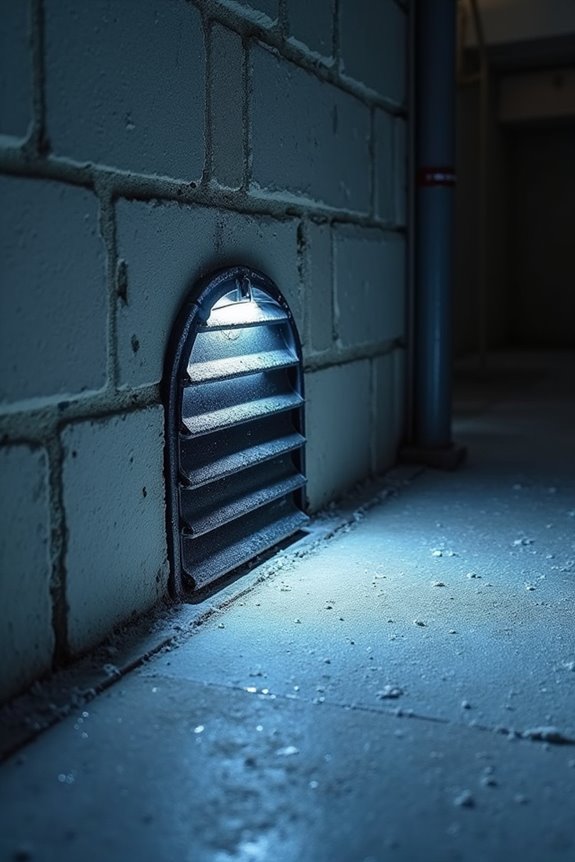
Now that you’ve got your dedicated heating zone set up, it’s time to make sure that warm air actually moves around your basement instead of getting stuck in one spot. Installing a return vent low on the basement wall improves air circulation. This vent pulls cooler air upward from the floor, mixing it with warmer air above. Position your return vent near the basement wall to work with high-side supply vents, creating vertical airflow that addresses cold pockets near the ground. Proper sizing prevents shortcuts in your basement heating system. When paired with sealed rim joists and insulated walls, you’re creating a complete strategy that makes your basement warmer and more livable.
Quick Fixes to Warm Your Basement Immediately
What if you could feel a noticeable difference in your basement’s temperature today, not months from now? You don’t need to wait for major renovations. Let’s try some immediate solutions that actually work.
Feel a noticeable difference in your basement’s temperature today, not months from now—without major renovations.
- Open all basement heating registers and check that nothing blocks them
- Close basement doors to trap warm air downstairs instead of losing it upstairs
- Switch your furnace fan to the On position for continuous air circulation
These steps mix warm air throughout your space, eliminating cold pockets. A portable space heater offers quick relief too, though it’s temporary and uses more energy. Better insulation takes time, but these fixes? You’ll notice results within hours. You’re taking control of your comfort right now, and that matters.