
You’ll spend $3,000 to $120,000+ on basement waterproofing in 2026, depending on your method choice. Interior systems run $3,000–$10,000 for a typical basement, while exterior waterproofing costs $25,000+ due to excavation labor. Sump pumps add $1,500–$4,500. Your actual price depends on basement size, soil type, damage severity, and site access—factors that make each quote unique. Keep reading to discover what drives costs up and how to ask contractors the right questions.
Basement Waterproofing Costs in 2026: What to Expect
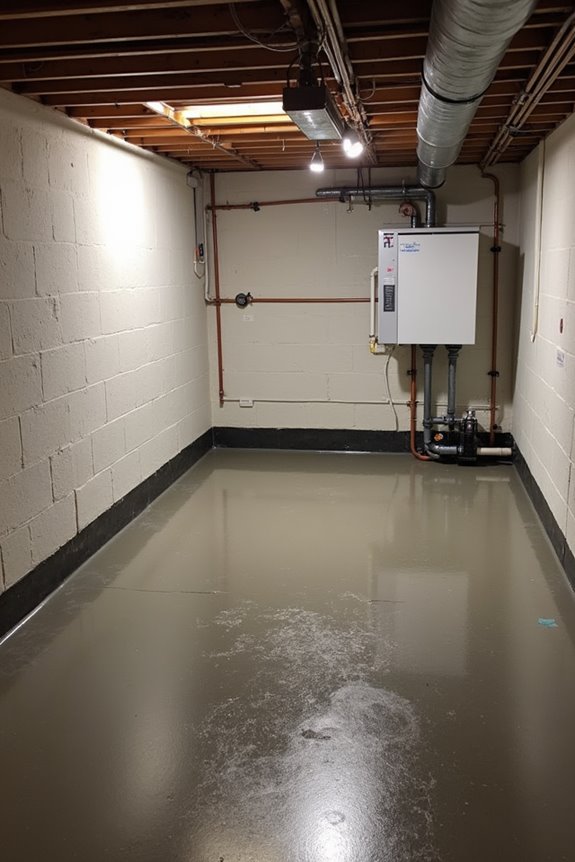
So, you’ve noticed some water seeping into your basement, and now you’re wondering what it’ll cost to fix?
You’re not alone. Most homeowners spend around $5,000 nationally, though your basement waterproofing cost depends on which solution you choose. Interior drain tile typically runs $8,000 to $18,000 in the Twin Cities, while exterior waterproofing costs markedly more—$20,000 to $120,000+.
Per linear foot pricing helps you understand what you’re paying for. Interior systems average $60–$120 per foot, while exterior systems start at $150+. Several factors influencing cost matter: your basement size, problem severity, and which waterproofing method works best for your situation.
Financing options like 0% payment plans exist to help with the financial burden.
Interior vs. Exterior Waterproofing: Which Method Fits Your Budget
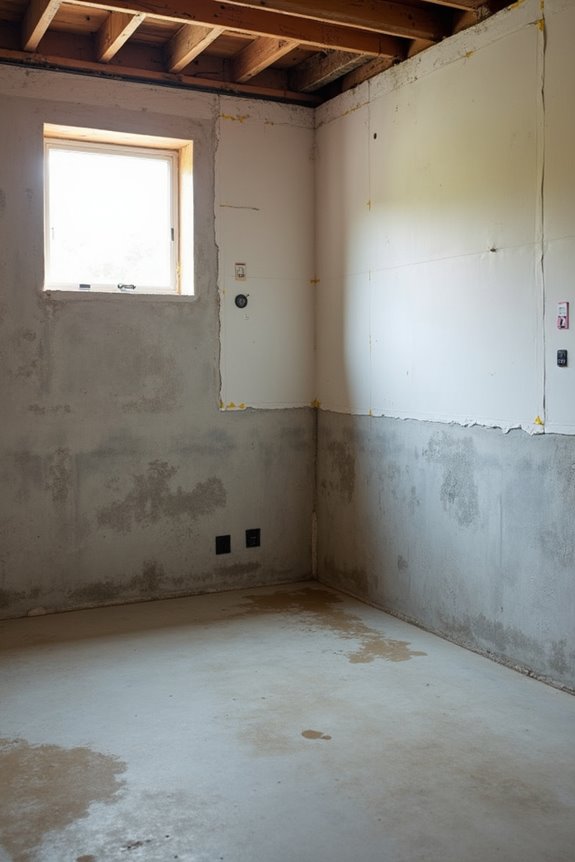
Interior systems cost between $3,000 and $10,000 for a typical 1,000 sq ft basement, while exterior solutions run $10,000 to $25,000+ because they require deeper digging and more labor. Interior waterproofing channels water to a sump pump at around $60–$120 per linear foot, making it faster and cheaper upfront, whereas exterior methods start at $150+ per linear foot but address hydrostatic pressure at the source for stronger long-term protection. Your budget choice depends on basement size, foundation type, and whether you’re fixing just problem spots or need full perimeter coverage.
Interior Systems Cost Breakdown
When water’s creeping into your basement, do you fix it from the inside or dig up your yard? Interior systems offer a cost-effective alternative. You’re looking at $60 to $120 per linear foot for interior drain tile, with total interior project costs ranging from $5,000 to $12,000. Add sump pump installation—typically $1,500 to $4,500—and you’ve got a complete solution that channels water away from your foundation.
What makes interior waterproofing attractive? You’ll skip expensive exterior excavation. Instead, you’re managing hydrostatic pressure through internal drainage and vapor barriers. Finished basements might need some demolition and restoration, but you’re still spending less than exterior methods. Your basement size, water severity, and existing finishes determine your final cost. Most homeowners find this approach manageable and effective.
Exterior Waterproofing Expenses
Ready to spend more money but get stronger protection? Exterior waterproofing costs more upfront, but you’re investing in serious, long-lasting defense for your foundation.
Here’s what you’re looking at:
- Cost range: $150+ per linear foot, with total projects reaching $25,000+ depending on your basement size
- Excavation work: Deeper digging around your foundation means more labor and potential site landscape changes
- Warranty benefits: Most exterior systems offer stronger protection against hydrostatic pressure and typically include better coverage guarantees
Exterior waterproofing requires permits and can temporarily disrupt your yard. However, you’re getting comprehensive protection that addresses water problems at their source. If you’ve got the budget and your foundation needs real reinforcement, exterior solutions deliver the protection and confidence that interior methods cannot provide.
Method Selection By Budget
How much can you realistically spend on basement waterproofing? Your answer depends on your situation and priorities.
If you’re budget-conscious, an interior system works well. You’ll spend $60–$120 per linear foot, and you can reduce costs by limiting perimeter drainage to problem areas only. Pair it with your existing sump pump to keep expenses down.
Have more flexibility? Exterior waterproofing costs $150+ per linear foot but delivers better long-term protection. It waterproofs your foundation from the outside, preventing future damage.
One important factor: your basement’s condition matters. An unfinished basement costs less to waterproof since you’re skipping demolition and re-finishing work. A finished basement requires removing walls and flooring first, significantly raising your total investment.
Weigh durability against your current budget to choose what works best for you.
How Basement Size and Home Age Change Costs?
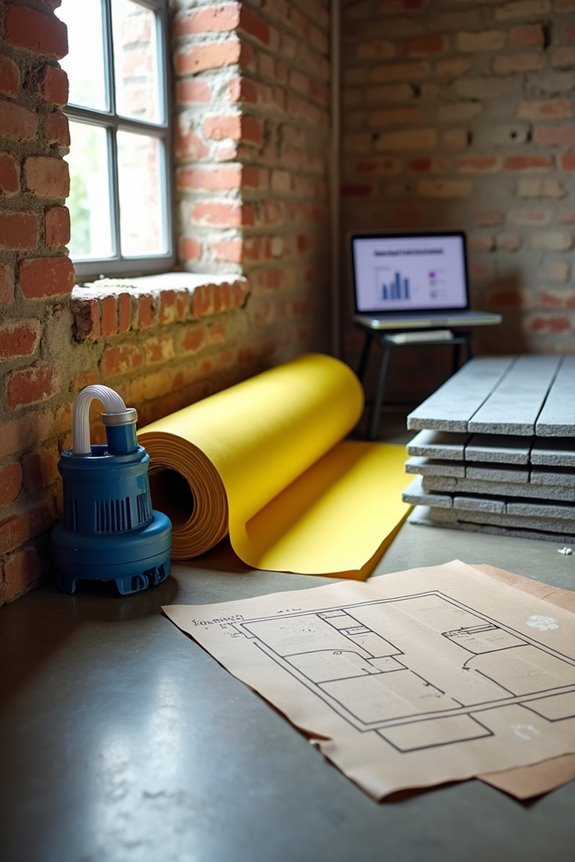
Your basement’s size and your home’s age are two of the biggest factors that’ll affect your waterproofing bill.
Basement size and home age are the two biggest factors determining your waterproofing costs.
A larger basement means a longer perimeter, and you’ll pay more because drainage systems run the entire length of your walls. Here’s what changes your costs:
- Basement size – A 1,500 sq ft ranch with a 115 ft perimeter costs around $11,660 total, while smaller basements cost less simply because they need less drainage track.
- Home age – Newer homes built after the late 1960s typically have existing footers, reducing your expenses. Older homes without proper footers need “fast track” drainage costing $76–$92 per foot.
- Footer presence – That footer directly determines whether you’ll drill weep holes or install drainage tracks, substantially impacting your final bill.
Soil Type, Damage Severity, and Site Access: Why Quotes Spike
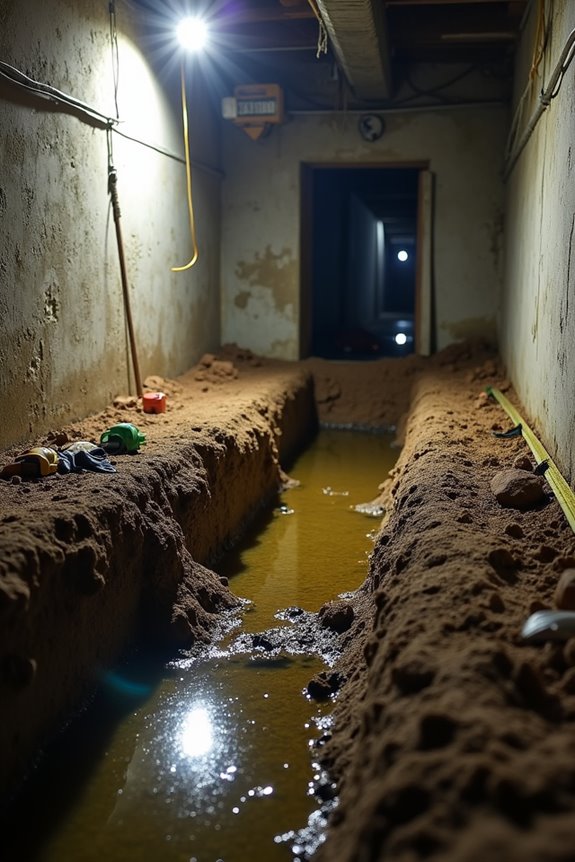
When you’re getting waterproofing quotes, three things can really shake up the price tag: the clay soil pushing down on your foundation, how bad the damage actually is, and whether contractors can even access your basement easily. Your soil type matters because dense Michigan clay creates serious hydrostatic pressure that demands more heavy-duty solutions and digging, which costs more in labor and materials. Add in damage assessment fees and tricky site access—like steep grades or tight spaces—and you’ll see those quotes climb faster than you’d expect.
Clay Soil Hydrostatic Pressure
Why does your waterproofing quote jump dramatically when the contractor mentions clay soil?
Clay soil creates intense hydrostatic pressure against your basement walls. This pressure forces water through tiny cracks, making standard fixes inadequate. You’re looking at more aggressive solutions—and higher costs.
Here’s what clay soil means for your wallet:
- Deeper excavation required – Contractors dig further down to install exterior drainage systems that actually work against clay’s poor drainage
- Extended installation time – Low-permeability clay slows water movement, demanding longer waterproofing installations and more materials
- Robust drainage solutions – You’ll need comprehensive interior or exterior systems, not just basic sealants
In Michigan’s Macomb and Oakland counties, dense clay creates what experts call the “Clay Bowl” effect. Water pools around your foundation instead of draining away naturally. You’re not just waterproofing; you’re redirecting significant water pressure. That’s why your estimate reflects the real complexity underground.
Foundation Damage Assessment Costs
How much does it actually cost to find out what’s wrong with your foundation? You’re looking at $200–$500 for a professional on-site assessment—a necessary expense because it reveals exactly what you’re dealing with.
Your soil type matters enormously. Dense clay raises soil permeability concerns and hydrostatic pressure, while sandy soil drains faster. Inspectors evaluate moisture sources, measure wall cracks, and determine if you need basic waterproofing or a full drainage systems setup with a sump pump.
Site access affects pricing too. Tight crawlspaces and limited yard space require specialized equipment and extended labor, bumping costs higher. Damage severity—whether you’ve got minor dampness or serious structural compromise—shapes your foundation damage repair strategy and final quote.
Get an assessment first rather than guessing.
Excavation Access and Labor
Once you’ve identified what’s actually wrong with your foundation, the real cost conversation starts—and that’s where excavation and labor take center stage. Your basement waterproofing costs spike dramatically based on three major factors:
- Soil type – Dense clay in Michigan and similar regions creates extra hydrostatic pressure, demanding deeper digging and more labor hours
- Access limitations – Narrow spaces, below-grade doors, or walk-out basements require specialized equipment and phased work, stretching your timeline and budget
- Foundation damage – Missing or damaged footers force faster, more extensive perimeter drainage solutions
For a 115-foot perimeter drainage project, you’re looking at significant labor scaling. Exterior waterproofing costs more than interior methods because it requires deeper excavation. The longer your project runs, the higher your per-foot costs climb. Understanding these variables helps you anticipate realistic quotes.
Sump Pumps and Crack Sealing: What These Cost
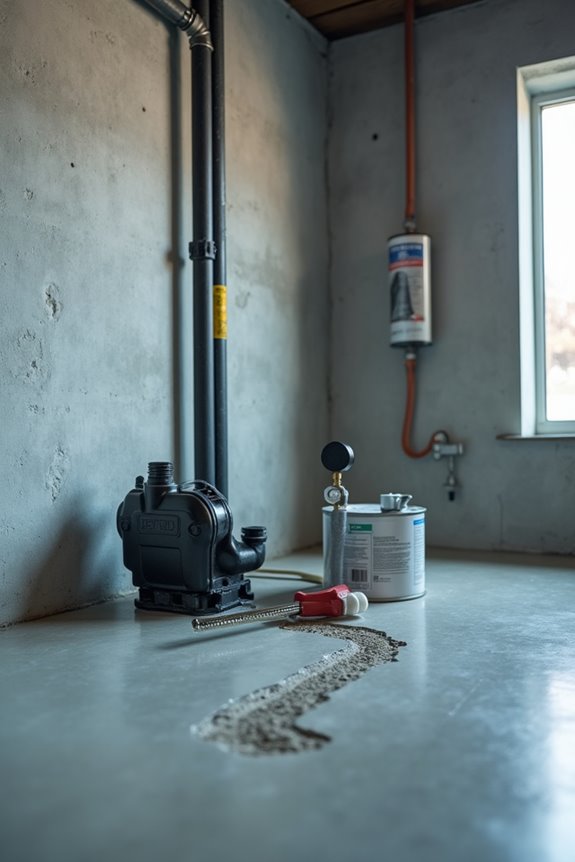
When water finds its way into your basement, you’ve got two main defense strategies: stop it at the source with crack sealing, or manage it once it’s inside with a sump pump system.
Crack Injections run $600 to $1,200 per crack, sealing isolated leaks before they worsen. Sump pumps cost $1,500 to $4,500 and typically include battery backup for power outages—a practical choice for reliability.
Here’s where it gets real: combining both approaches gives you solid protection. An interior drain tile system paired with your sump pump ranges from $5,000 to $12,000. Together, you’re looking at roughly $11,000 to $15,000 for a mid-sized basement.
You’ll need a licensed plumber for installation due to code compliance. It’s an investment that protects your home and provides long-term peace of mind.
Do You Need Both Systems or Just One? (A Quick Decision Guide)
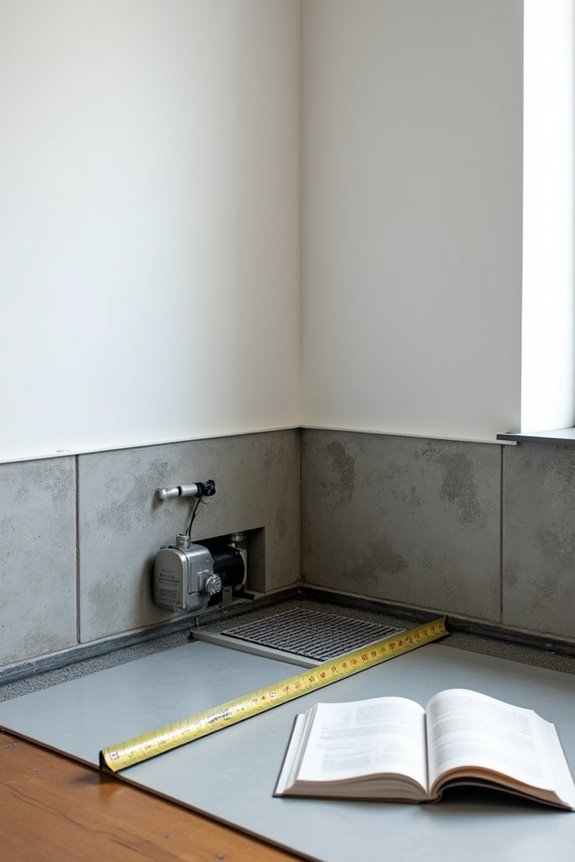
The truth is, you probably don’t need every waterproofing solution available—and that’s good news for your wallet.
Your best move? Start by diagnosing where moisture intrusion actually happens. Here’s how to decide:
Start by diagnosing where moisture intrusion actually happens—it’s the smartest first step to choosing the right waterproofing solution.
- Localized wet spots – Interior waterproofing ($60–$120 per linear foot) with targeted fixes beats expensive exterior work
- Older homes with footers – Interior drain tile and a sump pump often do the job without excavation
- Severe hydrostatic pressure – Exterior waterproofing ($150+ per linear foot) becomes necessary when water pressure’s relentless
Get line-item quotes first. You’ll spot exactly what you need versus what’s overkill. Most homeowners find interior drainage plus a sump pump ($1,500–$4,500) handles things nicely. Skip the full exterior system unless your contractor confirms it’s necessary. That’s smart budgeting, not cutting corners.
What to Ask Your Contractor: Questions That Unlock Accurate Pricing
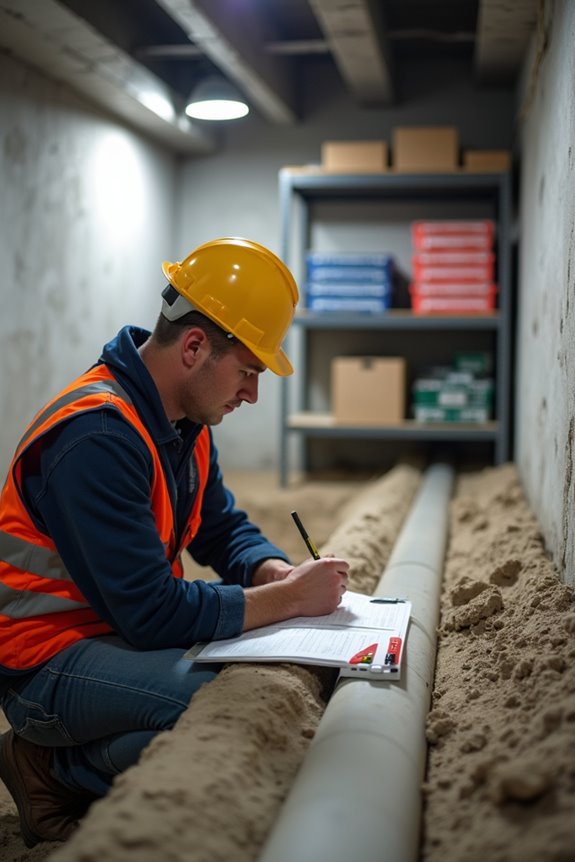
How do you know if a contractor’s quoting you fairly or just throwing numbers at the wall? Smart homeowners pin down specifics before signing anything.
Request a line-item quote breaking down perimeter length, method choice, sump pump inclusion, and crack injections with cost per linear foot. Tie the scope to your basement size—say, 1,000 sq ft with 120–140 ft of perimeter—and clarify whether work covers full perimeter or problem areas only.
| Detail | Interior Drain Tile | Exterior Excavation |
|---|---|---|
| Typical cost per linear foot | $15–$25 | $25–$40 |
| Timeline | 2–3 days | 5–7 days |
| Disruption level | Moderate | High |
| Restoration included? | Confirm separately | Confirm separately |
| Warranty coverage | Specify terms | Specify terms |
Demand written guarantees, insurance proof, and exact warranty details so you’re protected.
Our Satisfaction Guarantee: What You’re Protected Against
You’ve asked the right questions, gotten a detailed line-item quote, and verified your contractor’s credentials—now comes the part that should actually let you sleep at night. Our satisfaction guarantee backs every waterproofing project with real protection.
Here’s what you’re covered for:
- Rework and remediation if you’re not fully satisfied with results
- Written warranty outlining coverage details and transferability when you sell
- Transparent timelines with clear milestones so we address issues promptly
This guarantee covers your complete project scope—interior and exterior systems included. We’re committed to quality workmanship and results you can rely on. Think of it as our promise that you’ve made a smart investment. Your confidence matters to us, and this protection demonstrates it.